Did you know cholesterol levels can go up 25% to 50% during pregnancy? This rise is crucial for the health of both mom and baby. However, it also means keeping an eye on cholesterol is more important than ever. High cholesterol can cause problems like preeclampsia and gestational diabetes. For pregnant women, managing cholesterol isn’t just advice—it’s essential for a healthy pregnancy. This guide gives expectant moms tips on how to keep cholesterol in check for their health and the baby’s.
Key Takeaways
- Cholesterol levels can rise significantly during pregnancy, making monitoring essential.
- High cholesterol is linked to various pregnancy complications, highlighting the need for management.
- Healthy lifestyle choices can effectively lower cholesterol levels during pregnancy.
- Regular consultations with healthcare providers are critical for tailored cholesterol care.
- Understanding familial hypercholesterolemia can assist in managing cholesterol more effectively.
Understanding Cholesterol in Pregnancy
Cholesterol is key for various body functions. In pregnancy, it helps with health and growth for mom and baby. Knowing about cholesterol is important for pregnant women. This is because levels can change during pregnancy.
What is Cholesterol and Its Role in the Body?
Cholesterol is a fat found in blood and cells. It is crucial for making hormones and keeping cells healthy. It also helps make vitamin D and aids in digesting fats. During pregnancy, cholesterol’s role grows in importance. A healthy rise in cholesterol helps make key pregnancy hormones. These hormones, like estrogen and progesterone, are vital for pregnancy and the baby’s growth.
Natural Increase in Cholesterol Levels During Pregnancy
Women’s cholesterol levels naturally go up during pregnancy. An increase of 25 to 50 percent is common. This increase is especially seen in the second and third trimesters. The rise in cholesterol supports important hormonal changes. It also helps prepare for making healthy breast milk after birth. Women with high cholesterol or triglycerides should watch their levels. For those interested, reading more about cholesterol during pregnancy is helpful.
| Cholesterol Level Changes | First Trimester | Second Trimester | Third Trimester |
|---|---|---|---|
| Average Cholesterol Level | Lower than normal | Increased by 25-50% | Stabilizes at elevated levels |
| Hormonal Production | Initial support | Enhances estrogen and progesterone | Culminates in increased breast milk preparation |
| Health Considerations | Monitoring recommended | Watch for preexisting high levels | Consult healthcare providers for guidance |
The natural jump in cholesterol can worry some, but it’s key for mom and baby’s health during pregnancy.
The Importance of Cholesterol Management During Pregnancy
Keeping an eye on cholesterol is key during pregnancy. It not only impacts the mom but also the baby growing inside. Cholesterol levels can jump up a lot during the second and third trimesters, sometimes by 25 to 50 percent. Knowing and handling these levels is critical for both mom and baby’s health.
Why Monitoring Cholesterol Matters for Expectant Moms
If you’re pregnant and already have high cholesterol, you need to watch your cholesterol closely. Hormonal changes during pregnancy can make things worse. They can lead to more risks of high cholesterol like heart disease. HDL levels, or good cholesterol, should be over 40 mg/dL to help avoid heart problems. But, LDL levels, or bad cholesterol, above 160 mg/dL could raise the risk of heart attacks a lot.
Risks Associated with High Cholesterol in Pregnancy
Having total cholesterol over 200 mg/dL could mean a higher risk of heart disease. And, triglyceride levels over 150 mg/dL may point to diabetes risks. These risks of high cholesterol mean pregnant women should talk to doctors about their health. Making small changes, like moving more and eating foods rich in omega-3s, can be key in managing cholesterol.
Check out this resource for more on why managing cholesterol is so important during pregnancy and ways to do it.
Cholesterol Management During Pregnancy
During pregnancy, managing cholesterol is key due to big swings in levels. Women’s total cholesterol might go up by 25% to 50%. It’s vital to check your cholesterol regularly with blood tests. These tests reveal important figures like total cholesterol, HDL (good cholesterol), LDL (bad cholesterol), and triglycerides. Knowing these can help make a customized plan for you.
How to Monitor Cholesterol Levels Effectively
Monitoring cholesterol focuses on checking your lipid profiles. This means watching for increases in LDL cholesterol, which can jump up to 66% during pregnancy. Doctors recommend getting blood tests at key pregnancy stages to watch for important changes. It’s also key to keep an eye on triglycerides, which may rise by 200% to 400%. Staying on top of these numbers lets you tackle any issues early on.
Discussing Results with Your Healthcare Provider
After getting your cholesterol test back, talk it over with a doctor. Open talks about your levels can clear up what they mean for you. Your doctor can help you understand your cholesterol and may suggest changes to your lifestyle. Working together on this is great for your health and your baby’s.
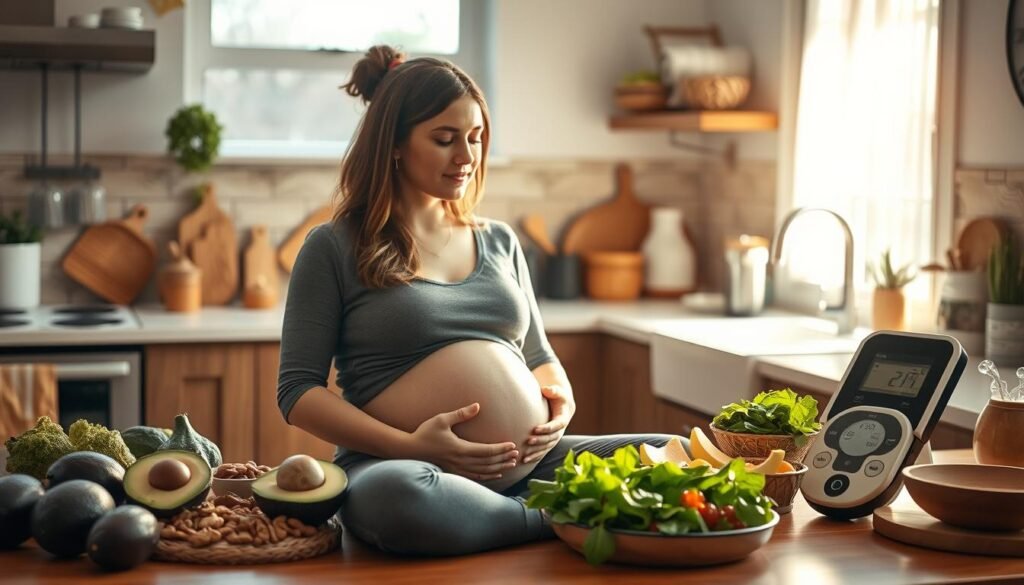
Dietary Changes for Healthy Cholesterol Levels
Making the right food choices is crucial for controlling cholesterol when pregnant. Expectant mothers can create a healthy environment for themselves and their babies. They do this by knowing what foods to eat and avoid.
Incorporating Healthy Fats into Your Diet
Adding healthy fats to your pregnancy diet can really help your cholesterol levels. Avocados, nuts, seeds, and fatty fish are great choices. These foods boost your HDL cholesterol, the “good” kind that protects against heart disease.
Eating these healthy fats often helps pregnant women have a great lipid profile. This leads to better health during pregnancy.
Foods to Avoid and Limit During Pregnancy
Expectant mothers need to be careful about certain foods to keep cholesterol healthy. Avoiding fried foods, processed snacks, and foods high in saturated fats and sugars is key. These can raise your LDL cholesterol and triglycerides.
It’s also smart to avoid unpasteurized cheeses and raw or undercooked eggs to lower foodborne illness risks. Eating plenty of fruits, vegetables, whole grains, and lean proteins is best. This is similar to a Mediterranean diet and is great for cholesterol and nourishing both mother and child.
Physical Activity and Its Impact on Cholesterol
Staying active during pregnancy is key to managing cholesterol levels. It boosts heart health and benefits both mom and unborn child. Safe and effective exercise is crucial for pregnant women.
Recommended Types of Exercise for Pregnant Women
Expectant mothers have many good options for exercise. They can try:
- Walking
- Swimming
- Prenatal yoga
- Pregnancy-safe aerobics
These activities improve fitness and reduce risks like gestational diabetes. This condition affects about 7% of pregnancies. A targeted heart rate of 60% to 70% during exercise helps both the mom’s health and cholesterol.
Benefits of Regular Physical Activity on Cholesterol Levels
Exercise offers great benefits for cholesterol management. It helps lower bad cholesterol types and raise good cholesterol levels. This is very important for expecting mothers to have a healthy lipid profile.
Being active can also reduce the chance of getting gestational diabetes. The most active women see the lowest rates of this condition. Aiming for 10 to 12 miles of exercise a week can make a big difference. High activity levels also lead to shorter labor times, which is a plus during childbirth.

Natural Ways to Maintain Healthy Cholesterol
It is very important for expectant mothers to keep their cholesterol at healthy levels. Eating the right foods is key to achieving this. Choosing foods wisely helps manage cholesterol, especially those rich in fiber and omega-3.
The Role of Fiber in Cholesterol Management
Dietary fiber is vital for natural cholesterol management. High-fiber foods like whole grains, fruits, and veggies help lower bad LDL cholesterol. Research shows that fiber helps keep the heart healthy. Adding fiber to meals each day is a smart move. It’s good to eat fruits as snacks and add beans to meals, avoiding processed and sweet foods.
Including Omega-3 Rich Foods in Your Diet
Omega-3 fatty acids play a big role in controlling cholesterol. Eating foods like fatty fish, flaxseeds, and walnuts keeps cholesterol in balance. Studies show omega-3s reduce triglycerides and boost heart health. Having salmon or mackerel often is good for you. Pregnant women can eat walnuts or flaxseed for their omega-3s, which also help their baby’s brain.
These dietary steps help expectant mothers stay healthy. For more tips on natural remedies, check out this resource. Following these tips and getting advice from diet experts makes managing cholesterol easier.
Talking to healthcare providers gives personalized advice for a healthy pregnancy.
When to Consult Your Healthcare Provider
Pregnant women should know when to see a healthcare provider about cholesterol. It’s important to recognize the signs of high cholesterol. This helps manage health risks for the mother and baby.
Signs of High Cholesterol to Look Out For
Some people don’t show signs of high cholesterol, but others do. These signs include:
- Unusual fatigue
- Chest pain
- Shortness of breath
- High blood pressure
If you notice any of these signs, see a healthcare provider quickly. They can check your cholesterol and overall health. Catching and managing this early is key during pregnancy.
Medication Considerations for Pregnant Women
Pregnant women need to be careful with cholesterol-lowering meds. Some, like statins, can harm the fetus. Lifestyle changes are a safer way to manage cholesterol. In some cases, doctors may suggest different medicines that are safe.
Talking with a healthcare provider is important. It helps pregnant women learn about safe pregnancy medication considerations. Keeping up with doctor visits and tailored care is very important for managing cholesterol safely during pregnancy.
Safe Cholesterol Management Practices
Managing cholesterol when you’re expecting takes careful thought. Expectant moms need to focus on safe cholesterol management practices for their well-being and their baby’s. This includes looking into medications and knowing how they work during pregnancy.
Guidelines for Safe Drug Usage During Pregnancy
Expectant moms should always talk to their doctors before using any medication. Statins, drugs that lower LDL cholesterol, need careful handling during pregnancy. Even though the FDA thinks some high-risk patients can use statins, this needs careful thought. It’s about balancing the good with the possible risks for these women.
Statins might cause headaches and muscle pain, so regular check-ups are key. Most often, doctors advise stopping statins when pregnant. Yet, they might be necessary for those at high risk. It’s critical to weigh the pros and cons of using medications during pregnancy.
Consultation for Alternative Treatments and Support
There are other ways to control cholesterol without medication. Changing what you eat, exercising more, and certain supplements can make a big difference. Moms-to-be should discuss these options with their healthcare providers carefully.
Eating foods with omega-3s and fiber helps control cholesterol naturally. Taking charge of your health now benefits you and your baby long-term.
Conclusion
Managing cholesterol is key for both mom and baby during pregnancy. Cholesterol goes up by 30-50% during this time. It’s vital for expectant moms to eat well, stay active, and check their cholesterol regularly. Knowing this helps women make smart choices for a healthy pregnancy.
Keeping cholesterol in check lowers the risk of issues like preeclampsia and gestational diabetes. It’s good to eat foods high in fiber and omega-3s, and to stay active. Talking openly with doctors helps moms manage their health and provides a safe space for their baby to grow.
Working towards the right cholesterol level during pregnancy keeps both mom and baby safe. By focusing on their diet and lifestyle, expectant mothers can look forward to a healthy pregnancy journey. This creates a nurturing environment for the baby’s growth and development.