Did you know losing just 3% of your body weight can help your heart? The National Institutes of Health say it’s true. This small step can make a huge difference in fighting heart disease. Heart disease is a top killer in the U.S. So, eating foods low in cholesterol is vital. It helps keep your heart healthy. We’ll share tips for meals low in cholesterol. They’re tasty and good for your heart. You’ll learn how to pick the right foods and cook in a way that’s healthy.
Key Takeaways
- Losing 3% of body weight can positively impact cholesterol levels.
- Heart-healthy meal preparations are achievable without sacrificing flavor.
- Incorporating high-fiber foods like beans and whole grains is essential.
- Choosing healthy fats, such as monounsaturated fats, contributes to cholesterol management.
- Regularly monitoring cholesterol levels can guide dietary adjustments.
- Learning to make simple ingredient swaps can lead to healthier eating habits.
Understanding Cholesterol and Dietary Impact
Cholesterol is key to our health, but its role is often misunderstood, especially regarding heart health. It’s a fatty substance made in the liver and found in animal foods. Unlike saturated and trans fats, dietary cholesterol doesn’t greatly affect blood cholesterol levels. It’s important to know how diet influences cholesterol for a healthy heart.
What is Cholesterol?
Cholesterol is needed for building cells and making hormones, but too much is bad. It comes in two types: low-density lipoprotein (LDL) and high-density lipoprotein (HDL). LDL is “bad” because it can clog arteries, raising heart attack and stroke risks. HDL, the “good” type, helps remove LDL from the blood. Keeping these in balance is essential.
How Diet Affects Cholesterol Levels
Diet plays a big part in controlling cholesterol. Eating less than 200 mg of cholesterol daily is advised. It’s also best to keep saturated fats to less than 7% of daily calories since they mainly boost LDL. Including foods that lower cholesterol in your diet is beneficial. Foods rich in soluble fiber, like oats and apples, help block cholesterol absorption. Aiming for 10 to 25 grams of fiber daily is good.
Adding healthy fats, such as omega-3s from fish and walnuts, helps reduce LDL and triglyceride levels. Regular physical activity and watching salt intake also support heart health. High salt levels can increase the risk of heart disease.
Check out more tips on eating for low cholesterol and maintaining a heart-healthy lifestyle at this helpful guide on lowering cholesterol through diet.
Cooking Tips for Low-Cholesterol Meals
Making healthy eating choices every day can lower your cholesterol. Mindful choice of ingredients makes meals both healthy and tasty. This part shows how to pick low-cholesterol items and suggests swaps for high-cholesterol foods.
Making Healthier Ingredient Choices
It’s key to choose fresh food over processed for lower cholesterol. Pick lean meats like poultry or fish instead of red meat. Eat different fruits and vegetables to get more nutrients, keeping meals exciting. Use whole grains like brown rice, quinoa, and whole wheat pasta. They’re not only alternatives but also offer more fiber to help manage cholesterol.
Substituting Ingredients with Low-Cholesterol Alternatives
Swapping ingredients can improve the healthiness of your meals without losing taste. For instance, use egg whites instead of whole eggs to lower cholesterol while still getting protein. When baking, try applesauce instead of oil to reduce fat. Other great swaps include:
- Greek yogurt for sour cream
- Cauliflower for heavy cream in soups
- Low-fat cheese instead of regular cheese
- Roasted veggies instead of creamy sides
Making these swaps leads to low-cholesterol meals that are as delicious as they are heart-healthy. Meal planning with these tips can create tasty and beneficial dishes.
The Importance of Lean Proteins
Eating lean proteins is key for a diet low in cholesterol. Knowing the different proteins helps make meals healthier and tastier.
Choosing Lean Cuts of Meat
It’s vital to pick lean meats for a healthy heart. Look for cuts like “round,” “loin,” or “sirloin” since they have less fat. Poultry and fish are also great for keeping meals good for your heart.
The American Heart Association suggests eating 8 ounces of fish each week. Fish like salmon and trout are rich in omega-3 fatty acids, which are good for you.
Incorporating Plant-Based Proteins
Beans, legumes, and tofu are good plant-based proteins. They offer the protein you need but with less saturated fat. Adding these to your diet makes meals more interesting and helps lower cholesterol. Try cooking methods like steaming or baking to keep dishes healthy. This way, you can enjoy a variety of tasty meals without harming your health.
| Protein Source | Type | Approx. Saturated Fat (g) |
|---|---|---|
| Pork Tenderloin | Lean Meat | 3.5 |
| 95% Lean Ground Beef | Lean Meat | 4.5 |
| Salmon | Fatty Fish | 3.0 |
| Black Beans | Plant-Based | 0.2 |
| Tofu | Plant-Based | 0.5 |
Cooking Techniques to Reduce Cholesterol
Learning to cook in ways that lower cholesterol can really help your health. There are methods that keep meals tasty but lower in bad fats. Using these low-cholesterol techniques means you can still enjoy great food while managing your cholesterol levels.
Broiling vs. Frying: Benefits Explored
Broiling is a top choice to cut down cholesterol in cooking. When you broil food, fat can drip off, making meals healthier. Frying, however, can soak foods in more oil, upping cholesterol. For instance, broiling meats like pork tenderloin or lean beef keeps them juicy without extra fat from frying.
Using Cooking Methods that Retain Flavor with Less Fat
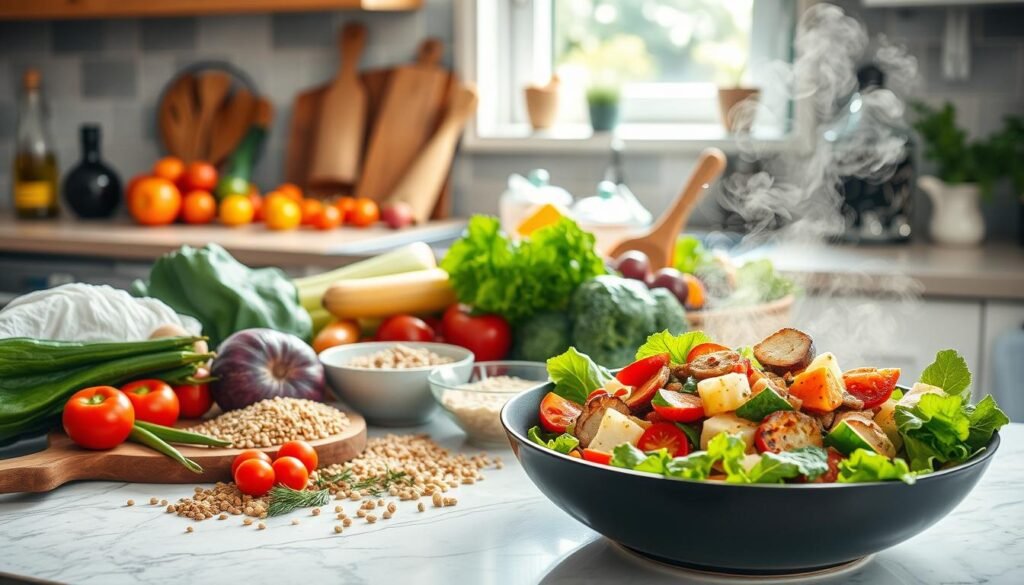
Avoiding frying can make a big difference for those trying to lower cholesterol. Methods like steaming, roasting, or baking keep flavors in without too much fat. Marinating food in healthy oils, like extra-virgin olive oil or canola, adds taste without needing butter. Also, cooking with low-fat or fat-free dairy helps keep your diet nutritious. With these smart cooking methods, your meals can still be delicious and healthy.
Heart-Healthy Cooking Oils
Switching from solid fats to heart-healthy oils is a big step towards better meals. Solid fats, like butter, have lots of saturated fats. These increase cholesterol levels. On the other hand, liquid oils offer beneficial fats that help the heart. It’s important to use the right type and amount of oil. Even healthy fats can lead to extra calories if used too much.
Switching from Solid Fats to Liquid Oils
To lower cholesterol, use heart-healthy oils instead of butter. Here are some good choices:
- Olive oil
- Canola oil
- Avocado oil
- Sunflower oil
These oils have fats that are good for you. They help lower “bad” LDL cholesterol. For example, olive oil is about 78% good fat. It can reduce the chance of heart disease.
Best Oils for Low-Cholesterol Cooking
Consider the fatty acid content and how you’ll use oils in cooking. Here’s a look at several good oils:
| Oil Type | Monounsaturated Fat (%) | Polyunsaturated Fat (%) | Saturated Fat (%) |
|---|---|---|---|
| Olive Oil | 78 | 8 | 14 |
| Canola Oil | 62 | 31 | 7 |
| Avocado Oil | 65 | 18 | 17 |
| Sunflower Oil | 79 | 7 | 14 |
| Flaxseed Oil | 65 | 28 | 7 |
Choosing oils rich in good fats is key for heart health. Studies say these oils can lower “bad” LDL cholesterol. They can also raise “good” HDL cholesterol, fighting heart disease. For instance, using rice bran oil can cut LDL cholesterol by about 7 mg/dl. Picking the right oil and how to cook with it helps make meals both tasty and healthy.
Incorporating More Fish into Your Diet
Eating more fish, especially fatty types with omega-3, is wise for a low-cholesterol diet. These fats are key for heart health. They help lower bad cholesterol and triglycerides.
Benefits of Omega-3 Fatty Acids
Omega-3 fatty acids are very beneficial. Fish like salmon, black cod, and tuna are great for cholesterol. Studies show omega-3s lower LDL cholesterol. This is good for heart health. Experts suggest eating fatty fish twice a week for heart benefits. For more info on fish oil and cholesterol, check this link.
Cooking Methods for Fish
Cooking fish right is key to keeping it healthy. Grill, bake, or broil to save omega-3s and avoid bad fats. Adding veggies and whole grains makes meals even better for your heart. These ways let you enjoy tasty, heart-friendly dishes.
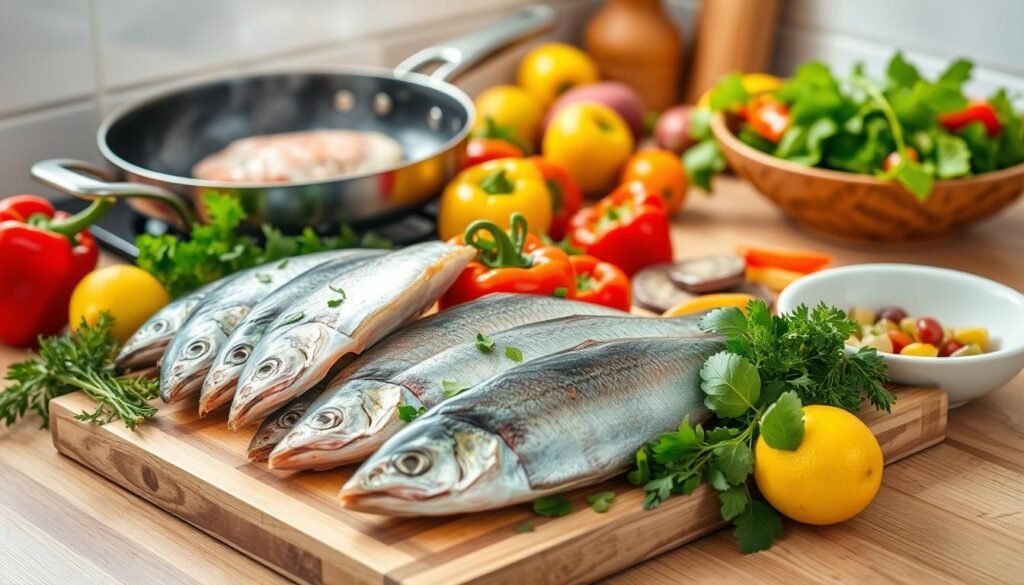
| Fish Type | Omega-3 Content (grams per 100g) | Cholesterol Level (mg per 100g) | Recommended Servings per Week |
|---|---|---|---|
| Salmon | 2.3 | 60 | 2 |
| Black Cod | 2.5 | 62 | 2 |
| Tuna (canned) | 1.0 | 50 | 2 |
Adding more fish to your diet is good for health beyond just cholesterol. With the right fish and cooking methods, it can be a tasty, healthful choice.
Fresh and Colorful Vegetables
Adding veggies to a low-cholesterol diet is smart. They bring in so many flavors and good stuff. Fresh veggies make meals better and they’re great for your heart. Cooking them the right way keeps them tasty and low in fat.
Heart-Healthy Ways to Cook Vegetables
Cooking veggies without adding lots of cholesterol is easy and tasty. Here are some favorite ways:
- Steaming: Keeps the good nutrients and skips the fats.
- Stir-frying with minimal oil: Makes them crunchy and keeps calories low.
- Roasting: Reveals their natural sweetness, for a great flavor.
Flavor Enhancements Without Extra Fat
It’s key to boost flavor without the fat. Try these ideas:
- Play with spices like garlic, basil, and paprika.
- Add a splash of lemon or lime for a fresh taste.
- Try balsamic vinegar or low-sodium soy sauce for more flavor.
With colorful veggies, you can make all sorts of dishes. Like roasted Brussels sprouts or tasty quinoa salads. They show how fresh produce is versatile and good for keeping cholesterol low.
| Recipe | Calories | Fat (g) | Cholesterol (mg) | Fiber (g) |
|---|---|---|---|---|
| Italian Sausage Veggie Skillet | 251 | 6 | 28 | 6 |
| Chickpea & Chipotle Tostadas | 347 | 9 | 5 | 12 |
| Meatless Mushroom Bourguignon | 234 | 6 | 0 | 7 |
| African Peanut Stew | 349 | 9 | 0 | 11 |
Try these recipes for tasty veggie meals that are good for your heart. Adding beans and whole grains makes them even healthier and better tasting.
Whole Grains: A Smart Choice
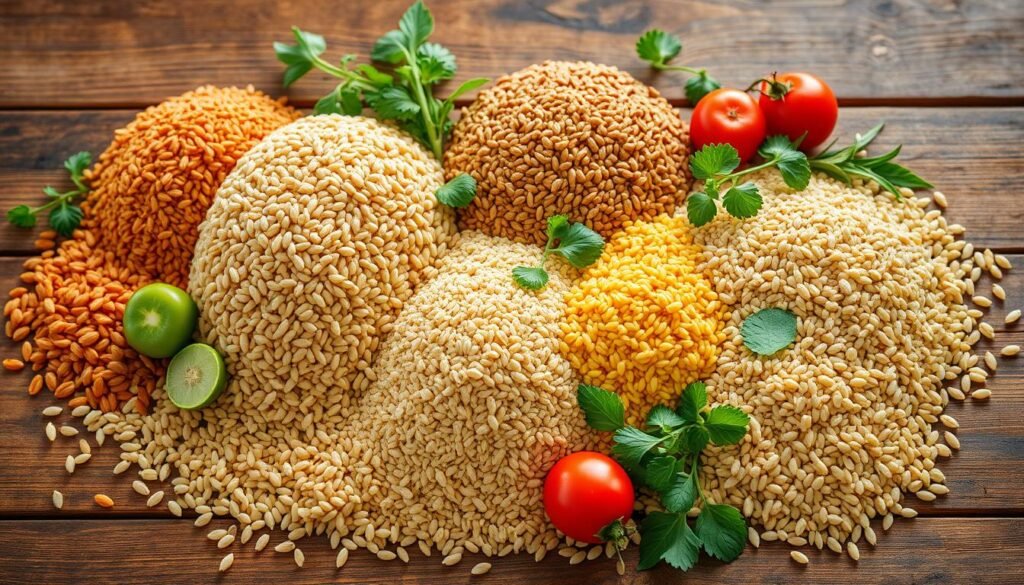
Whole grains are full of health perks, making them an excellent diet choice. The Dietary Guidelines for Americans recommend making at least half our grains whole grains. Sadly, many in the U.S. don’t meet this goal. Whole grains are rich in fiber, vitamins, and minerals. These are key for controlling cholesterol and maintaining heart health.
Benefits of Whole Grains
Whole grains consist of three parts: the bran, germ, and endosperm. Each provides vital nutrients. They offer vitamins like A, B-1, B-2, B-3, B-6, B-9, and E. Minerals include iron, magnesium, phosphorus, and selenium. Eating lots of whole grains can lower the risk of heart issues, stroke, diabetes, and some cancers. Nutritious whole grains to try are:
- Brown rice
- Oatmeal
- Barley
- Quinoa
- Whole-wheat bread
Replacing Refined Grains with Whole Grains
Refined grains lose their germ and bran, along with fiber and nutrients. But enriched grains get some nutrients added back. For healthier options, always look for “whole grain” at the start of ingredients on labels. To add whole grains to meals easily, here are some cooking tips:
- Start with whole-grain cereals each morning.
- Pick whole-grain bread for sandwiches.
- Try whole-wheat pasta over refined types.
- Explore grains like wild rice and barley.
Low-Fat Dairy Substitutes in Cooking
Using low-fat dairy substitutes is a tasty route to healthier eating. These options cut down on saturated fats without losing the flavors and textures we enjoy. They make it easy to eat well and stay healthy, merging delicious meals with good nutrition.
Choosing Low-Fat Dairy Options
Choosing low-fat dairy is good for your heart. The American Heart Association recommends eating less saturated fat. Here are a few good swaps:
- Low-fat milkChoose 1% or skim milk instead of whole milk for a lighter alternative.
- Low-fat cheeses: Pick part-skim mozzarella or ricotta, great for cooking.
- Fat-free yogurt and sour cream: Perfect for recipes or as toppings.
- Evaporated skim milk: Use this instead of heavy cream for lower cholesterol.
Lightening Up Recipes with Dairy Alternatives
Making recipes healthier with low-fat dairy substitutes is simple. Try these tips for lighter dishes:
- Switch to phytosterol-based spreads instead of creams and butter. They’re lower in fat and good for your heart.
- Low-fat Greek yogurt makes dressings and sauces creamy without the extra fat.
- For baking, use two egg whites or 1/4 cup of egg substitute instead of whole eggs to reduce fat.
- Make gravies healthier by using homemade, fat-skimmed versions instead of high-fat ones.
Choosing low-fat dairy lets us enjoy delicious meals while following heart-healthy guidelines. This way, you can lower cholesterol and promote overall health.
Creative Ways to Add Fiber to Your Meals
Adding more fiber to your meals is key for heart health and cholesterol control. It’s about choosing the right foods that lower cholesterol. Foods like beans and legumes are great. They are not only full of protein but also rich in fiber. This makes them perfect for anyone looking to eat healthier.
Beans and Legumes as a Protein Source
Beans and legumes offer a lot of fiber and protein. Think lentils and chickpeas. Just a ½ cup of peas or lentils gives you about 8 grams of fiber. Beans offer about 7 grams. They are full of nutrients yet light on your wallet. This makes them great for adding to all kinds of meals.
- Try tossing black beans or kidney beans into your tacos or salads.
- Mix lentils into soups or stews for something rich and hearty.
- Whip up a chickpea salad with veggies and a simple dressing.
This boosts your daily fiber, vital for both men and women. Women should aim for 25 grams a day, and men need about 30 grams. Mixing up your meals with these ingredients can help you reach these targets.
Increasing Dietary Fiber for Heart Health
More fiber isn’t just good for digestion. It’s also great for managing cholesterol. A meal high in fiber has about 8 grams per serving. Here are some easy ways to eat more fiber:
- Pick whole grains like bulgur wheat or quinoa for 8 to 5 grams of fiber per cup.
- Add fruits like blueberries to your snacks for around 4 grams of fiber per cup.
- Use oats in your morning meal or baking for an extra 4 grams of fiber per ½ cup.
Try snacking on veggies, fruits, or popcorn to meet your fiber goals. Each snack should aim for 3-4 grams of fiber. Need more tips on adding fiber to your diet? Check out this helpful guide. By following these tips, you can boost your nutrients and enjoy tasty meals.
Conclusion
It’s vital to manage cholesterol levels to keep your heart healthy. High LDL cholesterol ups heart disease risk. It’s a top health issue here. Low-cholesterol cooking means knowing how foods affect you and picking the right ingredients. Plus, it involves heart-healthy cooking ways.
Eating heart-healthy recipes daily helps improve heart wellness and enjoy tasty meals. Fruits and veggies are key, aim for 7-8 servings daily. They’ve got soluble fiber and nutrients that lower bad cholesterol. Adding healthy snacks like nuts or seeds to your diet can cut the risk of heart disease.
Choosing the right ways to cook, such as grilling, baking, or using olive oil for sautéing, is important for cholesterol management. Regular exercise and following low-cholesterol cooking tips can boost heart health. A balanced approach—diet, exercise, and healthy habits—leads to a healthier lifestyle and stronger heart.