Did you know about 80% of our health comes from non-clinical factors? This shows how vital community health programs are. These initiatives tackle major health concerns and boost overall well-being. Thanks to the Affordable Care Act, nonprofit hospitals must help their communities to keep their tax-exempt status. This law highlights how crucial these programs are for public health.
This guide aims to show you how to get involved in community health efforts in a meaningful way. The World Health Organization says working together is key to promoting health. By exploring community health, you’ll learn how to make a difference in your community’s health.
Key Takeaways
- Community health initiatives significantly impact overall public health.
- Engaging in these programs fosters collective responsibility and participation.
- Factors beyond clinical care play a larger role in individual health.
- Nonprofit hospitals are required to support community benefits as per regulations.
- Understanding local needs is essential for effective health programs.
Introduction to Community Health Initiatives
Community health initiatives are key in improving the well-being of locals. They tackle health gaps and build healthier places to live. With health promotion activities, these programs help people get involved in health matters. The CDC launched efforts like Communities Putting Prevention to Work (CPPW) and Racial and Ethnic Approaches to Community Health (REACH) in 2011. These aim to guide and boost community health efforts.
Historical studies from the 1970s, such as the Stanford Three Community Study, show the value of community health initiatives. They demonstrate that organized methods can better health results. Groups like Kaiser Permanente and the Georgia Department of Community Health now focus more on fairness. They make sure that those in need get important health services.
Having everyone involved is crucial for health programs to work well. The Division of Community Health pushes for openness, trust, and shared duty. Reviewing how we connect with communities can make our efforts fairer. This lets us create programs that truly meet community needs.
The Community Health Needs Assessment (CHNA) motivates communities to pinpoint their health goals. Using varied data on living conditions, transport, and medical access helps us grasp community challenges. This leads to better health promotion activities. When local people have a say, they feel a stronger link to their health progress.
Understanding the Importance of Community Engagement
The importance of community engagement is huge in health projects. It builds strong bonds between community folks and health workers. These ties lead to better health results. Getting involved gives people a feeling they own the project. It makes everyone want to work together on health issues.
Getting people involved can really change things. It can change how people act, the environment, and even policies. This boost in health awareness comes from including leaders and community figures, especially from places with less money. When people help decide what’s important, the choices made and programs started work better.
A big study showed that in places with conflicts, involving the community can change health projects a lot. It showed that health programs do much better when they listen to the people. This exchange builds trust and makes sure the health services meet the community’s needs.
Experts say we need to really focus on the community’s role. Opening up spaces for their views helps get services used more. When people feel heard, they’re more likely to join health efforts. This improves health knowledge and makes the community stronger.
To wrap up, involving the community in health projects is key. Understanding what the community needs and engaging them properly leads to lasting health benefits. These benefits truly reflect what the community wants. You can find more details on handling obesity and cholesterol here.
Benefits of Engaging in Community Health Initiatives
Being part of community health initiatives brings many benefits. It improves health and lets communities manage their health better. People can access more care and vital resources by getting involved.
Community participation increases social support, which helps face health problems together. In the US, six out of ten people have chronic conditions. This shows how crucial community health efforts are.
Community health initiatives also boost health knowledge. They focus on preventing illnesses and managing chronic diseases. The Health Resources and Services Administration (HRSA) helped over 30 million people in need get primary care. This shows how important it is to make health services fair for everyone.
| Benefit | Impact |
|---|---|
| Improved Health Outcomes | Reduction in chronic disease prevalence |
| Empowerment | Increased community participation and self-management |
| Access to Care | Expanded services in rural and underserved areas |
| Education | Enhanced awareness of health issues and preventative measures |
| Social Capital | Strengthened community bonds and support systems |
By making the most of healthcare resources, community programs make care more sustainable and cost-effective. HRSA shows how giving services and education makes a real difference. It improves public health and lightens the healthcare system’s load.
Types of Community Health Programs
Community health programs are diverse. They reflect the various needs and goals of different communities. Knowing about these programs helps us tailor them to address specific health issues. Mainly, we can group these programs into three types:
- Preventive Programs: These aim to prevent illnesses and promote health. Examples include immunization campaigns and teaching about good nutrition.
- Supportive Programs: These help vulnerable groups with services like care management and support for families with young kids.
- Educational Initiatives: These are about spreading knowledge on health topics, from quitting smoking to preventing injuries.
Making wellness programs fit the needs of specific groups boosts engagement. For example, older adults might get training on preventing falls, whereas youth programs could tackle preventing drug use. The Engaging in Community Health Initiatives showcase that successful programs in places like metro Denver and southern Colorado have made an impact.
| Type of Program | Example | Target Audience |
|---|---|---|
| Preventive | Immunization Campaigns | Children and Families |
| Supportive | Postpartum Nurse Home Visits | New Mothers |
| Educational | Smoking Cessation Workshops | Adults |
Using these community health programs wisely can greatly improve public health. It is not just about meeting health goals for individuals. This effort also strengthens the entire community.
Health Promotion Activities for Community Well-Being
Community health promotion activities are vital for improving residents’ well-being. Through promoting community health, things like workshops, health fairs, and fitness programs both raise awareness and motivate positive lifestyle changes. This helps everyone live healthier lives.
Residents in Action is a great example from Jackson, Michigan. This nonprofit helps unhoused people get medical care and shelter. It shows how specific activities can meet community needs.
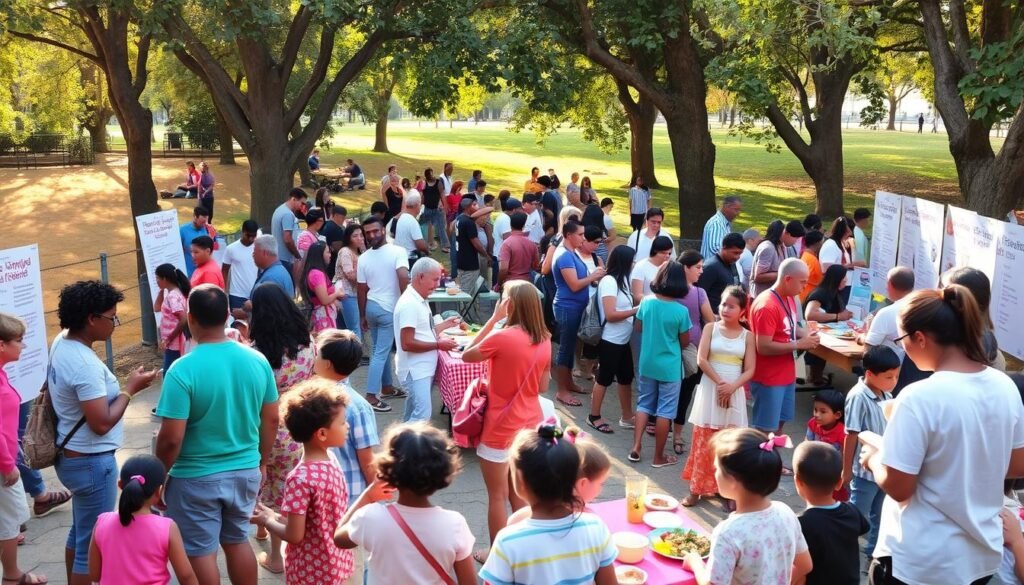
In Memphis, Tennessee, the Shelby County Health Department held a health fair. It offered free HIV tests, shots, and advice on quitting tobacco. Events like this community health event make important health services more available. They also help bridge health gap differences.
- Health fairs promoting screenings and preventive services
- Workshops on healthy living and nutrition
- Fitness programs encouraging physical activity
- Community gardens supporting food security and nutrition
Focusing on health promotion activities brings many benefits. They can boost health habits, improve how well people get better, and expand access to care. Working together, being culturally smart, and sticking to lasting plans creates a strong health vibe.
Looking for more info on community health? Check out promoting community health for extra resources.
Encouraging everyone to join in these activities builds toughness. It gives people the power to manage their own health. Getting to better health and happiness means all of us helping each other and always staying supportive.
Engaging in Community Health Initiatives
Community engagement is key to effective health initiatives. It focuses on teaming up and getting people involved in their health. By playing an active part, individuals can take control of their health. This improves overall community health awareness as people learn more about health issues that affect them.
Defining Community Engagement
Community engagement means getting people involved in health decisions. It’s about understanding what each community needs. People from different backgrounds offer insight, promoting health equality and inclusive public health. It’s vital to connect with those experiencing health gaps to achieve real results.
The Role of Stakeholders
Stakeholders are crucial in promoting community health. Health experts, organizations, and leaders work together to meet health needs. Their collaboration makes sure community needs are part of health programs, leading to better health results. Below is a table showing stakeholders and their roles.
| Stakeholder | Role in Community Engagement |
|---|---|
| Health Professionals | Provide expertise and resources, guiding the community in health literacy. |
| Local Organizations | Facilitate connections between community members and health services. |
| Community Leaders | Champion health initiatives and inspire participation among residents. |
| Policy Makers | Influence funding and resources dedicated to health engagement projects. |
| Community Members | Share experiences and participate in shaping programs that address their needs. |
Steps for Successful Community Outreach Programs
Creating effective community outreach starts with good planning. It’s about knowing what the community needs. Programs must aim to solve real health worries and have the right support to succeed.
Assessing Community Needs
First, we need to know what the community needs. This means talking to them through surveys and meetings. It helps to find out what health issues matter most and who we need to focus on.
Mobilizing Resources Effectively
Getting the right resources is key for outreach programs. This includes working with local groups, finding money, and teaming up with health experts. By involving community leaders, we can make our efforts stronger and more inclusive.
| Step | Description | Example |
|---|---|---|
| Needs Assessment | Conduct surveys to understand community health priorities. | Civic engagement activities to assess local healthcare needs. |
| Identifying Issues | Pinpoint specific health issues affecting the community. | Analyzing data on chronic diseases prevalent in the area. |
| Setting Goals | Develop measurable goals that target identified needs. | Creating programs aimed at reducing obesity rates. |
| Building Coalitions | Collaborate with local nonprofits and healthcare providers. | Partnering with Planned Parenthood to provide reproductive health education. |
Following these steps leads to impactful health initiatives. With careful assessment and the right resources, we can meet the community’s needs. This way, we improve public health outcomes together.
Implementing Health Education Initiatives
Health education initiatives help improve community health. They use tailored strategies to increase knowledge and skills about health. This makes sure the content fits the audience, making it more effective.
Programs like the SLV N.E.E.D. focus on issues such as opioid abuse. They provide important sessions. Community health workers play a big role in these programs. They help make resources available and effective.
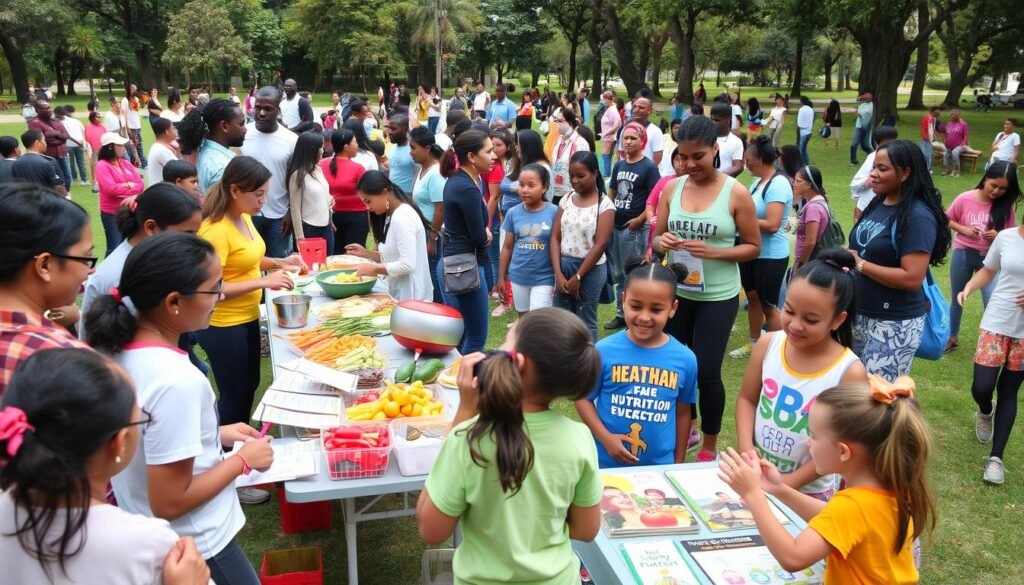
Health education needs to fit the culture of the community. This approach makes communities stronger and more inclusive. It involves everyone—individuals, the whole community, and larger populations.
The CDC lists traits of a good health education curriculum. It gives organizations a guide to make a difference. The Society for Public Health Education also supports these efforts.
County Health Rankings & Roadmaps highlights methods that work for better health behaviors. The National Institute of Health’s CEAL fights disparities, important during COVID-19.
Community involvement is key for health equality. It relies on fairness and strong partnerships. Groups like the National Academy of Medicine help by fostering teamwork.
Learning about community engagement helps fight health inequalities. It boosts community-led efforts. By working with academic centers, health education grows stronger. This empowers people and leads to a healthier society.
Organizing Community Health Events
Organizing community health events is key to improving health and increasing awareness. They teach people about health issues and promote better lifestyles. Planning these events well and getting the community involved are important steps.
To plan, first identify the health needs in your community. Look at past health programs for guidance. Issues like chronic disease, substance abuse, and mental health are common topics. Include community members in planning to ensure the events truly help.
Getting the word out is crucial. Good marketing can boost attendance. Use local media, social media, and community bulletins to inform people.
The events should be engaging with workshops, screenings, and booths. Working with health experts and local groups makes your event trusted and effective.
After the event, see how it went by getting feedback. This helps improve future health events. By understanding what worked and what didn’t, organizers can keep making health promotion better.
Evaluating the Impact of Community Wellness Initiatives
Looking at community wellness initiatives needs a detailed plan. It should cover counting data and talking to people. Collecting numbers helps us understand if health programs work well. Community health awareness is vital. It helps people support local health efforts.
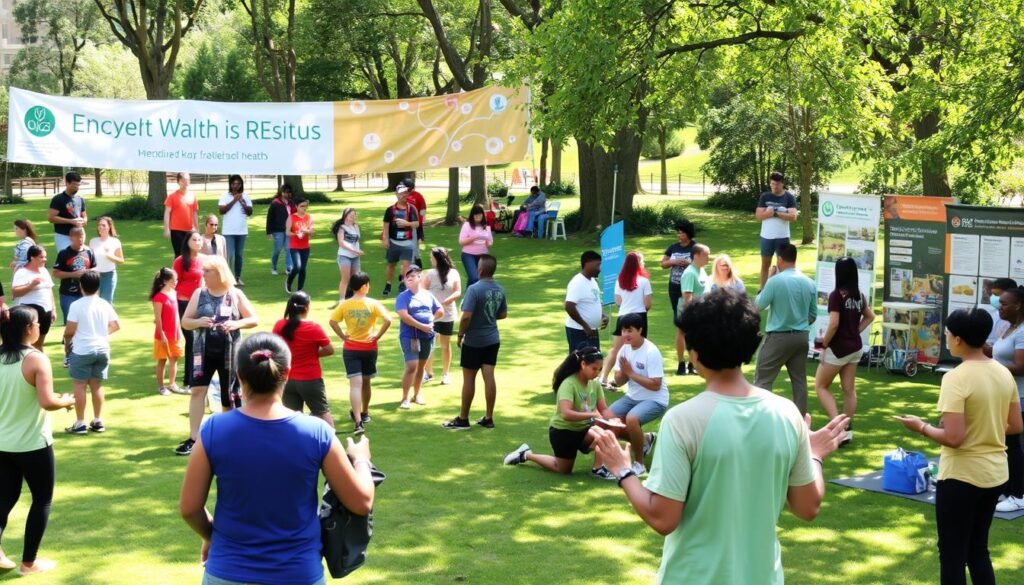
To study the effect of health programs, experts use surveys and group discussions. They collect opinions and facts. This helps figure out the programs’ impact on issues like obesity and smoking. Research proves these programs boost community involvement and health.
In recent years, the Health Fund has put almost $9 million into community health. This money supports projects improving health access for everyone. By focusing on impact, they make local health programs stronger.
Creating a strong review plan helps health agencies understand community projects better. Such plans offer useful advice and tools for easier analysis. Learning the hurdles and methods in reviewing wellness programs prepares for future betterment. It keeps programs up to date and working well.
Conclusion
Being active in community health projects is key to creating long-term change in our areas. This article showed how important it is to know about community health. It also showed the benefits of getting involved. When people work together in health programs, they make their lives and their community better.
Studies show that efforts reaching individuals, families, and social circles are really effective. These programs need time to work, often more than 3 to 5 years. But, they make a big difference, especially for those at greatest risk. Health projects work best when they get everyone involved, from single persons to whole communities.
We should all join local health initiatives. Doing this raises health awareness and empowers our communities through special programs. By working together, we can make our neighborhoods healthier and safer. We all have the power to bring positive change and improve our collective well-being.