About 71 million Americans are dealing with high cholesterol. That’s a big number, showing we need healthier diets. Luckily, going for low-cholesterol meals doesn’t mean we lose out on flavor. In this article, we’ll explore tasty recipes for low-cholesterol eating. These recipes are good for the heart and will also delight your taste buds. We’ll cover everything from satisfying main dishes to quick snacks. These meals use healthy ingredients to lower bad LDL cholesterol and boost overall health.
Key Takeaways
- Low-cholesterol meals can be both tasty and nutritious.
- Incorporating ingredients like garlic, broccoli, and salmon can help reduce LDL cholesterol.
- Many low-fat cooking ideas are adaptable for various meal preferences.
- Meal planning with heart-healthy ingredients promotes overall wellness.
- Increased fiber intake through plant-based foods can assist in cholesterol management.
Understanding Low Cholesterol Diets
Learning about low-cholesterol diets is key to better heart health and well-being. It’s important to know the types of cholesterol and how they impact health. Cholesterol helps build cells and hormones. It’s vital to understand the role of diet in managing cholesterol levels.
What is Cholesterol and Why It Matters
There are two main types of cholesterol: LDL and HDL. LDL, or “bad” cholesterol, can clog arteries and increase heart disease risk. HDL, or “good” cholesterol, helps remove extra cholesterol from the blood. Knowing about these types helps in planning a low-cholesterol diet.
How Diet Affects Cholesterol Levels
Diet plays a big role in cholesterol levels. Eating too much saturated and trans fats raises LDL cholesterol. It’s better to avoid foods like butter and use healthier oils instead. Eating lean meats, fruits, vegetables, and whole grains helps lower cholesterol.
To manage cholesterol, here are some tips:
- Limit egg yolks to three to four per week.
- Choose nonfat or low-fat dairy options.
- Avoid high-fat snacks, picking low-fat ones instead.
- Eat foods high in soluble fiber, between 10-25 grams daily.
| Food Type | Recommended Choices | Foods to Limit |
|---|---|---|
| Fats | Olive oil, canola oil | Butter, palm oil, lard |
| Meats | Chicken, turkey, lean cuts | Sausages, fatty cuts of beef |
| Dairy | Low-fat yogurt, nonfat milk | Whole-fat cheeses |
| Snacks | Fresh fruits, raw veggies | Granola bars, cookies |
Benefits of Eating Low-Cholesterol Meals
Eating meals low in cholesterol is very good for your health. It helps your heart by lowering blood pressure and cholesterol, cutting heart disease risk. Making good food choices is key to these benefits.
Heart Health and Blood Pressure
Low-cholesterol meals are vital for a healthy heart. Food affects your cholesterol levels. In fact, dietary cholesterol, found in animal products, impacts 20% to 30% of your bloodstream’s cholesterol. Eating at least 8 ounces of fish a week and cutting down saturated fats promotes heart health.
Also, eating more foods with soluble fiber, like fruits and legumes, helps lower bad cholesterol. This is crucial for your cardiovascular health.
Weight Management and Overall Wellness
Low-cholesterol meals also help manage your weight. Choosing foods full of nutrients, like whole grains and avocados, keeps you full. This helps with losing and maintaining weight. Getting enough fiber daily boosts fullness and leads to healthier eating habits.
Such a diet improves overall wellness too. It ensures a healthy, balanced lifestyle.
Essential Ingredients for Low-Cholesterol Cooking
Preparing food with low-cholesterol ingredients is key for heart health. Picking the right items helps cut down LDL cholesterol and boosts meal nutrition. Adding lean proteins and healthy fats changes daily eating for the better.
Lean Proteins: Best Choices
For lean proteins, chicken, turkey, and various fish are great. They lower saturated fat intake, as recommended by the American Heart Association. Seafood is full of omega-3 fatty acids, good for the heart. Eating fish at least 8 ounces weekly is advised to boost heart health.
Healthy Fats and Fiber-Rich Foods
Using healthy fats over solid ones changes meals. Olive, canola, and soybean oils are better than butter or lard. This switch is vital for managing cholesterol. Also, foods high in fiber like fruits, veggies, and whole grains aid digestion and lower cholesterol. Including these in your diet prevents bad cholesterol buildup and enhances health.
Recipes for Low-Cholesterol Meals
Eating right is simple with tasty, low-cholesterol meal ideas. These dishes use healthy foods and bring lots of flavors. They have fish, lentils, avocados, and whole grains. This mix makes every meal both healthy and filling.
Delicious and Nutritious Ideas for Each Meal
Heart-healthy ingredients are key in each recipe. They use salmon, tuna, chickpeas, and quinoa. You’ll find dishes like vegetarian sliders and meatless soups. They offer a fresh twist on classic foods. Fresh veggies, olive oil, and whole grains are mainstays, reflecting the Mediterranean diet’s benefits.
- Grilled salmon with a lemon-garlic vinaigrette
- Lentil soup enriched with kale and sweet potatoes
- Chickpea and quinoa salad topped with miso dressing
Healthy cooking methods like grilling and making salads are used. This way, staying on a low-cholesterol diet is both easy and tasty.
Easy Meal Prep for Busy Lifestyles
Meal prep is a lifesaver for busy people. It’s smart to cook big batches for leftovers. Adding superfoods like cherries and sweet potatoes boosts nutritional value. Below are some quick meal prep ideas:
- Prepare one-pot pasta dishes with veggies and proteins like shrimp or black beans.
- Create sheet-pan dinners for easy roasting of veggies and proteins together.
- Portion out snacks like fruits, plain yogurt, and veggie sticks with hummus.
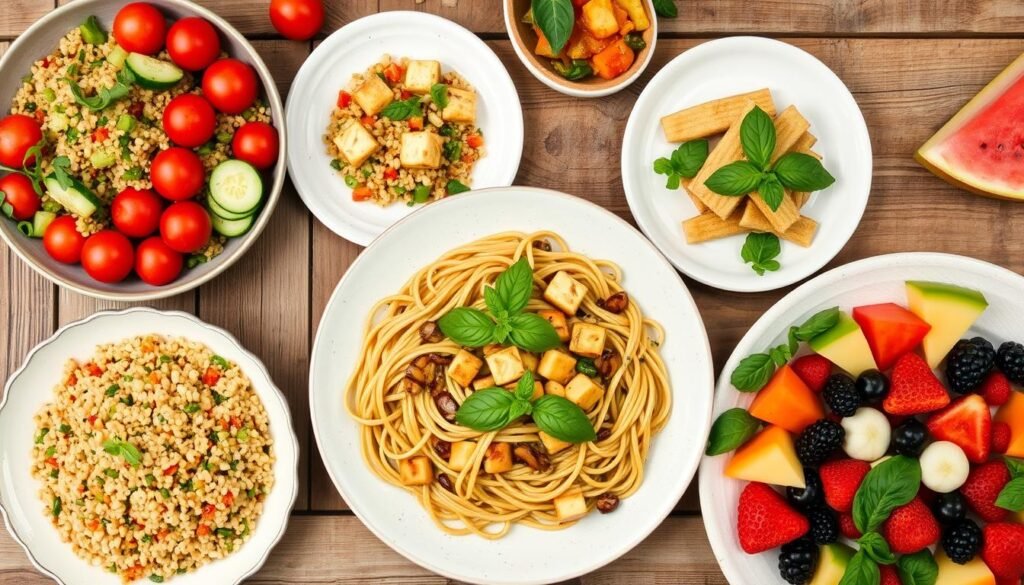
Planning meals and using specific cooking methods simplifies choosing healthy foods. By adopting easy meal prep practices, keeping a heart-healthy diet becomes effortless.
Heart-Healthy Breakfast Options
Starting your day with a heart-healthy breakfast can make all the difference. Foods like overnight oats and avocado toast are not only nutritious but also help maintain low cholesterol. These options are key to your heart’s wellness.
Overnight Oats with Fresh Fruits
Overnight oats are a tasty way to eat more whole grains. Mix rolled oats, chia seeds, and milk to create a hearty base. Top it off with fresh fruits like berries or figs for extra flavor and vitamins.
A bowl of overnight peach oatmeal carries only 163 calories. It’s packed with nutrients that kickstart your day while keeping cholesterol in check.
Avocado Toast with Whole-Grain Bread
Avocado toast goes beyond being just a trend. It’s a nutritious choice for the morning. Using whole-grain bread and creamy avocado provides healthy fats and tastes amazing.
Try adding toppings such as sliced tomatoes or pine nuts. These add crunch and flavor, making the meal ideal for sticking to a low-cholesterol diet.
Flavorful Lunch Recipes
Lunch should be exciting and good for you. There are many low-cholesterol lunch ideas that are both delicious and healthy. Below, find recipes that are great for the heart and taste amazing. They use ingredients full of fiber, protein, and healthy fats. These make them top choices for a nutritious lunch.
Quinoa, Avocado & Chickpea Salad
This salad mixes protein-packed quinoa with creamy avocado and nutrient-packed chickpeas. The flavors blend well, creating a tasty and satisfying dish. It has healthy fats from avocados and lots of fiber from quinoa and chickpeas, about 6 grams per serving. Olive oil in the dressing makes this meal even better for your heart.
Vegetarian Lentil Soup
A warm bowl of vegetarian lentil soup is perfect for lunch. This soup is full of fiber and easy to make ahead of time. You can freeze it and warm it up later. It has lots of veggies and lentils, which are great for the heart. Each serving is very nutritious and helps keep cholesterol low. That makes it an excellent choice for those watching their cholesterol.
Chickpea and Spinach Stir-Fry
This stir-fry has fresh spinach and filling chickpeas for a quick meal. Cooking with a bit of healthy oil keeps all the good stuff in the spinach. It also stays low in bad fats. Each serving has over 6 grams of fiber, making it a smart pick for a low-cholesterol lunch.
| Recipe | Main Ingredients | Fiber Content (grams) | Main Health Benefit |
|---|---|---|---|
| Quinoa, Avocado & Chickpea Salad | Quinoa, Avocado, Chickpeas | 6 | Rich in healthy fats |
| Vegetarian Lentil Soup | Lentils, Carrots, Celery | 8 | High in fiber |
| Chickpea and Spinach Stir-Fry | Chickpeas, Spinach, Olive Oil | 6 | Supports heart health |
Adding these tasty recipes to your lunch can help keep cholesterol low. They offer a range of flavors and health benefits. Try them and enjoy the variety and nutritional value they bring to your meals.
Delectable Dinner Ideas
Finding delicious dinner recipes good for your heart can make eating fun. Low-cholesterol dinner ideas are both tasty and healthy. They use fresh ingredients that are simple to prepare and delicious. Below are two great meals that are good for your heart and taste amazing.
Grilled Lemon-Herb Salmon with Veggies
This dish is great for the heart because of the omega-3 in salmon. It comes with a bunch of colorful veggies for extra flavor and nutrients. Eating grilled lemon-herb salmon gives you protein and antioxidants for health. Find more tasty dinner recipes with salmon and veggies that help keep cholesterol low.
Stuffed Bell Peppers with Brown Rice and Beans
Stuffed bell peppers are full of nutritious brown rice and beans. They’re low in cholesterol but high in fiber and plant proteins. Every bite is delicious and good for your heart. You can add different spices and herbs to make them even tastier. These fit well within a heart-healthy diet.
Hearty Snacks for a Low-Cholesterol Diet
Snacking is great and helpful on a low-cholesterol diet. Eating fiber-rich snacks every day can keep energy up and cholesterol down. These snack ideas are tasty, easy to make, and good for you.
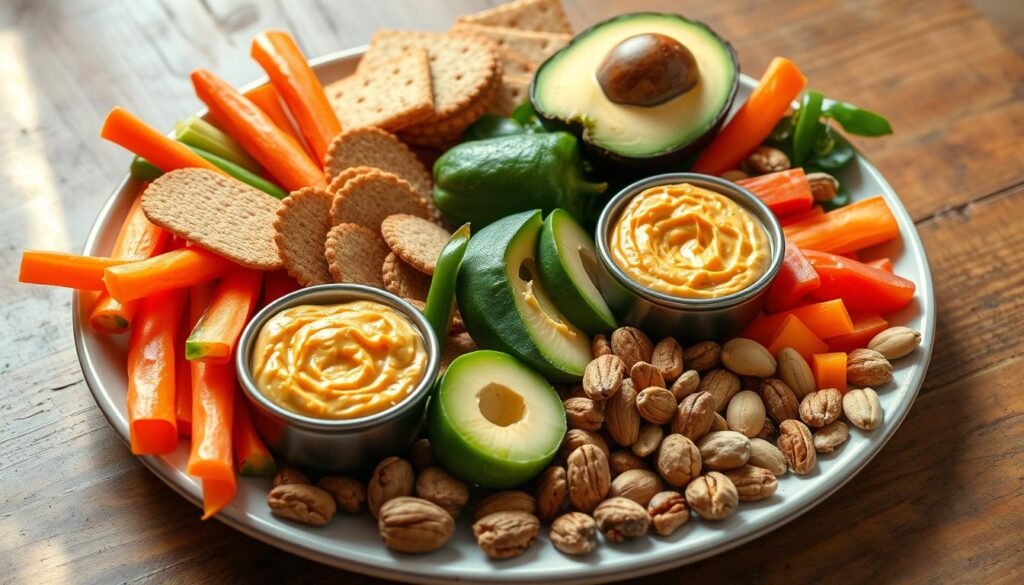
Raw Veggies with Hummus
Raw veggies and hummus are perfect together for a fast snack. They fill you up and have lots of fiber. Hummus, mainly from chickpeas, adds soluble fiber which helps lower cholesterol. Try dipping carrots, bell peppers, or cucumber sticks in hummus for a crunchy, healthful snack.
Homemade Energy Bites with Nuts and Seeds
Making homemade energy bites with nuts and seeds is a top choice for low-cholesterol snacking. These bites have healthy fats, protein from plants, and lots of fiber from ingredients like almonds, chia seeds, and oats. They’re simple to make and keep you energized all day. For more snack ideas, check out this collection of healthy snacks.
Low-Fat Cooking Techniques
Low-fat cooking techniques can make meals both tasty and healthy. Methods like steaming and grilling help keep the nutrients in your food while cutting down on fat. These approaches are great for anyone looking to eat better and keep their cholesterol in check.
Steaming and Grilling for Healthier Meals
Steaming and grilling are great ways to cook food without adding fat. Steaming keeps the vitamins and minerals in your veggies. Grilling lets the fat in meat drip away, leaving you with a leaner meal. Dishes like Grilled Pineapple Pork & Vegetables prove that healthy cooking can also be delicious.
Using Herbs and Spices Instead of Fat
Herbs and spices can add a lot of flavor without fat. They can turn simple meals into exciting dishes. For example, Chickpea Curry and African Peanut Stew become tastier with the right seasonings. Choosing low-fat options like fat-free sour cream or nonfat yogurt helps too. They provide the creamy texture you love without the bad fats.
Comparison of Cooking Techniques
| Cooking Technique | Benefits | Example Dishes |
|---|---|---|
| Steaming | Retains nutrients, no added fat | Steamed broccoli, vegetable medleys |
| Grilling | Fat drips away, enhances flavor | Grilled chicken, fish, and vegetables |
| Using Herbs/Spices | Adds flavor without calories | Herb-seasoned salads, spiced soups |
Implementing a Low-Cholesterol Meal Plan
Starting a low-cholesterol meal plan means choosing a balanced diet with whole, nutritious foods. It’s about planning weekly meals that are good for your heart. This way, you can enjoy tasty dishes that are also healthy.
Creating a Balanced Weekly Menu
Creating a weekly menu helps with meal planning. It should include fruits, veggies, whole grains, and lean protein. This helps make meals that are both delicious and good for your health. For example, a balanced weekly menu could look like this:
| Day | Breakfast | Lunch | Dinner |
|---|---|---|---|
| Monday | Overnight oats with berries | Quinoa salad with chickpeas | Grilled lemon-herb salmon with veggies |
| Tuesday | Smoothie with spinach and banana | Vegetarian lentil soup | Stuffed bell peppers with brown rice |
| Wednesday | Avocado toast on whole-grain bread | Raw veggies with hummus | Chicken piccata meatballs with zucchini noodles |
| Thursday | Chia seed pudding with almond milk | Mushroom Bourguignon over brown rice | Chipotle ranch chicken tacos |
| Friday | Fruit salad with nuts | Cabbage slaw with grilled shrimp | Vegetarian curry with brown rice |
Tips for Grocery Shopping Mindfully
Smart grocery shopping is key for a low-cholesterol diet. Here are some tips to help:
- Stay around the store’s edges to find fresh produce, lean proteins, and whole grains.
- Check nutrition labels to steer clear of saturated and trans fats.
- Skip processed foods that might have hidden cholesterol.
- Plan your meals and make a list before shopping to avoid impulsive buys.
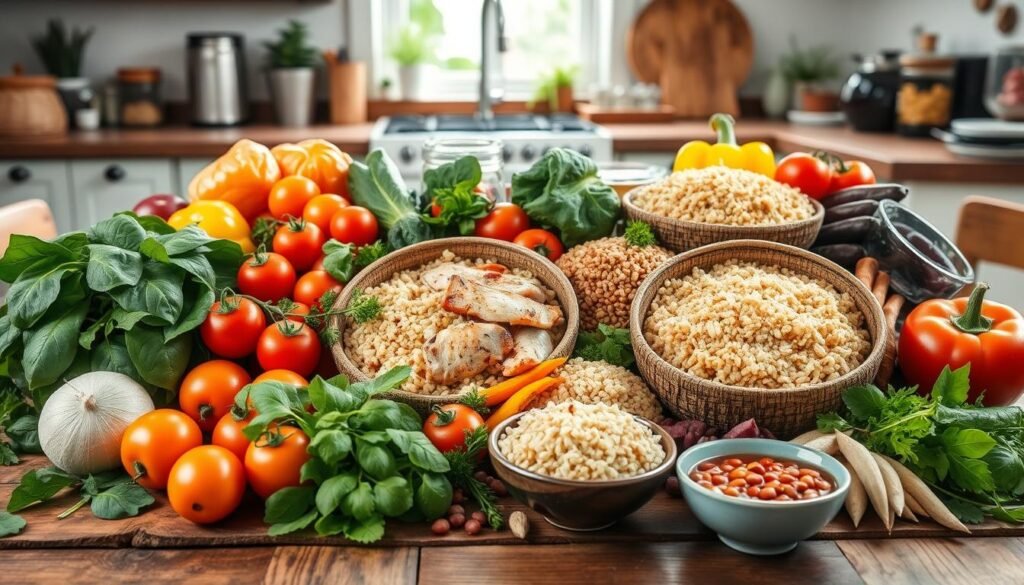
These tips, along with a well-planned meal schedule, can boost heart health. They help keep nutrition balanced. There are resources that offer heart-healthy recipes for home cooking.
Find tasty, low-cholesterol dinner recipes here. Knowing what foods to avoid is also crucial. For advice, check out this guide. A good diet is essential for a healthy heart and overall wellness.
Coping with Cravings and Challenges
Food cravings are something almost everyone deals with. In fact, over 90% of people across the globe experience them. When you’re trying to eat less cholesterol, managing these cravings becomes a big challenge. Finding healthy ingredients to replace the less nutritious ones is crucial. This way, you can still enjoy your favorite meals but make them better for you.
Finding Substitute Ingredients
Making smart swaps with ingredients is a great way to stick to a low-cholesterol diet. Here are a few switches that can make a difference:
- Use unsweetened applesauce instead of oil when you bake. It keeps things moist without adding fat.
- Replace cream with Greek yogurt to lower saturated fat while still keeping that creamy texture.
- Opt for whole grains like quinoa or brown rice. Swap out white rice or pasta to boost your fiber intake.
- Choose avocados or nut butters over butter to get your fill of healthy fats.
Staying Motivated on Your Low-Cholesterol Journey
Keeping up your motivation might feel tough sometimes. Studies show that being flexible with what you eat can actually help you lose weight better than strict diets. Check out these tips:
- Set goals that you can actually reach to feel good about your progress.
- Find a group of people on the same path. Their support and stories can really help.
- Keep a log of what you eat and when you crave certain foods. This helps you understand your habits better.
- Try out new recipes to keep your meals interesting and fun.
Conclusion
Eating meals low in cholesterol is key for a healthy heart and body. Knowing how diet affects cholesterol helps us choose better. With the right strategies, like picking healthy foods and cooking methods, we can live heart-smart.
Having too much cholesterol can lead to heart problems. So, it’s important to eat foods low in bad fats and sugar. Try tasty recipes like avocado dip and steamed veggies. These foods are good for you. They have lots of fiber, lean protein, and good fats.
Making smart food choices is the first step to a heart-healthy life. A balanced diet with lots of fruits, vegetables, and good fats helps a lot. This way, we keep our cholesterol in check and enjoy tasty, healthy meals.