About 86 million adults in the US had high cholesterol in 2020. This shows a big need for eating better to manage cholesterol. Eating seasonal foods can make managing cholesterol delicious. Many heart-healthy foods are available all year. They can improve your health and add great taste to your meals.
Studies show that some foods can lower bad cholesterol and make your heart healthier. Eating an avocado every day can cut down cholesterol, a 2015 study found. Also, eating nuts daily can lower the risk of heart problems by 30%. Choosing the best seasonal foods can lead you to better heart health and wellness.
Looking at seasonal ingredients, from green veggies to colorful fruits and whole grains, helps you make good choices. These choices are good for your heart and taste great too. To learn more about how foods help with cholesterol, read this article on foods that lower cholesterol.
Key Takeaways
- Incorporating seasonal foods can significantly impact cholesterol management.
- Foods like avocados and nuts are proven to lower LDL cholesterol levels.
- Balancing diet with whole grains aids in reducing the risk of heart disease.
- Regularly consuming fruits and vegetables is essential for lowering triglycerides.
- Making smart switches in protein sources can help lower cholesterol effectively.
Understanding Cholesterol and Its Impact on Health
Cholesterol is like a waxy fat in our body. It’s needed to build cells and make hormones. Most of it is made by the liver, but we also get some from food. Knowing about cholesterol and its effects is crucial. This is because too much bad cholesterol, or LDL, can cause heart problems and strokes.
We need to know about the different kinds of cholesterol. HDL is the “good” kind. It helps get rid of extra cholesterol. On the other hand, LDL and VLDL can cause plaque to build up in our arteries. This could lead to heart issues.
Triglycerides are fats in our blood that can go up due to being overweight, having uncontrolled Type 2 diabetes, or eating too many calories. Many things can make cholesterol levels rise, not just diet. These include your genes, how old you are, certain medicines, and lifestyle habits like not moving much or smoking. Almost half of Americans need medication because their cholesterol is too high. Making smart food choices can really help.
Eating foods with plant sterols and less saturated fat can help manage cholesterol. Getting enough soluble fiber from fruits, vegetables, beans, lentils, and whole grains can lower LDL. Good ways to add more fiber include eating more whole grains and a variety of fruits and vegetables, and drinking plenty of water.
Holiday times can make LDL levels jump. This often goes along with gaining weight and a higher chance of heart attacks. This season is a good time to check on our health habits. By knowing how cholesterol works and affects us, we can take steps to manage it well and improve our overall health.
| Cholesterol Type | Description | Health Implications |
|---|---|---|
| HDL | “Good” cholesterol that helps remove excess cholesterol | Reduces risk of heart disease |
| LDL | “Bad” cholesterol linked to plaque buildup | Increases risk of heart attack and stroke |
| VLDL | Contributes to plaque formation in arteries | Associated with heart diseases |
| Triglycerides | Fats in the blood influenced by various factors | High levels can lead to health complications |
Types of Cholesterol: LDL vs. HDL
It’s crucial to know the types of cholesterol for heart health. There are two main kinds: LDL, the “bad” cholesterol, and HDL, the “good” one. High levels of LDL can block arteries, which might lead to heart problems.
HDL cholesterol works like a bodyguard. It moves cholesterol to the liver to get rid of it. Keeping a balance between LDL and HDL is key for cholesterol control. Changing what you eat can really help maintain your health.
To keep cholesterol in check, it’s advised to eat less saturated fat, no more than 6% of your daily calories. Eating omega-3 rich foods, like fish and nuts, can lower LDL. Adding fruits and whole grains that are high in fiber can block cholesterol too.
Drinking green tea could also cut down LDL and total cholesterol. Eating 25 grams of soy protein daily, from foods like tofu, is beneficial. Getting advice from doctors and changing your diet is a good plan for better heart health. For more tips on cholesterol, check out CDC’s cholesterol prevention resources.
| Cholesterol Type | Effects on Health | Recommendations |
|---|---|---|
| LDL Cholesterol | Contributes to plaque buildup in arteries | Limit saturated fats, increase omega-3 intake |
| HDL Cholesterol | Helps transport cholesterol to the liver for elimination | Incorporate healthy fats, regular physical activity |
Seasonal Foods for Cholesterol Management
Eating seasonal foods is great for heart health. You get food that tastes better and is more nutritious. Plus, these foods can help manage your cholesterol. By choosing fresh, local goods, you’re getting both great flavor and health perks. Studies show that certain seasonal foods are really good for your heart. This makes seasonal eating a smart choice for better cholesterol.
Benefits of Seasonal Eating for Heart Health
Adding seasonal foods to your diet is good for your heart. When fruits and veggies are in season, they pack more nutrients. Take apricots and raspberries, for example. They’re full of fiber and antioxidants, which are key for a heart-healthy diet. Eating these foods can help lower your bad cholesterol, which is great for your heart.
How Food Choices Affect Cholesterol Levels
Your diet really influences your cholesterol. Foods good for the heart, like avocados and asparagus, are important for cholesterol management. Avocados, which you can find all year, can make bad cholesterol levels better. Asparagus, which has a lot of fiber and saponins, fights inflammation and cholesterol. Eating these healthy options regularly can boost your heart health.
Spring Seasonal Eats to Lower Cholesterol
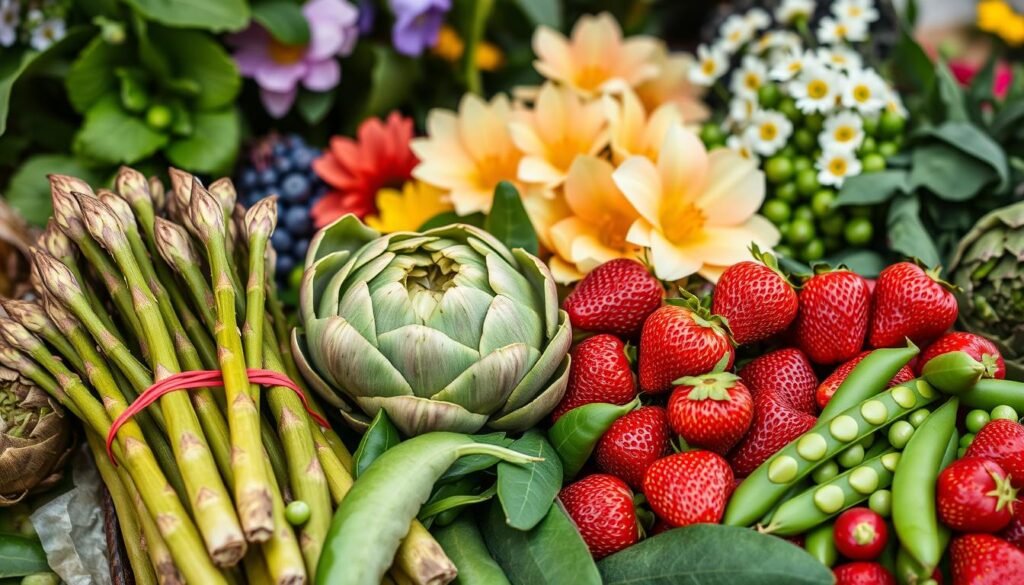
Spring brings a bounty of fresh produce, making it a great time for heart health. Foods available in spring are rich in flavors and nutrients that help manage cholesterol. Making these foods a part of your daily diet can improve your health.
Heart-Healthy Vegetables
Asparagus, broccoli, and cabbage are great this season for heart health. They are filled with nutrients that help manage cholesterol. Asparagus boosts the immune system and keeps blood vessels flexible. Broccoli helps with collagen synthesis, aiding heart health. Cabbage improves liver function and fights off free radicals, bringing many health advantages.
- Asparagus: Helps remove toxins and might mildly help with digestion.
- Broccoli: Packed with antioxidants that support prostate and eye health.
- Cabbage: Helps heal ulcers and improves liver health.
Fruits That Help Control Cholesterol
Strawberries and blueberries are perfect for controlling cholesterol this season. These fruits are tasty and full of antioxidants and soluble fiber, which are key for healthy cholesterol levels. Adding them to your meals supports heart health and showcases the importance of eating seasonal fruits.
- Strawberries: Enhance heart health with their high vitamin C content.
- Blueberries: Lower LDL cholesterol and boost heart health.
Summer Fruits and Vegetables for Cholesterol Health
Summer brings colorful and tasty seasonal produce. These foods are great for your heart. Fruits and vegetables help manage cholesterol with their nutrients, antioxidants, and fiber. Adding them to your meals improves cholesterol levels and your overall health.
Fiber-Rich Fruits like Apricots and Raspberries
Fruits are key for healthy cholesterol. Raspberries and apricots have lots of fiber, lowering bad LDL cholesterol. The fiber stops cholesterol from getting into your blood. A study showed that these summer foods really help with cholesterol.
Berries like blueberries and strawberries are also full of antioxidants. They boost heart health. The mix of fiber and antioxidants makes these fruits top choices for lowering cholesterol.
Summer Vegetables for a Heart-Healthy Diet
Summer vegetables like tomatoes, zucchini, and cucumbers make your diet heart-friendly. Tomatoes are full of lycopene and can reduce cholesterol levels. Cucumbers keep you hydrated and have cholesterol-lowering phytosterols and pectin.
Adding these vegetables to your meals boosts heart health. They are packed with nutrients that help your heart. This shows how enjoying summer produce is part of a healthier lifestyle.
Autumn’s Best Seasonal Foods to Lower Cholesterol
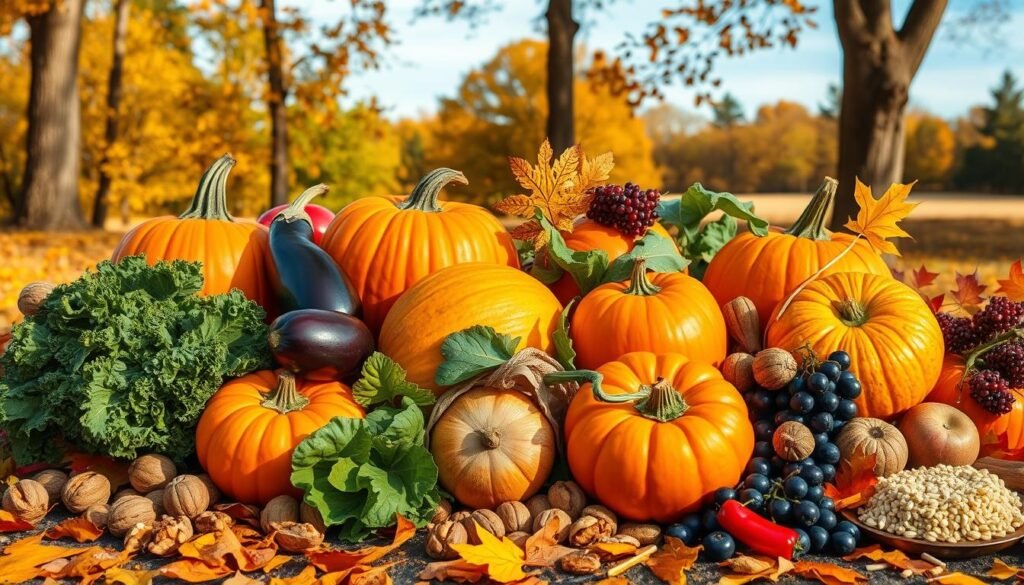
As autumn arrives, markets are filled with nutrient-dense produce. These are perfect for making heart-healthy meals. Adding these foods to your diet helps manage cholesterol. High in fiber, they enhance flavor and boost overall health. Discover the tasty options this fall offers.
Nutritious Squash and Root Vegetables
Autumn offers a range of squashes and root veggies good for the heart. Butternut squash, pumpkins, and sweet potatoes are full of fiber and vitamins. They lower bad cholesterol and add creaminess to soups and stews.
- Pumpkin: Rich in antioxidants and fiber, this delicious seasonal food returns great value in cholesterol management.
- Sweet Potatoes: Their high fiber content contributes to improved heart function.
- Beets: Known for their potential to improve blood circulation, they make great additions to salads and roasted dishes.
Harvest Fruits and Their Benefits
Harvest fruits stand out among autumn foods for cholesterol management. Fruits like apples and pears taste great and are healthy. For example, apples are full of pectin. This soluble fiber helps control cholesterol levels.
- Apples: Eating them can lower cholesterol, making them excellent snacks.
- Pears: These fruits boost heart health with their fiber.
- Oats and Barley: Adding these grains to your diet can cut LDL cholesterol. And they’re filling and nutritious.
Winter Foods That Support Cholesterol Management
Winter is a great time to eat hearty and healthy foods that help with cholesterol. In the cold months, we should eat foods that are not only warm but also good for the heart. Foods like legumes and dark leafy greens are especially helpful for this.
Warm, Fiber-Rich Legumes for Cold Weather
Beans and lentils are some of the best foods for lowering cholesterol, especially in winter. A study from 2021 showed that eating a cup of beans every day can reduce bad cholesterol levels. They are full of fiber and protein, keeping you full. They also make winter meals both filling and tasty.
Seasonal Greens and Their Cholesterol-Busting Properties
Dark leafy greens like kale and collard greens are key for managing cholesterol in the winter. They’re full of nutrients and fiber that catch cholesterol and help get rid of it. Adding these greens to your winter meals makes them tastier and healthier.
Recipes Incorporating Seasonal Foods for Heart Health
Using seasonal ingredients in your meals can boost both taste and nutrition. Cooking with the seasons can help manage cholesterol through delicious dishes. Try these easy, heart-healthy recipes any time of the day.
Easy Breakfast Options Featuring Seasonal Ingredients
Start your day with quick, heart-healthy breakfasts that feature seasonal fruits and veggies. Some tasty examples are:
- Overnight oats topped with strawberries and blueberries, which are high in antioxidants and fiber.
- Avocado toast on whole grain bread, full of healthy fats and fiber for a full morning.
- Spinach and tomato scramble with eggs or tofu to pack vitamins while watching cholesterol.
Delicious Lunch and Dinner Ideas for Reduced Cholesterol
Lunch and dinner can be both enticing and good for your heart, making them perfect for lowering cholesterol. Here are some mouthwatering choices:
- Chickpea salad mixed with bell peppers, greens, and a light vinaigrette for plenty of fiber and nutrients.
- Grilled salmon with sweet potatoes and asparagus, rich in omega-3s, vitamins A and C.
- Quinoa stir-fry with veggies like beets and garlic to boost antioxidants and support heart health.
By focusing on seasonal recipes for heart health, keeping a balanced diet while managing cholesterol becomes easier. Every meal is a chance to support your heart and enjoy your food.
Incorporating Seasonal Eating into Daily Life
Adding seasonal eating to your life boosts health and nutrition. Knowing which produce is in season lets you enjoy fresher and tastier fruits and veggies. Shopping at farmers’ markets or stores focused on seasonal food helps the local economy and the planet.
Tips for Shopping Seasonal Produce
Here are some tips for buying seasonal produce:
- Go to farmers’ markets to find fresh, local produce. Prices and quality are usually better.
- Learn about fruits and veggies that are in season in your area.
- Choose produce that looks bright and feels firm for freshness.
- Try community-supported agriculture (CSA) for regular seasonal food deliveries.
Meal Planning with Seasonal Foods
Planning meals with seasonal foods can make cooking easier. Try these strategies:
- Plan your weekly meals using seasonal ingredients to add variety.
- Cook in batches to save time and reduce waste, keeping nutritious meals on hand.
- Experiment with different cooking methods like roasting or steaming to enjoy seasonal goodies.
- Think about growing your own fruits and veggies. Even in small spaces, you can grow things like tomatoes and herbs.
| Seasonal Produce | Benefits | Meal Ideas |
|---|---|---|
| Sweet Potatoes | High in fiber, supporting cholesterol and blood sugar levels | Sweet potato casserole, roasted sweet potatoes |
| Brussels Sprouts | May lower risk of heart disease | Roasted Brussels sprouts with garlic, Brussels sprouts salad |
| Apples | May help lower cholesterol and aid digestion | Apple crisp, sliced apples in salads |
| Butternut Squash | Supports eye health and heart function | Butternut squash soup, roasted butternut squash |
| Pomegranates | High in antioxidants, helps fight inflammation | Pomegranate seeds in yogurt, pomegranate salad dressing |
Combining Seasonal Foods with a Healthy Lifestyle
Eating seasonal foods every day promotes a healthy lifestyle. These foods improve our overall health, especially our hearts. Choosing fruits and vegetables at their peak means more nutrients and better taste. This makes meals not just healthier, but also more enjoyable.
It’s important to exercise regularly if you want to live healthier. Eating fresh, seasonal foods and staying active can really help your heart. Studies show that around 31% of deaths globally are because of heart issues. This makes diet and exercise key for a healthy heart.
A diet rich in plants is good for your heart. It means eating lots of fruits, vegetables, nuts, beans, and grains. Diets like this can lower the bad cholesterol that causes heart disease. Eating seasonal foods is perfect for this diet, as they help lower cholesterol too.
Eating mindfully adds to these benefits. It means really enjoying your food. Drinking lots of water and herbal tea helps with digestion and keeps cholesterol in check.
- Explore diverse seasonal cuisines to introduce new flavors and nutrients.
- Engage in outdoor activities that complement seasonal eating habits.
- Utilize local farmers’ markets to access fresh, seasonal produce.
Mixing seasonal foods with being active helps prevent chronic diseases. Making these lifestyle changes is key for a healthier heart.
| Season | Recommended Seasonal Foods | Health Benefits |
|---|---|---|
| Spring | Asparagus, Spinach, Strawberries | Rich in antioxidants and vitamins, supports digestion |
| Summer | Tomatoes, Zucchini, Blueberries | Supports hydration, provides fiber for heart health |
| Autumn | Pumpkin, Brussels Sprouts, Apples | High in fiber, promotes satiety, contains heart-healthy nutrients |
| Winter | Broccoli, Kale, Citrus Fruits | Boosts immune system, offers high vitamin C content |
Consulting Professionals for Cholesterol Management
It’s crucial to work with experts for better heart health. They offer services for cholesterol monitoring. This helps track your cholesterol levels accurately. Knowing your cholesterol levels is key to making smart choices about your diet and lifestyle.
Doctors and dietitians provide expert advice on cholesterol. They suggest eating heart-healthy foods like soy, nuts, and fiber. These can lower your LDL, or “bad” cholesterol, levels.
Seeing these experts regularly helps create plans that focus on weight and exercise. This support leads to an understanding of how lifestyle changes lower cholesterol risks. For more tips on managing your cholesterol, visit this resource.
| Cholesterol Management Strategies | Expected Benefits |
|---|---|
| Regular Health Check-ups | Improved understanding of cholesterol levels and risks |
| Dietary Adjustments | Lower LDL and higher HDL levels |
| Physical Activity | Increased HDL, lowered LDL, and reduced cardiovascular risks |
| Medication Adherence | Better management of cholesterol levels |
| Stress Management Techniques | Enhanced overall heart health and reduced unhealthy behaviors |
Conclusion
Seasonal eating helps manage cholesterol and boosts overall health. By choosing seasonal fruits and vegetables, you get vital vitamins and minerals all year. This aids in controlling cholesterol and encourages healthy living for a strong heart.
Knowing how different foods affect cholesterol is key. For example, fiber-rich beans can lower LDL cholesterol by 8 milligrams per deciliter. Nuts, like walnuts or almonds, can cut bad cholesterol by 5 percent. Opting for salmon over red meat and using oils like olive or canola are good for your heart.
Seasonal eating is fun and keeps meals exciting while helping with cholesterol. Try overnight oats with rolled oats and low-fat milk for an easy breakfast. Be mindful during holidays to enjoy food without harming your heart health. These habits lead to better cholesterol levels and a healthier life.