Eating 15 grams of nuts and seeds every day can lower heart disease risk by 20%. Cardiovascular disease is a big problem in the United States. So, including heart-healthy nuts and seeds in your diet is super important. These tiny foods are tasty and filled with nutrients like fiber, healthy fats, vitamins, and minerals. They are all good for your heart.
Studies show people who eat nuts and seeds often have better heart health. They have lower bad cholesterol levels and less inflammation. This article will tell you about the best nuts for your heart. It will also give you tips on how to add them to your meals easily. The goal is to make heart-healthy nuts and seeds a regular part of your diet.
Key Takeaways
- Eating around 15g of nuts and seeds daily can lower coronary heart disease risk by about 20%.
- Regular consumption can positively impact total and LDL cholesterol levels.
- Increased intake beyond 30g per day provides additional heart health benefits.
- Nuts and seeds contribute to lower body weight by enhancing satiety after meals.
- Dietary patterns rich in nuts are endorsed by leading health organizations to reduce cardiovascular risks.
Introduction to Heart-Healthy Nuts
Nuts are key for a healthy heart. They’re full of nutrients important for reducing heart disease risks. Eating 3-4 small handfuls of nuts and seeds each week, around 15 grams a day, results in a 20% lower chance of coronary heart disease. The benefits of nuts and seeds for heart health are clear.
Eating these nutrient-rich foods helps lower bad cholesterol (LDL) and maintain good cholesterol (HDL). This is great for those at high risk for heart issues. Studies have also found that nuts and seeds for heart health don’t lead to weight gain if eaten in moderation.
Almonds, walnuts, and hazelnuts are especially good for the heart. For example, one ounce of almonds provides many vitamins and minerals essential for heart health. By regularly eating these nuts, you can significantly improve your health. They’re a wise choice for anyone wanting to better their health.
The Importance of Nuts and Seeds for Heart Health
Nuts and seeds are key to a heart-healthy diet. They carry unsaturated fats, fiber, and many micronutrients. These elements support heart health and lower heart disease risk. Eating them regularly improves arterial function and decreases blood pressure and bad cholesterol.
Eating nuts and seeds helps your heart, according to research. Just three to four handfuls per week can cut heart disease risk by about 20%. Up to 15 grams daily is beneficial and won’t lead to weight gain. Big studies show no weight change with recommended nut and seed amounts.
Peanuts, sunflower seeds, sesame seeds, and flaxseeds are easy on the wallet. Peanut butter is also a nutritious, budget-friendly choice. Supermarkets offer various peanut butter types to fit all tastes and budgets.
Eating nuts and seeds in their natural state is best for heart health. This keeps their nutrients whole, enhancing health benefits. Research urges adding these foods to your diet. They’re part of a Mediterranean-style diet, full of fiber and heart-friendly nutrients. For more on heart health, visit this resource.
Types of Nuts That Promote Cardiovascular Health
Nuts are a tasty snack and good for the heart. Each type has benefits for health. Knowing the benefits of different nuts can help people choose the best for heart health while enjoying their taste.
Almonds: The Cholesterol Lowering Nut
Almonds are great for lowering cholesterol. They have vitamin E and healthy fats that help cut down bad cholesterol, a key risk factor for heart disease. Eating almonds daily is recommended by the FDA for a healthy heart. They also have a lot of fiber which helps the heart too.
Walnuts: The Omega-3 Powerhouse
Walnuts are top for omega-3, which is great for the heart. They have about 47% polyunsaturated fats, important for reducing inflammation and keeping the heart well. Regularly eating walnuts can majorly cut the risk of heart diseases. Plus, they have nutrients like arginine and potassium that are good for the heart.
Other Notable Nuts: Cashews, Pecans, and More
Cashews and pecans are worth mentioning too. Cashews mix healthy fats and protein, good for heart health. Pecans, known for their antioxidants and fiber, are nutritious. Including these nuts in a balanced diet can lower heart disease risk.
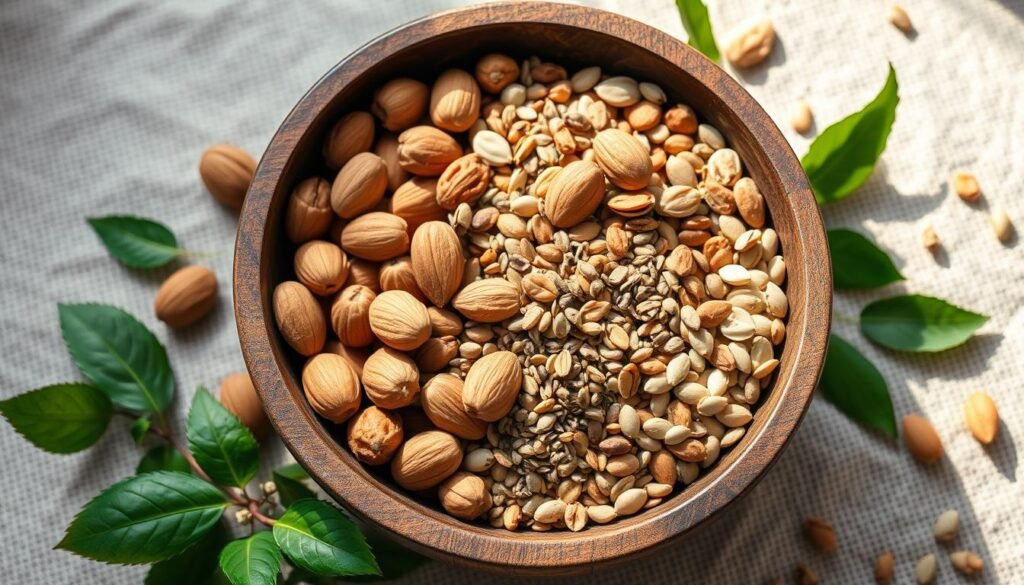
| Nut Type | Key Nutrients | Health Benefits |
|---|---|---|
| Almonds | Vitamin E, Fiber (3.54g) | Lowers LDL cholesterol |
| Walnuts | Omega-3 fatty acids, Argintine | Reduces inflammation, lowers heart disease risk |
| Cashews | Healthy fats, Protein | Supports heart health |
| Pecans | Antioxidants, Fiber | Protects against heart disease |
Top Seeds for Heart Health
Adding the right seeds to your diet can do wonders for your heart. Chia seeds and pumpkin seeds are two great choices. They’re known for their powerful health benefits.
Chia Seeds: A Nutrient Dense Option
Chia seeds are full of omega-3 fatty acids, fiber, and essential minerals. They help lower triglycerides and make cholesterol levels better. This makes them a top pick for heart health. Adding them to your food is easy. Try mixing them into smoothies, yogurt, or baked goods. They’re not just healthy; they make dishes tastier, too.
Pumpkin Seeds: Packed with Antioxidants
Pumpkin seeds, or pepitas, are rich in antioxidants and magnesium. They’re great for easing inflammation and improving blood circulation. Eating them often might even lower your blood pressure and benefit your prostate health. Roasted as a snack, or added to salads and oatmeal, they’re delicious.
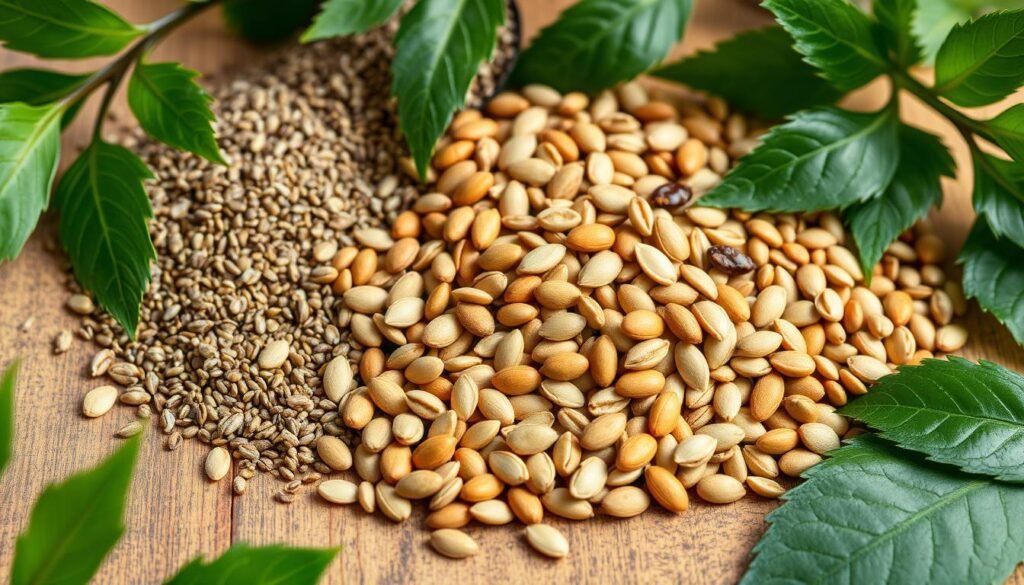
| Seed Type | Key Nutrients | Heart Health Benefits | Serving Suggestions |
|---|---|---|---|
| Chia Seeds | Omega-3, Fiber, Antioxidants | Lowers triglycerides, improves cholesterol | Smoothies, oatmeal, yogurt |
| Pumpkin Seeds | Magnesium, Antioxidants, Zinc | Reduces inflammation, lowers blood pressure | Salads, snacks, baked dishes |
Benefits of Nuts and Seeds for Heart Health
Nuts and seeds are key for good heart health. They help with cholesterol, blood pressure, and inflammation. These foods are full of healthy fats, fiber, and other beneficial compounds.
Eating them regularly lowers bad LDL cholesterol and boosts heart health.
Reducing LDL Cholesterol Levels
Nuts and seeds have a big positive effect on cholesterol. They lower bad LDL and increase good HDL cholesterol. Eating at least four servings a week of unsalted nuts is advised.
Try walnuts, almonds, and chia seeds for more omega-3 fatty acids. This helps lower cholesterol even more.
Lowering Blood Pressure and Inflammation
They also help lower blood pressure and fight inflammation. This is vital for preventing heart disease. Foods like almonds and walnuts are especially good because of their unsaturated fats.
Eating small amounts can keep you from getting too hungry. This helps you eat well without gaining weight.
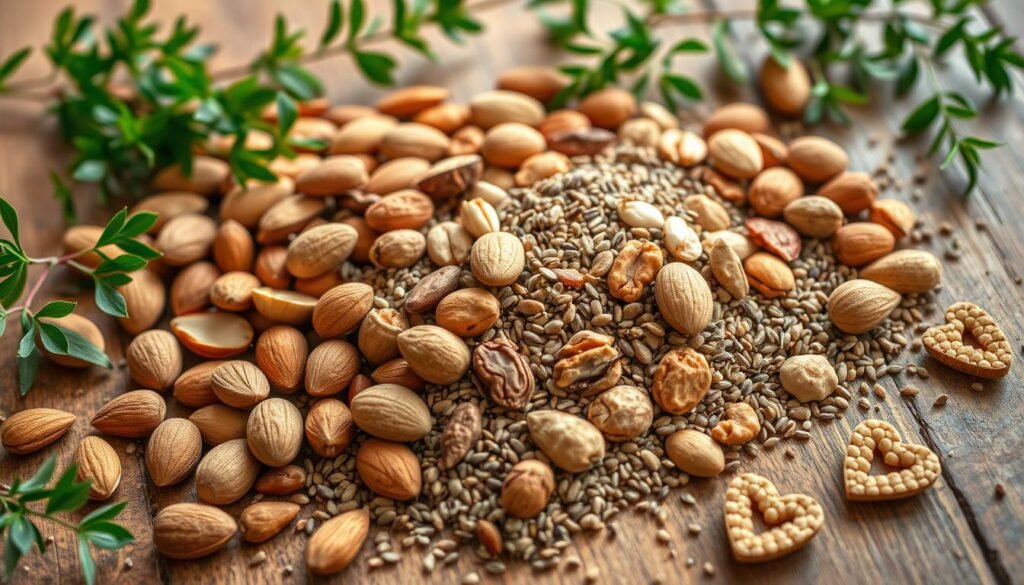
| Nut/Seed | Calories (per serving) | Protein (g) | Total Fat (g) | Saturated Fat (g) | Monounsaturated Fat (g) | Polyunsaturated Fat (g) | Fiber (g) |
|---|---|---|---|---|---|---|---|
| Almonds (22 pieces) | 169 | 6.0 | 15.0 | 1.1 | 9.5 | 3.6 | 3.3 |
| Cashews (18 pieces) | 162 | 5.2 | 13.1 | 2.6 | 7.7 | 2.2 | 0.8 |
| Walnuts (14 halves) | 185 | 4.3 | 18.4 | 1.7 | 2.5 | 13.3 | 1.9 |
Adding nuts and seeds to your diet makes a big difference in heart health. They are great for lowering bad cholesterol and controlling blood pressure. Making them a part of your meals is a smart choice for your heart.
Nuts and Seeds for Heart Health: Recommended Intakes
Eating nuts and seeds can boost your heart health and cut the risk of heart diseases. Experts say you should eat about 3 to 4 small handfuls of them each week. That’s around 15 grams a day. Doing this can lower your heart disease risk by 20% compared to eating very little.
Nuts and seeds can also make your cholesterol better. Eating them often can decrease bad cholesterol. This helps your heart stay healthy. It’s good for everyone, especially if you’re at risk for heart problems.
Some worry that these high-fat foods might lead to weight gain. But, studies have found that eating more nuts can mean a lower body weight. Foods like almonds, walnuts, and pecans are rich in fiber, healthy fats, and vitamins. The Heart Foundation stresses the importance of eating nuts consistently for heart health.
Nuts and seeds add flavor and texture to your meals. You can put them in cereals, salads, or smoothies. For more ideas on how to use them, check out this source.
For adults, aim for 4 to 6 servings of unsalted nuts each week. The amount may be different for kids, depending on their age. The main point is: adding nuts and seeds to your diet is key to better heart health. It also makes eating more fun. Check nutrition guides to balance nuts and seeds in your diet properly.
| Nuts/Seeds | Serving Size (oz) | Calories | Fat (g) | Omega-3 (g) |
|---|---|---|---|---|
| Almonds | 1 | 164 | 14.2 | 0.1 |
| Walnuts | 1 | 185 | 18.5 | 2.5 |
| Cashews | 1 | 157 | 12.4 | 0.2 |
| Pecans | 1 | 196 | 20.4 | 0.4 |
| Pumpkin Seeds | 1 | 151 | 13.3 | 0.1 |
Heart-Healthy Snack Ideas Using Nuts and Seeds
Finding heart-healthy snacks is easy and fun. Nuts and seeds provide key nutrients while satisfying cravings. You have many flavorful options, from sweet to savory.
Savory Snack Options: Seasoned Nuts and Roasted Seeds
Seasoned nuts and roasted seeds are great for your heart. Mix almonds and walnuts with herbs for a tasty snack. Roasted pumpkin seeds are crunchy and high in antioxidants.
These snacks are not just good for your heart. They also give you essential nutrients for a healthy heart. Heart-healthy snack nuts are tasty without being bad for you.
Sweet Treats: Nut Butters and Energy Bites
If you like sweet snacks, try some with nuts and seeds. Spread almond or cashew butter on whole-grain toast for taste and nutrition. Energy bites made with oats, nut butter, and seeds are a quick, healthy snack.
These sweet options are full of nutrients too. They have healthy fats and proteins that keep your heart strong.
Incorporating Nuts and Seeds into Your Diet
Adding nuts and seeds for heart health is both fun and tasty. There are many easy ways to include these nutrient-packed foods in your daily meals. Doing this helps improve your heart health while you enjoy great flavors and textures.
Easy Ways to Add Nuts and Seeds to Meals
Begin by adding nuts and seeds to different dishes for health benefits. Here are some great tips:
- Top smoothies: Add a tablespoon of chia seeds or flaxseeds to smoothies for more fiber and protein.
- Mix with salads: Throw in a handful of walnuts or pumpkin seeds into salads for crunch and flavor.
- Bake with them: Use almonds or pecans in muffins and bread for a nutritional upgrade.
- Snacks: Have nuts as a tasty snack or create your own trail mix with various nuts and seeds.
- Nut butter: Spread almond or peanut butter on whole-grain bread or fruit for a quick, healthy snack.
Choosing the Right Products: What to Look For
It’s important to choose nuts and seeds wisely. Here’s what to keep in mind:
- Unsalted varieties: Pick unsalted nuts to reduce sodium intake.
- Minimally processed: Go for products with minimal added ingredients to keep the health benefits.
- Portion sizes: Stick to a serving size of about 1 ounce to control calories.
- Quality: Find high-quality, fresh, preferably organic nuts and seeds for the best nutrition.
| Nut/Seed | Protein (g/oz) | Key Nutrients | Health Benefits |
|---|---|---|---|
| Almonds | 6 | Vitamin E, fiber | Supports heart health, helps manage weight |
| Walnuts | 4.3 | Omega-3 fatty acids | Lowers cholesterol, reduces inflammation |
| Pumpkin Seeds | 8.5 | Zinc, antioxidants | Boosts immune function, supports heart health |
| Chia Seeds | 6 | Omega-3 fatty acids, fiber | Aids digestion, controls weight |
To easily add nuts and seeds to your diet, explore these methods and choose products carefully. This way, you can boost your heart health and overall well-being.
Conclusion
Adding nuts and seeds for heart health is key for better cardiovascular health. They are packed with nutrients that lower the risk of heart disease. Studies show they reduce heart issues by 30-50%.
Eating 1.5 ounces daily can cut heart disease risk. This shows how crucial they are in our diet.
Nuts and seeds are great for proteins, fiber, vitamins, and fighting bad cholesterol. They also fight inflammation. The PREDIMED study shows they can reduce strokes by half.
Including them in meals daily brings many health benefits. It’s a smart move for everyone.
Using nuts and seeds for heart health matches heart dietary advice. Plus, it helps fight heart disease broadly. Added to a healthy lifestyle, they’re key for better health.