About 39% of American adults struggle with high cholesterol. This is a big risk for heart disease. Looking at effective ways to manage cholesterol is important. One interesting method is through dairy. Certain dairy products, when eaten in the right amounts, can help manage cholesterol. This is good for your heart’s health.
This guide will help you learn about the benefits of dairy for managing cholesterol. It will give you tips on how to add these foods to your diet in a way that’s good for your heart. Dairy’s impact on cholesterol and the importance of smart choices will be explained. This will help you keep your cholesterol at a healthy level and lessen your risk of heart problems. Let’s start by checking what the American Heart Association says about lifestyle and diet changes for managing cholesterol well.
Key Takeaways
- High cholesterol affects nearly 39% of American adults.
- Dairy products can help manage cholesterol levels.
- Eating dairy in moderation could be good for the heart.
- Knowing about different dairy types is important for managing cholesterol.
- Adding healthy dairy to daily meals can lower the risk of heart disease.
The Role of Dairy in Cholesterol Management
It’s vital to know about cholesterol and its types for your health. Cholesterol plays a major role in our bodies. It helps make hormones and keeps cell membranes working right. There are two main kinds: LDL or “bad” cholesterol, and HDL or “good” cholesterol. High levels of LDL can block arteries, raising the risk of heart disease.
Understanding Cholesterol and Its Types
Both types of cholesterol affect health. LDL cholesterol can build up in arteries, causing atherosclerosis. This leads to heart problems. HDL cholesterol, however, helps remove LDL, protecting the heart. Monitoring cholesterol levels is crucial, especially if you’re at risk for heart issues.
How Dairy Interacts with Cholesterol Levels
Studies show dairy’s effect on cholesterol. Some dairy products can improve cholesterol levels. Low-fat dairy, in particular, helps lower LDL cholesterol. This makes it a good choice for those managing their cholesterol.
In one study, people who ate dairy had different effects on their cholesterol. But low-fat dairy often led to lower LDL levels.
Dairy and its impact on cholesterol is important in diet planning. More research on how dairy affects LDL cholesterol could improve heart health. Many people could see benefits from adding low-fat dairy to their diets. This is a key step in managing cholesterol. For more tips on managing cholesterol, check out these dietary guidelines.
Benefits of Dairy for Cholesterol Levels
Dairy products are great for managing cholesterol. They are packed with high-quality proteins, vitamins, and minerals important for the heart. These help maintain a healthy heart while letting you enjoy delicious dairy foods.
High-Quality Protein Sources
Dairy is an excellent source of protein. It keeps muscles strong and metabolism healthy. Foods like yogurt, milk, and cheese not only provide this protein but also help in managing cholesterol. They come with added nutrients that work together for better health.
Vitamins and Minerals for Cardiovascular Health
Dairy is full of heart-healthy vitamins like calcium and potassium. They are crucial for cardiovascular well-being. Calcium keeps blood vessels functioning properly, and potassium controls blood pressure. Eating dairy each day ensures you get these essential nutrients, boosting heart health.
The Impact of Dairy on Lipid Levels
Studies show dairy may improve your cholesterol. Eating a variety of dairy can lower bad LDL cholesterol and total cholesterol. This is especially true in a balanced diet. More research points to dairy’s role in a healthier heart.
| Nutrient | Role in Heart Health | Source from Dairy |
|---|---|---|
| High-Quality Protein | Maintains muscle mass and metabolic health | Milk, Yogurt, Cheese |
| Calcium | Supports blood vessel function | Cheddar, Yogurt |
| Potassium | Regulates blood pressure | Skim Milk, Yogurt |
| Vitamins | Contributes to overall heart health | Fortified Milk, Cheese |
Choosing Dairy Products Wisely
It’s essential to pick the right dairy for good cholesterol management. Both low and whole-fat dairy have their perks. Yet, knowing their nutritional content is key. Saturated fats are higher in whole-fat dairy, which isn’t good for cholesterol if too much is had. The American Heart Association suggests eating less saturated fat for better LDL cholesterol levels. Low-fat dairy, on the other hand, is packed with nutrients but has less saturated fat, making it better for your heart.
Low-Fat vs. Whole-Fat Dairy: What to Know
Deciding on dairy for a cholesterol-friendly diet means looking at low-fat versus whole-fat options carefully. Research shows low-fat dairy fits well into a healthy eating plan. But, new studies question if whole-fat dairy is truly bad for heart health. Observations show no clear link between full-fat dairy and heart disease or other health risks. Understanding dairy’s role includes knowing about its good parts like calcium and yogurt’s live cultures.
Recommended Dairy Products for Cholesterol Management
To keep your cholesterol in check, it’s wise to choose your dairy carefully. Here’s a list of dairy that’s good for both nutrition and heart health:
| Dairy Product | Type | Fat Content | Benefits |
|---|---|---|---|
| 1% Milk | Low-Fat Dairy | 1% Milk Fat | Provides essential nutrients with lower saturated fat. |
| Fat-Free Yogurt | Low-Fat Dairy | 0% Milk Fat | Contains live cultures for gut health and lower caloric content. |
| Whole Milk | Whole-Fat Dairy | 3.25% Milk Fat | Offers beneficial fatty acids; moderation is crucial. |
| Ricotta Cheese | Low-Fat Dairy | Less than 6% Milk Fat | Rich in calcium and protein, versatile for meals. |
| Buttermilk | Whole-Fat Dairy | Approx. 1% Milk Fat | High in milk polar lipids, beneficial for cardiometabolic health. |
Being smart with your dairy choices helps meet cholesterol goals. Mixing low-fat and whole-fat wisely and choosing quality can boost overall health.
Incorporating Dairy in a Low Cholesterol Diet
Adding dairy to a low cholesterol diet can be fun and healthy. It’s all about choosing wisely. With smart options, you can enjoy dairy’s goodness and keep your cholesterol in check. Making small changes to your meals can keep them tasty and good for your heart.
Simple Swaps for Everyday Meals
One way to do this is by picking lower-fat dairy. For example, use 1% milk instead of whole milk. This cuts calories and lowers saturated fat. You can also swap full-fat yogurt for a low-fat one. It’s still creamy but with fewer calories. This helps you enjoy meals that fit with heart health goals.
Healthy Dairy-Based Snack Ideas
For snacks, dairy can be both delicious and nutritious. Try smoothies with low-fat yogurt and fresh fruit for an energy boost. They provide key nutrients and taste great. Adding low-fat milk to oatmeal, along with nuts, is another good choice. It brings in soluble fiber, which helps lower bad cholesterol.
- Cottage cheese with sliced peaches or berries
- Greek yogurt with honey and almonds
- Whole grain toast with ricotta cheese and avocado
Taking these steps helps manage cholesterol well. It’s important to know how dairy affects your heart health. For solid advice, check out the information on dairy and heart health. By choosing these heart-healthy options, you can create a tasty diet that’s also good for your heart.
Dairy and Cholesterol Reduction
Dairy products are key to managing cholesterol, especially with whey protein and fermented dairy. Adding these to your diet helps cut down cholesterol for better heart health.
Whey Protein’s Role in Lowering LDL Cholesterol
Whey protein is a strong helper in cutting LDL cholesterol. Studies show whey protein lowers total cholesterol and blood pressure. It’s good for heart health.
Fermented Dairy Products and Their Benefits
Fermented dairy, like yogurt and kefir, is great for cholesterol. They’re full of probiotics which may reduce cholesterol. Fermented dairy boosts digestion and helps with cholesterol.
Exercise and Dairy: A Powerful Combination
Adding exercise to daily life helps manage cholesterol. It boosts “good” cholesterol and reduces the “bad” one. Exercise and dairy together improve heart health and well-being.
Dairy foods and exercise are a great match. Eating dairy after working out replenishes protein and helps muscles recover. Dairy also has nutrients like calcium and vitamins that are good for cholesterol.

Activities like walking, cycling, or lifting weights are good for cholesterol. These, combined with dairy, support heart health.
To manage cholesterol, eat low-fat dairy and exercise regularly. This keeps the heart healthy and is key for a healthy lifestyle.
Exercise and healthy diets are important for dealing with high cholesterol. Adding dairy and regular exercise makes this strategy stronger. For more on dairy and heart health, check this study.
Dairy and Heart Health
Studies show that eating dairy is good for your heart. Many researchers have found that dairy may protect against heart disease. This suggests that dairy should be part of a heart-healthy diet.
Research Supporting Dairy’s Role in Heart Health
Dairy has been linked to better heart health. For example, fermented dairy lowers the risk of heart disease by 20%. Eating yogurt can reduce this risk by 22%, and cheese by 13%. This shows eating dairy helps your heart.
| Dairy Product | Reduction in Cardiovascular Disease Risk |
|---|---|
| Fermented Dairy | 20% |
| Yogurt | 22% |
| Cheese | 13% |
| Full-Fat Dairy | 32% |
| Milk | 18% |
Eating dairy can also cut the risk of stroke by 34%. More dairy means better blood fats, without raising bad cholesterol. This proves dairy’s benefits for your heart.
Recommended Portions for Heart Health
To keep your heart healthy with dairy, don’t eat too much. It’s all about the right amount. Experts suggest:
- 1 serving of yogurt (about 150 grams)
- 1-2 servings of cheese (about 30-40 grams each)
- 1 glass of milk (about 240 ml)
Eating these servings daily is good for your heart. Remember, a balanced diet is key. As we learn more, including dairy remains important.
Effects of Dairy on Cardiovascular Health
The link between dairy intake and heart health is a hot topic among experts. Studies show dairy’s impact on our hearts is not simple. It depends on what kind of dairy you eat and your overall diet. Knowing more about dairy and heart disease helps us see its potential perks.
Dairy Consumption and Cardiovascular Disease
Research reveals a complex connection between dairy and heart disease. Dairy is a key source of saturated fats in our diets, making up about one fifth in the USA. In Europe, it ranges from 17% to 41%. Yet, eating up to 200 grams of dairy daily doesn’t harm heart health. The kind of dairy matters more than the fat it contains. This tells us to look at both the amount and types of dairy we eat.
Long-Term Benefits of Dairy in Diet
Over the years, some dairy products give us key nutrients that are good for our hearts. For instance, fermented dairy like yogurt helps our gut bacteria, boosting overall health. However, how much dairy to eat varies around the world. Some guidelines recommend up to three dairy servings a day, while others suggest less. This difference shows the long-term benefits of dairy depend on where you live and your culture.

| Dairy Type | Potential Benefits | Considerations |
|---|---|---|
| Yogurt | Supports gut health, provides probiotics | High sugar content in some brands |
| Milk | Rich in calcium and vitamins | Full-fat versions may be higher in SFAs |
| Cheese | Source of protein and calcium | Can be high in sodium; choose lower-sodium options |
| Dairy Desserts | Calcium source, enjoyable treats | Often contain high levels of added sugars and oils |
Common Myths About Dairy and Cholesterol
There are lots of myths about dairy and cholesterol that mislead people. These myths can harm our health, especially our hearts. Knowing the truth about dairy and cholesterol is vital for healthy choices.
Debunking Misconceptions
Many think all dairy is bad for the heart. But, some high-fat dairy products are okay in a balanced diet. They’re full of important nutrients. Studies show whole-fat dairy helps you feel full and manage your weight.
Also, some foods with high cholesterol offer good nutrients. Not everyone is affected by the saturated fats in dairy. This is important to realize.
- Fat-rich foods can help with weight loss by making you feel full.
- Full-fat dairy has important nutrients and can be part of a healthy eating plan.
- Studies don’t always link saturated fat with heart disease.
Evidence-Based Facts about Dairy Products
It’s key to understand the real info on dairy health. Even with the saturated fats, some dairy foods are good for you. For example, they provide essential nutrients like calcium and vitamin K2. These are very important for pregnant women and their babies.
Also, foods high in fat, like dairy and avocados, might help with blood sugar and protect against diabetes. This is encouraging news.
While dietary cholesterol concerns some, about two-thirds of people are not affected by it. This means many can enjoy a range of dairy products worry-free. It’s all about balanced eating.
Creating a Balanced Diet with Dairy
Adding dairy to your meals is important for a balanced diet. It ensures you get nutrients that are key for health, like managing cholesterol. Dairy offers protein, calcium, and vitamins for your heart and bones.
Picking different dairy types is wise. For example, choosing low-fat cheese can cut down on fat. Cheeses with over 17.5g of fat per 100g are high in fat. But, reduced-fat options have less, good for adults wanting a healthy heart.
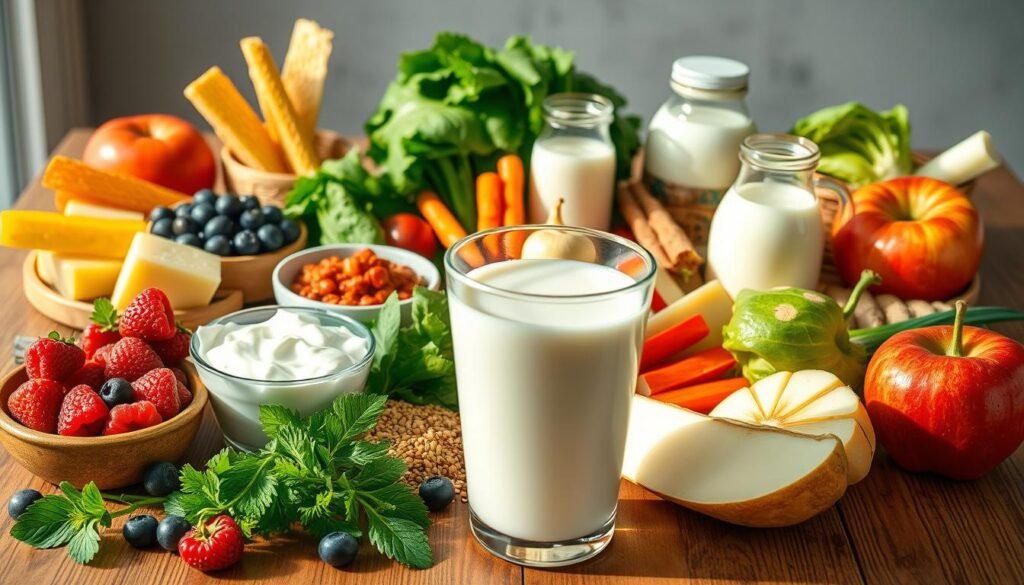
Fruits, veggies, whole grains, and lean proteins also enhance a dairy-rich diet. Mixing yogurt with fruit makes a healthy breakfast. But be aware of added sugars in flavored dairy. Go for plain versions for a healthier diet.
- Even full-fat dairy can be healthy in small amounts.
- Around 300ml of milk daily meets a child’s calcium needs. Kids 1 to 3 need about 350mg of calcium a day.
- The 2015-2020 Dietary Guidelines suggest three 1-cup servings of dairy daily for those over 9 years.
Dairy makes your diet varied and tasty, and fulfills nutritional needs. It keeps your heart healthy and helps manage cholesterol. Adding dairy in right amounts is key to staying healthy.
Conclusion
Managing cholesterol with dairy is good for a heart-healthy lifestyle. Studies show that dairy, if eaten in moderation, doesn’t harm cholesterol levels. In fact, research finds that dairy doesn’t change total cholesterol or LDL-C much.
This means dairy offers more than calcium and protein. It supports heart health too. Fermented dairy like yogurt and cheese could even improve lipid levels. They’ve been linked to lower total cholesterol and LDL-C.
With heart disease being a common problem, knowing how to use dairy is key. It’s important to choose dairy that’s low in fat but rich in good bacteria.
Taking advantage of dairy for cholesterol can boost heart health and add important nutrients to your diet. Understanding how dairy fits into a healthy eating plan allows people to make smarter health choices. These choices can enhance their wellness and life span.