Did you know that the best times to eat can vary a lot for each person? This depends on their work, exercise routines, and circadian rhythms. It’s not only important what we eat but also when we eat. A food journal lets people closely track their meals. This helps them notice patterns in their eating habits they didn’t see before. Such a journal is a key tool. It helps manage nutrition and encourages eating with attention.
Think of a food diary as a map to better health. It guides you to make smart food choices and helps in controlling weight. Writing down every meal makes meeting health goals easier. It also creates a sense of responsibility and spots the causes of poor eating habits. Whether you prefer digital apps or writing on paper, keeping track of meals can change your lifestyle for the better.
Key Takeaways
- Keeping a food journal can significantly improve nutrition and aid in weight management.
- Tracking meals helps identify eating patterns and triggers for unhealthy choices.
- Consistent food journaling fosters accountability and mindfulness.
- Popular apps for food journaling include MyFitnessPal, Lose It!, and Cronometer.
- Incorporating reminders and simplifying the process can enhance adherence to food journaling.
- Understanding when to eat is just as crucial as recognizing what to eat.
The Importance of Keeping a Food Journal for Health
Keeping a food journal is key for those wanting to better their nutrition and wellness. It helps people see what they eat and find patterns that help meet their health aims. Writing down meals improves understanding of dietary habits and encourages responsible food choices.
Understanding Your Eating Habits
A study with around 1,700 people showed those tracking their food lost more weight. Those who keep a diary of what they eat tend to pick healthier options. They also learn what emotional triggers lead to poor eating, like stress or boredom, and can improve long-term diet.
Establishing Accountability for Food Choices
Recording meals makes one more mindful about their eating. It suggests noting down not just what you eat but how much, when, and where, as well as your mood. This detailed logging helps keep an accurate record of eating habits. Sharing this diary with health experts can offer insights to improve diet and meet health goals.
Benefits of Tracking Meals
Tracking meals offers many benefits that change how we see food. By writing down what they eat, people better understand their eating habits and nutrition. This helps with being responsible and knowing about things like how much to eat and why they eat.
Aware of Portion Sizes
Noticing portion sizes is a big perk of tracking meals. When people log their food, they see how much they eat. This helps stop overeating and keeps their diet healthy. It makes it easier to choose between processed and whole foods for better calorie control.
Identifying Food Triggers for Unhealthy Choices
Meal tracking helps spot what causes bad eating choices. By writing down how they feel when they eat and the situation, people find patterns. They might eat out of boredom or stress. Knowing this helps them handle these triggers and eat healthier.
Enhancing Mindful Eating Practices
Food journaling boosts mindful eating. It makes people pay attention to their body and think about their food choices. Writing down when and how they feel about meals helps them know their nutritional needs. Studies say mindfulness affects how we eat and choose our meals.

Using apps like MyFitnessPal can make tracking easier. This app helps log food, gives access to a big food database, and helps with calories. Overall, logging meals leads to better eating habits and helps reach health goals.
For more on the benefits of food journaling, check out Nutrition.org. Or learn how dietary fats affect health at EasyHeartBoost.com.
How to Start Your Food Journal
Starting a food journal is a smart move to get to know your eating habits better. You can choose a digital app or a traditional paper journal. Both have their perks. This choice can make tracking your food more enjoyable.
Choosing Between Digital Apps and Paper Journals
Digital food journals are handy, letting you record meals and calories easily. They also provide nutrition facts. On the other hand, paper journals offer a hands-on way to think about what you eat. You can reflect on your food choices and how much you eat. Both can lead to better eating habits by keeping you honest about your diet.
Basic Components to Include in Your Food Diary
Your food diary should cover all meal details. Make sure to include:
- Food Items: List everything you eat, even snacks and drinks.
- Portion Sizes: Note how much of each item you consume.
- Meal Times: Keep track of when you eat to spot patterns.
- Emotional Context: Write down your feelings when eating to understand your habits better.
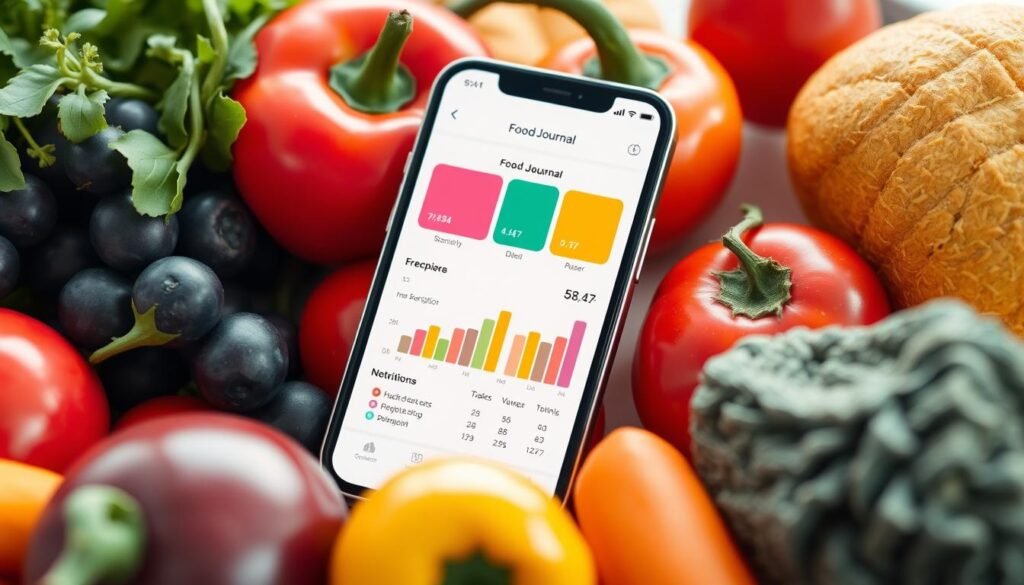
By tracking these details, you can learn a lot about your eating habits. This helps you see where you can improve. Keeping a food diary is linked to better weight control. It can even help find food sensitivities, like those causing irritable bowel syndrome (IBS).
| Component | Description |
|---|---|
| Food Items | All foods and drinks consumed. |
| Portion Sizes | Accurate measurement of each food item. |
| Meal Times | Timing of each meal. |
| Emotional Context | Feelings experienced during meals. |
Remember, a balanced diet is key to fighting chronic diseases like diabetes and heart disease. A food journal can change the way you see food and health. Stick with it, and you’ll see the difference.
Strategies for Maintaining Your Food Journal
Keeping a food journal helps you become more aware of what you eat. It’s great for managing your health. Using smart strategies makes it easier to do every day. This turns food journaling into a fun and regular activity.
Setting Reminders and Incorporating into Daily Routines
Setting daily reminders helps a lot when keeping a food journal. Adding it to your daily habits makes it seamless. You might write down what you eat while waiting for your morning coffee. Or do it right before bed. This keeps the habit strong and your entries accurate.
Keeping It Simple: Starting Small
Starting with just a pen and paper can seem hard. But if you begin with just the basics, it gets easier. Write down what you eat and how much. Later, you can add more details. This way, you won’t feel overwhelmed and will enjoy keeping your journal.
Batch Entry Technique for Logging Meals
The batch entry method is great for making food tracking easier. Spend some time in the evening to write down all you ate that day. This way, you won’t forget anything. It makes the process both simple and fun.

| Strategy | Benefits | Tips for Implementation |
|---|---|---|
| Setting Reminders | Promotes consistency, improves accuracy | Use apps or phone alarms |
| Starting Small | Reduces overwhelm, builds confidence | Log only meals, add details gradually |
| Batch Entry Technique | Enhances efficiency, reduces missing entries | Dedicate specific time in the evening |
Incorporating Mindful Eating with Food Journaling
Mindful eating and food journaling work together to improve our food relationship. By following these methods, we learn what our bodies need. We understand how different foods affect our health.
Tuning Into Your Body’s Needs
It helps to listen to when you’re hungry or full. This is a big part of mindful eating. People who keep a food diary pay close attention to how they feel when they eat. This helps them choose healthier foods by considering their body’s needs.
Understanding the Connection Between Food and Mood
How food affects our mood is really important for our health. By keeping a food diary, we can note how we feel before, during, and after eating. Looking at these notes, we can find patterns that make us eat more or eat when we’re not hungry. Mindful eating lets us enjoy our meals more by really experiencing them.
| Aspect | Benefit of Mindful Eating | Benefit of Food Journaling |
|---|---|---|
| Body Awareness | Enhances recognition of hunger cues | Tracks eating habits for better insights |
| Food Choices | Encourages nutrient-rich selections | Documents emotional influences on choices |
| Portion Control | Promotes awareness of serving sizes | Enables planning to minimize waste |
| Mood Regulation | Connects dietary patterns with emotional health | Identifies mood-related triggers for eating |
These methods help us eat mindfully and carefully. They support our emotional and physical health. Taking time to think about what and why we eat can improve our eating habits and health.
Analyzing Your Food Journal Entries
Keeping a food journal is very helpful for your health. It lets you find patterns that impact your health. These discoveries can show eating habits that stop you from meeting health goals.
Spotting Patterns That Impact Your Health
Looking at your journal, you can find what leads to bad eating habits. For example, eating too much when you’re stressed. Studies show that tracking what you eat every day helps people lose weight. This lowers health risks for about 70% of people in these studies. Noticing habits, like when you crave snacks, can help you make better choices.
Adjusting Goals Based on Your Observations
After seeing these patterns, it’s easier to change your goals. Learning from your food journal helps you tweak your diet and workouts. For instance, eating more vegetables can improve your diet. Writing down what you eat shows the real number of calories you eat. This helps you make healthier eating choices.
| Pattern Observed | Action Steps | Health Impact |
|---|---|---|
| Frequent snacking during stress | Practice mindfulness techniques | Reduced emotional eating |
| Low vegetable intake | Set a daily vegetable target | Improved overall nutrition |
| High sugar consumption | Explore healthier dessert options | Better blood sugar management |
| Underestimating calorie intake | Log meals immediately | Enhanced weight loss success |
Recommended Apps for Food Journaling
Food journaling gets easier with the right apps. Many apps are great because they have features that help a lot. They make tracking what you eat simple and work well. There are apps for different health needs. Picking the best app can make your health journey better.
MyFitnessPal: A Comprehensive Tracking Tool
MyFitnessPal is famous for its huge food list of over 14 million foods. You can set your own goals for calories and other nutrients. This is great for meeting your own health needs. It also works well with fitness trackers. This makes it good for people who want to see all their health info in one place.
Lose It!: Setting and Achieving Health Goals
Lose It! is easy to use for keeping track of calories. It has a really big list of more than 50 million foods. Tracking things like vitamins might cost extra though. But it’s good at helping you set and reach your goals. This keeps you focused and working towards better health.
Cronometer: Focus on Nutritional Quality
Cronometer is great for looking at what nutrients you’re getting. It gives detailed info on 80 nutrients from lab tests. This is good for people who want to know a lot about vitamins and minerals. It tells you about added sugars in food too. Dietitians suggest this app for its detailed nutrient info and how well it checks food entries.
| App | Key Features | Cost |
|---|---|---|
| MyFitnessPal | Extensive food database, customizable nutrient goals, syncs with fitness trackers | Free with premium options |
| Lose It! | User-friendly interface, large food database, calorie tracking | $40 per year for premium |
| Cronometer | Tracks 80 nutrients, lab-analyzed data, comprehensive nutritional quality focus | $50 per year for Gold membership |
MyFitnessPal, Lose It!, and Cronometer are great choices for food journaling. They help you understand what you eat and encourage you to meet your goals. Using these apps can really help you work towards better health.
Challenges of Keeping a Food Journal
Keeping a food journal has many benefits but it’s not always easy. People run into problems that can make sticking to it hard. Being too busy, forgetting to log meals, and feeling like it’s too much work are common issues. It’s important to know these challenges so we can find ways to deal with them.
Common Obstacles to Consistency
It can be hard to keep up with the journal when life gets busy. Figuring out how much you’re eating and how many calories foods have is tough. The CDC notes that many people don’t realize how calorie-rich some foods are. For those who have had an eating disorder, food logging could be upsetting. Also, forgetting to write down meals could mess up the journal. Without someone to hold you accountable, it’s easy to stop using the food journal.
Finding Solutions to Overcome Barriers
It’s key to tackle these problems to keep the journal going. Using reminders or apps like MyFitnessPal and Weight Watchers can help you stay on track. Making the process simpler can also make it easier to stick with it. Tricia Harrison from the Claire Chapin Eps Family YMCA says tracking calories helps control your diet. Writing down your feelings with what you eat can show how emotions affect your eating. Choosing methods that fit your life can help you keep using your food journal.
Conclusion
A food journal can make a big change in our health. It helps us become more aware of what we eat. By writing down our meals, we see our eating habits clearly.
Choosing to use a notebook or an app can help us stay on track. This leads to eating better. Making this a habit ensures we are mindful of our food choices every day.
Studies reveal that many people find food-tracking apps helpful. They make us more aware of our eating habits. Yet, it’s important to log food right away, not at day’s end. This keeps our records true and helps us think more about our food choices. It also encourages us to eat more veggies and make healthier choices.
In short, a food journal helps us eat with intention. It helps us meet our diet goals. This practice greatly improves our nutrition and life, leading to lasting health changes. Using a food journal is a big step towards living healthier and more mindfully.