Did you know a shocking 94 million American adults have high cholesterol? This info comes from the Centers for Disease Control and Prevention (CDC). It’s key to know how food choices impact heart health. Many people don’t spot high cholesterol until it causes heart attacks or strokes.
To avoid such dangers, it’s essential to learn about foods to avoid with high cholesterol. Knowing about cholesterol-lowering foods helps people make smarter food choices. This supports heart-healthy eating and fights the world’s leading death cause: cardiovascular disease. Cutting out bad foods can greatly lower risks and promote a healthier, longer life.
Key Takeaways
- Over 94 million American adults struggle with high cholesterol.
- Heart attacks and strokes are common consequences of very high cholesterol levels.
- High-cholesterol foods often contain unhealthy saturated and trans fats.
- Maintaining healthy cholesterol can help prevent heart disease and stroke.
- A nutrient-rich diet can lower bad cholesterol levels.
- Processed foods can adversely affect cholesterol and overall health.
Understanding Cholesterol and Its Impact on Health
Cholesterol is crucial for our body. It helps form cell membranes, hormones, and vitamins. Most of our cholesterol comes from the liver. Foods like meat, poultry, and dairy also add to our cholesterol levels. Keeping an eye on these levels is key to managing our health.
Having too much cholesterol is risky. It can lead to heart disease and stroke. The Centers for Disease Control and Prevention says about 94 million American adults have high cholesterol. That’s why knowing about cholesterol is important for preventing health problems.
It’s important to keep cholesterol levels healthy. This helps avoid atherosclerosis, where cholesterol blocks arteries. This blockage could cause heart attacks or strokes. Everyone should watch their cholesterol to protect against heart disease. This means keeping HDL (good) cholesterol up.
Lifestyle, genes, and health conditions can affect cholesterol levels. Understanding these can help manage it better. Eating well and staying active lowers bad cholesterol. Checking your cholesterol levels helps too. You can learn more by looking at resources on interpreting cholesterol test results.
Why High Cholesterol Levels Are a Concern
High cholesterol is a big health problem because it’s linked to serious health issues. While high cholesterol often shows no signs, regular blood tests are needed to find it. The NHLBI suggests starting cholesterol checks from ages 9 to 11 and then every five years.
For adults, screenings are advised more often. Men between 45 to 65 and women from 55 to 65 need tests every one to two years. Once you hit 65, tests should be done yearly.
Lack of activity, being overweight, and bad eating habits can raise your bad cholesterol and triglycerides. Chronic diseases like kidney disease, diabetes, and HIV/AIDS can make it worse. It’s vital to watch out for risk factors like poor diet, a BMI over 30, no exercise, smoking, drinking too much, and getting older. Ignoring these can lead to atherosclerosis, increasing risks of chest pain, heart attacks, and strokes.
To keep cholesterol in check, eat less salt and animal fat, manage your weight, quit smoking, stay active, drink less alcohol, and handle stress well. Your diet affects 20% to 30% of your blood’s cholesterol levels. Animal products are major sources of cholesterol, but saturated and trans fats are the biggest health risks.
Experts recommend eating less saturated fat, no more than 5% to 6% of your total calories. The U.S. FDA’s ban on partially hydrogenated oils in 2018 was to cut down trans fats. Eating 10 to 25 grams of soluble fiber daily helps reduce bad cholesterol levels. Although the Mediterranean Diet may lower heart disease risks, some people can’t reach their cholesterol goals with diet alone.
Types of Cholesterol: Good vs. Bad
There are two main types of cholesterol: LDL and HDL. LDL is called bad cholesterol. It can harm your heart by clogging your arteries. HDL is known as good cholesterol. It works to keep your blood clean by carrying cholesterol away.
To eat better, it’s vital to know these cholesterol types. The American Heart Association suggests eating less saturated fat. Aim for less than 7% of your daily calories. Cut back on skin-on chicken and fatty meats to decrease bad cholesterol.
Eating foods rich in good cholesterol helps your heart. Include nuts, avocados, and fatty fish in your meals. These have healthy fats that better your cholesterol levels. Try to avoid foods high in trans fats to keep bad cholesterol down.
Eat more soluble fiber to reduce LDL cholesterol. Foods like oats and legumes are great sources. Aim for 5 to 10 grams of fiber daily. Regularly check your cholesterol, both LDL and HDL, especially if heart disease runs in your family. Small diet changes can make a big difference in managing your cholesterol.
| Type of Cholesterol | Function | Sources | Impact on Health |
|---|---|---|---|
| LDL (Bad Cholesterol) | Transport cholesterol to cells | Red meat, full-fat dairy, processed foods | Increases risk of heart disease |
| HDL (Good Cholesterol) | Removes excess cholesterol | Nuts, fatty fish, olive oil | Protects against heart disease |
Foods to Avoid with High Cholesterol
It’s crucial to watch your cholesterol for a healthy heart. Knowing which foods to steer clear of is key. Here, we’ll explore the main foods that could raise your cholesterol. This helps keep your levels in check.
Saturated Fats: The Major Culprits
Saturated fats are bad news for your LDL cholesterol. You find these in fatty cuts of meat, full-fat dairy products, and certain oils. Cutting down on these can improve your cholesterol. It makes your heart healthier.
By eating less saturated fats, you do your heart a favor. It’s a step towards a healthier lifestyle.
Trans Fats and Their Effects on Cholesterol
Trans fats are another enemy of heart health. They’re in processed and fried foods and hurt your cholesterol. They lower the good HDL cholesterol, raising the bad LDL. It’s wise to avoid foods with trans fats.
Staying away from trans fats is vital. They’re linked to heart problems in the future. Be cautious with what you choose to eat.
Cholesterol-Rich Foods to Limit
Even though dietary cholesterol’s impact might be less feared today, be cautious. Foods like organ meats and shellfish can raise your cholesterol. Cutting down on these can be beneficial. It’s good for your heart health.
For a deeper look into what to avoid, this guide can help: foods to avoid with high cholesterol. It provides detailed advice.

High Cholesterol Diet: What to Reduce
When you have high cholesterol, knowing what to cut back on is key. It’s important to understand which foods make cholesterol levels go up. This knowledge helps you make better health choices.
Start by eating less fatty meat. This includes things like sausages, bacon, and fatty steaks. These foods have a lot of saturated fat, which can raise your cholesterol. Choose lean meats with no more than 15% fat for a healthier option.
It’s also smart to eat less high-fat dairy. Foods such as cream, whipped toppings, and fatty cheese add saturated fat to your diet. Using low-fat or fat-free milk instead can cut down on the fat without losing taste.
Avoid processed snacks and desserts. They often contain trans fats that are bad for cholesterol. Always check the labels, and try to eat more whole foods.
Don’t eat fried foods too much. Foods cooked this way can really increase your cholesterol. Try grilling or baking instead. Making these changes can lead to a heart-healthier diet.
Adding more fiber from whole grains, fruits, and veggies helps too. Eating more plant-based proteins and trying meatless options can improve what you eat.
Knowing which foods to avoid can really help manage high cholesterol. Doing this can make a big difference in your health.
Incorporating Low Cholesterol Alternatives
Making heart-healthy foods a part of your daily meals is key. They help keep your cholesterol in check. And, they’re good for your heart’s health.
Healthy fats are a great choice. Olive oil, avocados, and nuts are full of unsaturated fats. These lower the bad LDL cholesterol that can lead to heart issues.
Choose lean proteins like skinless poultry, fish, and beans. They’re nutritious and better than fatty meats. They also keep cholesterol levels healthy.
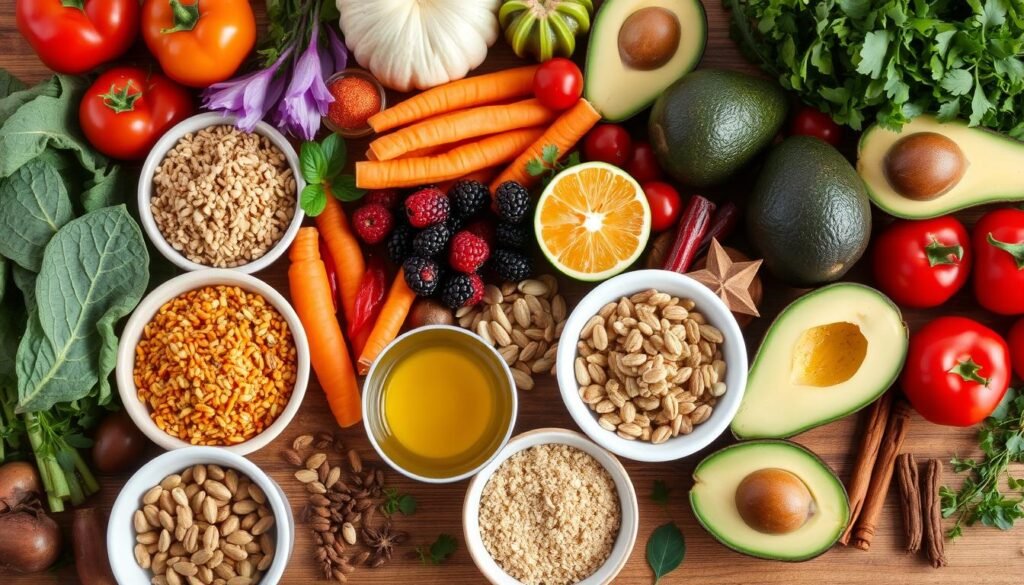
Adding whole grains and nuts to your diet helps manage cholesterol. Foods such as oats, beans, and almonds are high in nutrients and fiber. They’re good for your heart.
Eating a lot of fruits and vegetables boosts heart health. These heart-healthy foods are full of antioxidants. They fight high cholesterol and keep your diet balanced.
If you want to learn about lowering cholesterol, check out how to improve cholesterol levels. Using low cholesterol foods is a smart way to keep your heart healthy. It also lowers your risk of heart disease.
| Food Type | Low Cholesterol Alternatives | Benefits |
|---|---|---|
| Saturated Fats | Olive Oil, Avocados | Reduce LDL cholesterol |
| Fatty Meats | Skinless Poultry, Fish | Lean protein source |
| Refined Grains | Whole Grains, Oats | High in soluble fiber |
| Processed Snacks | Nuts, Seeds | Rich in healthy fats |
| High Sugar Fruits | Berries, Apples | Antioxidant-rich |
Heart-Healthy Eating: Key Principles
Heart-healthy eating focuses on key nutrition rules for a strong heart. These guidelines keep your cholesterol healthy. They also help your heart work its best.
Balanced Meals are made up of lean proteins, good fats, whole grains, fruits, and veggies. It’s important to make half of your grains whole grains for heart health.
Portion Control helps manage how many calories you eat. You can measure servings in cups for grains or ounces for meats. This helps stop you from eating too many calories.
Hydration is key to good health and helps you manage your weight.
Limiting sugar and sodium is smart. The 2020-2025 Dietary Guidelines for Americans suggest eating less saturated fat. Aim for less than 10% of your daily calories from saturated fat, under 6% if you can. Stay away from trans fats completely.
Adults should eat less than 2,300 milligrams of sodium a day. If possible, go for 1,500 mg. Choosing fresh foods instead of canned soups and frozen meals helps you eat less sodium. This is part of eating for a healthy heart.
Eating unsaturated fats, like those in olive or canola oil, is good for your heart. It’s also wise to cut down on added sugars and limit how much alcohol you drink. This supports a heart-healthy lifestyle.
| Recommendation | Details |
|---|---|
| Saturated Fat | Limit to less than 10% of total daily calories, ideally under 6% |
| Trans Fat | Avoid completely |
| Sodium Intake | Maximum of 2,300 mg per day, preferably 1,500 mg |
| Whole Grains | Constitute at least half of grains consumed |
| Lean Proteins | Include poultry, fish, legumes, and plant proteins |
| Physical Activity | Aim for 150 minutes of moderate or 75 minutes of vigorous weekly |
Following these heart-healthy eating tips leads to better nutrition. It also promotes healthy living choices.
Cholesterol Management Tips for a Healthier Lifestyle
Managing your cholesterol is key for a healthy heart. Simple yet powerful cholesterol management tips can really boost your heart health. This makes it easier to live a heart-healthy lifestyle.
Keeping an eye on your cholesterol levels is crucial. You should get regular check-ups to stay updated on your heart health. Make it a point to have these check-ups regularly to watch for changes in your cholesterol.
Understanding food labels is essential. It helps you know what you are eating. Watching out for saturated and trans fats in packaged foods is important. The American Heart Association recommends keeping saturated fats under 7 percent of your total calories.
Planning your meals can help you stay healthy. It means you can make sure to eat foods like fruits, veggies, and grains. Try to get 25 to 30 grams of soluble fiber per day to lower cholesterol absorption.
Having support makes sticking to a healthy diet easier. Family and friends can motivate you. Together, you can make heart-healthy eating a habit.
Eating two portions of fatty fish a week is good for your heart. Fish like salmon or mackerel increase omega-3 fats, which are good for cholesterol. Drinking alcohol in moderation can boost good cholesterol levels. But, too much can harm your health.
| Action | Impact on Cholesterol |
|---|---|
| Regular Cholesterol Monitoring | Helps track levels and make informed dietary choices |
| Reading Food Labels | Aids in reducing intake of harmful fats |
| Meal Planning | Encourages consumption of fruits, vegetables, and fiber |
| Support System | Boosts adherence to healthy choices |
| Incorporating Fatty Fish | Improves omega-3 intake, benefiting cholesterol levels |
These tips for managing cholesterol can lead to healthier choices and better heart health. For more info on managing cholesterol and diet changes, check out resources. Click this link to discover how to lower your cholesterol through diet.
Exercise and Its Role in Cholesterol Control
Regular exercise is key to control cholesterol effectively. The American Heart Association suggests 150 minutes of moderate exercise weekly. This helps lower cholesterol and boosts overall health.
Exercise raises “good” cholesterol, or HDL. This can lower “bad” LDL cholesterol, which forms artery-clogging plaque. People who bike to work have less cholesterol than non-bikers.
Resistance training is great for improving cholesterol. A 2023 study found combining aerobic and strength exercises helps cholesterol the most. Swimming and brisk walking also make cholesterol levels healthier.
In 2021, seniors with diabetes lowered their cholesterol by swimming regularly for 16 weeks.
- Improved Cardiovascular Health: Working out strengthens the heart and improves blood flow.
- Stress Reduction: Exercise helps ease stress, which can affect cholesterol.
- Weight Management: Keeping fit helps control cholesterol and body fat.
To better cholesterol, mix aerobic and strength exercises twice a week. Exercise to reach 50% to 85% of your max heart rate for the best impact on heart health. Regular exercise lowers LDL cholesterol and enhances overall cholesterol health. It shows how vital exercise is.
Making lifestyle changes like exercising and eating right greatly affects cholesterol. For more tips on controlling cholesterol, visit the American Heart Association.
Conclusion
It’s very important to know how diet affects cholesterol for a healthy heart. This review shows that the right food choices can really change cholesterol levels and improve health. Avoiding foods rich in saturated fats is key. This includes high-fat meats, full-fat dairy, and fried items.
Instead, it’s best to eat more vegetables, whole grains, and lean proteins. These foods help maintain a good diet.
Eggs and shellfish have dietary cholesterol but can still be part of a healthy diet if eaten in moderation. Making healthy lifestyle choices like staying active and eating mindfully helps a lot too. These habits work well with a heart-healthy diet to boost heart health.
Following these tips is good for your cholesterol and overall health. By being proactive, you can take charge of your health. This ensures a happy heart and a lively life.