About 95 million adults in the US fight with high cholesterol. This condition is greatly affected by what we eat. The role of saturated fats in our diet is often debated and misunderstood. Though these fats can raise cholesterol and heart disease risks, not all fats are the same. Some foods rich in saturated fats also have essential nutrients that are good for a balanced diet.
This section talks about the different saturated fats. We’ll see how some nutrient-rich foods can be part of a healthy eating plan. From tasty dairy to filling meats, there’s a lot to learn about saturated fats. Knowing which foods to limit and which can be nutritious helps our health. For tips on cutting down bad fats, check out this useful guide.
Key Takeaways
- Saturated fat is solid at room temperature and can impact cholesterol levels.
- Understanding the sources of saturated fats can help manage heart disease risk effectively.
- Some foods high in saturated fats, like yogurt, may actually lower cardiovascular risk.
- Choosing lean meat and liquid oils can help manage saturated fat intake.
- Balanced diets focus on moderation, aiming for less than 10% of daily calories from saturated fats.
Understanding Saturated Fats
Saturated fats are found in foods like butter, cheese, and red meat. They’re solid at room temperature, unlike unsaturated fats. Knowing about saturated fats helps make better food choices.
There’s debate over saturated fat and health. The American Heart Association suggests eating less saturated fat. Too much may increase bad cholesterol, raising heart disease risk. Yet, more research is needed to fully understand this.
Not all saturated fats are the same. For example, processed meats can be harmful, but chocolate’s stearic acid might not be. Choosing unsaturated fats from fish, nuts, or oils is healthier. This knowledge helps people make better food decisions.
Types of Dietary Fats
Knowing about types of dietary fats helps us choose our food wisely. Fats are divided into saturated, monounsaturated, and polyunsaturated types. Each has a different effect on our body and comes from various foods.
Saturated fat is mainly in animal products and some plant oils. Foods like butter, whole milk, and fatty meats such as beef and pork have a lot of it. The American Heart Association says to keep saturated fat under 7% of your daily calories. That means only about 11 to 13 grams for someone eating 2000 calories a day.
Monounsaturated fats are the healthier kind. They are found in plant oils like olive and canola oil. Peanut oil has about 17% monounsaturated fat, while palm oil and butter have around 50% and 60% respectively. Eating these fats is good for your heart and can lower bad cholesterol.
Polyunsaturated fats are also good for you. Canola oil, for example, has about 58% of this kind of fat. These fats improve cholesterol levels and lower heart disease risk. Omega-3 fats, especially from fish, reduce the chance of dying early and are important for a balanced diet.
When looking at saturated vs unsaturated fat, unsaturated should be preferred. This choice improves blood fats and heart health. Swapping saturated for unsaturated fats has beneficial effects, particularly on cholesterol ratios.
It’s important to mix dietary fat sources well in your diet. For more information, check out the American Heart Association. Choosing the right fats can boost your health and happiness.
Foods High in Saturated Fats
It helps to know where saturated fat comes from. Most foods rich in saturated fats are solid at room temperature. They are found in animal and some plant-based foods. Let’s look at the main sources of saturated fats.
Meat Sources of Saturated Fat
Meat is a big source of saturated fat in our diets. Beef, lamb, and pork have about 4.5 grams per 100-gram serving. Poultry, especially with skin, also has a lot of saturated fats. Eating lean cuts like chicken breasts can lower saturated fat intake.
Dairy Products as Saturated Fat Sources
Full-fat dairy products are another key source of saturated fat. For example, one tablespoon of butter has around 7 grams. Ice cream, a tasty treat, can have up to 38 grams per serving. Yet, yogurt and kefir offer health benefits despite their saturated fat content.
Plant-Based Oils High in Saturated Fats
Saturated fat isn’t just in animal products. Oils like coconut oil, about 90% saturated fat, contain 12 grams per tablespoon. Palm oil, too, is high in saturated fat and often found in processed foods. These oils can enhance dishes but should be enjoyed in moderation.
| Food Category | Example | Saturated Fat Content (per 100g) |
|---|---|---|
| Red Meat | Beef | 4.5g |
| Poultry | Chicken with skin | ~7g |
| Dairy Products | Butter | 7g per tbsp |
| Dairy Products | Ice Cream | Up to 38g |
| Plant-Based Oils | Coconut Oil | ~90g |
Recognizing Saturated Fat Content in Foods
Learning to read nutritional labels is key to managing what you eat, especially saturated fats. By looking at these labels, people can choose wisely about the saturated fats in their food. Look for “saturates” to find out the levels of saturated fat.
Nutritional Labels and Saturated Fat
Nutritional labels are packed with info on saturated fats. Foods with more than 5 grams of saturated fat per 100 grams are considered high. Foods with 1.5 grams or less are low. This helps people pick healthier food, fitting the American Heart Association’s advice to keep saturated fat under 6% of daily calories.
Understanding labels is more crucial now, as research on saturated fats and heart health is mixed. Some studies link them to high LDL cholesterol, but others see no tie to heart disease risk. Knowing these facts can make it easier to choose what to eat.
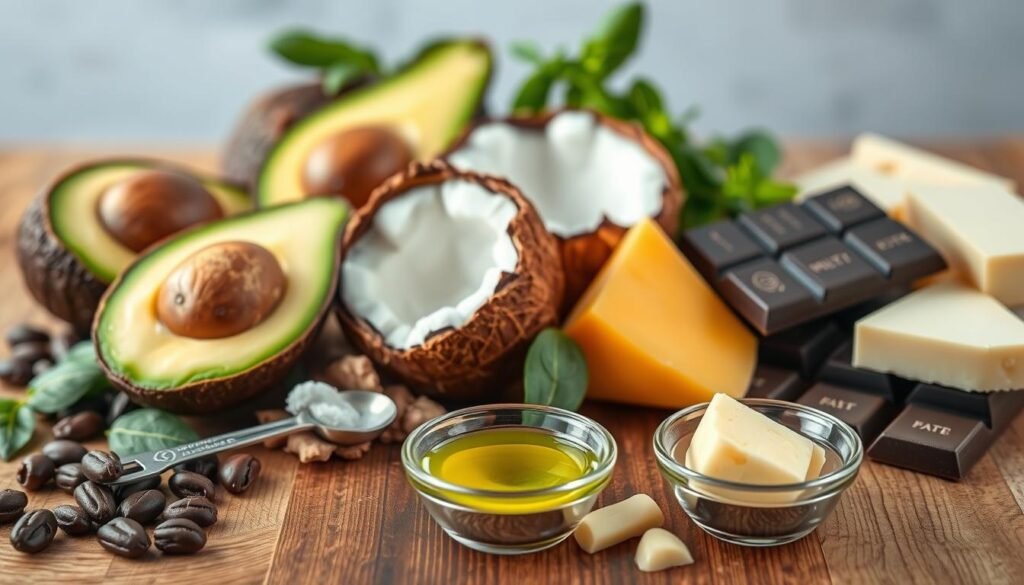
Using these tips when looking at labels can help manage your diet better. It supports heart-healthy eating for better health overall.
Health Implications of Saturated Fat Intake
The health effects of saturated fat are widely discussed and researched. Many studies show that saturated fats can impact cholesterol in our bodies. Knowing how they affect cholesterol helps us make better food choices and be aware of health risks.
Effects on Cholesterol Levels
Saturated fats can increase both LDL and HDL cholesterol levels. LDL cholesterol is often seen as harmful because it raises the risk of heart disease. However, HDL cholesterol is good as it helps clear LDL from our blood. This makes the cholesterol effects of saturated fats complex.
Potential Risks of High Saturated Fat Consumption
Eating too much saturated fat isn’t just bad for the heart. It has been linked to cognitive problems, like Alzheimer’s disease. Dietary advice often tells us to eat less saturated fat and more unsaturated fat. Unsaturated fats can help lower cholesterol and reduce heart disease risk. Studies confirm these findings, but the impact of saturated fat on heart events varies.
Alternatives to High Saturated Fat Foods
Anyone looking to decrease their saturated fat should consider some alternatives. These choices help your heart stay healthy. They also make your meals more nutritious and tasty. Here’s how you can cut back on saturated fat:
- Choose low-fat or fat-free dairy over whole-fat ones. Try Greek yogurt or low-fat milk for great nutrition without much saturated fat.
- Use oils like olive, canola, or safflower instead of butter when you cook. These oils are full of good fats that your heart will love.
- Opt for lean meat types such as tenderloin or loin chops, and use skinless poultry. These options have much less fat than others.
- Include fish like salmon and trout in your meals. They’re full of omega-3 fatty acids and taste amazing.
- Eat whole grains like brown rice, quinoa, and whole wheat bread instead of refined grains. They’re rich in fiber and help lower cholesterol.
- Try unsweetened applesauce or mashed bananas as a sugar substitute in baking. This is a healthier way to sweeten your foods.
- Test out meat alternatives such as tofu and mushrooms for tasty and less fatty meals.
- Add flavors to your dishes with nuts, avocado, and spices rather than cheese. These add texture and can reduce saturated fat.
Making these switches helps you follow a diet good for your heart. This approach emphasizes eating plenty of fresh produce, whole grains, and foods rich in nutrients. Below you’ll find a table comparing some usual substitutes and their advantages:
| Substitute | Original Ingredient | Bennies |
|---|---|---|
| Olive Oil | Butter | Less saturated fat, packed with healthy fats |
| Low-Fat Yogurt | Whole-Fat Yogurt | Lower in both saturated fat and calories |
| Lean Chicken | Skin-On Chicken | Fewer fats, but still delicious |
| Whole Grains | Refined Grains | More fiber and more nutrients |
| Nuts | Croutons | Brings healthy fats and a protein punch |
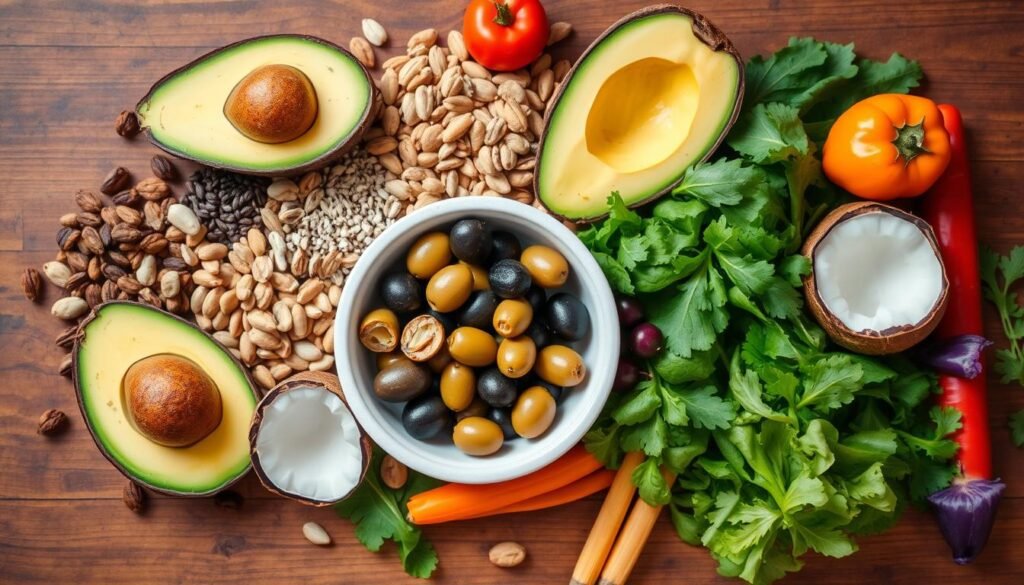
Trying out these healthy fats can open up a whole new world in the kitchen. By making these changes, you embrace a healthier, more colorful lifestyle.
Portion Control for Saturated Fat Management
Managing saturated fat begins with portion control. Knowing how much you consume can lead to healthier eating habits. The Dietary Guidelines for Americans suggest keeping saturated fat under 10% of daily calories. For someone eating 2,000 calories a day, that means no more than 200 calories from saturated fat, about 22 grams. To stay within this limit, adopting strategies to balance your diet is key.
Recommended Daily Intake
Reading product labels helps manage saturated fats. Packaged foods show saturated fat per serving, aiding in dietary management. By choosing low-fat or nonfat options, you can cut down on saturated fat. Foods like nonfat dairy or lean meats are good choices. Adding unsaturated fats, like olive oil, and proteins, like beans and tofu, improves your diet.
Balancing Saturated Fats in a Healthy Diet
Here are some tips for saturated fat management:
- Using vegetable oil sprays to minimize added fats when greasing pans.
- Avoiding high-fat snack foods and deep-fried items.
- Trimming visible fat from meats before cooking.
- Limiting the use of sauces, fats, or oils on vegetables.
- Choosing nuts in moderation to gain health benefits without exceeding fat limits.
- Restricting egg yolk consumption to three to four per week.
By following these tips, you can control your portions. This balance helps manage daily saturated fat intake well.
Culinary Uses of Saturated Fat-Rich Foods
Fats like butter, cream, and cheese make dishes richer and tastier. They are key in many recipes. These fats can make food more enjoyable but we must think about health. They make sauces creamy and baked goods soft, adding to the meal’s enjoyment.
Chefs love to use these fats for several things:
- Sautéing: Butter and ghee are perfect for frying. They add flavor and give food a nice color.
- Baking: For moist cakes and flaky pastries, cream and butter are essential.
- Spreading: Spreading butters or rich cheeses on bread or crackers makes great snacks.
It’s important to enjoy these fats in moderation. Choosing healthier options sometimes can help. Like using olive or canola oil instead. Adults should limit saturated fats to a third of their daily fat intake. This means about 20g for women and 30g for men. This helps in making wise choices in the kitchen.

Tips for Reducing Saturated Fat in Your Diet
Simple steps in your daily meals can help cut saturated fat. Choosing lean meats and smart cooking techniques are key. This makes your diet healthier and lowers fat intake.
Choosing Lean Cuts and Low-Fat Options
Picking lean meat is important to lessen saturated fat. Go for skinless chicken, turkey, and lean beef for less fat. Replace fatty deli meats with tuna or chicken for fewer saturated fats. Also, pick low-fat dairy over full-fat versions for better health. Look for products with green or amber labels for healthier options.
Cooking Methods to Reduce Saturated Fat
Cooking the right way helps cut down saturated fat. Grilling, baking, steaming, or poaching needs less oil than frying. These methods keep food tasty and are healthier. Using oils like olive or rapeseed instead of butter or palm oil also helps reduce saturated fats.
Every little change in what you eat can improve your health over time. Being mindful of these tips and choosing healthier options can lower your saturated fat intake. This boosts your overall health.
Conclusion
Understanding saturated fats is key to eating healthy. It’s about knowing their role in our diets and health. Studies show that saturated fats may not be as bad for the heart as thought.
This information helps us make better food choices while watching our saturated fat intake. Health experts suggest we balance the types of fats we eat. They note that good sources like full-fat dairy can actually help our hearts if we don’t overdo it.
It’s important to know not all saturated fats are the same. Their effects can change based on our overall diet. Recognizing the complex roles of saturated fats aids in making smart eating decisions.
By choosing a variety of fat sources wisely, we can manage our health better. Aim for moderation and diversity in your diet. This approach leads to a healthier lifestyle and better health results.