In the 1960s, researchers found that people living in Mediterranean countries like Greece and Italy had fewer heart disease deaths than those in the US and northern Europe. This discovery sparked interest in the health benefits of the Mediterranean diet. The diet focuses on a balanced lifestyle and has been found to improve cholesterol levels. It lowers “bad” cholesterol (LDL) and increases “good” cholesterol (HDL).
The Mediterranean diet includes lots of nutrient-rich foods. You’ll eat vegetables, fruits, whole grains, legumes, nuts, seeds, and healthy fats like olive oil. The World Health Organization and other major health bodies praise this diet for its cardiovascular benefits. Studies show sticking with this diet can lower heart disease risks, besides managing cholesterol well. It’s a smart choice for everyone’s health.
Key Takeaways
- The Mediterranean diet significantly lowers bad LDL cholesterol levels.
- Balancing the intake of healthy fats, especially from sources like olive oil, is essential.
- Fruits, vegetables, and whole grains are vital components of this heart-healthy diet.
- Numerous studies support the Mediterranean diet’s effectiveness in cholesterol management.
- This dietary pattern is endorsed by major health organizations as a pathway to better health.
Introduction to the Mediterranean Diet
The Mediterranean diet is a tasty and healthy way to eat. It takes ideas from many countries around the Mediterranean Sea. It focuses on lots of vegetables, fruits, whole grains, and olive oil. Nuts and seeds are also key. Eating fish at least two times a week is a must. But, you should eat less red meat.
The Mediterranean lifestyle is about more than choosing what to eat. It values eating together, staying active, and enjoying wine socially. This way of life is good for your body and your connections with others. It’s a full guide to living well.
Experts often rate the Mediterranean diet as one of the best. It matches what the American Heart Association suggests. Eating this way helps keep your heart healthy. It includes foods full of nutrients that are good for your heart. Using virgin olive oil can help keep your arteries clear.
People who eat this way often have better heart health. They might also avoid some long-term illnesses. Studies show their chances of getting diseases like metabolic syndrome go down. This diet is more than food choices; it’s a path to a healthier life.
If you want to learn more, there are lots of resources. You can find meal plans and recipes to help. Check out this guide to start your journey to better eating.
Understanding Cholesterol and Its Effects on Health
Cholesterol is a waxy substance in our blood. It’s crucial for making cells and hormones. We have two main types: low-density lipoprotein (LDL) and high-density lipoprotein (HDL). High levels of LDL can cause plaque buildup in arteries, raising heart disease and stroke risks. HDL cholesterol, on the other hand, helps clear cholesterol from the blood, taking it to the liver for removal. Keeping a balance between LDL and HDL is key for heart health.
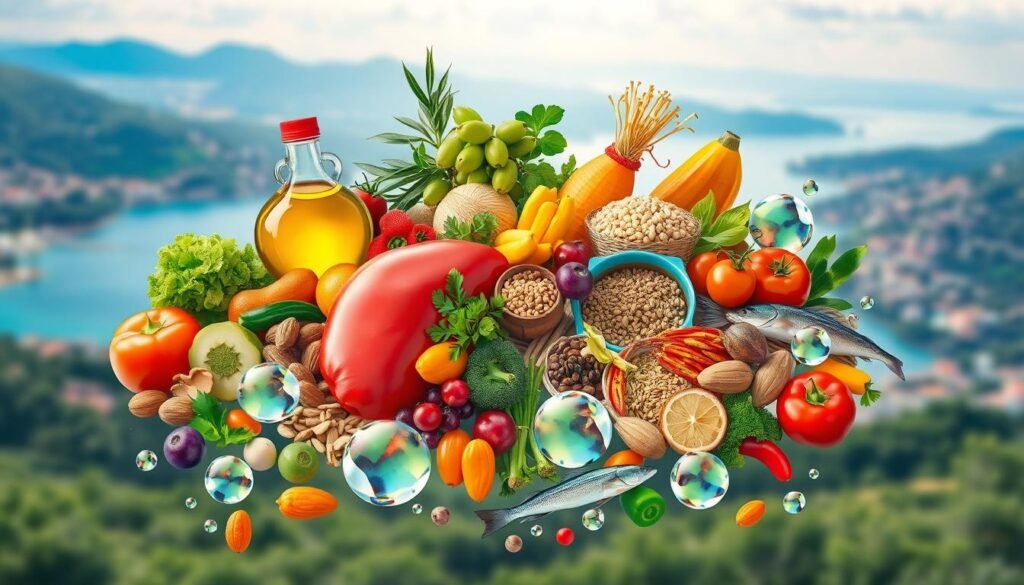
Millions of people globally deal with high cholesterol, leading to around 2.6 million deaths a year. It’s often due to bad diets, being overweight, and not moving enough. Making better food choices is crucial for control. Studies suggest that a Mediterranean diet can greatly lower LDL levels in those at heart risk. This diet is beneficial for people dealing with overweight and obesity too.
What we eat affects 20% to 30% of our cholesterol. Cholesterol comes mainly from animal foods like meat and dairy. However, focusing on dietary cholesterol isn’t as effective as cutting down on saturated and trans fats. The American Heart Association recommends keeping saturated fats to less than 5% to 6% of our daily calories.
To wrap up, cholesterol’s effects on health are significant. Understanding its types and how to manage them can lead to better health. Adopting diets like the Mediterranean diet helps maintain healthy cholesterol levels. This, in turn, boosts heart health.
How the Mediterranean Diet and Cholesterol Are Linked
The Mediterranean diet is known for its health benefits, especially in managing cholesterol. Rich in heart-healthy fats, this diet helps lower bad LDL cholesterol. People who follow it often see their cholesterol levels improve, boosting their heart health.

This diet is linked with higher good cholesterol and lower triglycerides. It includes lots of whole grains, fruits, vegetables, nuts, and beans. Olive oil is a key part, providing healthy fats for better cholesterol.
A study found that older, overweight smokers with dyslipidemia benefited from this diet. About 11% who didn’t get treated for dyslipidemia were diagnosed later. Those who ate according to the Mediterranean diet had fewer cholesterol problems.
Following this lifestyle leads to better cholesterol and possibly more stable blood sugar. It emphasizes eating less meat and carbs than the typical American diet. This matches how people eat in Italy and Spain.
| Diet Component | Effect on Cholesterol |
|---|---|
| Olive Oil | Reduces LDL levels, increases HDL levels |
| Nuts | Helps lower overall cholesterol |
| Fatty Fish | Increases HDL and lowers triglycerides |
| Whole Grains | Improves lipid profile |
| Fruits and Vegetables | High in fiber, supports overall cholesterol management |
This diet focuses on foods full of nutrients and healthy fats. It’s great for those looking to manage cholesterol. Plus, it includes tasty meals that promote overall health.
Mediterranean Diet and Cholesterol: Key Components
The Mediterranean diet is famous for its heart-healthy ingredients. It mainly uses plants, like fruits, vegetables, grains, and nuts. These parts provide important nutrients and fiber.
Olive oil is a big deal in this diet, as it replaces bad fats found in junk food. This change helps lower bad cholesterol and total cholesterol.
Fatty fish, like salmon and sardines, are encouraged for their omega-3 fats. These fish help lower risks of heart disease, strokes, and heart failure. This shows the Mediterranean diet’s power for a healthy heart.
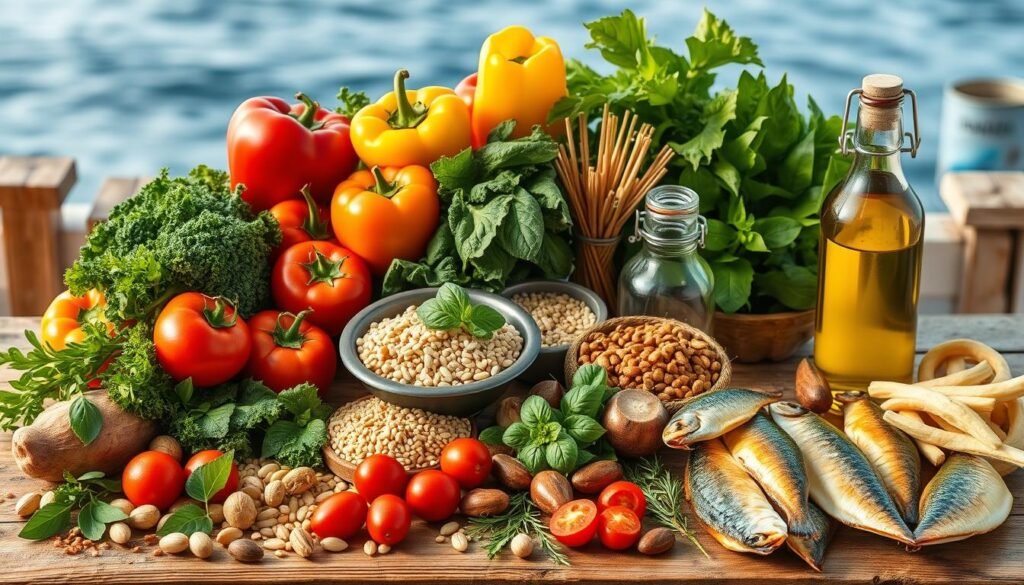
It also means eating less red meat and dairy, opting for more plants. Poultry is okay once a day, but red meat should be just once a week.
The diet suggests eating fruits three times a day and veggies at least three times. It recommends 3-6 servings of grains and starchy veggies, plus legumes three times a week. This plan highlights the Mediterranean diet’s health benefits.
Some folks might enjoy a glass of red wine daily. Women should stick to one glass, and men, no more than two. Sweets should be less than three servings weekly.
Following the Mediterranean diet isn’t just heart-healthy. It also ensures you get all essential nutrients for overall better health.
Cholesterol-Lowering Foods in the Mediterranean Diet
The Mediterranean diet includes lots of cholesterol lowering foods. These foods are great for your heart. You’ll find fiber in things like whole grains and various fruits. Veggies, beans, and nuts also keep cholesterol in check. Adding these foods to your meals boosts health and taste.
Fish that have lots of omega-3, like salmon and sardines, are key. They lower bad cholesterol and raise the good kind. Using extra virgin olive oil adds healthy fats to your cooking. This is great for your heart.
Here’s a table that lists cholesterol lowering foods from this diet and their benefits:
| Food | Benefits |
|---|---|
| Whole Grains | Reduce LDL cholesterol and lower heart disease risk |
| Berries | Rich in antioxidants and can lower cholesterol levels |
| Fatty Fish | Increase HDL cholesterol; high in omega-3 fatty acids |
| Nuts | Lower LDL cholesterol; beneficial for heart health |
| Olive Oil | Contains healthy fats that improve cholesterol balance |
| Beans | High in fiber; support lower cholesterol levels |
Make these cholesterol lowering foods a regular part of your diet for a healthier heart. Check out this helpful resource for more on cholesterol and nutrition. Avoiding foods with lots of saturated and trans fats is also key. Focusing on these dietary choices supports heart health and overall wellness.
Benefits of Adopting a Mediterranean Diet
The Mediterranean diet is famous for its many health perks. It’s especially good for the heart and managing weight. Studies show it cuts the risk of heart disease and helps you live longer. This diet focuses on whole foods, promoting well-being and a balanced lifestyle of enjoyment and moderation.
Heart Health Benefits
This diet is heart-friendly. Research shows it greatly reduces heart disease risks. For example, a study on 26,000 women showed a 25% lower heart disease risk for those on the Mediterranean diet over 12 years.
The PREDIMED trial found eating this diet, with extra olive oil or nuts, cut stroke deaths by 30%. By choosing healthy fats like olive oil and eating nutrient-rich foods, the diet boosts heart health.
Weight Management
The Mediterranean diet helps with weight control. It balances macronutrients for fullness. People on this diet often lose weight well, especially with fewer calories. This diet includes fruits, veggies, nuts, and whole grains, which keep you full.
This approach keeps weight healthy and supports overall well-being. According to U.S. News & World Report, it’s the top diet for 2022, showing its lifestyle benefits.
Healthy Eating Tips for Starting a Mediterranean Diet
Starting a Mediterranean diet can lead you to healthier eating. Simple steps can help you succeed from the start. These tips focus on eating nutritious foods while keeping it fun and sustainable.
Daily Food Recommendations
To feel your best, eat a variety of foods. The Mediterranean diet suggests:
- Fruits and Vegetables: Have 7 to 10 servings a day to cut the risk of heart disease.
- Whole Grains: Pick whole-grain bread, pasta, and brown rice instead of refined grains.
- Healthy Fats: Use olive oil and nuts for unsaturated fats, which can lower bad cholesterol.
- Seafood: Eat fatty fish like salmon and mackerel twice or thrice a week for omega-3 fats.
- Dairy: Choose low-fat or non-fat dairy in moderation.
- Red Wine: If okay, women can have one glass and men two daily, following dietary traditions.
Meal Prep Ideas
Meal planning makes the Mediterranean diet easier to follow. Try these meal prep ideas:
- Overnight Oats: Mix oats with yogurt, fruits, and nuts for a fast breakfast.
- Grain Bowls: Combine quinoa or brown rice with roasted veggies, chickpeas, and olive oil.
- Salads: Make large salads with various greens, nuts, and protein like chicken or beans.
- Snacks: Have fruits, nuts, or yogurt ready for quick, healthy snacks.
- Soups and Stews: Cook and freeze them for easy, nutritious meals later.
Following these tips can build a strong start to your Mediterranean diet plan. Adding these habits gradually can lead to better health and more enjoyable meals.
Sample Mediterranean Diet Plan for Lowering Cholesterol
A Mediterranean diet plan is key for managing cholesterol. It comes with a 14-day menu that mixes up meals. This keeps flavors and nutrients balanced.
The plan includes breakfast, snacks, lunch, and dinner. It focuses on healthy ingredients. For example:
- Breakfast: Greek yogurt with fruits and nuts.
- Lunch: Salads made of whole grains and lean proteins like fish or beans.
- Dinner: Baked fish with veggies and whole grain sides.
Healthy snacks are a big part of the Mediterranean diet. They keep you feeling full. Snacks can be:
- Fresh fruit
- Nuts
- Hummus with whole grain pita
The diet limits processed foods and sugars. It suggests eating whole, natural foods. These are rich in nutrients and fiber. You can enjoy a variety of proteins, including beans, turkey, and salmon.
Studies show that healthy fats are good for cholesterol levels. These fats come from olive oil and nuts. Eating foods full of antioxidants supports heart health. It also boosts your overall wellness.
Here is a table showing a week’s meals on the Mediterranean diet:
| Day | Breakfast | Lunch | Dinner | Snack |
|---|---|---|---|---|
| 1 | Greek yogurt with mixed berries | Quinoa salad with chickpeas and veggies | Grilled salmon with asparagus | Almonds |
| 2 | Oatmeal with bananas and honey | Whole grain wrap with turkey and spinach | Stir-fried shrimp with bell peppers | Baby carrots with hummus |
| 3 | Fruit smoothie with spinach and flaxseeds | Brown rice bowl with beans and avocado | Baked tilapia with broccoli | Greek yogurt |
| 4 | Whole grain toast with avocado | Lentil soup and a side salad | Chicken with roasted veggies | Apple slices with nut butter |
| 5 | Chia seed pudding with strawberries | Couscous with veggies and feta | Stuffed peppers with quinoa | Mixed nuts |
| 6 | Scrambled eggs with spinach and tomatoes | Salmon salad with greens | Pasta with olive oil and garlic | Orange slices |
| 7 | Porridge with fruits | Chickpea salad with cucumbers and tomatoes | Chicken with whole grain couscous | Celery sticks with hummus |
This Mediterranean diet plan is flexible and tasty. It works well for cholesterol management. Following this diet improves heart health. Plus, it helps you enjoy food in a healthy way.
Conclusion
The Mediterranean diet is great for your heart and keeping cholesterol in check. It comes from the eating habits of Italy, Greece, and Croatia. These places have lower heart disease thanks to this diet. It’s all about eating whole foods like fruits, veggies, grains, and using lots of olive oil. This way of eating is both tasty and good for you.
Following this diet can lower bad cholesterol and the chance of getting Type 2 diabetes. It suggests eating fish regularly but not much red meat. This not only keeps cholesterol levels good but also helps with overall health. People who eat this way have fewer heart attacks and strokes. This could mean living a longer, healthier life.
Making the Mediterranean diet part of your day can change your health for the better. It encourages enjoying good, nutritious food that leads to lower cholesterol and a healthier heart. It’s a blend of enjoyment and health. It stands out as a fantastic way for anyone wanting a heart-healthy diet.