Eating two servings of fatty fish like tuna each week can reduce bad cholesterol and triglycerides. The American Heart Association says this change can greatly help your heart. Since heart disease is a top cause of death in the United States, knowing how diet affects cholesterol is very important. This article will look at how tuna helps manage cholesterol and give tips for a heart-healthy life.
This article will show the benefits of omega-3 fatty acids in tuna. It will also suggest ways to add this healthy fish to your meals. By choosing the right foods, you can improve your health and nutrition.
Key Takeaways
- Two servings of fatty fish per week are recommended for optimal cholesterol management.
- Omega-3 fatty acids contribute to lowering LDL cholesterol levels.
- Implementing heart-healthy foods is essential for effective cholesterol management.
- Incorporating tuna into meals can provide multiple health benefits.
- Maintaining a balanced diet can lead to significant improvements in heart health.
Understanding Cholesterol and Its Impact on Heart Health
It’s important to know about cholesterol and its types for a healthy heart. Cholesterol is a waxy substance in our blood. It comes in forms like low-density lipoprotein (LDL), high-density lipoprotein (HDL), and triglycerides. Each has a unique role in how our heart functions. LDL cholesterol is often called “bad” cholesterol. It can lead to artery blockage, raising the risk of heart attacks and strokes.
The Framing of Cholesterol
The U.S. Dietary Guidelines advise eating less cholesterol. This is because our bodies make enough of it. Foods like egg yolks and beef liver have a lot of cholesterol. For example, an egg yolk has about 186 milligrams of cholesterol. That’s more than half of what you should have in a day. Meanwhile, a 4-ounce shrimp serving has 170 milligrams, and a slice of Monterey Jack cheese adds 18.7 milligrams.
Recent research provides new insights into cholesterol’s effects on heart health. A 2019 American Heart Association study found that cholesterol in food might not greatly affect heart disease risk. However, saturated fats in red meat and dairy can raise “bad” LDL cholesterol. This means we need to be careful with these foods. Fast food can increase cholesterol and lower “good” HDL levels. But eating beans and water-packed tuna offers low-cholesterol choices that are better for your heart.
- A 3-ounce serving of beef liver has 333 milligrams of cholesterol.
- Water-packed tuna contains only 10.2 milligrams of cholesterol per ounce.
- Egg whites are a cholesterol-free option that excludes the yolk.
So, understanding cholesterol’s role is key to heart health. By choosing what we eat carefully, we can manage cholesterol. This helps keep our hearts healthier for longer.
What Is Cholesterol and Why It Matters?
Cholesterol is a fatty substance important in our bodies. It helps make hormones, vitamin D, and cell membranes. Knowing what is cholesterol helps us understand its role in health. Cholesterol comes from animal foods, so what we eat affects its levels in our body.
The role of cholesterol is vital for heart health. “Bad” cholesterol, or LDL, can clog arteries and increase heart disease risk. “Good” cholesterol, or HDL, helps remove LDL from the blood. It’s important to keep these levels balanced.
We shouldn’t take monitoring cholesterol lightly. It’s suggested to eat less than 200 mg of cholesterol daily. Saturated fat should be below 7% of our total calories. Eating foods like oats and beans that have lots of soluble fiber can help. They recommend 10 to 25 grams of fiber daily.
| Type of Cholesterol | Recommended Levels |
|---|---|
| Total Cholesterol | Under 200 mg/dL |
| LDL Cholesterol | Less than 100 mg/dL |
| HDL Cholesterol | 60 mg/dL or higher |
Eating plant stanols and sterols can also benefit our cholesterol. About 2 grams daily is good. Omega-3 fatty acids are key too. They come from fatty fish like salmon and lower bad cholesterol and triglycerides. For heart health, it’s wise to limit alcohol to two drinks a day for men and one for women.
Taking control of cholesterol involves understanding diet and lifestyle choices. Knowing the guidelines helps maintain healthy cholesterol levels. This reduces heart disease risks.
The Importance of Omega-3 Fatty Acids
Omega-3 fatty acids are key for heart health and managing cholesterol. We find them mostly in EPA (eicosapentaenoic acid) and DHA (docosahexaenoic acid). These come from fish like tuna, salmon, and mackerel. ALA (alpha-linolenic acid), another type, comes from plant oils such as flaxseed, soybean, and canola.
The American Heart Association suggests eating fish twice a week for enough Omega-3s. This boosts heart health and aids in controlling cholesterol. Most dietary lipids, including Omega-3s, are about 95% absorbed in our guts, showing their dietary value.
Studies show Omega-3s lower triglyceride levels and better heart health. U.S. adults not taking supplements have an average of 3% to 4% EPA and DHA. For those with heart issues or high triglycerides, doctors often advise more.
Farmed fish usually have more EPA and DHA than wild ones. But this varies with their diet and how they’re raised. Eating Omega-3-rich fish is beneficial, but choose wisely. Some fish, like king mackerel and swordfish, have high mercury which is harmful, especially to pregnant women and kids.
If you can’t eat fish, ground flaxseed is a great plant-based ALA option. About 2 tablespoons daily is good for those avoiding fish. Supplements exist, but their effectiveness in heart health is debated. It’s best to get Omega-3s from food when possible.
The Benefits of Tuna for Cholesterol
Tuna is a great choice for managing cholesterol levels. It is full of omega-3 fatty acids. These fats help with tuna for heart health by lowering bad fats and boosting “good” cholesterol. The American Heart Association suggests eating fatty fish like tuna twice a week for heart health.
There’s proof that tuna cholesterol impact is real. Including tuna in your diet can lower bad cholesterol, which causes heart disease. Tuna is also a key source of vitamin D. Just three ounces of canned tuna provides up to half of the daily vitamin D needed. This helps keep your heart healthy and may reduce heart disease risk.
Eating tuna also has other health perks. It can help with weight control, important for managing cholesterol. Teens eating lean fish like tuna tended to lose more weight than those who didn’t. This makes tuna good for health and a diet targeting cholesterol reduction.
For those looking into its benefits, natural tuna products are a healthy choice. They are minimally processed, keeping their nutritional value high. Eating tuna regularly also reduces the risk of diseases linked to poor cholesterol levels.
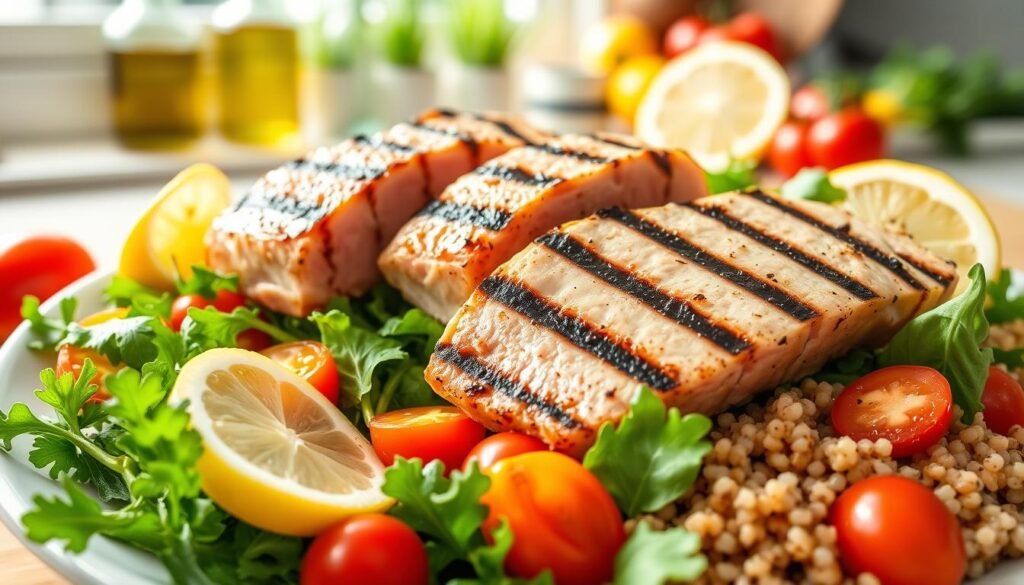
Tuna and Cholesterol Management: Key Nutrients
Tuna is great for your heart and helps manage cholesterol. It’s full of protein and Omega-3 fatty acids. These are good for a heart-healthy diet. Tuna helps lower the bad cholesterol in your body.
Comparing tuna to chicken shows its nutritional value. Tuna has less calories and fat than chicken. For every serving, tuna has only 31 calories and less than a gram of fat.
A fresh tuna serving has 11 mg of cholesterol, which is less than chicken. Tuna is also rich in Omega-3 fatty acids like DHA and EPA. For example, fresh tuna has 25 mg of DHA and 3 mg of EPA.
| Nutrient | Fresh Tuna (1 oz) | Canned Tuna in Water (1 oz) | Boneless Skinless Chicken Breast (3 oz) |
|---|---|---|---|
| Calories | 31 | 24 | 180 |
| Total Fat | <1 g | <1 g | 4 g |
| Cholesterol | 11 mg | 10 mg | 70 mg |
| Omega-3s (DHA/EPA) | 25 mg/3 mg | 56 mg/8 mg | N/A |
| Protein | 7 g | 6 g | 36 g |
Including tuna in your diet is a smart choice for heart health. It’s essential for those who want to keep their cholesterol in check. For more tips on managing cholesterol through diet, visit this useful website.
How Tuna Can Fit Into a Cholesterol-Lowering Diet
Eating tuna can help lower cholesterol and improve heart health. About 33.4% of people deal with high cholesterol. Samantha, a 43-year-old, saw her blood pressure drop by eating high-quality tuna. Her story shows how tuna is beneficial for heart health.
To add tuna to your diet, try replacing red meat with it. This change cuts down on bad fats and boosts your nutrient intake. A 165g serving of light tuna has 191 calories and 42g of protein. This protein is good for your skin and hair.
Tuna’s high protein and low carbs are great for a healthy diet. It helps keep blood sugar levels stable. Tuna is also full of vitamins and omega-3 fatty acids, which may reduce type 2 diabetes risk.
Adding tuna to meals is easy. Nutritionists recommend having it several times a week. You can enjoy it in many ways, such as:
- Tuna salad with leafy greens and olive oil.
- Whole-wheat wraps with canned tuna and veggies.
- Grilled tuna steaks with herbs and spices.
Natural Catch Seafood offers up to 44% off on their tuna products. A diet rich in tuna supports heart and brain health.
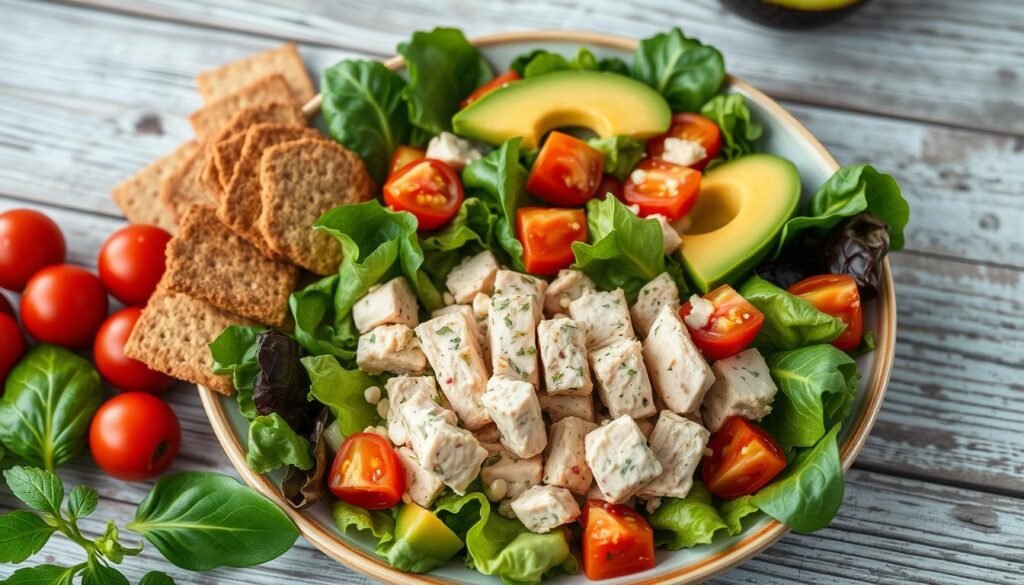
Incorporating Tuna into Your Daily Meals
Adding tuna to everyday meals boosts health easily. It’s great for those watching their weight. Tuna allows you to enjoy tasty, nutritious meals.
Tuna is versatile in the kitchen. It shines in salads, sandwiches, and casseroles. For a quick lunch, try a tuna wrap with veggies and whole grain tortillas.
Tuna offers lots of high-quality protein, perfect for muscle repair. Just 120g gives you about 23g of protein. It’s ideal for fitness lovers and those keeping up muscle.
It’s rich in omega-3 fatty acids too. These are good for the heart and fighting inflammation. Incorporating tuna helps keep your blood vessels healthy, boosting heart health.
Tuna suits everyone in the family. Kids aged 2 to 3 need about 30g. Adults should aim for 120g. This makes it easy to plan meals that fit everyone’s needs.
Try different tuna types to keep meals interesting. Albacore is great in pasta, while skipjack is perfect for quick snacks. Each type offers something special for your dishes.
Tuna lets you get creative with meals. It’s a nutrient-packed food that keeps eating fun and healthy. For more on tuna’s benefits and recipes, check out these resources.
| Type of Tuna | Protein (per 120g) | Omega-3 Fats (g) | Best Uses |
|---|---|---|---|
| Albacore | 23g | 0.4g | Salads, casseroles |
| Skipjack | 24g | 0.5g | Sandwiches, snacks |
| Yellowfin | 22g | 0.3g | Sushi, stir-fries |
| Bluefin | 20g | 0.6g | Grilling, high-fat dishes |
Healthy Tuna Recipes for Heart Health
Healthy tuna recipes are a great choice for heart health. They’re tasty too. These tuna meals use fresh veggies, whole grains, and healthy cooking. This means they’re good for you and fill you up. With dishes from Mediterranean Tuna Chef Salad to avocado tuna toast, eating for your heart can be fun and varied.
The Mediterranean Tuna Chef Salad is a flavorful, nutritious option. It uses 10 oz. of canned albacore tuna. Plus, it has:
- 6 cups of packed baby spinach
- 1 cup of chopped tomatoes (or 1/2 can of no-salt-added diced tomatoes)
- 1/2 cup of chopped red onion
- 1 cup of chopped, peeled cucumber
- 1/4 cup of crumbled reduced-fat feta cheese
- 2 Tbsp. cider vinegar
- 1 Tbsp. lemon juice
- 2 Tbsp. olive oil
- 1 tsp. dried oregano
This salad is only 101 calories per serving and has 3g of fiber. It’s a good balance with 5.1g of fat and 1g of sugar. These recipes show the importance of fresh, low-fat ingredients. They keep food tasty and support heart health.
There are many healthy tuna recipes. They fit all kinds of tastes with methods like skillet and air-frying. Using low-fat dressings and ingredients makes even tuna casserole good for your heart.
Check out a wide range of healthy tuna recipes at this website. Trying these recipes is a great way to eat well and take care of your heart. Plus, you’ll enjoy every bite of tuna.
Comparing Tuna vs Other Fish for Cholesterol Levels
Tuna is a great choice for those keeping an eye on cholesterol. It’s a heart-healthy fish, compared to other types. Understanding this comparison helps us see its benefits.
The cholesterol in fish can vary. Below is a table showing how different fish stack up:
| Fish Type | Cholesterol (mg) | Omega-3 Content (mg) | Protein (g) | Calories |
|---|---|---|---|---|
| Tuna (Yellowfin) | 13 | 1,000 – 1,500 | 21 | 93 |
| Wild Salmon (Coho) | 38 | Over 1,500 | 18 | 124 |
| Farmed Salmon (Atlantic) | 47 | Over 1,500 | 17 | 177 |
| Squid | 231 | Varies | 19 | 140 |
| Shrimp | 194 | 300 | 24 | 84 |
Tuna has the lowest cholesterol among them. It offers less calories and more protein compared to many fish. Wild and farmed salmon may have more vitamin D and omega-3s. But, their cholesterol is higher than tuna’s.
Shrimp and squid have high cholesterol levels. They should be eaten in moderation. Choosing tuna is smart, especially for families. It has less mercury, making it safer for pregnant women and children. This fish is great for managing cholesterol. Plus, it provides key nutrients without too many calories.
Tips for Choosing the Best Tuna Products
When you pick tuna, think about its impact on health and the planet. Look for tasty options that are good for the environment too. This makes the choice both enjoyable and responsible.
Canned light tuna is lower in mercury than albacore tuna. The EPA and FDA advise eating less high-mercury fish. So, light tuna is a smarter option. Pollock and skipjack are also good for the planet. The Monterey Bay Aquarium’s Seafood Watch Program likes light tuna caught by pole and line.
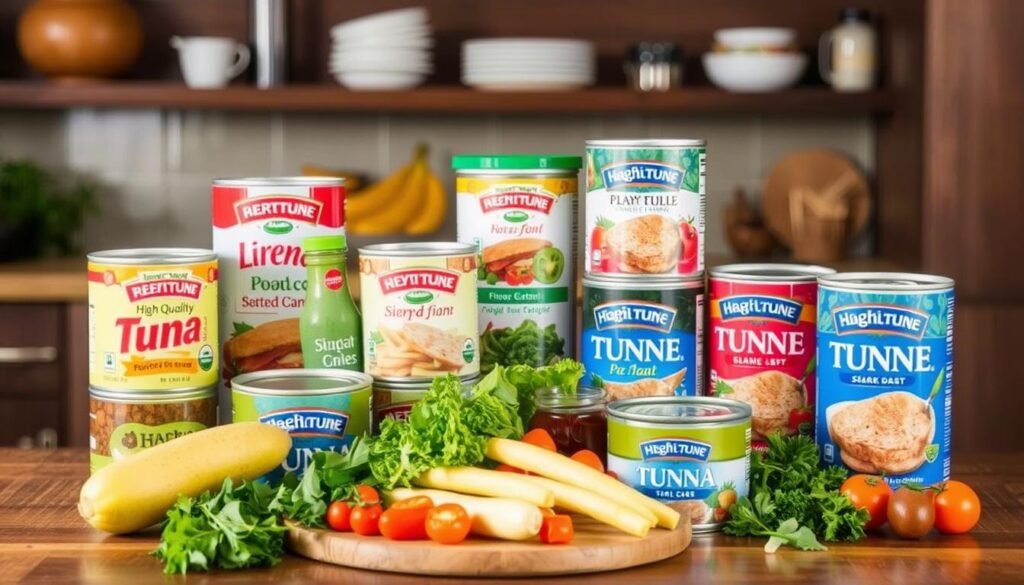
It’s smart to look for labels like MSC certification on tuna cans. These show the tuna was caught without harming the ocean. Trying different kinds like ventresca can make meals exciting. It also means eating high-quality tuna.
| Tuna Type | Mercury Levels | Sustainability | Calories per 1/2 cup | Shelf Life |
|---|---|---|---|---|
| Light Tuna | Lower | Best (pole and line) | 90 | 3-5 years |
| Albacore Tuna | Higher | Moderate (varies) | 90 | 3-5 years |
| Skipjack Tuna | Lower | Best | 90 | 3-5 years |
| Yellowfin Tuna | Higher | Moderate | 90 | 3-5 years |
Also, check for BPA-free packages. This reduces risks from chemicals in can linings. Choosing wisely helps the planet and your health.
To sum up, picking the best tuna means caring for the ocean, knowing the types, and watching for mercury and packaging. These steps help our health and the earth.
Other Dietary Changes to Support Cholesterol Management
Making dietary changes for cholesterol can have a big impact on supporting cholesterol management. It’s good to eat tuna, but other foods can help too. A balanced heart-healthy diet is about choosing the right foods and knowing what to avoid.
- Increase Fiber Intake: Eating foods like oatmeal, barley, black beans, and lentils, which have a lot of soluble fiber, can lower bad cholesterol. Try different fruits like pears and berries for fiber and vital nutrients.
- Limit Saturated Fats: The American Heart Association suggests eating less than 6% of total daily calories from saturated fats. Opt for lean meats, low-fat dairy, and plant-based fats such as olive oil to help control cholesterol.
- Consider Omega-3 Sources: Foods like salmon and sardines are high in omega-3 fatty acids and should be eaten twice a week to reduce triglycerides. Flaxseeds are a good plant-based omega-3 source too.
- Moderate Alcohol Consumption: Reducing alcohol can help with cholesterol management. The AHA says men should limit to 1 to 2 drinks a day and women to 1 drink. This could increase good cholesterol levels.
- Include Healthy Fats: Eat foods with monounsaturated fats, like avocados and nuts such as almonds and walnuts. These help lower bad cholesterol and provide important nutrients.
Adopting these dietary changes for cholesterol leads to a strong plan for supporting cholesterol management. Focusing on a heart-healthy diet not only lowers cholesterol but also boosts overall health.
| Food Item | Heart Health Benefit |
|---|---|
| Oatmeal | Rich in soluble fiber, lowers LDL levels |
| Olive Oil | Plant-based fat that reduces bad cholesterol |
| Salmon | High in omega-3s, lowers triglycerides |
| Almonds | Provides polyunsaturated fatty acids to reduce LDL |
| Pears | High in fiber, helps lower cholesterol |
Conclusion
Tuna is a great food choice for anyone trying to manage their cholesterol and keep their heart healthy. It’s packed with high-quality protein and important omega-3 fatty acids, like DHA. You can easily add this nutritious fish to your meals since serving sizes vary from 56 to 82 grams.
Research shows that tuna has a wide range of health benefits. It contains 90 to 770 mg of DHA per serving. This makes it excellent for heart health. The ratio of omega-6 to omega-3 fatty acids in water-packed tuna is also very good, ranging from 1:3 to 1:7.
Choosing to eat tuna is a smart move for your heart’s health. It’s part of a heart-healthy diet that focuses on quality protein. Eating foods rich in nutrients not only helps your heart but also boosts your overall life quality. Making tuna a part of your diet is a key step towards a healthier, happier life.