Did you know that the American Heart Association recommends eating fish twice a week? Cooking fish at home can make you a better cook and boost your health. We’ll show you the best ways to cook fish, ensuring your meals are both tasty and healthy.
Fish is a great source of lean protein and is packed with Omega-3 fatty acids, which are good for your health. Whether you prefer grilling, baking, or steaming, there’s a method for everyone. These tips will help you easily add more fish to your meals.
Key Takeaways
- Incorporating fish into meals can significantly improve dietary health.
- Healthy cooking methods like baking and steaming can retain flavor while reducing fat content.
- Utilizing various techniques enhances the culinary experience and accommodates different fish types.
- Understanding the health benefits of Omega-3s helps in making informed dietary choices.
- Quick cooking methods like broiling and microwaving are perfect for busy nights.
- Fish preparation at home encourages culinary exploration and skill development.
Introduction to Cooking Fish at Home
Cooking fish at home may feel tricky because it’s so delicate. Learning how to prepare it makes things easier. This helps anyone make tasty meals. Simplicity is key to highlighting the fish’s natural flavor. By using the right cooking methods, great dishes are easy to make. It’s important to know how to check if the fish is done and fresh.
For thick fillets like cod and salmon, it takes 8 to 10 minutes per inch to cook. Thin fillets, like flounder, cook much quicker, needing about two minutes. Using a meat thermometer can help check if it’s done right. White fish will look more opaque when cooked. Meanwhile, pinkish fish will fade in color. Looking into basic fish cooking techniques can teach how to get the best taste and texture.
Choosing fish that is good for the environment and your health is smart. For example, wild Alaskan salmon and Arctic char are great options. Make sure the fish is fresh or has been frozen right. Cooking methods like baking and sautéing are great. They make seafood dishes fun and rewarding to cook at home.
Benefits of Including Fish in Your Diet
Eating fish brings many health benefits. It not only boosts overall health but also gives the body essential nutrients.
Health Benefits of Omega-3 Fatty Acids
Fatty fish like salmon, sardines, and mackerel are rich in omega-3 fatty acids. These fats are great for the heart. In the U.S., men who eat fish weekly have a 15% lower chance of heart disease.
Omega-3s reduce inflammation. This can lower blood pressure and stroke risk. They’re also crucial for brain development. This makes them important for pregnant and breastfeeding women.
Fish as a Source of Lean Protein
Fish is a top source of lean protein. It has high-quality protein but low in saturated fat. It helps with muscle growth and overall health.
Eating fish regularly can also lower asthma risk in kids by 24%. It’s linked to better mental health and less depression. This supports physical and emotional health.
https://www.youtube.com/watch?v=5VjMPXxPbkE
| Health Benefit | Statistic |
|---|---|
| Lower risk of heart disease | 15% less risk with weekly fish consumption |
| Reduced risk of asthma in children | 24% lower risk linked to regular fish intake |
| Decreased risk of neovascular AMD | 53% lower risk when eating fatty fish weekly |
| Improved sleep quality | Enhancements noted in a study consuming salmon thrice weekly |
| Lower mental decline in older adults | Increased fish intake associated with improved cognition |
Cooking Methods for Fish
Exploring fish cooking can really make your dishes stand out. Knowing the right way to cook different fish can help you. You can bring out the best in taste and nutrition this way. It makes every meal with fish exciting and nutritious.
Overview of Popular Techniques
There are many ways to cook fish, each with its own benefits. Let’s dive into some top cooking methods:
- Baking: Recommended for thicker fish, such as salmon and halibut. Covering the fish during baking helps retain moisture.
- Broiling: Suitable for high-fat fish, this method requires grilling in an oven for about 2 minutes per side per inch of thickness.
- Grilling: Ideal for meaty fish like swordfish and tuna, allowing for a smoky flavor, typically 8 to 10 minutes per inch of thickness.
- Pan Frying: Best for flaky and tender fish like sole and branzino, creating a crispy skin via direct contact with heat.
- Deep Frying: Works well with white fish such as cod and tilapia, frying in hot oil (375°F) for 2 to 4 minutes.
- Sous Vide: A precision method that is great for oil-rich fish like salmon, varying cooking times based on thickness.
- Poaching: This gentle technique is perfect for fillets, ensuring a creamy texture while reaching about 140°F internally.
- Steaming: Retains nutrients and flavor, requiring about 10-15 minutes based on thickness.
Choosing the Right Method for Different Types of Fish
Matching your fish with the ideal cooking method is key. Here’s a quick guide to help you decide:
| Type of Fish | Recommended Cooking Method | Timing Guidelines |
|---|---|---|
| Salmon | Baking, Grilling, Sous Vide | 8-10 minutes per inch when grilling; bake covered depending on thickness. |
| Halibut | Baking, Grilling | 8-10 minutes per inch when grilling; check every few minutes when baking. |
| Sole | Pan Frying | Approx. 5-7 minutes per side. |
| Cod | Deep Frying | 2-4 minutes at 375°F. |
| Tuna | Grilling, Sous Vide | 8-10 minutes per inch when grilling. |
| White Fish (e.g., Tillapia) | Deep Frying | 2-4 minutes at 375°F. |
| Arctic Char | Baking, Pan Frying | 8-10 minutes per inch when baking. |
Grilling Fish for Delicious Flavor
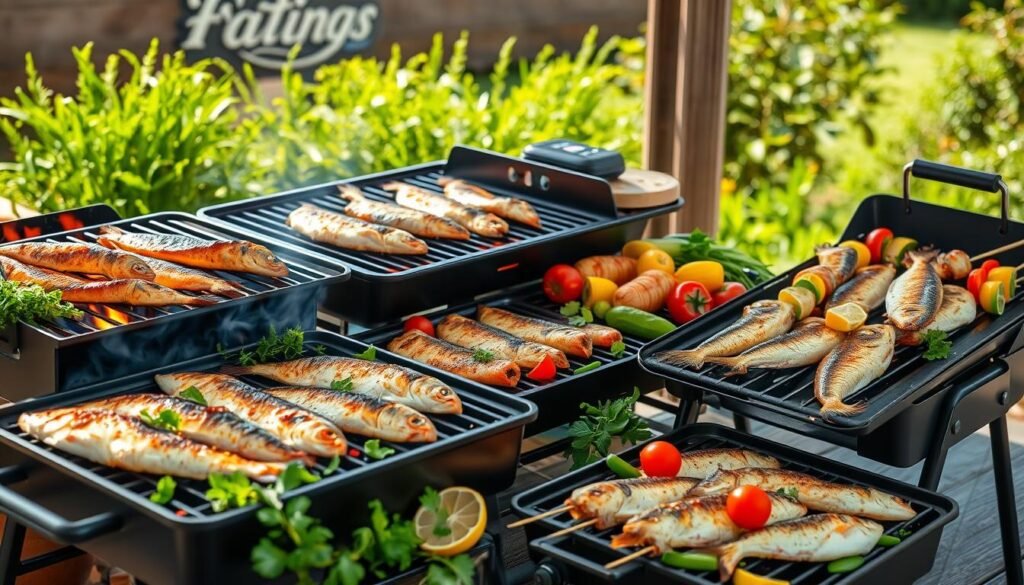
Grilling fish is a tasty way to bring out its flavors in a healthy meal. This method gives it a smoky finish. It’s great during the summer. To grill fish right, preheat the grill. Also, oil the fish and grill grate to stop sticking.
Knowing how to grill fish correctly is key. Fast-cooking fish does well with direct grilling, usually in 10-15 minutes. Fish like mahi-mahi and swordfish are perfect for this. But, tender fish like sole might not handle direct heat well. For these, try indirect grilling. It works like an oven and you don’t have to flip the fish.
A different way to grill is wrapping fish fillets with veggies in foil. This adds moisture and taste to the fish. If you pre-cook some ingredients, like potatoes, the meal gets even better.
When checking if the fish is cooked, use a digital meat thermometer for exactness. The fish should look opaque and flaky when it’s ready. Also, seeing white liquid, known as albumin, especially in salmon, tells you it’s done.
Baking: A Simple and Effective Method
Baking fish is both simple and great for keeping the food’s nutrients and taste. It’s an easy method, chosen by many who want an uncomplicated way to cook fish. Baking seals in moisture, making the meal more enjoyable, especially when using parchment or foil.
Benefits of Baking Fish
Baking fish is reliable because it prevents the fish from getting dry. This is true for thicker fillets or fish that have more oil. It also helps avoid overcooking, which can ruin a fish dish. Delicate fish like Tilapia and Cod do well when baked in parchment, keeping them moist and flavorful.
Recommended Baking Temperatures and Times
To bake fish perfectly, the temperature should be between 325°F and 400°F. Thicker fillets often need 15 to 20 minutes to cook well. They should flake easily with a fork. Using foil, cooking might take 8 to 15 minutes at a bit higher temperature, around 430°F (220°C).
Leftover baked fish stays good in the fridge for about two days. This makes planning meals easier. Baking fish brings variety to meals and helps us enjoy fish as a healthy choice for dinner.
Broiling Fish: Quick and Healthy Cooking
Broiling fish is fast and healthy, great for those who want to save time but love flavor. Using high heat from above makes it quick, letting you cook fish in under ten minutes. You get a golden exterior and juicy inside. Salmon and mackerel are great for broiling because of their healthy fats.
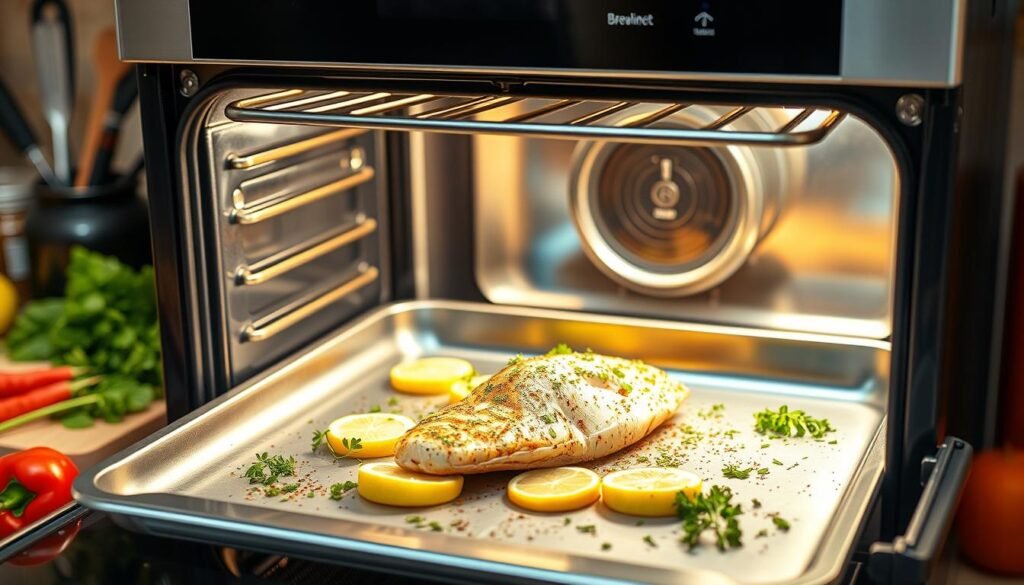
The USDA suggests eating seafood twice a week for heart health. Seafood, packed with vital nutrients, keeps your heart and brain in top shape. Broiling is light and may cut down the risk of stroke, heart disease, and Alzheimer’s, unlike frying.
To get the best results,
- Preheat the broiler for 5 to 10 minutes before cooking.
- Put oil on both sides of the fish to add flavor and texture.
- Try adding mayonnaise, yogurt, or sherry vinegar with lighter fish like tilapia and catfish.
Broiling fish takes about 20 minutes in total. For a zesty dish, try citrus and herb broiled fish with orange juice, lemon juice, and olives. Up to six tablespoons of melted butter in these recipes boost taste without too much fat.
To store broiled fish, keep it in the fridge for up to four days or freeze for two months. Always thaw it overnight in the fridge for freshness. Remember, cooked fish should reach an internal temperature of 145°F for safety and flavor.
Many fish, like red snapper, trout, and haddock, are great for broiling. This method is a key part of a healthy fish diet. If you’re curious about shellfish, this article has more info.
Poaching: A Gentle Cooking Technique
Poaching is a gentle way to cook fish. It keeps the fish moist and full of flavor. It’s perfect for cod, salmon, and shrimp. These fish taste great when simmered in tasty liquids. Poaching means cooking fish in a simmering broth or stock. This lets us add all sorts of flavors to the fish.
Flavoring Options for Poached Fish
Different poaching liquids can make the fish even tastier. Here are some great choices:
- Chicken stock or vegetable stock for the base
- White wine or port adds a fruity taste
- Water with bay leaves, lemon, herbs, garlic, and celery for freshness
- Flavored butters or oils make the dish richer
Ideal Fish Types for Poaching
Knowing the best fish to poach can make a big difference. Here’s a list of the best ones:
| Fish Type | Cooking Time (minutes) |
|---|---|
| Cod | 6-10 |
| Salmon | 6-10 |
| Shrimp | 4-6 |
| Tuna (thick steak) | 10 |
Keep the poaching temperature between 140 to 160 degrees Fahrenheit. Use an instant-read thermometer. It will tell you when the fish hits about 135 degrees Fahrenheit inside. This means your fish will be tender, soft, and flaky.
Steaming Fish: Retaining Flavor and Nutrients
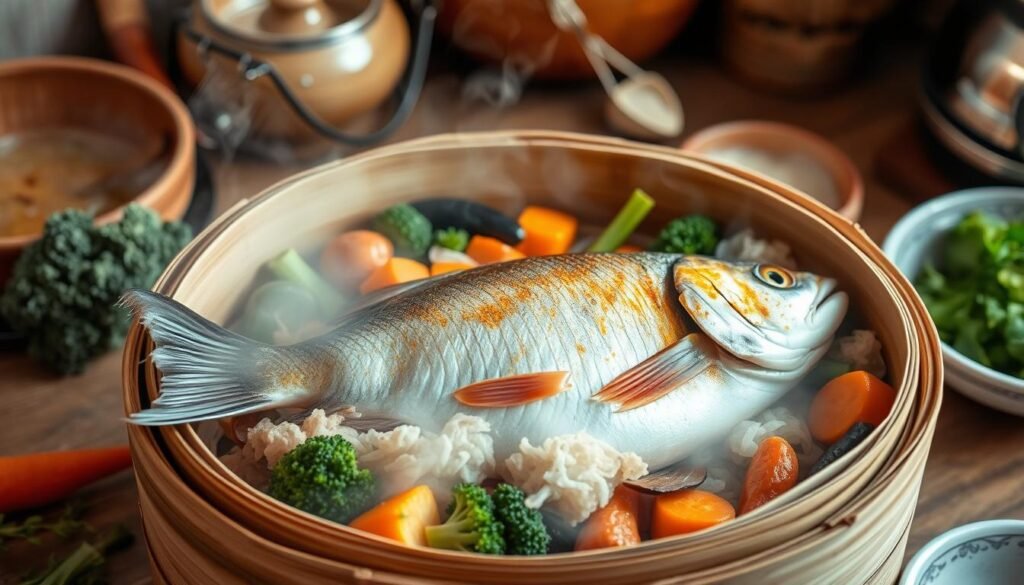
Steaming fish is a top choice for keeping its taste and nutrients. This method cooks fish over boiling water for about 8-10 minutes. It keeps the fish moist and full of flavor.
Steaming is great for your health, resulting in a light dish. It’s perfect with various sauces. Fish like tilapia and snapper are great for steaming. They soak up flavors yet stay firm. Always season the fish well for the best taste.
This cooking way is good for keeping in the nutrients. Steaming prevents the loss of important nutrients compared to other methods. The low heat keeps the fish’s juices and nutrients from leaking out. This makes for a healthy meal.
Steaming works with many fish types. It’s a smart choice for anyone wanting a healthy meal. Using a bamboo steamer or microwave makes it easy for everyone. A meal made this way is both delicious and good for you.
Frying Fish: Techniques and Tips for a Crispy Finish
Frying fish brings a joyful mix of crispy outside and tender inside. It’s a beloved method in many kitchens. To get that perfect golden crust, there are simple fish frying techniques. You can choose between shallow or deep frying. Pick the right oil, like canola, vegetable, sunflower, peanut, or avocado.
It’s vital to keep the oil at the right temperature. Aim for 375 to 400 degrees Fahrenheit for the best frying. This makes the fish cook fast. It gets a thin, crispy crust in just 3 to 4 minutes. Fish fillets should be about 1 inch thick for the best outcome.
Prep your fish to boost the final taste. Soaking it in buttermilk adds moisture for a crispy coat. Add cornstarch to your flour dredge for an extra crunch. Your batter should be thicker than heavy cream. Use cold club soda to make it lighter.
For breading, try different breadcrumbs. Panko brings crispiness but burns quicker than others. Only add 1 teaspoon of salt per cup of flour to your dredges and beer batters. If making homemade batter, mix 10-12 ounces of beer per cup of flour.
Adding malt vinegar and lemon wedges makes fried fish better. Yet, some recipes don’t need these. Want to know more about getting that crispy finish? Check out comprehensive frying tips for fish. It’s full of insights and techniques to improve your frying skills.
Conclusion
Cooking fish at home brings loads of flavors and great health perks. Trying out different cooking methods like grilling, baking, and poaching lets home cooks make tasty meals. This suits many tastes and needs.
Steam and bake fish to keep its good fats, like DHA and EPA, especially if you’re avoiding frying. Knowing how to cook fish right helps keep its nutrition. Check out this study to learn more about cooking fish healthily.
Using various healthy cooking ways makes it easier to cook fish right. It helps people eat more fish regularly. With the right cooking, seafood dishes become both yummy and good for you.