A 2021 study showed that eating fish twice a week could lower the risk of heart problems. This finding highlights the need for heart-healthy fish in our diets, especially for cholesterol control. High cholesterol is a big health threat, but the right fish choices can make a difference. Fish not only have low saturated fats but also provide nutrients and omega-3 fatty acids, which help the heart.
This guide will cover fish that are good for lowering cholesterol. We will talk about the benefits of both fatty and lean fish. You’ll learn how to add these healthy fish to your meals easily. Using fish wisely in your diet can help you manage cholesterol better.
Key Takeaways
- Incorporating at least 2 portions of fish weekly can aid heart health.
- Oily fish like salmon and tuna provide essential omega-3 fatty acids.
- White fish serve as a healthy, low-fat alternative to red meat.
- Women planning pregnancy should limit oily fish consumption.
- Opting for sustainable fish sources supports environmental health.
- Canned fish can offer significant nutritional benefits.
- Cooking methods impact the heart-healthy advantages of fish.
Understanding Cholesterol and Its Impact on Health
Cholesterol is a waxy substance that’s vital for making hormones, vitamins, and cells. It significantly affects health, especially concerning the heart. There are two kinds of cholesterol: LDL, the “bad” kind, and HDL, the “good” kind. High levels of LDL can lead to plaque in arteries, causing heart disease. Meanwhile, HDL helps move LDL out of the bloodstream, which is good for heart health.
What you eat, your genes, and how you live all affect your cholesterol. The American Heart Association advises eating fish weekly to help lower cholesterol. A diet filled with fiber, veggies, and fish, instead of red meat and full-fat dairy, is best. Foods like salmon and mackerel are great choices because they have a lot of omega-3 fats, lowering disease risk.
Keeping cholesterol in check means making smart food choices. Saturated and trans fats, for instance, bump up bad cholesterol. The National Heart, Lung, and Blood Institute warns about these fats. Picking low-mercury fish is recommended by the FDA. Eating fish in moderation and cutting back on fatty animal products can make a big difference in your cholesterol levels.
How Fish Can Benefit Cholesterol Levels
Fish in your diet brings big fish benefits for cholesterol. This is mostly because they have omega-3 fatty acids. These acids cut down triglycerides and better the cholesterol in your body. Fish are also great because they don’t have much saturated fat. This makes them a smart choice for keeping cholesterol in check.
The American Heart Association tells us to eat omega-3 rich fish at least two times a week. Some great cholesterol-lowering fish are salmon, herring, and trout. Even a small 3.5-ounce portion gives you nutrients that help your heart. Plus, these healthy fats help keep your cholesterol where it should be.
Though fish does have some cholesterol, it’s not as bad as saturated fat. For example, salmon has 52 mg of cholesterol and just 0.8 g of saturated fat. This makes it a good choice for your heart. Fish like tilapia and cod also have good fat-to-cholesterol numbers.
Eating lots of cholesterol-lowering fish follows health organization guidelines. It means eating less saturated fat, which is less than 7% of total calories. Choosing fish as your main protein adds variety to meals. It also helps your heart stay healthy over time.
| Fish Type | Cholesterol (mg/3 oz) | Saturated Fat (g) | Trans Fat (g) | Total Fat (g) |
|---|---|---|---|---|
| Salmon | 52 | 0.8 | 0.02 | 4.7 |
| Shrimp | 161 | 0.04 | 0.02 | 0.24 |
| Tilapia | 50 | 0.8 | 0.0 | 2.3 |
| Cod | 99 | 0.3 | 0.0 | 1.5 |
| Canned White Tuna | 72 | 1.3 | 0.0 | 5.1 |
| Trout | 63 | 1.2 | 0.0 | 7.2 |
Best Fish for High Cholesterol Diets
Adding fish to your diet helps lower cholesterol. It’s important to know the difference between fatty and lean fish. Both are good for your heart health. These fish are packed with nutrients that help your heart.
Fatty Fish vs. Lean Fish
Fatty fish like salmon, mackerel, and sardines are great for your heart. They lower triglyceride levels and are full of omega-3 fatty acids. On the other hand, lean fish like cod and tilapia offer lots of protein without much fat. Whether you prefer fatty or lean fish, both can fit into a diet that’s good for your heart.
Nutritional Profiles of Various Fish Options
| Fish Type | Calories (per 3 oz) | Protein (g) | Saturated Fat (g) | Cholesterol (mg) |
|---|---|---|---|---|
| Salmon | 206 | 22 | 4.5 | 63 |
| Sardines | 208 | 23 | 2.5 | 61 |
| Mackerel | 260 | 20 | 6.2 | 70 |
| Trout | 190 | 22 | 2.7 | 62 |
| Cod | 90 | 19 | 0.6 | 45 |
The nutrition facts for these fish show why they’re top choices for managing cholesterol. Salmon, for example, is full of omega-3s. Mixing fatty and lean fish is key for the best heart health benefits.
Omega-3 Fatty Acids: Key to Heart Health
Omega-3 fatty acids are crucial for your health, especially your heart. These fats help reduce inflammation, lower triglycerides, and improve arterial health. Health experts recommend eating omega-3 rich fish for cholesterol management regularly.
The American Heart Association suggests eating unsaturated fat-rich fish two times a week. This helps lower heart disease risk. Aim for two servings of omega-3-rich fish each week, about 4 ounces per serving. Salmon and mackerel, full of good oils, are top choices.

Omega-3s do more than manage cholesterol. They protect against heart diseases too. While fish oil pills are an option, whole fish offers more health pluses. Whole fish provides nutrients that pills don’t.
| Omega-3 Rich Fish | Benefits | Recommended Servings/Week | Mercury Level |
|---|---|---|---|
| Salmon | High in omega-3s, supports heart health | 2 servings | Low |
| Sardines | Rich in calcium and omega-3s, good for cholesterol | 2 servings | Low |
| Mackerel | Excellent source, helps reduce triglycerides | 2 servings | Moderate |
When picking fish, think about mercury levels. This is vital for pregnant folks and kids. Steer clear of high-mercury fish like shark and swordfish. The FDA recommends eating no more than 12 ounces of fish weekly. This ensures omega-3 benefits outweigh the risks. For more info, check out this informative guide.
Top Fish for Reducing Cholesterol
Adding certain fish to your meals can play a big part in lowering cholesterol. Omega-3 fatty acids are the key. They’re great for the heart. Today, we’ll look at the best fish to keep your heart in shape and manage cholesterol well.
Salmon: A Powerhouse of Nutrition
Salmon is one of the best for fighting cholesterol. It’s loaded with omega-3s. These fats help keep the heart healthy by reducing bad cholesterol and fats. Salmon is top-notch for heart health. Try grilling or baking it to keep its good properties.
Sardines: Small but Mighty
Sardines may be tiny, but they’re full of nutrients. They’re safe with low mercury levels and have lots of omega-3s and vitamin D. Eating sardines can help lower cholesterol and boost heart health. They’re easy to add to any meal, making them perfect for a heart-healthy diet.
Mackerel: Rich in Omega-3s
Mackerel is another excellent choice for omega-3s. This oily fish is packed with fats that are good for the heart. Adding mackerel to your diet can help with cholesterol and improve your health overall.
| Fish Type | Omega-3 Content (grams/100g) | Health Benefits |
|---|---|---|
| Salmon | 2.5 | Reduces LDL cholesterol and supports heart health |
| Sardines | 1.5 | Rich in vitamin D and beneficial for lowering cholesterol |
| Mackerel | 3.0 | Highly supportive of cardiovascular health and cholesterol management |
Want to better your cholesterol levels? Including these heart-friendly fish in your diet is a smart move. But don’t forget to talk to a healthcare professional for advice that fits you. They can offer guidance on cholesterol management. For more details, check out the best fish for cholesterol control.
Healthy Cooking Methods for Fish
The way you cook fish matters a lot. It’s key to pick healthy fish cooking methods. Going for poaching, steaming, or baking can boost the health perks. These are great for folks who want to focus on cooking fish for heart health. They help keep in the good omega-3 fats and vitamin D which are crucial for the heart.
Frying isn’t so good because it lowers the omega-3s and adds bad stuff. For instance, deep-frying cuts down omega-3 levels by up to 85%. It’s smarter to choose gentle cooking methods like poaching. This way, you keep all the nutrients and avoid bad fats.

| Cooking Method | Impact on Omega-3 Fatty Acids | Formation of Harmful Compounds | Preservation of Vitamin D |
|---|---|---|---|
| Grilling | Significantly Reduced | High Levels of HAs, PAHs, and AGEs | Moderate Loss |
| Frying | Very Low (up to 85% loss) | Very High Levels of HAs, PAHs, and AGEs | 50% Loss of Vitamin D |
| Baking | Good Retention | Low | Good Preservation |
| Steaming | Excellent Retention | Very Low | Good Preservation |
| Poaching | Excellent Retention | Very Low | Excellent Preservation |
| Microwaving | Good Retention | Low | Moderate Preservation |
Knowing how to cook fish is a big deal. It helps people who care about cooking fish for heart health. Plus, it keeps the fish good for your meals.
Seafood Choices for Lowering Bad Cholesterol
Making the right seafood choices can really help manage cholesterol. It’s key to know about the mercury in fish. Choosing seafood with low mercury is safe and healthy, especially for kids and pregnant folks.
Choosing Low-Mercury Options
Picking low-mercury fish is crucial. Salmon, sardines, and trout are great for lowering bad cholesterol. They’re good for your heart and keep mercury risks low. Pregnant people and kids should really focus on these safe options.
How to Incorporate Fish into Your Diet
Adding fish to your daily meals is easy with some creativity. Here are healthy ways to enjoy fish:
- Prepare canned tuna in salads for a quick, nutritious lunch.
- Create flavorful fish tacos using grilled salmon or shrimp.
- Craft comforting fish soups with assorted vegetables and seasonings.
These ideas make meals exciting and help manage bad cholesterol. By eating fish regularly, you’ll taste different flavors and boost your health.
| Fish Type | Mercury Level | Heart Health Benefits |
|---|---|---|
| Salmon | Low | Rich in Omega-3 fatty acids, supports heart health |
| Sardines | Low | High in calcium and Omega-3, good for overall health |
| Trout | Low | Excellent source of protein and Omega-3s |
| Shrimp | Moderate | Low in saturated fat, can be enjoyed occasionally |
Serving Recommendations for Optimal Health
Eating fish regularly is part of staying healthy. Health experts say adults should eat omega-3-rich fish twice a week. One serving is about 3 to 4 ounces. Eating this way helps your heart and keeps cholesterol in check.
The American Heart Association says these servings make your heart stronger. Fish like salmon, mackerel, and sardines are very good for you. Eating them often lowers your risk of heart issues and stroke. Following fish serving rules gives you omega-3s, which are key for heart health.
It’s also important to pick seafood that’s good for the planet. Choosing fish like wild salmon and Pacific sardines is healthier for you and the earth. Picking the right seafood means eating well and helping the environment. This way, you support healthy eating for your heart and our world.
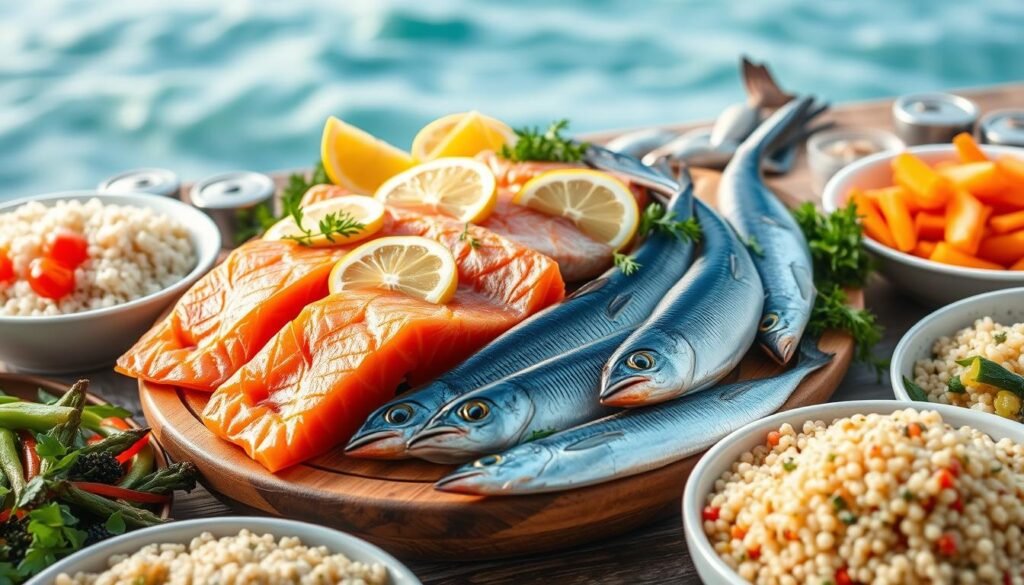
Adding fish to your meals can boost your health. Following these tips and choosing wisely helps your heart. It shows how eating well lowers cholesterol and improves wellbeing.
Potential Risks of Eating Fish
Fish is great for your health, but you should know about the risks of eating fish. Bigger fish like shark and swordfish often carry more mercury. This is a big deal for pregnant women, new moms, and kids.
Mercury can harm your brain and how you develop. Stay away from swordfish, shark, and king mackerel. They have a lot of mercury. Instead, try salmon or sardines. They are good for you and have less mercury.
Eating fish like salmon, not fried, once or twice a week is good for your heart. This advice comes from the American Heart Association. Make sure to eat safely. Talking to doctors about what you eat can help keep you safe.
| Fish Species | Mercury Level | Omega-3 Fatty Acids | Recommended Intake |
|---|---|---|---|
| King Mackerel | High | Moderate | Avoid for pregnant women and children |
| Sardines | Low | High | 2-3 servings per week |
| Salmon | Low | High | 2 servings per week |
| Bluefin Tuna | High | Moderate | Avoid |
| Canned Light Tuna | Low | Moderate | Up to 3 times per week |
Knowing which fish to choose helps you eat better. This knowledge balances the risks of eating fish with its health benefits. It leads to a healthier seafood diet.
For safe and healthy seafood choices, check out this informative resource.
Conclusion
Choosing the right fish is key for a healthy heart. Omega-3 fatty acids are vital. They are found in fish like salmon. This can boost heart health and lower bad cholesterol.
Fish like salmon have special nutrients that help the heart. Including fish in your diet gives you important vitamins. It keeps your cholesterol in check. Try different fish and cooking methods for the best results.
Eating seafood regularly is good for your health. Choosing fish with low saturated fat and lots of omega-3s is smart. It helps manage cholesterol and improves heart health. For more info on salmon and its benefits, visit this source.