Did you know more than 50% of the world’s seafood is now farmed? The health of our oceans is dropping fast, thanks to too much fishing and harmful practices. Choosing seafood wisely helps save marine life and supports local people’s jobs.
Many people now want seafood that’s good for the ocean and caught by local fishers. The Monterey Bay Aquarium Seafood Watch Program is a big help. It uses colors to show which fish are okay to eat and which aren’t. This tool makes it easy to pick seafood that’s okay for the planet.
Places like Chef Rolf’s New Florida Kitchen are setting a great example. They use seafood that’s local and in season. This helps the oceans and local economies. Want to learn more about eating sustainably? Check out Chef Rolf’s push for fresh, eco-friendly choices.
Key Takeaways
- Farmed seafood now represents over 50% of global consumption.
- The Seafood Watch Program offers a color-coded guide to fish sustainability.
- Choosing wild salmon is often healthier than opting for farmed salmon.
- Support restaurants that prioritize sustainable seafood practices.
- Local and seasonal seafood helps minimize transportation impacts.
- Responsible sourcing contributes to the health of marine ecosystems.
- Educating oneself about sustainable options promotes ethical seafood consumption.
Understanding Sustainable Seafood
Sustainable seafood comes from methods that help keep the ocean and fish populations healthy for the future. With over a third of fish populations declining, it’s vital to choose sustainable seafood. The United Nations says 60% of fish are being fished to their max.
It’s all about fishing responsibly, keeping biodiversity, and disturbing marine habitats as little as possible. By reversing the effects of overfishing and harmful practices, sustainable fishing is key. Switching to efficient fishing methods also cuts down carbon emissions, making these seafood options low-carbon.
The Marine Stewardship Council (MSC) blue fish tick shows which seafood is sustainably sourced. These certified options come from well-managed places and you can trace them back to where they came from. Plus, wild-caught fish are better for the planet and have fewer calories and fat than farmed ones.
People are now looking for less common, sustainable seafood choices. This includes smaller fish that are rarely overfished. It helps achieve the goal of sustainable seafood that’s good for oceans and communities alike.
The Importance of Sustainable Seafood Choices
34% of fish stocks are overfished, showing how vital sustainable seafood is. Unsafe fishing harms marine life and affects people who fish for a living. By choosing eco-friendly seafood, we help marine life thrive and keep our oceans diverse.
People can truly make a difference by picking seafood approved by groups like the Marine Stewardship Council (MSC). This organization works worldwide to ensure fisheries in over 100 countries are sustainable. Fisheries that meet these tough standards can enter better markets and fetch higher prices, helping local fishing communities economically.
Consumer demand also plays a big role in seafood sustainability. More than 80% of seafood buyers think preserving seafood for the future is crucial. The MSC’s blue fish label makes it easy for shoppers to find seafood that’s good for the planet.
Eating lower on the food chain lessens our ocean impact. Choosing smaller species, like sardines, promotes sustainability and makes the most of the ocean’s bounty.
Impacts of Overfishing on Ocean Health
Overfishing greatly harms the ocean’s health, leading to less fish and disturbed ecosystems. Statistics reveal that overfished stocks have tripled since 1970. Now, 37% of fish stocks are considered overfished as of 2024. This reduces fish numbers and puts species and their homes at risk.
In 2020, global fish catches dropped by 4.0% from the past three years. By 2019, only 64.6% of fish stocks were at safe levels, a drop from 65.8% in 2017. Unsustainable fishing reduces key fish populations and costs communities about USD 80 billion annually.
- Over 1 billion people rely on fish for essential nutrients.
- Illegal fishing activities cost between US$10 and 23.5 billion every year, harming both economy and marine life.
- In the U.S., over 80% of seafood is imported, often from places with high accidental catch rates.
Overfishing doesn’t just affect fish; it upsets the balance of marine life. This can increase the numbers of smaller fish and creatures, causing less biodiversity and damage to homes for marine life. Negative impacts spread through the marine world because everything is connected.
Encouraging better fishing methods is key to saving the ocean. Sustainable fishing helps the seas and feeds more people globally. Choosing seafood wisely supports a thriving ocean, helping all creatures, including us.
For better personal and ocean health, consider making smart food choices.
Eco-Friendly Seafood Options
Choosing eco-friendly seafood is key to a sustainable diet. Many people stick to shrimp, salmon, tuna, and cod. This can strain certain fish populations. Trying a variety of sustainable seafood can reduce pressure on these populations and add new flavors to meals.
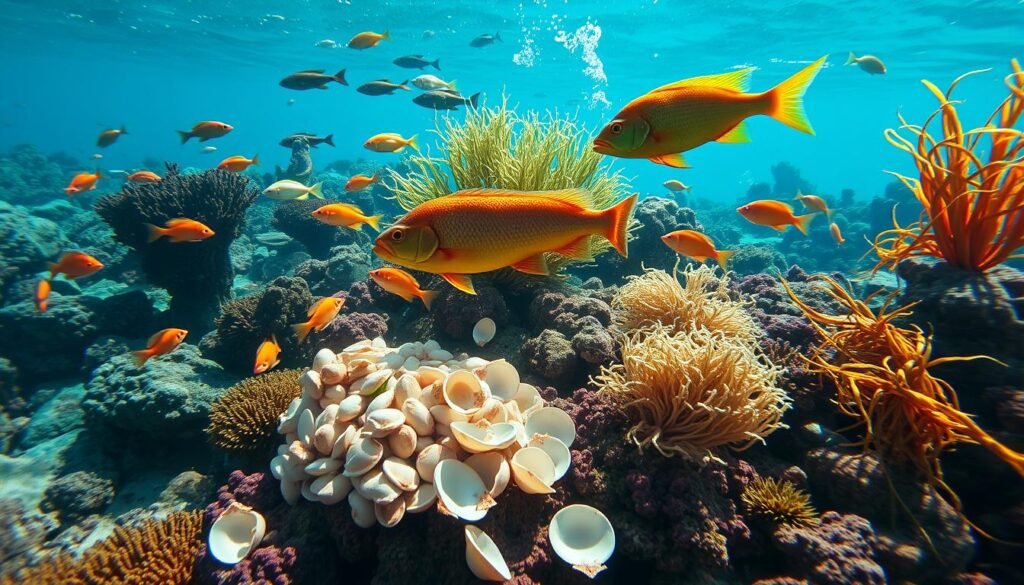
Dungeness crab, from California and Oregon, is a great sustainable choice. Also, Arctic char, which is often farmed in eco-friendly systems, helps conserve wild fish stocks. It’s delicious and helps preserve ocean life.
Clams, mussels, oysters, and scallops are very sustainable. They clean the water without harming their surroundings. Choosing these options can lower the environmental impact of eating seafood.
The Monterey Bay Aquarium’s Seafood Watch helps people choose sustainable seafood. It provides important info on the environmental impact of various seafood. This helps with making responsible seafood choices.
| Seafood Option | Sustainability Rating | Notes |
|---|---|---|
| Dungeness Crab | High | Trapped caught from California, Oregon, and Washington. |
| Arctic Char | Moderate | Farmed sustainably in recirculating systems. |
| Bivalves (Clams, Mussels, Oysters) | Very High | Natural filtering; minimal environmental impact. |
| Skipjack Tuna | Moderate | Fast-growing, reproduces quickly. |
| Wild Alaskan Salmon | High | Regulated fishing methods; often caught sustainably. |
Making informed choices about seafood has a positive impact on our diets and the ocean. As the demand for sustainable options increases, it’s crucial to support seafood that benefits marine ecosystems and communities.
How to Identify Responsibly Sourced Seafood
Choosing responsibly sourced seafood is key for our health and the planet’s health. When we buy wisely, we really help the seafood market. Look for special certifications to know the seafood is from sustainable practices. Labels like the Marine Stewardship Council (MSC) for wild fish and Best Aquaculture Practices (BAP) for farmed ones are good signs.
Using tools like the sustainable seafood guide from Monterey Bay Aquarium’s Seafood Watch makes choosing easy. These labels show which seafood is okay for the environment.
Reading labels on seafood packages tells you where and how the fish was gotten. Always ask questions at seafood counters to clear up any doubts. Knowing about overfishing and habitat damage helps us pick better. For instance, some farmed fish help the environment if they’re raised right. They need less land and make less carbon than regular farm animals.
Freshness matters too. Fish frozen right after catching can be as good as fresh ones. Choosing sustainable types like shellfish and wild salmon helps the oceans and us. Nowadays, 71% of people worldwide choose sustainable goods. This shows our choices can make a big change for our health and the earth.
Committing to sustainable seafood means eating healthier and helping the sea. Making smart choices is good now and for the ocean’s future. We must think of what’s best for the long run, not just today’s meal.
Sustainable Seafood Choices: A Guide for Beginners
Choosing sustainable seafood might seem hard, but it’s quite simple with a guide. A sustainable seafood guide helps people choose wisely for their meals. It allows us to support good fishing practices and still enjoy tasty food.
Look for special labels that show a product is sustainable. The Marine Stewardship Council (MSC) label means the seafood comes from a good place. Tuna, shrimp, and crab with this label are checked well to ensure they’re from sustainable sources.
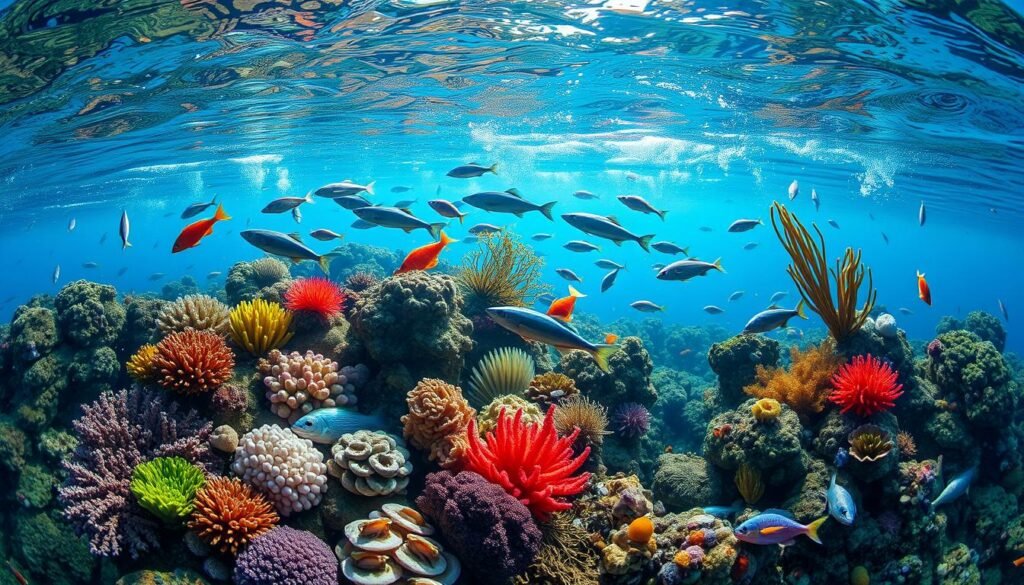
The Seafood Watch from the Monterey Bay Aquarium is another great tool. They’ve shared over 40 million cards to teach people about choosing well. This helps people know which seafood is okay to buy.
When buying seafood, keep a few things in mind:
- Look into local seafood options, like community-supported fisheries (CSFs).
- Talk to your fishmonger about where the seafood comes from and if it’s sustainable.
- Pick seafood that’s in season to lessen your impact on the environment.
Eating out? Ask about where the restaurant’s fish comes from. Check if they use sustainable seafood. By eating at places that care about this, you help promote good practices.
Remembering these tips helps us all help the ocean. It leads to a better future for seafood and us.
Benefits of Eating Seasonal and Local Seafood
Eating seafood from your area during its peak season brings many good things. It helps your health and your town. By choosing these foods, we help fish populations and the oceans they call home. Supporting local fishermen also helps the economy of the area.
Seasonal and local seafood is very nutritious. It has lots of omega-3 fats, vitamin D, and protein. When seafood is fresh, it has more nutrients. This means eating it when it’s in season is best for your health. Seafood from far away might not be as good for you.
Caring for the environment is another reason to eat this way. Eating food that doesn’t have to travel far is better for our planet. It helps fight climate change. And, local seafood means fewer gases from trucks or planes.
Trying seafood when it’s in season means you get the tastiest food. People say it just tastes better. This makes your meals even more enjoyable.
| Benefits of Seasonal and Local Seafood | Impact |
|---|---|
| Nutritional Advantages | Rich in omega-3 fatty acids, vitamin D, and protein |
| Supports Local Economies | Enables fishermen and seafood farmers to earn a living |
| Environmental Sustainability | Reduces carbon footprint and supports well-managed fisheries |
| Enhanced Taste | Fresher seafood leads to better flavor and quality |
| Healthier Choices | Lower risk of contamination compared to non-sustainable options |
| Cultural Preservation | Supports traditions and customs associated with local fishing practices |
Choosing seafood that’s in season and local makes a big difference. It’s good for you, the community, and the earth. Every bite you take supports something bigger. It’s about being healthy and making smart, sustainable choices.
Supporting Local Fisheries and Communities
Supporting local fisheries boosts the economy and helps marine ecosystems. Fishermen provide jobs and keep money in coastal areas. When we buy directly from them, we all get closer. This bond supports the health of fisheries and encourages sustainable fishing.
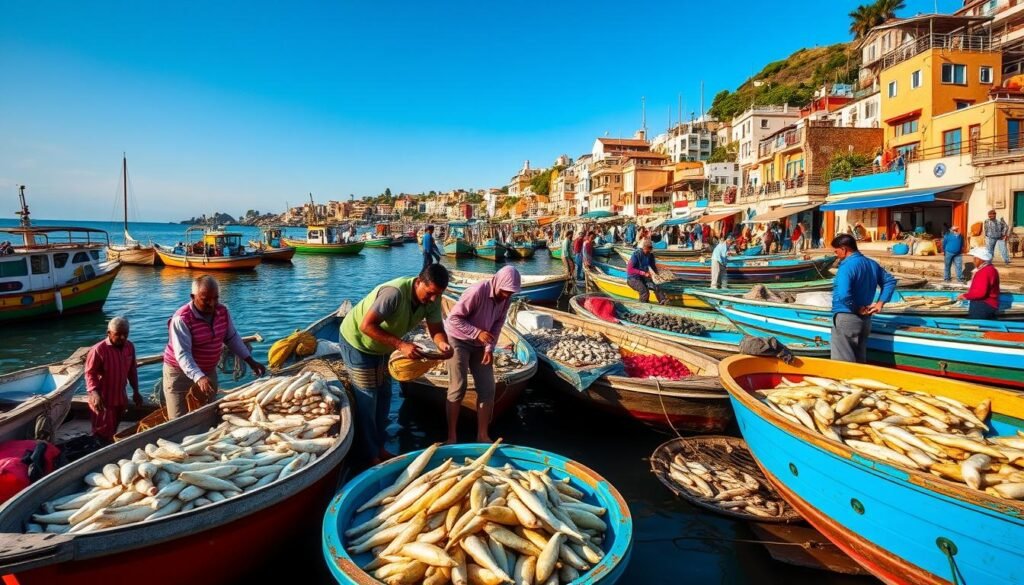
Local seafood often comes from places that fish responsibly. These methods protect fish stocks and the ocean’s health. Choosing nearby seafood cuts down on pollution from shipping and distribution.
Local seafood brings unique flavors to our tables. It inspires creativity in the kitchen. Places like Chef Rolf’s New Florida Kitchen show how sustainable seafood supports the community. This encourages everyone to try new dishes and cooking ways.
It’s important to know where your seafood comes from. Asking about its origin encourages sustainable eating. Supporting policies that help small fishermen is vital. Working together to share knowledge on sustainable seafood strengthens our community.
The fishing industry in the U.S. employs 1.7 million people and brings in $212 billion. However, COVID-19 hurt this industry a lot. Places like Monterey Bay Aquarium’s Seafood Watch and FishWatch from NOAA help us find sustainable seafood.
In summary, local fisheries are crucial for communities and the environment. By consciously buying and advocating, we can help local economies and protect marine life for the future.
Exploring Sustainable Seafood Certification Programs
Several programs help us know which seafood is sustainable. Groups like the Marine Stewardship Council (MSC) and the Best Aquaculture Practices (BAP) lead these efforts. They check if seafood meets strict sustainability rules, making it easy to choose ocean-friendly seafood.
Learning about these certifications builds trust. The MSC looks after wild fish stocks, keeping them healthy. BAP focuses on good farming practices for seafood. Both stamps of approval mean we’re buying seafood that’s good for the planet.
A lot of seafood businesses see the value in being green. Around 71% of shoppers worldwide want sustainable seafood. This trend pushes companies to source their seafood responsibly. It’s encouraged by ratings from Seafood Watch and the Good Fish Guide, moving the industry towards better practices.
Community involvement is key to better seafood practices. The Conservation Alliance for Seafood Solutions works with over 40 partners for this cause. They use tools like FishChoice to share sustainability tips. Governments, industries, and conservation groups all work together to make seafood more sustainable.
Nearly half of our seafood now comes from farms, and demand is growing. Choosing certified sustainable seafood helps our planet and the industry. With the sustainable seafood market hitting $138 billion in 2021, it’s clear that green efforts are essential for business success.
Avoiding Bycatch and Habitat Destruction
Bycatch is a big problem in fishing. It doesn’t just affect the fish we aim to catch but harms all marine life. Practices like bottom trawling damage the ocean floor, harming the homes of many sea creatures. Using better fishing methods can lessen these bad effects, helping our oceans stay healthy.
Every year, about 10 million tons of fish are thrown back into the ocean because of bycatch. This waste is bad for both the ocean’s health and vulnerable species trying to recover. Laws like the Magnuson-Stevens Act are in place to help reduce bycatch. It’s important to follow these rules to protect our oceans.
What we buy can make a difference in solving bycatch and habitat destruction. Picking seafood from places that care about the ocean encourages responsible fishing. The Marine Stewardship Council (MSC) gives out certifications to fisheries that meet high environmental standards. These places are checked every year to make sure they keep doing a good job.
Here is a comparison of the impacts of different fishing methods:
| Fishing Method | Impact on Bycatch | Impact on Habitat |
|---|---|---|
| Bottom Trawling | High | Severe Habitat Destruction |
| Longlining | Moderate | Minimal Impact |
| Trap Fishing | Low | Minimal Impact |
| Gillnetting | Variable | Moderate Impact |
Efforts like NOAA Fisheries’ National Bycatch Reduction Strategy help fight bycatch. They set clear goals to lower bycatch and protect marine life. By supporting sustainable fishing, we help keep fish as a resource for everyone. This also reduces harm to the ocean’s health.
Choosing Sustainable Seafood at Restaurants
Choosing a restaurant that serves sustainable seafood is good for us and the planet. More people want to eat seafood that’s sourced responsibly. They know it helps our oceans. Restaurants that offer local and seasonal seafood show they care about sustainability.
To find a restaurant that cares about sustainable seafood, here are some tips:
- Check for Certifications: Look for places with sustainability certifications like the Marine Stewardship Council. These places are confirmed to serve seafood from well-managed fisheries.
- Ask About Sources: Ask where the restaurant gets its seafood. If they offer wild-caught, find out how they avoid catching unwanted fish and overfishing.
- Seasonal Menus: A menu that changes with the seasons shows a dedication to sustainability. These menus often have less common fish, easing pressure on popular species.
- Transparency: Pick restaurants that are open about where they get their seafood. Their honesty shows they are serious about sustainable sourcing.
Today, over half of American consumers want sustainable seafood. They’re even willing to pay more to help protect the oceans. As more people become aware, we’re seeing more restaurants offer sustainable options. This is great news for our planet.
When we choose to eat at these restaurants, we’re making a difference. Our choices push restaurants to focus on sustainability. This helps protect our oceans and supports local fishermen.
Cooking and Preparing Sustainable Seafood
Cooking sustainable seafood boosts the flavor of your meals and the health perks they offer. Dietitians say include foods like fish in meals twice a week. This habit is good for you and helps the seafood industry use resources wisely.
Using canned seafood is one of the easiest ways to prepare it. Tuna, salmon, mackerel, and lobster in cans are good for quick meals. They’re easy to find in stores, making them great for fast meal planning.
Freezing seafood keeps its flavors and nutrients well. It’s a proven way to keep fish fresh without losing taste. Pan-searing fish is quick, taking less than 20 minutes. Oven-roasting thin fish fillets only needs 5-7 minutes at 350°F.
When grilling fish like halibut and swordfish, leave the skin on. Cooking it over medium-high heat gives the best taste and texture. Shellfish also has its own grilling steps.
You can find great seafood recipes from the Marine Stewardship Council (MSC). They show how to cook sustainably. Plus, sharing your seafood dishes online with #FeelGoodSeafood and #MSCbluefish is fun.
| Cooking Technique | Time Required | Ideal Fish Type |
|---|---|---|
| Pan Searing | 20 minutes or less | Salmon, Tilapia |
| Oven Roasting | 5-7 minutes | Pollock, Sole |
| Grilling | Varies | Halibut, Swordfish |
Cooking whole fish cuts down on waste. Choosing sustainable seafood fills you with nutrients like omega-3s, vitamin D, and protein. It fits right in with fighting climate change and supports local communities. It keeps the tradition of seafood alive for the next generation.
Conclusion
Sustainable seafood choices are key to our oceans’ health and future fish populations. With more people eating seafood, it’s important to choose wisely. Picking sustainably sourced seafood helps protect our marine ecosystems from overfishing and harmful practices.
The Alaska Pollock fishery shows how to manage seafood well. Certification programs like the Marine Stewardship Council (MSC) and Aquaculture Stewardship Council (ASC) point us to responsible seafood. These steps keep fish numbers healthy and maintain marine biodiversity for all to enjoy later.
Every time we buy seafood, we can drive change. Educating ourselves lets us support proper fisheries management and local communities. By choosing sustainable seafood, we all help save our oceans. This ensures plenty of food for the future.