Did you know adults who work out hard 2 to 4 times more than suggested can cut their risk of heart disease death by 27% to 33%? This shows how important it is to know how often to work out for the best results. Working out regularly is key not just for losing weight but also for keeping healthy and well. Yet, figuring out the best exercise schedule can be hard for some.
The U.S. Department of Health and Human Services says most healthy adults should do at least 150 minutes of moderate exercise or 75 minutes of intense exercise a week. To get the most health benefits, adding strength training twice a week is crucial. With the right exercise plan, you can better your heart health, lower chronic disease risks, and improve overall wellbeing.
This article will give you a detailed look at how often you should exercise, backed by science and health advice. Understanding different activity levels and their health gains will help you make the perfect fitness plan.
Key Takeaways
- Adults should aim for 150 to 300 minutes of moderate exercise weekly.
- Vigorous physical activity recommendations are 75 to 150 minutes per week.
- Strength training should be incorporated at least two times each week.
- Combining moderate and vigorous exercise can significantly lower mortality risks.
- Small amounts of physical activity can still provide health benefits throughout the day.
- Consultation with a healthcare professional is advised before starting a new regimen.
Understanding the Basics of Exercise Frequency
Exercise frequency is key to getting the best health benefits. Doing physical activities that match your ability improves your health. It helps control your weight, keeps your heart healthy, and reduces illness risk. Knowing exercise frequency recommendations lets people make plans that fit their needs.
The Department of Health and Human Services says that adults should do 150 minutes of moderate exercise or 75 minutes of hard exercise weekly. For extra health benefits, 300 minutes of aerobic activities are best. Planning like this is great for keeping consistent and boosting fitness levels.
Strength training should not be forgotten. It’s advised that adults should work all major muscle groups twice a week. Doing just one set of each exercise can be enough for health and fitness gains, and it’s easy to fit into a busy schedule.
Exercise feels different for everyone. The American Heart Association states moderate exercise is 50% to 70% of your max heart rate. Hard exercise should be 70% to 85% of this rate. Knowing these numbers helps people set the right exercise frequency to meet their goals.
Following these guidelines helps people build lasting routines that enhance health benefits. Regular activities, chosen based on what you like and your lifestyle, can make achieving fitness goals easier.
Current Recommendations for Adults
The U.S. Department of Health and Human Services gives adults clear exercise guidelines. Everyone should aim for at least 150 minutes of moderate-intensity aerobic activity or 75 minutes of vigorous-intensity aerobic activity every week. It’s best to spread this out over 4 to 5 days to get the most benefit and keep a steady routine.
Adults should also do muscle-strengthening exercises that target all the main muscle groups. Doing this at least two days a week is recommended. These exercises can include weight lifting, using resistance bands, or doing bodyweight exercises like push-ups and sit-ups. Even doing heavy gardening can help build strength.
You can also mix in short, very vigorous activities to meet your exercise goals. Options like High-Intensity Interval Training (HIIT) give you the same health perks. You only need 75 minutes a week of these activities. They count as much as 150 minutes of moderate exercise.
Not being active for too long is also something to avoid. Adding physical activities to your daily life can greatly improve your health. Try adding exercise bits by bits into your day and rest well, especially after strength exercises. People who are pregnant or have chronic health issues should talk to a doctor before starting a new exercise plan.
| Activity Type | Recommended Duration | Frequency |
|---|---|---|
| Moderate-intensity aerobic | At least 150 minutes | 4-5 days a week |
| Vigorous-intensity aerobic | At least 75 minutes | 4-5 days a week |
| Muscle-strengthening | Varies | At least 2 days a week |
Following these tips can really help adults improve their health by being active regularly.
How Often to Exercise for Best Results
Knowing how often to exercise is key to reaching your health and fitness goals. Every type of exercise offers different benefits. By following established guidelines, you can make an exercise plan that works.
Combining aerobic and strength exercises is crucial. This approach helps you stay on track and achieve the best results.
Weekly Guidelines for Aerobic Activity
Adults should do at least 150 minutes of moderate aerobic activity per week. You can choose activities like walking fast, swimming, or biking. Or, you might do 75 minutes of high-intensity exercises. Running and HIIT are good choices.
Mixing these two types of workouts each week can boost your fitness level.
Strength Training Recommendations
Strength training is just as important as aerobic exercises. Aim to work all major muscle groups at least two times per week. It’s best to divide your workouts between upper and lower body exercises.
Starters might work out 2 to 3 days a week. Those more experienced may go for 4 to 5 days. This plan helps build muscle and increase your metabolism. In turn, it makes your whole fitness routine more effective.
The Importance of Workout Consistency
Keeping up with your workouts is key to reaching your fitness dreams. This means exercising several days each week, like three or four, depending on what you want and need. Sticking to your routine not only boosts muscle growth and helps keep your weight steady but also makes you feel mentally good. It helps you avoid feeling too tired too soon.
If you skip your regular gym time, your muscles might start to shrink. This happens because they’re not being challenged, whether you’re lifting weights or running. Plus, if you don’t exercise often, you might find it hard to breathe when doing simple tasks. That’s because your heart and lungs aren’t working as well as they could be.
For those trying to lose weight, not exercising enough could lead to a standstill. This is because your body gets used to how much you’re moving. If you don’t work out regularly, you might even start to put on weight. Suddenly, finding the motivation to get moving again can be tough if you’ve taken a long break.
But, if you can stick to your workout plan for about four weeks, you’re on your way to making it a habit. Research says it takes about 68 days for a new behaviour to become automatic. With continuous exercise, your body starts to work better. Your muscles use energy more efficiently, your heart and blood vessels get stronger, and even your joints improve. Trying different kinds of exercises can make these benefits show up sooner.
Another tip is to make exercise a normal part of your day. For example, you can do some exercises while watching TV. This doesn’t just help you keep a regular workout schedule. It also helps your blood flow better and makes it easier for your body to use fat as energy. Following a regular workout plan is a great step toward a healthier life.
| Benefits of Workout Consistency | Implications of Inconsistent Training |
|---|---|
| Improved muscle growth | Muscle breakdown for energy |
| Enhanced endurance | Decreased heart and lung efficiency |
| Higher resting calorie burn | Weight loss plateaus |
| Increased motivation | Challenges in resuming workouts |
| Stronger body adaptations | Slower results in fitness changes |
Finding Your Optimal Workout Schedule
Creating a workout plan that suits you means understanding several key elements. You need to know how often to exercise, what kinds of workouts to do, and how to fit them into your day. Think about how fit you are, how much time you have, and what activities you like.
The Centers for Disease Control and Prevention (CDC) recommends at least 150 minutes of moderate exercise or 75 minutes of something more vigorous each week for health. If you’re aiming to lose weight, try for 300 minutes a week. Adding strength exercises for all your major muscles twice a week will also help you a lot.
It’s important to keep track of your progress. You can do this by checking your pulse, timing your runs or walks, and measuring your waist. When you increase your workout intensity or length, do it slowly. Aim for a 10% increase each week to avoid injuries. Remember, resting is as crucial as exercising. Days off help with muscle recovery and reduce soreness.
Sticking to your workout schedule consistently is key for the best outcomes. Here’s a sample weekly plan:
- Monday: Full-body strength training plus Pilates abs and yoga stretches
- Tuesday: A Cardio HIIT session or a nice long walk/swim
- Wednesday: Repeat Monday’s routine
- Thursday: Take a rest day
- Friday: Again, full-body strength training with Pilates and yoga
- Saturday: Another cardio day – HIIT or enjoy a walk/swim
- Sunday: Rest and recover
Fitness apps are great for keeping track of your workouts, steps taken, and calories burned. Working out in the morning might help you burn more calories. However, exercises in the late afternoon could be more effective due to your body’s natural rhythms. By following these tips and regularly checking your progress, you can find the workout schedule that works best for you. This way, you’ll stay motivated and see real results from your fitness plan.
Combining Moderate and Vigorous Exercise
Mixing moderate and vigorous exercise can boost health a lot. Knowing the difference between these exercises helps make an effective plan. This balance improves heart health and body shape.
Benefits of Moderate Aerobic Activities
Moderate activities have many perks. Things like brisk walks, easy bike rides, or water aerobics help your heart and lower injury risks. They are great for older people, improving mobility and health.
Adults should aim for 150 minutes of such activities weekly. Doing this helps avoid chronic illnesses like heart disease and keeps weight under control.
Benefits of Vigorous Aerobic Activities
Intense exercises, like running or fast swimming, burn calories quickly and boost heart endurance. At least 75 minutes a week of these can be as good as moderate exercises for active folks. Adding intense workouts is key for those wanting to achieve higher fitness or weight loss.
People should tailor their exercise plan to their fitness goals and level. Below, find how long to engage in each activity type for the best health impact.
| Type of Activity | Weekly Recommendation | Health Benefits |
|---|---|---|
| Moderate Activity | 150 minutes | Lower risk of chronic disease, weight management |
| Vigorous Activity | 75 minutes | Increased cardiovascular endurance, weight loss |
| Combination of Both | 150 minutes moderate or 75 minutes vigorous | Maximized overall health benefits |

The Role of Strength Training in Your Fitness Regimen Frequency
Strength training is key for a balanced fitness routine. Many skip weight lifting for aerobic activities. Yet, it’s vital for health. It grows muscle mass, boosts metabolism, and strengthens bones. These perks help avoid injuries and improve how we perform physically.
The recommendations for strength training say beginners should start with two to three times a week. As you get better, you can do more, like three to four times. Those more advanced might train four to six times a week. They might follow a plan of “three days on, one day off” for all-around muscle work.
Studies show you don’t need long workouts for good results. A 2018 study found short workouts under an hour are just as effective. This means even busy people can see big benefits from their workout routines.
Adding weight training fits well with doing 150 minutes of aerobic exercise each week. Mixing cardio and weights is best for health and fitness. Two to three days of focused weight training is enough to see real benefits.
| Client Level | Recommended Training Frequency | Typical Routine |
|---|---|---|
| Novice | 2-3 days per week | Basic full-body workouts |
| Intermediate | 3-4 days per week | Combined upper/lower body splits |
| Advanced | 4-6 days per week | Three days on, one day off |
Exercise Frequency Recommendations for Different Goals
Knowing the correct exercise frequency is key to reaching your fitness goals. Different aims need specially made exercise plans to be most effective.
Weight Loss Goals
For weight loss, you’ll likely need to move more than usual. Aim for at least 300 minutes of moderate activity each week. It’s important to workout regularly for the best results. Keeping your exercise enjoyable helps you stay motivated and stick with your program.
General Health Maintenance
Maintaining general health requires following basic exercise guidelines. Adults should do at least 150 minutes of moderate activity weekly. They should also do strength workouts for all muscle groups two days a week. This routine ensures you get the health benefits of regular exercise.
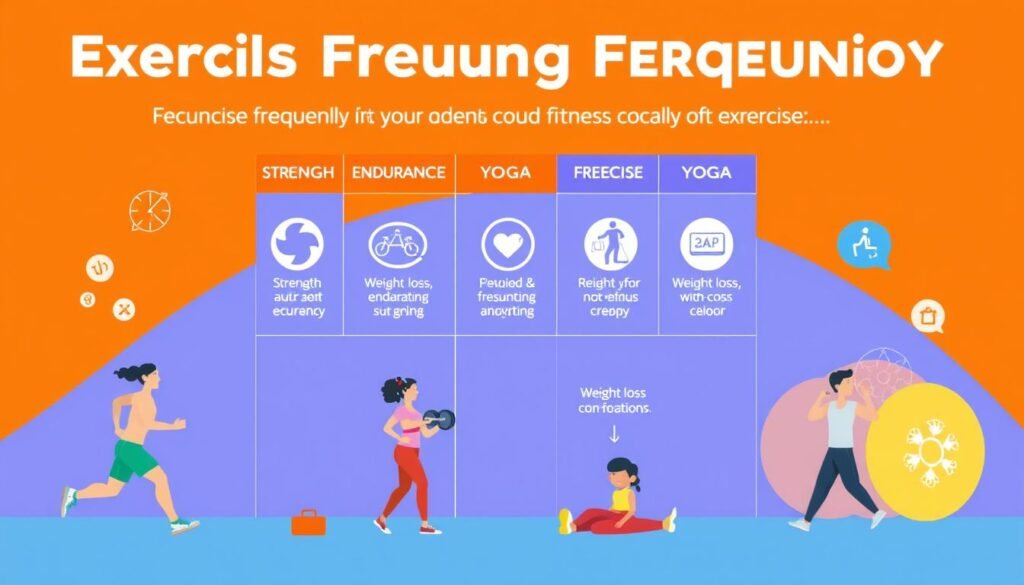
Listening to Your Body and Avoiding Overtraining
It’s crucial to know how often to exercise for the best results. Paying attention to your body helps you avoid overtraining. This condition can slow your progress and cause injuries. It’s important to notice when you’re tired, check how you’re doing, and change your routine as needed. This makes your fitness journey better.
The CDC suggests doing moderate aerobic workouts for 2.5 hours weekly, plus two sessions of strength training. Following this advice gives you a strong start. It also lets you adjust how often you exercise to get the best results.
Watching for overtraining signs is a smart move. Look out for constant tiredness, a changing resting heart rate, joint pain, and slow recovery after working out. A study in the Journal of the American College of Cardiology shows a surprising fact. Running too much—over four hours a week at a fast pace—could be as bad as not exercising at all.
To keep fit, rest at least two days a week. This break helps your body recover. Make sure to eat well, drink plenty of water, and get enough sleep. Also, mixing up your workouts, picturing your exercises, and keeping a workout diary can help. These strategies prevent overtraining by balancing exercise and rest.
Creating a workout plan that listens to your body is key. It helps you keep going strong in your fitness journey. Knowing about overtraining and its warning signs is very important. It leads to lasting success and better health over time.
Short Bouts of Exercise Matter
Exercising for just five to ten minutes can be very beneficial. These short activities add up across the day. They help improve fitness and encourage an active way of life.
The Centers for Disease Control and Prevention (CDC) suggests adults aim for 150 minutes of moderate exercise or 75 minutes of vigorous activity each week. This might seem like a lot. However, splitting this time into smaller parts makes it more doable. A study of over 1,000 people found health benefits are the same no matter if exercise is done all at once or in pieces. It shows small, frequent workouts can manage blood pressure and improve heart and lung health just as well.
Here are some ways to fit short exercises into your day:
- Taking brisk walks during work breaks.
- Choosing stairs over elevators.
- Doing quick sets of exercises like push-ups or squats.
- Adding brief, vigorous exercises like jumping jacks during TV time.
Research shows three 10-minute walks can lower blood pressure better than one long walk. Also, doing short vigorous exercises three times a day can cut the risk of heart disease in half. These findings show even quick exercises have major health benefits.
High-intensity interval training (HIIT) is very effective in a short time. A HIIT workout can be as short as 10 minutes but offers the same health perks as much longer workouts. This makes it clear how valuable little bits of exercise can be.

| Benefits of Short Bouts of Exercise | Impact on Health |
|---|---|
| Improved Mood | Immediate mood enhancement observed in brief walking sessions. |
| Lower Blood Pressure | More effective than longer, continuous sessions in some studies. |
| Enhanced Fitness | Allows for higher intensity activity that boosts cardiovascular health. |
| Flexible Integration | Easily fits into busy schedules with minimal time commitment. |
| Reduced Risk of Disease | Lower cardiovascular and cancer mortality rates associated with increased activity. |
Adding short exercises into your routine is smart. It doesn’t just make exercise easier, it also makes you healthier. It’s a great option for people who are very busy.
Conclusion
Knowing how often to exercise is key for top exercise rewards and keeping healthy. Exercise isn’t just for looks. It helps control weight, cuts down heart disease and diabetes risks, and boosts mental health. Making exercise a daily habit brings lasting good effects.
It’s important to have workout plans that match your lifestyle and what you like. You might mix simple exercises into daily chores or workout with friends. The main goal is to enjoy being active for long-term health.
Staying active brings major health perks, like feeling happier and living longer. By learning about the good things consistent exercise offers, you can improve your fitness. This ensures you get the most out of exercise for years ahead.