Did you know shrimp has a lot of cholesterol, about 220 mg per 100 grams? But, studies show the effect of such dietary cholesterol on our body is little. In fact, eating shrimp might boost good cholesterol and lower bad cholesterol. This makes shrimp a good choice for heart health. So, shrimp can be great for those watching their cholesterol without harming their heart.
Key Takeaways
- Shrimp is rich in cholesterol but has minimal impact on blood cholesterol levels.
- Regular intake of shrimp can improve the ratio of HDL to LDL cholesterol.
- It is low in saturated fats, making it a better choice compared to red meats.
- Including shrimp in a diet can lower the risk of heart disease when combined with other heart-healthy foods.
- Shrimp is an excellent protein source packed with essential nutrients beneficial for overall health.
Understanding Cholesterol and Its Types
Cholesterol is crucial for making hormones, vitamin D, and bile acids. It comes in two types: LDL and HDL cholesterol. LDL is often called “bad” because it can build plaque in arteries, raising heart disease risk.
HDL cholesterol, on the other hand, is seen as “good.” It works to clear LDL cholesterol from the blood. This balance is key to understand how certain foods affect heart health.
Recent findings highlight how food impacts blood cholesterol. Diets rich in cholesterol, like those including shrimp, affect LDL and HDL levels. Eating shrimp often can raise HDL but only slightly changes LDL levels. This shows why eating shrimp in moderation is important.
Most of our body’s cholesterol is made by the liver, not from food. About 85 percent is liver-produced. This lessens the impact of dietary cholesterol. Current guidelines suggest a balanced diet for a healthy heart.
Eating heart-healthy foods, like shrimp for omega-3s, helps cholesterol levels. Combine them with fruits, legumes, and whole grains. Avoid processed and fried foods for a healthier cholesterol profile.
| Type of Cholesterol | Function | Impact on Heart Health |
|---|---|---|
| LDL Cholesterol | Transports cholesterol to cells | Can lead to plaque buildup in arteries |
| HDL Cholesterol | Removes cholesterol from the bloodstream | Helps reduce heart disease risk |
Benefits of Including Shrimp in a Heart-Healthy Diet
Adding shrimp to a heart-healthy diet offers a bunch of benefits. It’s full of protein and has little saturated fat. This makes shrimp a great choice for improving health. Also, it’s low in calories but high in protein. To be specific, 100 grams of cooked shrimp has about 99 calories and 24 grams of protein.
Studies show shrimp is good for shrimp and cholesterol levels. Even with its high cholesterol, it doesn’t harm heart health if eaten in moderation. People eating shrimp tend to have better cholesterol levels and more HDL, the good cholesterol. This supports advice from health groups to eat seafood for a heart-healthy diet.
Americans love shrimp, eating about 4 pounds a year. It’s the top seafood in the U.S. Most of this shrimp is farmed. Shrimp not only adds flavor to dishes but also provides key nutrients. These include phosphorus, copper, and zinc, which help the heart stay healthy.
| Nutrition per 100g of Cooked Shrimp | Calories | Protein (g) | Fat (g) | Carbohydrates (g) |
|---|---|---|---|---|
| Shrimp | 99 | 24 | 0.3 | 0.2 |
In short, shrimp is beneficial when eaten with care. It’s good for those wanting a heart-healthy diet and to keep an eye on cholesterol.
Shrimp and Cholesterol Levels: What Research Shows
Studies reveal interesting facts about shrimp and cholesterol. Despite concerns, research suggests shrimp can actually help improve cholesterol profiles. Let’s look closer at its effects on HDL and LDL cholesterol.
The Relationship Between Shrimp Consumption and Cholesterol Levels
Eating shrimp might raise LDL cholesterol slightly, by about 7%. But, it also boosts HDL cholesterol by around 12%. This can lead to a better cholesterol balance. Balancing these cholesterol types is key for heart health. Shrimp’s low in saturated fat, which helps reduce heart disease risk. So, eating shrimp in moderation could be good for both your palate and your heart.
How Shrimp Affects HDL and LDL Cholesterol
Shrimp’s nutritional content is quite special. A 3-ounce serving has 161 mg of cholesterol. Yet, its low fat content helps lessen high cholesterol worries. Plus, the increased HDL cholesterol from shrimp hints at a heart protection benefit. These insights support adding shrimp to a balanced diet, watching overall cholesterol intake.
| Food Item | Cholesterol (mg) | Serving Size | Notes |
|---|---|---|---|
| Shrimp | 161 | 3 oz cooked | Low in fat, high in protein |
| Egg (large) | 169 | 1 | More than half RDA of 300 mg |
| Sardines (canned) | 131 | 1 can in oil | AHA recommends two servings per week |
| Ground Beef | 110 | 4 oz | Varies by cut |
| Trimmed Beef Cuts | 45 | 4 oz | Lower cholesterol option |
Nutrition Composition of Shrimp
Shrimp is both nutritious and tasty. It’s full of essential goodies that are great for health. It is packed with protein, making it a top pick for those who eat healthily.
Key Nutrients Found in Shrimp
A 3-ounce serving of shrimp is loaded with important nutrients:
| Nutrient | Amount per 3 oz serving |
|---|---|
| Calories | 84.2 kcal |
| Protein | 20.4 g |
| Cholesterol | 161 mg |
| Total Fat | 1.5 g |
| Saturated Fat | Minimal |
| Phosphorus | 201 mg |
| Potassium | 220 mg |
| Iron | 0.433 mg |
| Zinc | 1.39 mg |
| Magnesium | 33.2 mg |
| Sodium | 94.4 mg |
Shrimp’s nutrition highlights its role in a well-rounded diet.
Low Fat Content and Its Importance for Heart Health
Shrimp’s low fat helps the heart stay healthy. It has less than 1.5 grams of total fat. This makes it perfect for managing cholesterol levels.
Choosing shrimp over fatty meats is wise for heart health. Cooking it properly, along with healthy ingredients, makes it even better.
Cooking Methods for Heart-Healthy Shrimp Dishes
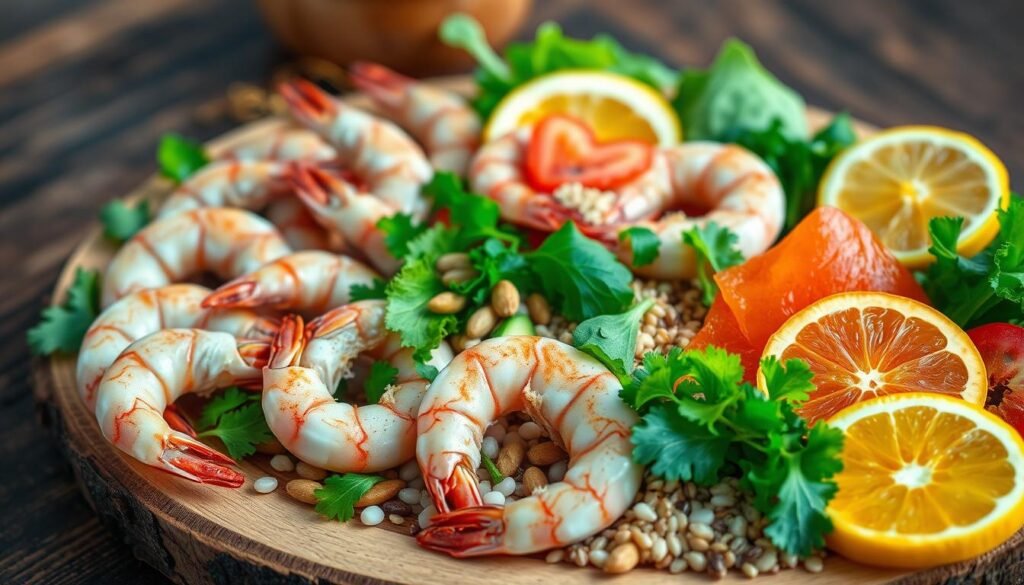
When cooking shrimp, choosing the right method matters a lot for heart health. Using heart-healthy cooking methods like baking, boiling, and grilling can boost flavor while cutting down on bad fats. Frying, on the other hand, packs on calories and unhealthy fats. This can take away from the healthiness of shrimp. By picking healthier cooking ways, you can keep enjoying tasty shrimp dishes while managing cholesterol levels.
Baking, Boiling, and Grilling vs. Frying
Choosing to bake, boil, or grill shrimp is best for heart-friendly meals. Grilled shrimp brings a nice smokiness, and boiled shrimp is soft and tender. These ways of cooking keep in the good stuff like protein and omega-3s. They help your heart without the extra fats found in fried shrimp.
Heart-Healthy Seasoning Techniques
The way you season shrimp also affects its heart health benefits. Using heart-healthy spices and items like herbs, garlic, and lemon boosts taste without needing cream or a lot of salt. This method makes shrimp dishes healthier, adding nutrients and flavor. It lets you enjoy your meal without harming your heart. For more shrimp diet tips, check out Medical News Today or Easy Heart Boost.
Incorporating Shrimp into a Low-Cholesterol Diet
Adding shrimp to a low-cholesterol diet can be both fun and good for your heart. This seafood is a great source of protein, perfect for managing cholesterol. One serving of shrimp, about three ounces, has only 84 calories and gives you 20 grams of protein. It’s a great choice for a fulfilling meal.
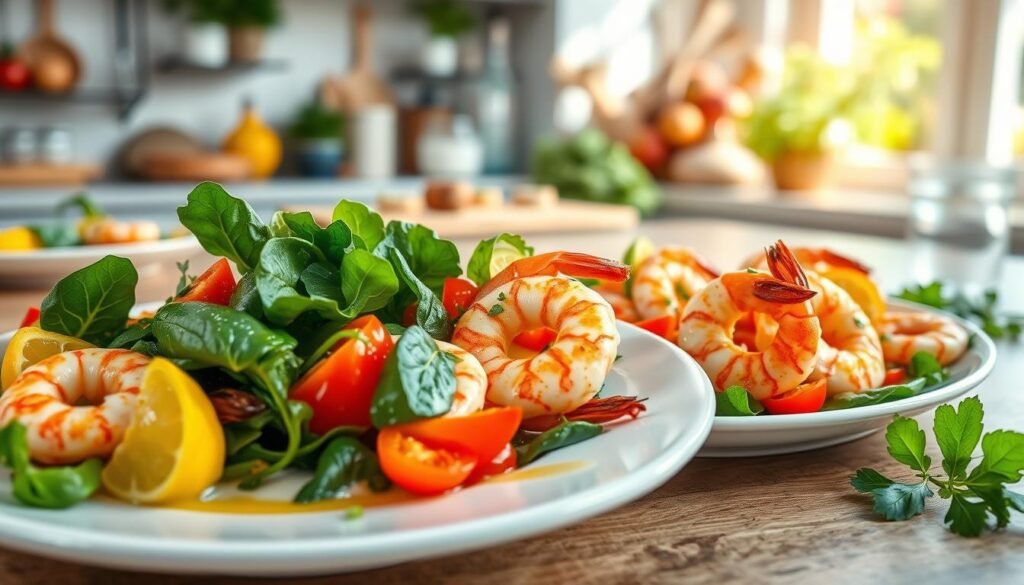
When cooking shrimp, choose healthy methods. Steaming, baking, and grilling keep its flavor and don’t add extra fats. Making tasty shrimp recipes with fresh veggies not only adds flavor but also makes your meal more nutritious. A stir-fry with shrimp, bell peppers, and broccoli is packed with vitamins and minerals.
Controlling your portions is crucial for a low-cholesterol diet. The American Heart Association suggests eating two seafood servings a week without frying. Even though one four-ounce serving of shrimp has 161 mg of cholesterol, it’s important to watch your daily intake. The recommended limit is less than 300 mg a day.
Shrimp can also boost protein in salads or whole grain meals. Pairing shrimp with whole grains offers a heart-healthy meal that doesn’t raise cholesterol. Eating a variety of foods, including shrimp, can keep your diet interesting and nutritious.
Potential Risks: Allergies and Pollutants in Shrimp
Shrimp is both tasty and good for you, but it has its downsides. These include shellfish allergies and harmful contaminants. Many react to shrimp with symptoms like hives or even anaphylaxis. Knowing about these allergies is very important for shrimp lovers.
It’s also key to understand the signs and dangers of cross-contamination. This knowledge can help people with a shellfish allergy eat safely.
Recognizing Shellfish Allergies
Shellfish allergies are among the top eight food allergies in the US. Reactions to shrimp may include:
- Vomiting
- Swelling of the throat
- Hives
- Anaphylactic shock (in severe cases)
It’s crucial to know your allergies and get urgent help if you react. Being careful about how food is prepared can prevent harmful cross-contamination. This ensures meals are safe to eat.
Choosing Sustainable and Safe Shrimp Products
The way shrimp is farmed can harm the environment. Shrimp farming is big, making up 50% of all aquafarming worldwide. Choosing “sustainably farmed” or “MSC certified” shrimp helps protect our planet. It also means the shrimp is safe to eat.
As a healthy food choice, it’s important to know about shrimp’s environmental effects and toxins. Learning about sustainable shrimp and reliable suppliers is key. This not only keeps you healthy but also supports responsible seafood eating. To find out more about seafood’s impacts and options, visit this resource.
Comparing Shrimp with Other Seafood Options
Making choices about what seafood to eat is easier when you know about their nutrition. The shrimp vs. crab and shrimp vs. lobster comparisons are important. They help us understand the differences in cholesterol, fat, and sodium.
This discussion sheds light on what’s good and not so good about these seafood choices.
Nutritional Comparison with Crab and Lobster
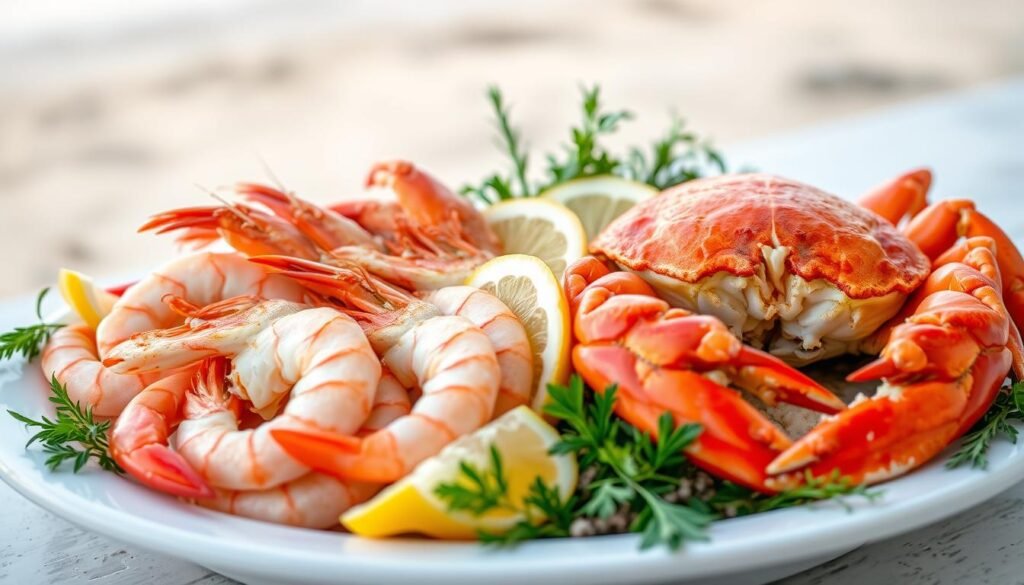
Many people see crab as a good seafood choice. It has less cholesterol than shrimp but more sodium, which isn’t great for blood pressure. Lobster and shrimp are similar in fat, but lobster usually has more cholesterol.
The table here shows how shrimp, crab, and lobster stack up nutritionally in a 3-ounce serving:
| Seafood | Calories | Protein (g) | Cholesterol (mg) | Sodium (mg) |
|---|---|---|---|---|
| Shrimp | 85 | 18 | 166 | 150 |
| Crab | 80 | 17 | 95 | 1000 |
| Lobster | 70 | 15 | 120 | 500 |
Shrimp is a great source of omega-3 fatty acids. But, it’s important to consider your health needs when eating seafood. If you’re watching your cholesterol, crab might be a better choice. For more information on seafood, check out this resource.
The Benefits of Oily Fish Like Salmon
Adding oily fish, like salmon, to your diet is very healthy. Salmon is full of omega-3 fatty acids good for the heart. Unlike shrimp, salmon has more fat, but it’s the kind that’s good for you.
By choosing a mix of seafood, including shrimp and oily fish, you get many nutrients. This helps keep cholesterol at healthy levels. Choosing wisely means supporting your health goals.
Recommendations from Health Organizations
Eating shrimp can help keep your heart healthy as part of a balanced diet. The American Heart Association gives heart health guidelines. They suggest eating healthy proteins like shrimp. These guidelines recommend lean proteins and say to eat less saturated and trans fats. Instead, we should focus on fish, poultry, and plant options.
American Heart Association Guidelines
The American Heart Association says to have two seafood meals a week. This fits with the advice to eat a variety of healthy foods. Shrimp is a great choice. Just three ounces of cooked shrimp has 101 calories, 1.4 grams of fat, and 179.4 mg of cholesterol. So, it’s a good protein that keeps you at a healthy weight and is good for your heart.
Dietary Recommendations for Shrimp Consumption
It’s key to eat shrimp in moderation. Health groups say to mix shrimp into a diet full of vegetables, whole grains, and low-fat dairy. This mix gives you many nutrients and keeps cholesterol low. Shrimp has vitamins and minerals too. These are great for your brain, with nutrients like selenium and vitamin B12.
| Nutrient | Amount (per 3 oz cooked shrimp) | Daily Value (% DV) |
|---|---|---|
| Calories | 101 | |
| Total fat | 1.4 g | |
| Cholesterol | 179.4 mg | |
| Sodium | 805 mg | |
| Protein | 19.4 g | |
| Selenium | 77% | |
| Vitamin B12 | 59% | |
| Choline | 21% |
To wrap up, following the heart health guidelines from health experts helps us make good choices about eating shrimp. Shrimp can be a healthy part of our meals. You just have to eat it the right way and mix it with other good foods.
Conclusion
Shrimp can be good for your heart if you eat it the right way. Even though it has a lot of cholesterol, 189 milligrams per 100 grams, it’s still low in fat. This makes shrimp a good choice for heart health. It helps with both good and bad cholesterol.
Eating shrimp in a healthy way, like baking, boiling, or grilling, can be good for you. It doesn’t greatly affect your cholesterol. Health experts, like the American Heart Association, say shrimp is okay to eat if you do it right. It has benefits and unsaturated fats that are good for you.
So, if you care about your heart health, shrimp can be a smart pick. Enjoy its benefits, but remember to consider what your body needs. With wise eating choices and cooking methods, shrimp fits into a diet that meets your health goals.