Did you know that over 60 million Americans feel the sting of heartburn monthly? This fact shines a light on a common issue. Yet, many may not see how cholesterol and heartburn are linked. High cholesterol, when total blood levels go beyond 200 milligrams per deciliter (mg/dL), brings various health troubles. This includes heartburn. Though we often think of cholesterol’s impact on the heart, its role in digestive problems is crucial too. This odd link shows how elevated cholesterol can lead to heartburn. By understanding this connection, we can better manage heartburn and health.
Key Takeaways
- Over 60 million Americans suffer from heartburn at least monthly.
- A total cholesterol level above 200 mg/dL indicates high cholesterol.
- There is a significant connection between high cholesterol and digestive issues.
- Managing heartburn may require addressing cholesterol levels.
- High levels of LDL cholesterol increase the risk of heart-related complications.
Understanding Cholesterol and Its Types
Cholesterol is essential for our bodies. It helps make cell membranes and hormones. Yet, not all cholesterol is good for us. It’s crucial to know about LDL (bad cholesterol) and HDL (good cholesterol) to keep our hearts healthy.
What is Cholesterol?
Since cholesterol can’t dissolve in water, it travels in the bloodstream via lipoproteins. There are different types of cholesterol, each with a unique role. High levels of LDL cholesterol can cause artery blockage, known as atherosclerosis. This makes it hard for blood to flow, forcing the heart to work more.
Types of Cholesterol: LDL vs. HDL
LDL and HDL are the major types of cholesterol. LDL is bad because it sticks in our blood vessels, raising heart disease risk. HDL is good as it carries cholesterol back to the liver for elimination. Knowing and managing your cholesterol levels is key for heart health. Hormonal changes in women and thyroid problems can also impact cholesterol.
For more on cholesterol’s importance and reading test results, check out this guide.
By regularly checking cholesterol and changing our lifestyle, we can decrease the risk of heart disease. Since high LDL cholesterol affects many American adults, being informed helps with prevention and care.
What is Heartburn?
Heartburn is a common condition that causes a burning feeling in your chest. It happens when stomach content moves back into the esophagus. This can be uncomfortable. Knowing about the *symptoms of heartburn* helps manage and treat it.
Symptoms of Heartburn
The *symptoms of heartburn* usually are:
- Persistent discomfort after eating
- A sour taste in the mouth
- Regurgitation of food or sour liquid
- Irritation that disrupts sleep
If these symptoms happen often, they might indicate a more serious condition like GERD.
Common Triggers of Heartburn
Knowing what triggers heartburn helps lessen it. Common triggers involve:
- Spicy or fatty foods
- Chocolate and caffeine
- Alcohol and carbonated drinks
- Being overweight
- Lying down right after eating
Avoiding these triggers can greatly improve life. You can learn more about heartburn and related conditions in this detailed guide on heartburn and GERD.
The Connection Between High Cholesterol and Heartburn
It’s important to understand how high cholesterol and heartburn are connected. These conditions have similar risk factors that can make them worse. Learning about these connections helps people make better health choices.
Shared Risk Factors
High cholesterol and heartburn are linked by common risk factors. These include obesity, not exercising enough, and high blood pressure. In the U.S., 93 million people suffer from a condition called GERD that causes heartburn. Major risk factors for both conditions are:
- Obesity: Almost half of U.S. adults are overweight or obese. This increases the risk of heartburn.
- Smoking: Tobacco use can lead to heart and digestive issues.
- Poor Diet: Eating foods with lots of saturated fats may raise cholesterol. This can also cause heartburn.
- Lack of Physical Activity: Not exercising can increase cholesterol and make heartburn worse.
Why Heartburn May Appear with High Cholesterol
The link between heartburn and high cholesterol is often due to related health issues. People with high cholesterol are more likely to have heart disease. Heart disease is connected to GERD and heartburn. Studies show those with heart disease are more likely to have GERD. Factors causing heartburn include:
- Obesity can increase pressure in the abdomen, leading to reflux symptoms.
- Heart disease patients may have poor blood flow to the stomach. This can make stomach problems worse.
- Eating foods high in saturated fats, which increase cholesterol, can also trigger heartburn.
To deal with these linked conditions, lifestyle changes are key. Steps like regular check-ups, eating healthier, and managing weight can help. These changes can lessen symptoms and boost overall health.
How High Cholesterol Affects Heartburn
It’s key to know how high cholesterol and heartburn are connected. High cholesterol doesn’t just impact your heart. It can also cause issues for your esophagus. This part will explore how cholesterol levels influence heartburn and might increase GERD symptoms.
Impact of Cholesterol Levels on Esophageal Function
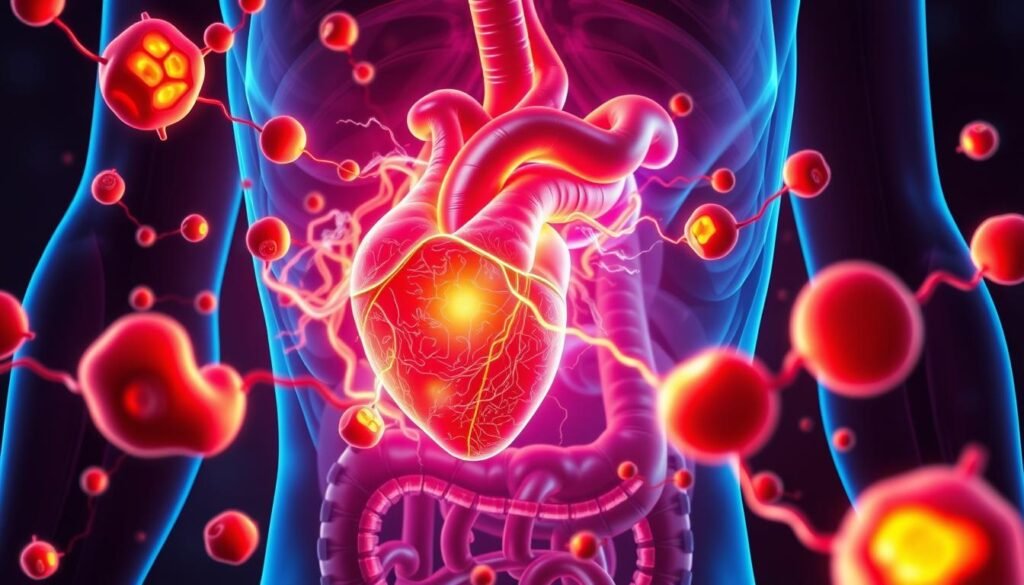
High cholesterol can lead to several problems, including those affecting the esophagus. When your LDL cholesterol is high, it can inflame the esophageal lining. This inflammation can make it hard for food to move through. So, acid reflux and heartburn might get worse. Also, a diet high in cholesterol often has little fiber, which can slow digestion and increase reflux.
Potential for Increased GERD Symptoms
High cholesterol greatly affects the esophagus, worsening GERD symptoms. People with high cholesterol may face more acid reflux and ongoing heartburn. Being overweight, having diabetes, or drinking too much alcohol also ups the risk for these issues. Plus, those with GERD might be more likely to get heart diseases. This creates a harmful loop of health problems.
Making better food choices can really help manage cholesterol. This is good for both your heart and esophagus. Eating more soluble fiber, cutting down on saturated fats, and choosing more plants can make your digestive system healthier. It can also help fight high cholesterol levels.
Medications and Their Role in Heartburn
Understanding how cholesterol medicine affects heartburn can be tricky. These medications can cause digestive issues, worsening heartburn. Proton pump inhibitors (PPIs) help with heartburn but might hurt heart health if used too long.
Cholesterol Medications and Digestive Issues
Cholesterol drugs, like statins, are key in managing fats in your blood. They lower bad fats and can raise good fats. But, they might cause digestive problems, such as discomfort and acid reflux. The next list shares drugs that might upset your stomach:
- Statins: They may lead to stomach pain and fatigue.
- Bile Acid Sequestrants: Drugs like Cholestyramine can cause constipation and bloating.
- Combination Drugs: Ezetimibe-simvastatin might upset your stomach.
- Fibrates: Drugs like Fenofibrate could cause nausea.
- Niacin: It can cause stomach upset and facial flushing.
Talk with your doctor if you get heartburn from your cholesterol medicine. You might need to change your treatment.
Proton Pump Inhibitors: A Double-Edged Sword
Proton pump inhibitors (PPIs) can really help with heartburn. But, if you use them a lot, they could affect your heart. Studies show that long-term PPI use might be bad for heart health.
Other medicines can also make heartburn worse, like:
| Medication Type | Possible Effect on Heartburn |
|---|---|
| Antibiotics | They can irritate the esophagus and cause pain. |
| Calcium Channel Blockers | These might make acid reflux worse. |
| Narcotics | They can increase acid reflux. |
| Anticholinergics | They might worsen GERD symptoms. |
It’s a good idea to talk with your doctor about the medicine you’re taking. You’ll want to ease your heartburn without harming your heart.
Managing High Cholesterol and Heartburn
Changing your diet is key to managing heartburn and high cholesterol. By eating differently, you can improve your health and ease symptoms. This helps with both heartburn and cholesterol.
Dietary Changes for Both Conditions
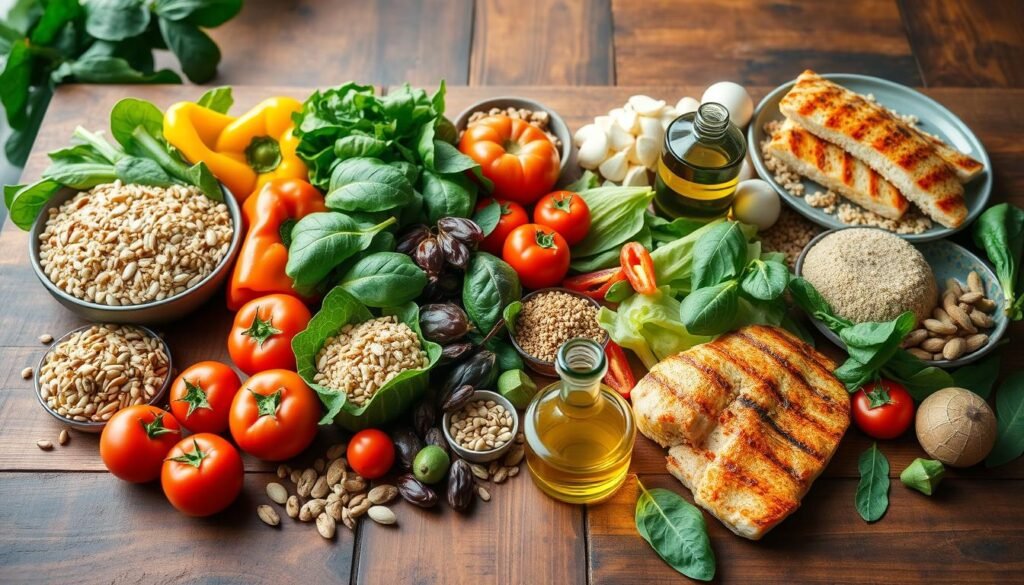
Eat diverse, nutrient-rich foods for better health. Cut down on saturated fats and choose healthier options. Include more plants and fiber for a balanced diet for cholesterol and heartburn. This lowers cholesterol and aids digestion, which helps with heartburn.
The Importance of a Balanced Diet
Having a varied diet is vital for dealing with these issues. Foods full of antioxidants, like fruits and veggies, are great for the heart and digestion. Here are some foods that help both cholesterol and heartburn:
| Food Type | Benefits for Cholesterol | Benefits for Heartburn |
|---|---|---|
| Oats | Rich in soluble fiber; helps lower LDL cholesterol | Gentle on the stomach; less likely to trigger acid reflux |
| Leafy Greens | Low in calories; high in nutrients | Enhances digestion; reduces the likelihood of heartburn |
| Bananas | High potassium; supports heart function | Natural antacid; helps neutralize stomach acid |
| Fish (Salmon, Mackerel) | Rich in omega-3 fatty acids; lowers triglycerides | Anti-inflammatory; can soothe the digestive tract |
| Nuts (Almonds, Walnuts) | Promotes heart health; reduces bad cholesterol | Nutritious; provides fiber without irritating the stomach |
Looking for more advice on what to eat? Visit understanding heartburn diets for tips. Making the right changes can help you manage both conditions.
Preventing Heartburn in High Cholesterol Individuals
Preventing heartburn in individuals with high cholesterol means making smart choices about food and lifestyle. It involves selecting food options and lifestyle changes that won’t worsen heartburn. Knowing which foods hurt heart health while avoiding those that cause heartburn is key to feeling better.
Dietary Strategies to Avoid Heartburn
Eating right is vital to stop heartburn and keep cholesterol in check. Some important diet tips include:
- Avoid trigger foods: Stay away from foods high in fat, spices, chocolate, and caffeine. Choose healthier protein sources like chicken, turkey, and fish instead.
- Choose fiber-rich options: Eating foods loaded with soluble fiber, like oatmeal and whole grains, can lower cholesterol. They also ease acid reflux.
- Hydrate wisely: Water helps clear your esophagus, lessening acid reflux’s effects.
- Practice portion control: Eating smaller meals more often can stop acid reflux and overeating.
Weight Management Techniques
Managing your weight well also helps in fighting heartburn and controlling cholesterol. Here are some strategies:
- Incorporate physical activity: Regular exercise, like walking, swimming, and sports, helps control weight and cholesterol. It encourages a healthier living.
- Maintain a moderate weight: Research shows losing a bit of weight can lessen heartburn.
- Eat mindfully: Eating slowly without distractions helps digestion and reduces heartburn.
| Dietary Practices | Heartburn Impact | Cholesterol Management |
|---|---|---|
| Avoiding high-fat foods | Reduces risk of acid reflux | Lowers cholesterol absorption |
| Consuming lean proteins | Less likely to trigger symptoms | Supports weight management |
| Eating fiber-rich foods | Helps prevent heartburn | Improves cholesterol levels |
| Staying hydrated | Flushes excess acidity | Aids in digestion |
By following these dietary strategies and applying weight management for cholesterol, people can greatly reduce heartburn. This leads to a better quality of life.
Health Risks Associated with Ignoring Symptoms
Not paying attention to symptoms of high cholesterol and heartburn is risky. It can lead to serious health problems. Knowing these risks helps you take care of your health better.
Potential Complications of High Cholesterol
High cholesterol can cause many health issues if ignored. These issues include:
- Heart attacks and strokes resulting from narrowed arteries
- Increased risk of coronary artery disease
- Elevated chances of developing high blood pressure
- Increased likelihood of other cardiovascular problems
People over 60, those who are overweight, or have diabetes face a greater risk heart problems. In women, heart attack symptoms can be different, like not having chest pain. This can make their situation unclear.
Long-term Effects of Untreated Heartburn
If you don’t treat heartburn, it can cause serious issues. The effects of long-term heartburn include:
- Esophageal damage, increasing susceptibility to esophageal cancer
- Gastroesophageal reflux disease (GERD), which may require more intensive treatment
- Chronic cough or wheezing due to recurrent acid exposure
- Possible dental erosion from stomach acid
Ignoring heartburn can lower your quality of life and cause ongoing discomfort. Paying attention to symptoms and getting help can reduce the risks of high cholesterol and untreated heartburn.
Living a Heart-Healthy Lifestyle
Making heart-healthy choices is key to managing cholesterol and avoiding health issues. Regular exercise boosts heart health and mood, and helps keep weight in check. Adding movement throughout your day boosts your health.
Exercise and Physical Activity Benefits
Regular physical activity lowers cholesterol and supports the heart. Brisk walking, swimming, and cycling make the heart stronger, boost blood flow, and cut heart disease risk. An active life improves energy and lowers stress, important for a healthy heart.
Regular Cholesterol Monitoring
Keeping an eye on cholesterol is crucial for heart health. Regular checks help track cholesterol, spot problems early, and tweak lifestyle and diet. This not only aids heart health but also leads to active risk management. Combining healthy living with regular monitoring helps people make heart-smart decisions.
Conclusion
There’s a strong link between high cholesterol and heartburn. People with frequent heartburn need to know how cholesterol affects them. Studies show high cholesterol and GERD often occur together. Diet and lifestyle are key to managing them.
Choosing a healthy lifestyle helps fight high cholesterol and heartburn. Eating foods low in fats is crucial. This supports overall health and lowers the risk of further problems.
Keeping a healthy weight and staying active improves life quality. It also cuts down on health risks.
Knowing about heartburn and cholesterol is essential. By changing diet and lifestyle, people can improve their health significantly. This leads to a better quality of life.