About 462 million people across the globe are fighting with type 2 diabetes. This number is increasing rapidly. This fact is crucial for understanding the debate on red meat and health. It focuses on its effects on chronic conditions like diabetes. Studies bring to light a complex view on red meat, its benefits, and risks.
This article will help balance the discussion on red meat in our diets. Through reliable research and expert opinions, you’ll learn about the pros and cons of red meat. Get ready to explore the world of red meat. Making informed decisions leads to a healthier lifestyle.
Key Takeaways
- The rate of type 2 diabetes is on the rise, affecting 462 million people globally.
- High red meat consumption correlates with a greater risk of type 2 diabetes.
- Swapping red meat for alternatives like nuts can significantly reduce diabetes risk.
- Moderating red meat consumption to one serving a week is advised for optimal health.
- Evidence regarding red meat’s link to chronic diseases like cancer and heart disease varies in quality and certainty.
- Non-vegetarians show reluctance to change meat-containing habits despite health risks.
Introduction to the Red Meat Health Debate
The debate on red meat and health is always evolving. People have loved red meat for ages for its taste and nutrients. But, opinions on its health effects vary greatly today.
Some see red meat as causing health issues. This group includes vegans and vegetarians. They point to studies that show risks like heart disease. Yet, the research is complex, and not all studies agree.
Many argue against simplifying how we see red meat in health studies. They say some research doesn’t consider meat type or quality. So, the debate often misses the point on specific meats.
Understanding the red meat debate requires looking at all angles. For example, natural vs. processed meat has different health impacts. It’s important to consider study credibility and potential biases too. A balanced diet is key in shaping the red meat discourse.
The Nutritional Benefits of Red Meat
Red meat is key to a well-rounded diet. It’s well-known for being a top source of protein. This meat type is packed with nutrients crucial for our health.
High-Quality Protein Source
Lean beef is packed with 22–26% protein. It’s great for anyone looking to improve muscle strength. A 3.5-ounce serving of lean ground beef has about 217 calories.
Essential Vitamins and Minerals
Red meat is loaded with vitamins and minerals. It’s rich in Vitamin B12, zinc, selenium, niacin, Vitamin B6, and phosphorus. Heme iron in red meat is easily taken in by our bodies. This makes it a key player in fighting off anemia.
Unique Nutrient Profiles in Grass-Fed Varieties
Grass-fed beef is especially good for your health. It comes with more omega-3 fatty acids, which reduce inflammation. These are good for your heart and overall health.
| Nutrient | Content per 100g Lean Beef |
|---|---|
| Protein | 22–26 g |
| Fat | 10 g |
| Saturated Fat | 4.5 g |
| Vitamin B12 | 2.6 µg |
| Zinc | 4.3 mg |
| Selenium | 24.7 µg |
| Iron | 2.6 mg |
| Niacin | 4.9 mg |
| Vitamin B6 | 0.5 mg |
| Phosphorus | 196 mg |
The Health Concerns Surrounding Red Meat Consumption
Red meat is often talked about when it comes to health. Many like its taste and the good stuff it brings to the table. But, we can’t ignore the health worries it brings, especially about long-term illnesses. There’s a strong call to look closely at red meat’s health dangers, especially the processed kinds.
Correlation with Chronic Diseases
Many studies show a link between eating a lot of red meat and getting sick often. One key concern is how red meat relates to heart disease. Eating too much red meat can be bad for your heart. Also, processed red meat, full of salt and preservatives, might increase the risk of diseases like colorectal cancer. Groups like the American Heart Association say we should eat less red meat. This is because of its saturated fat, which is not good for our health.
Risks of Processed Red Meat
The dangers of processed red meat deserve a closer look. Foods like bacon, hot dogs, and sausages have stuff in them that’s not in natural meat. Studies keep showing that these foods could lead to health problems, like cancer and heart disease. The World Cancer Research Fund says to have red meat only three times a week at most. They stress cutting down on processed meat. This helps people know the risks of their food choices. It also shows why it’s important to watch how much red meat we eat.
Health Risks Associated with High Red Meat Intake
Eating a lot of red meat has brought up big health worries. Studies point to problems like heart disease, certain cancers, and diabetes. Knowing these risks helps us choose what to eat wisely.
Impact on Heart Disease
Eating too much red meat, can harm your heart. Saturated fats in red meat can raise bad cholesterol. This may increase heart disease risk.
People who eat lots of red and processed meat tend to be heavier. Obesity is a big risk for heart problems. Eating a variety of foods keeps your heart healthy.
Association with Certain Cancers
Red meat and cancer risk is worrying. Processed meats are thought to be very risky. They’re linked to cancer, like colorectal cancer.
The experts urge us to be careful with red and processed meats. Eating less can lower our cancer risk.
Red Meat and Type 2 Diabetes Risk
There’s also a link between red meat and Type 2 diabetes. Eating red meat every day could increase your risk. Being overweight plays a part, but red meat itself is also a factor.
It’s crucial to think about these dangers when you plan meals. Reading more on this topic can help you understand better. For deeper insight, check this research.
| Health Concern | Associated Risk |
|---|---|
| Heart Disease | Increased LDL cholesterol and obesity |
| Cancer (Colorectal) | Higher incidence associated with processed meats |
| Type 2 Diabetes | Elevated risk with high daily consumption |
The Debate on Red Meat and Health
Nutrition experts have varying opinions on red meat. Some say eating it in moderation is okay. It’s part of a balanced diet if you don’t overdo it. Studies show that while eating a lot of red meat is bad, a moderate amount is fine. This is especially true if you eat a variety of foods.
Credentialed Positions from Nutrition Experts
There’s a difference between unprocessed and processed red meat. Processed meat is linked to health problems. Yet, not all studies say unprocessed red meat is bad. Some experts believe just eating less meat is enough. They advise sticking to two large steaks a week. They point out that meat’s saturated fat isn’t the main cause of diseases.
Research Findings on Moderate Consumption
Recent work looks into red meat’s effect on illnesses. Factors like fiber, calcium, and how you cook meat matter. Some studies link red meat to heart disease and diabetes. But others don’t see a connection between saturated fats and these problems. They think diet variety and environment are important. Knowing this, people can enjoy red meat’s benefits wisely.
Moderation and Dietary Recommendations
Red meat consumption is widely discussed by dietary experts and nutritionists. It offers nutritional benefits, but moderation is key. To keep a healthy diet, it’s essential to follow red meat consumption guidelines.
Guidelines for Red Meat Consumption
50-100 grams of unprocessed red meat per day is recommended for a balanced diet. Studies show that eating less red meat leads to better health. Experts advise to watch how much you consume and consider other food sources like:
- Poultry
- Legumes
- Nuts
- Fish
Avoiding unprocessed red meat may lower the risk of various health problems. Diversifying protein sources is key for heart health and overall well-being.
Importance of Varied Protein Sources
A mix of protein sources is crucial for a balanced diet. It brings nutrients red meat alone can’t provide. Moving to plant-based proteins aids the body in many ways, such as:
- Enhancing nutrient diversity
- Improving digestive health
- Lowering the risk of chronic diseases
Eating foods rich in fiber and essential nutrients helps maintain energy and promotes health. Adhering to red meat guidelines and including various proteins guides wise food choices.
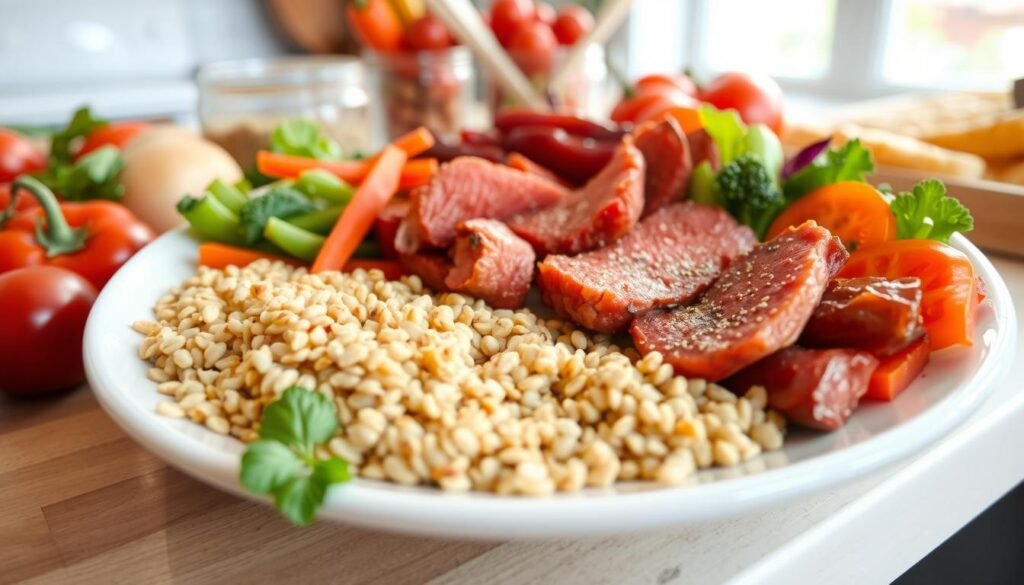
Implications of Red Meat on Public Health
Looking into how red meat affects public health covers many aspects. These include personal diets and community health efforts. Many people are still not aware of the health risks from eating too much red meat.
Global Health Perspectives
Only a few people, about 8%, know that red meat can cause prostate cancer. Meanwhile, 28% link it to heart disease. This gap shows a big public health issue. People are seriously worried about heart disease and red meat.
On average, Americans eat 284 grams of red meat each week. This is way too much. Yet, many are ready to cut down on red meat.
Environmental Considerations
The debate on red meat is not just about health but also the planet. Only 13% see the connection between red meat and water shortages or deforestation. About 22% understand its effect on climate change.
This shows a gap between our health decisions and their impact on Earth. Despite these facts, red meat eating might go up in the next ten years. A lot of people don’t see how urgent these issues are.
Functional Roles of Red Meat in an Evolutionary Context
Red meat has been a key part of human diets for over three million years. It has shaped our nutritional needs and health. As a main source of high-quality protein, red meat gives us more than 90% of our vitamin B12. This ensures we have the essential nutrients our bodies need to function.
Studies of human anatomy show we’ve evolved to eat a lot of meat. This is clear from observing hunter-gatherer societies. In these societies, about 60% of what people eat comes from animals. Meat is vital for getting B vitamins, retinol, omega-3s, iron, and zinc. These nutrients are especially important for young kids’ brains to develop well.
In places where people mainly eat cereals, meat is a critical source of nutrients. It shapes what people eat and affects their health. Experts are looking into how diets from our past impact our health today. This research underlines the ongoing importance of meat in our diets.

Research Trends and Emerging Studies
Research on red meat and health shows its complex impacts. Long-term studies link red meat intake to health outcomes. They show how both how much and what kind of red meat matters.
New Findings from Long-term Health Studies
In recent studies, like those with African American adults, the average meat intake was 5.7 servings a week. Unprocessed red meat was 2.3 servings, while processed meat was 3.3 servings per week. Eating more than three servings of unprocessed red meat a week raised stroke risk (hazard ratio = 1.43).
A deep look into heart disease rates over 9.8 years reveals more about these risks. This underscores the need for more research on red meat consumption.
Exploring the Nutritional Implications of Meat Alternatives
As concerns over red meat grow, studies focus on meat alternatives. People are eating more vegetables, legumes, and plant-based proteins. Research compares their nutritional value to red meat.
Swapping red meat for these alternatives could reduce health risks. They offer rich nutrients too.
| Type of Meat | Nutritional Benefits | Health Risks |
|---|---|---|
| Red Meat | High-quality protein, essential vitamins | Increased risk of CVD, stroke, and certain cancers |
| Processed Meat | Convenience, potentially fortified | Higher rates of type 2 diabetes, heart disease |
| Meat Alternatives | Fiber-rich, lower saturated fat | Possible nutrient deficiencies if poorly planned |
Changes in diet and their health effects require ongoing study. This will help understand the impact of various diets on public health.
Practical Tips for Healthy Red Meat Consumption
Eating red meat in a healthy way means choosing wisely. Look for the right types of meat and how to cook them. This lets you enjoy red meat and stay healthy.
Choosing the Right Cuts of Meat
Go for lean cuts to cut down on bad fat. This is key for your heart. Lean cuts like sirloin or tenderloin, flank steak, round cuts, and ground beef that’s 90% lean are best. They have less fat and are better for you. Aim for a serving size about as big as a deck of cards.
Optimal Cooking Methods
How you cook red meat matters a lot. It impacts health and taste. Use methods that reduce harmful stuff but keep the meat yummy. You can grill at lower temperatures, bake, or slow-cook. These ways keep the meat’s good nutrients and taste, but lose the bad. Cooking red meat right is a big part of eating it in a healthy way.
It’s also good to try other foods like beans instead of meat sometimes. They’re good for you in many ways. For tips on eating better and taking care of your heart, see this guide.

Conclusion
The debate on red meat and health is ongoing. Red meat has many nutrients, like high-quality protein. But, it also comes with health risks.
Researchers from seven countries found the health risks from red and processed meats to be low. However, it’s still advised to eat less to avoid heart disease, diabetes, and certain cancers.
Choosing what to eat can be tricky. It’s important to eat a little of everything. A diet with fruits, veggies, whole grains, and plant proteins is key to staying healthy. Variety helps get all the nutrients needed and supports long-term health.
Health experts say to limit red meat to three portions a week. They also recommend doing 30 minutes of moderate cardio exercise each day.
Making smart choices about red meat involves thinking about your health and what you believe in. For more on finding a healthy balance with red meat, read the latest discussions. Taking time to learn can lead to a healthier life while understanding how diet affects health.