Did you know the American Heart Association wants us to eat fish twice a week? Just two 3-ounce servings can make your heart much stronger. This helps lower the risk of heart attack and stroke. Fish, especially types rich in omega-3s, are very good for your heart. They bring many benefits that make you healthier overall.
Despite concerns about mercury in fish, eating it has many pluses. It can reduce inflammation and help your heart work better. It’s important to know which fish are best and how to enjoy them safely.
This article will help you see why fish is good for your heart. We’ll talk about the best fish to eat and how they fit into a healthy diet. Knowing about omega-3 fats will show you why eating at least 8 ounces of fish each week is key.
Key Takeaways
- The American Heart Association suggests consuming at least two 3-ounce servings of fish weekly to promote heart health.
- Omega-3 fatty acids found in fish are crucial for cardiovascular benefits and overall health.
- Some fish varieties are high in mercury, which can pose risks, especially for pregnant women and young children.
- Low-mercury fish options provide health benefits while reducing toxicity concerns.
- Incorporating fish into a balanced diet can enhance overall well-being, supported by various cooking methods.
The Benefits of Fish for Heart Health
Eating fish brings many benefits, especially for the heart. Omega-3 fatty acids are key for preventing heart disease. Many studies prove these acids defend the heart.
Understanding Omega-3 Fatty Acids
Fatty fish like salmon and mackerel are rich in omega-3s. These fats lower blood pressure and reduce inflammation. Eating these fish regularly keeps the heart healthy by lowering triglycerides and ensuring a steady heartbeat. The American Heart Association advises eating two servings of fish each week.
Reducing Inflammation and Blood Pressure
Omega-3s also lessen inflammation and blood pressure. This helps stop heart disease. Studies show eating fatty fish weekly greatly reduces heart disease deaths. Choosing fish over high-fat foods brings even bigger heart benefits. A diet high in omega-3s is not just good for the heart; it helps with keeping a healthy weight too because fish has fewer calories than other proteins.
Choosing foods high in omega-3s leads to lasting health perks. It shows why fish is a must in our diets.
Fish and Heart Health: What Studies Reveal
Eating fish has been linked to better heart health. Many studies have shown that fish in the diet helps prevent heart disease. These studies find eating more fish lowers the risk of heart problems and improves overall heart health.
Evidence from Research
A big study looked at data from 22 other studies with over 900,000 people. It found that eating more fish reduces the risk of heart disease. In fact, for every extra 20 grams of fish eaten daily, the risk goes down by 4%.
Another study with over a million people found a strong link between eating fish and lower death rates from heart disease. This shows how important fish can be for heart health.
Comparing Fish to Other Protein Sources
Fish is better for your heart than other protein sources like red meat. Eating fish two to three times a week can lower heart disease risk by 8%. This is because fish has healthy omega-3 fatty acids.
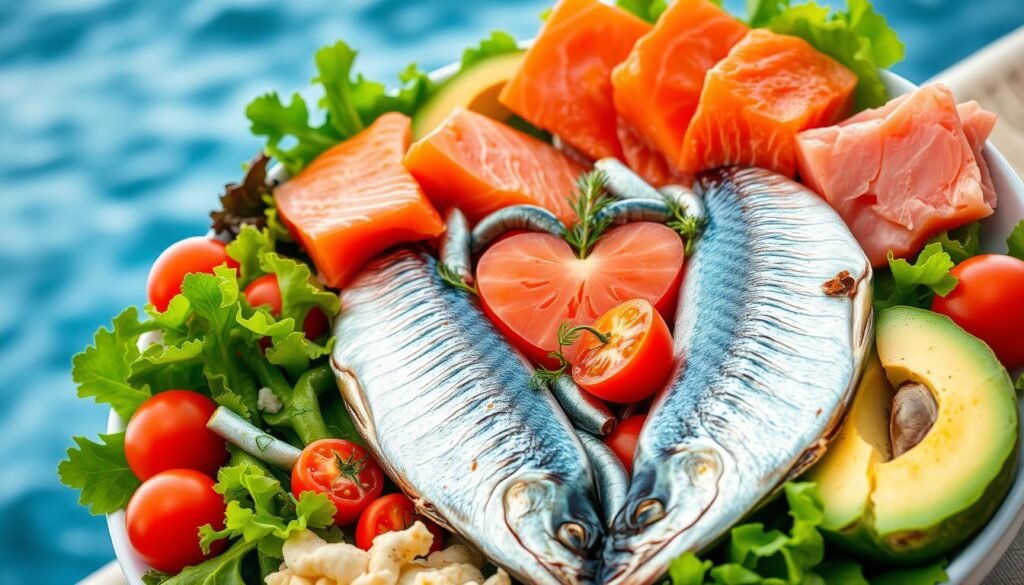
Oily fish such as salmon, mackerel, and sardines are especially good. They have lots of omega-3s. This makes fish a great choice for anyone looking to eat healthier and protect their heart.
Choosing the Right Fish for Cardiovascular Benefits
Making smart choices about the fish we eat can really boost our heart health. It’s important to know the difference between fatty and lean fish to get the most omega-3s. Fatty fish are the best for omega-3 fatty acids, which are great for the heart.
Fatty Fish versus Lean Fish
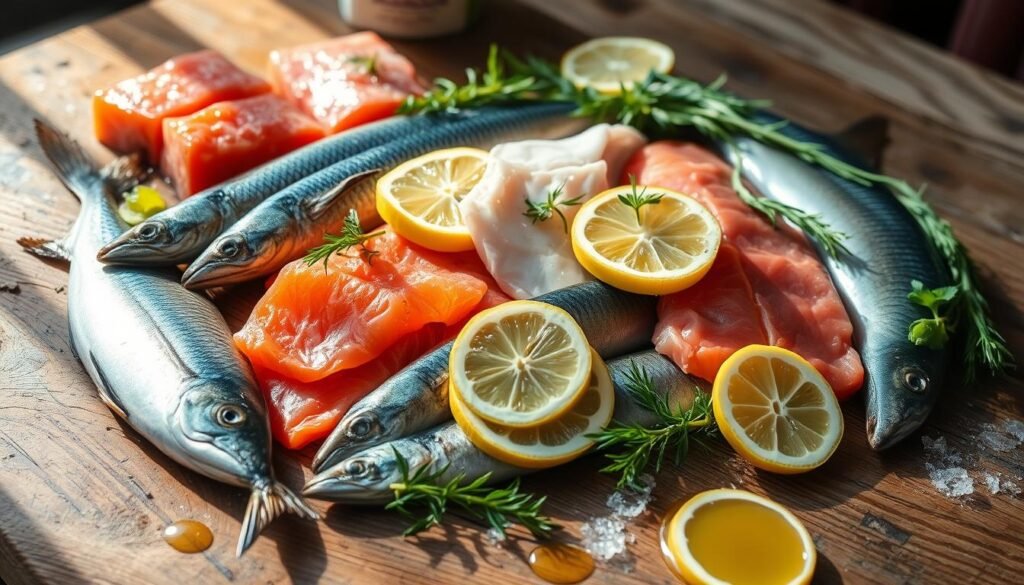
Fatty fish, like salmon, mackerel, and sardines, are full of omega-3s. They not only help the heart but also give us protein, vitamin D, and selenium. Lean fish are healthy too but have less omega-3 fatty acids. So, picking fatty fish is better for improving heart health.
Best Fish Choices for Omega-3 Intake
The American Heart Association suggests eating two servings of fatty fish weekly for enough omega-3s. Below is a table with the top fish options, their omega-3 content, and mercury levels:
| Fish Type | Omega-3 Content (grams per 4 oz) | Mercury Level |
|---|---|---|
| Salmon | 2.2 | Low |
| Sardines | 2.2 | Low |
| Mackerel | 2.5 | Low |
| Anchovies | 1.5 | Low |
| Tilapia | 0.4 | Low |
| Canned Chunk Light Tuna | 0.23 | Moderate |
To get more omega-3 fatty acids, focus on these top fish picks. Eating two servings of fatty fish a week is key. It’s way better than supplements for heart health. Adding these fish to your diet can improve your heart wellness and lower disease risks. Check out more on fish health benefits at this resource.
Recommended Fish Consumption Guidelines
It’s key to follow fish consumption guidelines for a heart-healthy diet. Regular fish eating gives essential nutrients and improves well-being. The Dietary Guidelines for Americans suggest that adults eat 8 ounces of seafood weekly. This means about two 3-ounce servings. Certain groups may need different recommendations for safe, healthy eating.
Serving Sizes and Frequency
Different people need different serving sizes. Here is what’s recommended:
| Group | Recommended Servings | Type of Fish |
|---|---|---|
| Adults | 2-3 servings (average of 8 ounces total) | Best Choices category recommended |
| Pregnant/Breastfeeding Women | 8-12 ounces per week | Lower mercury options advised |
| Children | 2 servings per week | Variety from Best Choices |
| Individuals with Health Conditions | 1 serving of Good Choices per week | No other fish that week |
Specific Recommendations for Different Groups
For pregnant and breastfeeding women, eating 8-12 ounces of low mercury fish weekly is vital. It boosts maternal health and infant cognitive development. Kids should eat fish to support their growing bodies and minds. Those with health issues should choose fish rich in omega-3.
Following these guidelines can boost a heart-healthy diet. Stay aware of contaminants and pick healthy fish types. For fish types and benefits, see FDA guidelines. To manage cholesterol, visit heart health resources.
Potential Risks of Eating Fish
Eating fish has many health benefits, but we must also consider the risks. Mercury contamination is a serious concern, along with other environmental factors. This is crucial, especially for people who are most vulnerable.
Mercury and Other Contaminants
Mercury can be a big risk, especially for pregnant women, nursing mothers, and little kids. Some fish, like shark and swordfish, build up high levels of mercury. Studies show that not getting enough omega-3s during pregnancy can harm a baby’s brain development just as much as too much mercury can.
The government advises certain people to eat less high-mercury fish. This helps lower health risks.
Impact of Environmental Factors on Fish Quality
Things like water quality and pollution affect how good fish is. Fish can also gather harmful chemicals, like PCBs, which are bad for our health. Choosing fish from clean, responsibly managed waters can reduce these risks.
Knowing about fishing practices and pollution in different areas helps us make better choices. This way, we can enjoy fish that’s healthier for us.
| Fish Type | Mercury Level (ppm) | Recommendation |
|---|---|---|
| Shark | 0.979 | Avoid |
| Swordfish | 0.971 | Avoid |
| King Mackerel | 0.730 | Avoid |
| Tuna (Albacore) | 0.358 | Limit to 6 oz/week |
| Salmon (Wild) | 0.022 | Safe for regular consumption |
| Sardines | 0.013 | Safe for regular consumption |
Fish Preparation Methods for Heart Health
Choosing the right way to prepare fish can make meals healthier for your heart. There are cooking methods that keep your meals tasty but lower the health risks. Go for grilling, steaming, or baking instead of frying to keep the good nutrients.
Healthier Cooking Techniques
Grilling, steaming, and baking are better than frying. They keep the fish’s fat content low. Take Asian-Style Steamed Salmon, for instance. It’s rich in nutrients but only has 175 calories and 2 grams of saturated fat. Then there’s Baja-Style Salmon Tacos, which are just as heart-healthy with 325 calories and 1 gram of fat. Choose healthier oils like olive or canola when you cook to make flavors pop without bad fats.
Avoiding Harmful Additives
Add too much salt or other bad additives and you lower the fish’s health benefits. It’s vital to watch your sodium for the sake of your heart. Take the Baked Cod with Cheese—it’s well balanced with 155 calories and 3 grams of fat. Always serve fish with veggies or beans for a fuller meal. Use herbs and spices for seasoning to keep things healthy. Adding sides full of nutrients makes the whole dish better and boosts the heart benefits.
With these fish prep methods, you can work towards a healthier heart while enjoying various tasty dishes. For more on keeping a balanced diet with fats, check out this link.
Fish Oil Supplements: Are They a Good Alternative?
Fish oil supplements are popular for those wanting better heart health. They are full of omega-3 fatty acids. But, can they match the health benefits of eating fish?
Comparing Supplements to Whole Fish
Studies show that fish oil supplements have omega-3s but don’t offer all the benefits of fish. Eating fish gives you vitamins A and D and omega-3s that help prevent heart disease. People who eat fish often, especially fatty kinds, have a lower risk of heart disease than those who just take supplements.
The American Heart Association suggests eating unsaturated fat-rich fish, like mackerel and salmon, twice a week. This matches the Dietary Guidelines for Americans, which recommend 8 ounces of seafood weekly for a 2,000-calorie diet. Fish oil supplements may reduce triglycerides, but their impact on heart health is not as clear as eating whole fish.
The National Academy of Medicine recommends 1.6 grams of omega-3s for males 14-50 and 1.1 grams for females of the same group. Fish is a great source of these fatty acids. So, it’s best to choose fish over supplements when you can.
Eating fish rich in omega-3s, like salmon and sardines, also gives you protein and essential nutrients. Fish oil supplements may help your health, including your liver. But, they can’t provide all the nutrients whole fish can. Supplements are an option for those who can’t eat fish often. Yet, they shouldn’t replace fish in your diet.
| Feature | Fish Oil Supplements | Whole Fish |
|---|---|---|
| Omega-3 Content | Varies, typically around 1,000 mg per serving | Varies by type, e.g., salmon contains about 2,260 mg |
| Total Nutritional Profile | Mostly omega-3s, with some vitamins A and D | Loaded with proteins, vitamins, minerals, and omega-3s |
| Heart Disease Prevention | Results are mixed | Strong proof of lowering risk |
| Recommended Intake | Use as needed, after talking to a healthcare provider | Two 3-ounce servings every week |
| Environmental Considerations | Fewer contaminant risks | Possible mercury concerns in some fish types |
The Role of a Heart-Healthy Diet
Eating for your heart is key to staying healthy. Fish is great because it’s full of omega-3 fatty acids. These are good for your heart. Adding fish to a healthy diet can make meals both tasty and good for your heart.
Incorporating Fish into a Balanced Diet
The American Heart Association suggests having fish twice a week. Opt for kinds like salmon, mackerel, or sardines. These are full of omega-3s. You can grill, bake, or even toss them into salads. It’s a tasty way to mix things up.
Complementing Fish with Other Nutrient-Rich Foods
Besides fish, eat foods that are rich in nutrients. Add whole grains, fruits, and veggies to your diet. They offer vitamins, minerals, and fiber. Below is a table of foods that are good with fish for a heart-healthy eating plan:
| Food | Benefits |
|---|---|
| Avocados | Rich in fiber, may lower heart disease risk by up to 30%. |
| Nuts (unsalted) | Consuming 4-6 servings weekly can improve heart health. |
| Blueberries and Strawberries | High in anthocyanins, may help lower blood pressure. |
| Whole Grains | High-fiber diets can reduce the risk of stroke and heart disease. |
| Beans, Peas, and Lentils | Daily consumption can help lower LDL cholesterol. |
| Extra-Virgin Olive Oil | Replacing butter with 1-2 tablespoons may benefit heart health. |
Mixing these foods with fish makes for healthy, balanced meals. This approach not only boosts your heart health but also makes eating fun and sustainable.
Conclusion
Eating fish is key for heart health. It offers many benefits mainly due to omega-3 fats. Most people don’t eat enough omega-3s. By adding fish to meals, we can fight heart disease better. The American Heart Association suggests eating fish like salmon or mackerel twice a week.
Studies show eating fish regularly lowers the risk of heart problems. Enjoying fish once a week can lead to fewer heart issues. It is important to choose the right types of fish to boost heart health.
Having fish often is good for long-term health. It helps the heart by providing essential omega-3 fats. Making fish a regular part of our diet is a smart health move.