Did you know adults on a 2,000-calorie diet need about 5.5 ounces of protein daily? This can include lean cuts of red meat. Despite some beliefs, lean red meat, like lean beef cuts, enriches your diet. It offers protein, iron, and B vitamins, making healthy red meat cuts a tasty choice for health-conscious people.
We will look into low-fat red meat options, their benefits, and tips for cooking. If you’re craving a steak, pork loin, or lamb, lean meats can improve your nutrition. For deeper info, see this guide on cuts.
Key Takeaways
- Lean cuts of red meat are a flavorful source of essential nutrients.
- Moderation and portion control are key when consuming red meat.
- Look for “Choice” or “Select” grades for healthier beef options.
- Trimming visible fat aids in reducing overall fat intake.
- Cooking methods like grilling can enhance flavors while keeping dishes healthy.
Introduction to Lean Red Meat
Lean red meat is both tasty and good for health. It’s defined as cuts with less than 10 grams of total fat for every 3.5-ounce serving. These meats are packed with essential nutrients but low in calories.
They offer high-quality protein and important minerals like iron and zinc. Lean red meat can also make meals more satisfying.
The Dietary Guidelines for Americans suggest eating meat in moderation. It’s advised to keep meat intake under 26 ounces weekly. Using lean beef in dishes, along with skinless poultry, fish, beans, and legumes, helps balance the diet.
There are many lean cuts available, such as eye of round and top sirloin steak. These choices spotlight lean red meat’s benefits for a healthy diet. For heart-healthy meals, trim visible fat off meat and choose cooking methods that reduce fat content.
Including lean red meat in a diverse diet benefits health. By selecting and preparing these meats wisely, you can enhance their health advantages.
What Are Lean Cuts of Red Meat?
Lean red meat cuts are lower in fat, making them great for health-focused eaters. The USDA says a “lean” cut has under 10 grams of fat per 3.5-ounce serving. To fit the “extra lean” category, there must be less than 5 grams of fat. Cuts like eye of round, top round, and sirloin meet these standards well.
Red meat is from animals like beef, lamb, goat, venison, bison, and pork. It’s richer in saturated fat than white meat. But, picking lean red meat can keep your diet balanced. The American Heart Association recommends choosing cuts labeled as loin, round, or sirloin for healthier eating.
Knowing which meat cuts are lean is key for healthy eating. This knowledge is vital for those watching their cholesterol. In fact, many lean red meats have 95 milligrams of cholesterol or lower per serving. Choosing these can make your diet heart-friendlier. For more tips on diet and cholesterol, visit this helpful guide.
Health Benefits of Lean Red Meat Cuts
Adding lean red meat to your diet has many benefits. These cuts are full of important nutrients. They make meals both nutritious and satisfying.
Source of Essential Nutrients
Lean red meat is packed with key nutrients. It’s high in protein, which is important for muscles and health. A 3-ounce serving of lean beef provides more than half the protein you need daily.
It has essential nutrients in red meat like heme iron and zinc. Heme iron is easier for our bodies to use than iron from plants. Zinc helps with immune functions and metabolism. Lean red meat also has a lot of B vitamins, especially B12, needed for energy and brain health. Eating lean red meat increases nutrient intake without too many calories.
Lean Protein Options for a Healthy Diet
Choosing lean proteins, such as red meat, keeps your diet healthy. Benefits of lean protein include muscle growth and making you feel full. This can help with weight control. The American Heart Association suggests eating lean red meat as a heart-healthy protein choice. You should pick cuts labeled as “choice” or “select,” and cook them in a healthy way. This keeps the fat low and the taste high.
| Nutrition (per 4 oz of 80% lean ground beef) | Amount |
|---|---|
| Calories | 287 |
| Protein | 19 gm |
| Fat | 23 gm |
| Carbohydrates | 0 gm |
| Vitamin B12 | 101% of Daily Value |
| Zinc | 43% of Daily Value |
| Selenium | 31% of Daily Value |
| Niacin | 30% of Daily Value |
| Iron | 12% of Daily Value |
Find more about lean beef cuts in this guide. Making smart choices on meat picks can give you health benefits. It also keeps your diet in good balance.
Popular Lean Beef Cuts
Exploring popular lean beef cuts can lead to delicious and nutritious meals. These cuts are low in fat but high in protein. They are perfect for a healthy diet. Knowing about the different lean beef options helps people choose wisely for their meals.
Top Choices for Healthy Eating
Some of the most common healthy red meat cuts include:
- Eye of Round Steak: 363 calories, 10 grams total fat, 66.9 grams protein.
- Top Round Steak: 382 calories, 9.8 grams total fat, 68.6 grams protein.
- Sirloin Tip Center Steak: 405 calories, 16 grams total fat, 62.9 grams protein.
- Flank Steak: 439 calories, 18.7 grams total fat, 63.3 grams protein.
- Tenderloin Steak: 482 calories, 20.3 grams total fat, 69.7 grams protein.
Each cut has different fat and protein levels. This variety meets various cooking needs and diet plans. Adding these popular lean beef cuts to your diet can help you eat better.
Understanding USDA Lean Labels
The USDA defines lean beef standards. “Lean” beef must have under 10 grams of fat per 100 grams. It should have less than 4.5 grams of saturated fat. “Extra lean” beef has 5 grams or less of fat and no more than 2 grams of saturated fat.
USDA beef labels make it easier to pick healthy options. Knowing what these labels mean is key to better diet choices. This awareness also promotes understanding healthy meat options available for purchase.
Choosing Lean Pork Cuts
Pork has lean options that fit well in a healthy diet. It is known for its taste and how easily it can be used in recipes. Some cuts are the best because they are healthy and tasty. Choosing them helps people eat well without giving up flavor.
Best Cuts of Pork to Include
The best pork cuts for a lean diet include:
- Pork Tenderloin
- Pork Loin Chops
- Sirloin Roast
- Filet Mignon
These cuts are low in fat but high in protein. They are perfect for anyone wanting to eat healthy pork.
How to Prepare Lean Pork Successfully
It’s easy and fun to cook lean pork. You can keep it tasty while reducing fat by:
- Grilling: This method adds a smoky taste and lets extra fat drip off.
- Roasting: Seals in the flavors. Use marinades for more taste.
- Slow Cooking: Makes cuts like pork shoulder tender. It’s great for savory meals without extra fat.
Marinating adds extra flavor to your pork. This easy step makes meals healthier and more delicious. By choosing these cooking methods, you can make lean pork that’s both tasty and good for you.
Exploring Lean Lamb Cuts
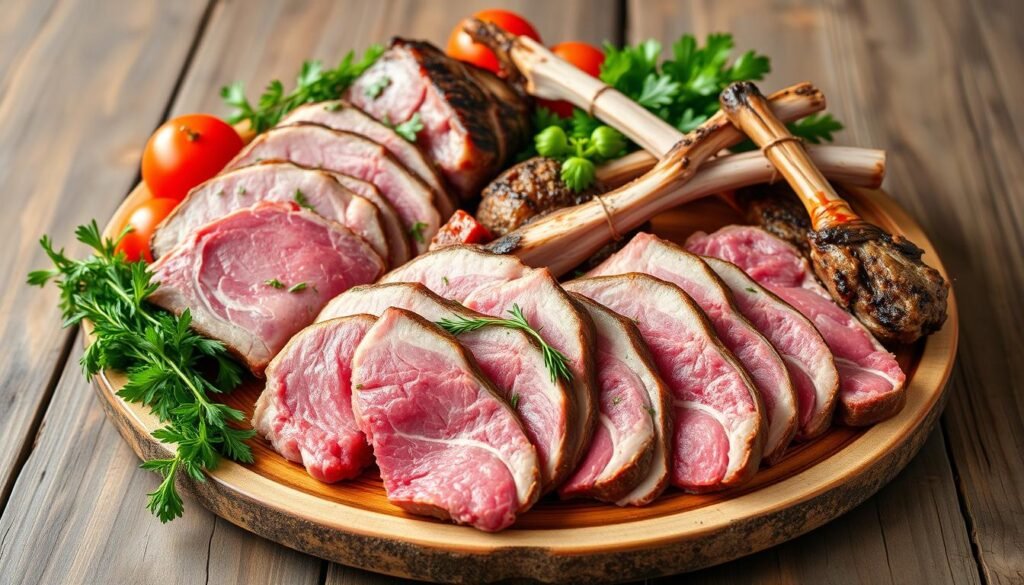
Lean lamb offers a tasty choice for those eating healthy. It’s full of flavor, making it a great source of protein. Lamb shoulder and leg are top picks. They have less fat than many meats. Nutritious lamb options fit well in a healthy eating plan.
Lamb isn’t just yummy; it’s also loaded with vitamins and minerals. It’s high in zinc and iron, which help keep the immune system strong and boost energy. Plus, lamb is an excellent protein source. It’s ideal for active people.
It’s important to think about how much lamb to serve. A 1kg leg of lamb is enough for 4-6 folks. A 2kg lamb shoulder serves 6-8. And a rack of lamb, with 4 cutlets, is perfect for 2. Lamb’s versatility makes it great for any meal, from big family events to simple dinners.
Want to learn more about cooking lamb? Check out this guide. It gives great tips on ways to cook lamb, making your dishes even better.
Cooking Tips for Lean Red Meat Cuts
Cooking lean red meat the right way keeps its natural taste and boosts health. Specific techniques can make lean cuts both flavorful and nutritious. These methods keep the meat tasty and support a healthy lifestyle.
Methods to Maintain Flavor While Reducing Fat
Skirt steak is popular for being tasty and lean. Grilling and pan frying can reduce fat while keeping the meat juicy. It’s good to use olive oil like Cobram Extra Virgin Olive Oil for these methods.
Pre-salting the meat before cooking helps it absorb seasoning better. This enhances flavor without adding too much salt.
- Marinating adds moisture and makes meat tender.
- Add fresh herbs like garlic, ginger, or citrus juices after cooking for extra flavor without the calories.
- Try salsas with tomatoes, capsicum, and fresh coriander for more taste and nutrients.
Healthy Cooking Techniques and Seasoning Options
Slow cooking is a great way to make meat tender and tasty. It’s easy and lets meat fully take in the seasoning. You can use a slow cooker, oven, smoker, or pot, perfect for tougher cuts that need more time.
Choosing the right seasoning is key in cooking lean meat. Using natural flavors is a healthier way to cook. Important ingredients include:
- Garlic and ginger add depth.
- Fresh herbs make meals more enjoyable.
- Citrus juices bring out a bright flavor.
Using these methods makes healthy cooking fun. It turns preparing nutritious meals into an enjoyable task.
Benefits of Incorporating Lean Cuts of Red Meat into Your Diet
Adding lean meat to your diet offers many benefits. It boosts nutrition and supports overall health. Red meat gives you essential nutrients like high-quality protein, amino acids, vitamins, and minerals. These elements help fight common nutrient shortages, mainly in vitamin A, iron, and zinc. With about 3 ounces of lean beef, you get over half of your daily protein needs. This makes it easy to meet dietary requirements.
Lean red meat offers more than just protein. It’s full of essential nutrients, adding value to your meals. You’ll get a good dose of selenium, niacin, vitamin B12, iron, and zinc. These nutrients are crucial for keeping energy up and supporting your metabolism. The nutrient-rich nature of lean cuts helps your body function well. It also helps beat tiredness.
Although some worry about red meat linking to chronic diseases, it’s crucial to look at these claims closely. Studies suggest links between red meat and illnesses like cancer, heart disease, and diabetes. Yet, these studies often have flaws. The risks tied to red meat aren’t as high as with other foods.
Moderation is the key to enjoying lean red meat. Including lean cuts in your meals offers variety without overdoing it. By focusing on serving sizes and reducing processed meat, you can enjoy red meat healthily. This mindful approach ensures a balanced diet.
| Nutrient | Amount in 3 oz of Lean Beef | Daily Percentage Value |
|---|---|---|
| Protein | ~22g | ~44% |
| Iron | ~2.1mg | ~12% |
| Zinc | ~5.3mg | ~35% |
| Vitamin B12 | ~2.5mcg | ~104% |
| Selenium | ~27mcg | ~49% |
Reducing Fat Intake While Enjoying Delicious Meals
Cutting down on fat doesn’t mean missing out on tasty food. By choosing lean meats and watching portion sizes, you can eat well and stay healthy. Try different lean red meats like sirloin or pork loin to keep meals exciting and nutritious.
Try new ways of cooking to keep flavors rich without extra fat. Bake or roast chicken, turkey, or fish instead of grilling. Ground turkey or canned tuna are great low-fat options too.
- Marinate chicken or fish for enhanced flavor while keeping it healthy.
- Utilize spices and herbs generously to create vibrant dishes.
- Incorporate hearty plant-based foods like beans and whole grains alongside lean proteins.
Combining spicy chicken with black beans and veggies makes meals fun and vibrant. By focusing on portion control and lean meats, you can enjoy good food without the guilt. Studies show that even lean beef can be part of a heart-healthy diet.
Planning meals with less fat is easy and fulfilling. Mindful eating boosts creativity in cooking. It leads to a life full of varied tastes and healthy choices.
Conclusion
The closing thoughts on lean red meat underline its key place in a balanced diet. It offers vital nutrients with less saturated fat compared to many other foods. When cooked well, lean meats make for fulfilling dishes without hurting your health.
Learners should note the benefits of select lean red meats like top sirloin and eye of round. These meats have usually less than 10 grams of saturated fat, letting you enjoy great taste guilt-free. Highlighting their high protein content shows why they’re good for your daily meals.
By including lean red meat with moderation in a diet full of fruits, veggies, and grains, you boost your well-being. Choosing these foods carefully can help reach your health goals while keeping meals delicious.