Do you know about the Dietary Guidelines for Americans? They recommend that over half our grains should be whole grains. Yet, many in the U.S. don’t meet this guideline. Missing this target means they lose out on whole grains’ benefits for cholesterol and heart health. Whole grains are great because they have a lot of fiber and nutrients.
They help lower bad cholesterol (LDL) and increase good cholesterol (HDL). More and more research shows that eating more whole grains can make your heart healthier. This makes whole grains key in battling heart disease.
Key Takeaways
- Whole grains are vital for cholesterol management, offering numerous health benefits.
- Dietary guidelines recommend that at least half of consumed grains be whole grains.
- High-fiber diets, including whole grains, can reduce the risk of heart disease and diabetes.
- Whole grains contain essential nutrients that contribute to heart health.
- Consistent consumption of whole grains can improve total and LDL cholesterol levels.
- Examples of heart-healthy whole grains include brown rice, oatmeal, and whole-grain bread.
Introduction to Whole Grains and Cholesterol
Whole grains have the bran, germ, and endosperm—which are all parts of the grain. They are good for your health, especially for keeping cholesterol in check. Experts say we should make half our grains whole grains. Yet, many people don’t meet this goal.
Studies show that women who eat 2 to 3 servings of whole grains each day are 30% less likely to have heart issues. If you eat about 70 grams of whole grains daily, you’re 22% less likely to die early.
Eating whole grains can lower bad cholesterol and triglycerides. This is key for a healthy heart. Studies find that eating whole grains cuts the risk of heart disease by 21%.
To wrap it up, adding more whole grains to your diet helps manage cholesterol and keeps your heart healthy. For tips on making these changes, check out this resource.
Understanding Cholesterol: The Good and the Bad
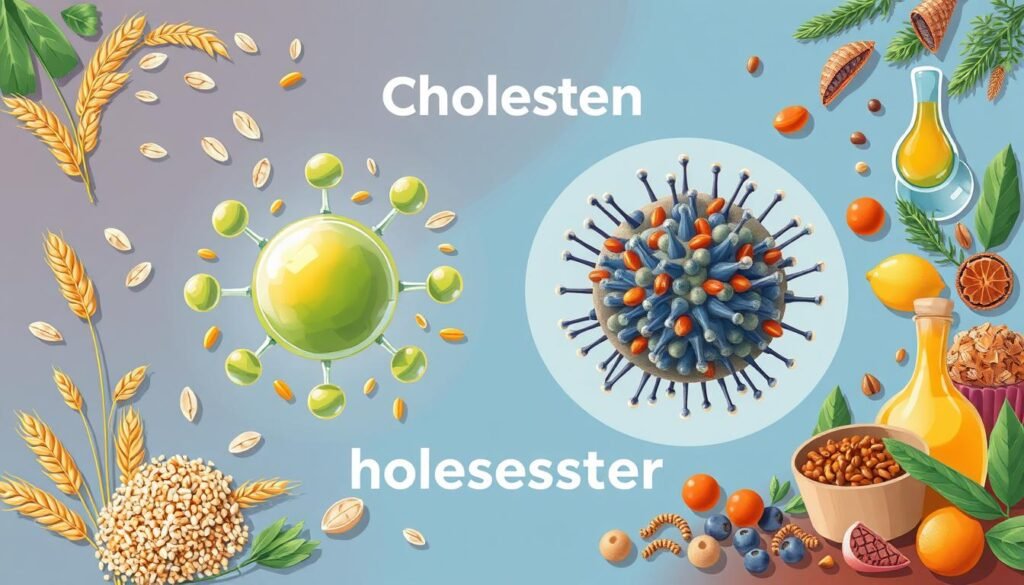
Cholesterol is crucial for our bodies, with two main types doing different jobs. The first type, low-density lipoprotein (LDL), is often called bad cholesterol. The second type, high-density lipoprotein (HDL), is known as good cholesterol. High LDL can clog arteries, boosting heart disease and stroke risks. Meanwhile, HDL helps get rid of cholesterol, keeping things balanced.
Knowing about these cholesterol types is key to managing them. People with LDL under 100 mg/dL usually have lower heart disease rates. Yet, high LDL can be due to genetic issues, like familial hypercholesterolemia. This condition affects about 1 in 212 U.S. adults.
What you eat also matters a lot. Foods high in saturated fats can raise cholesterol. These include some animal products and processed meats. Eating lots of fruits, veggies, whole grains, and foods high in good cholesterol can lower bad cholesterol levels. This is great for your heart.
Getting your cholesterol checked regularly is important too. Children as young as two might need checks if heart disease runs in the family. For more on understanding your cholesterol test results, click here.
Why Choose Whole Grains Over Refined Grains
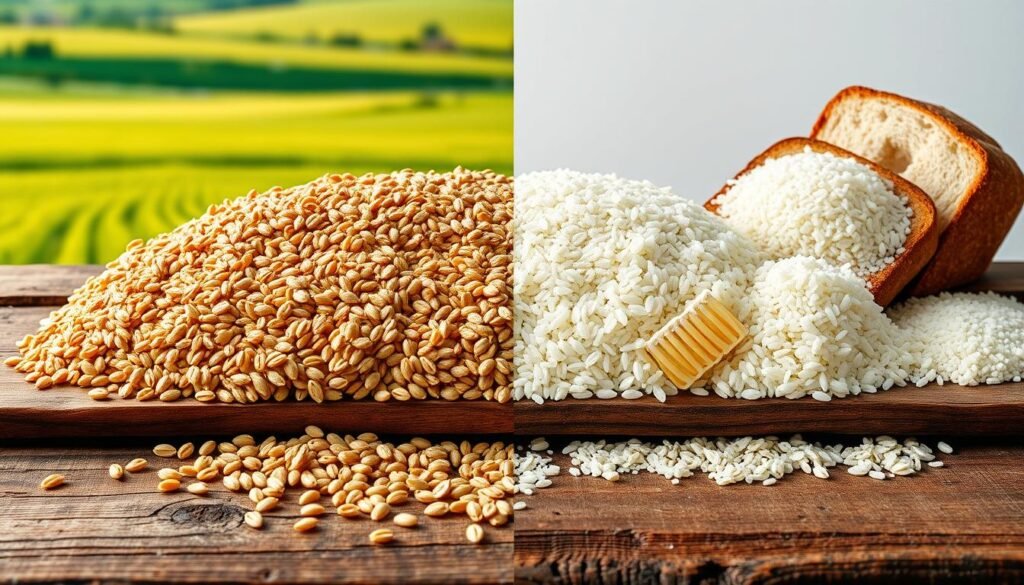
Whole grains are a healthier choice than refined grains. They keep their bran and germ, which means they have more fiber and nutrients. Refined grains lose these parts during processing. This leads to less fiber and a higher glycemic index. These differences affect not just our digestion but our overall health too.
Studies show the advantages of eating whole grains. They can lower bad cholesterol and inflammation. People who eat more whole grains instead of refined ones often see better heart health. Experts suggest making at least half of our grains whole grains.
How much whole grain should we eat? It depends on our age. Here’s a guide:
| Age Group | Whole Grains (oz-equiv) |
|---|---|
| Toddlers (12-23 months) | 1½ to 2 |
| Children (2-3 years) | 1½ to 3 |
| Girls (9-13 years) | 2½ to 3½ |
| Girls (14-18 years) | 3 to 4 |
| Boys (9-13 years) | 3 to 4½ |
| Boys (14-18 years) | 3 to 5 |
| Women (19-30 years) | 3 to 4 |
| Women (31-59 years) | 3 to 3½ |
| Women (60+ years) | 3 to 4½ |
| Men (19-30 years) | 4 to 5 |
| Men (31-59 years) | 3½ to 5 |
| Men (60+ years) | 3 to 4½ |
Eating whole grains can lower heart disease risk, help digestion, and aid weight management. They also may reduce the risk of type 2 diabetes and stomach cancers. Whole grains can even decrease the chance of dying from heart issues. This shows how valuable whole grains are for our health.
Benefits of Whole Grains for Heart Health
Whole grains offer many heart health benefits. They are key for good cardiovascular health. Adding whole grains to your meals can lower bad cholesterol and boost good cholesterol. This is because they’re rich in fiber, which is great for your heart.
The American Heart Association suggests eating plenty of whole grains. You should pick foods that are at least 51% whole grains. A diet rich in these grains cuts the risk of heart disease, stroke, obesity, and diabetes. This shows how vital whole grains are for controlling cholesterol and improving health.
Whole grains are packed with essential nutrients like thiamin, riboflavin, niacin, folate, and minerals. These nutrients boost heart health benefits. By eating three servings of whole grains daily, you can keep your heart running smoothly.
Here are some top whole-grain choices:
- Amaranth
- Barley
- Brown rice
- Buckwheat
- Oats
- Quinoa
- Whole-wheat bread
- Whole-grain pasta
To pick the right whole grains, it’s important to read labels. The color of a food doesn’t show if it’s whole grain. Eating the right amounts is also key. For example, one slice of whole-grain bread or half a cup of whole-grain cereal is good for your heart.
Whole Grains for Cholesterol Control
Adding whole grains to your diet is key for healthy cholesterol. These grains lower “bad” LDL levels while boosting “good” HDL cholesterol. Knowing how whole grains work with cholesterol helps you choose what to eat wisely.
How Whole Grains Impact LDL and HDL Cholesterol
Whole grains are great for both LDL and HDL cholesterol. They reduce LDL cholesterol when you eat more of them. At the same time, they increase HDL cholesterol, which protects your heart. This perfect balance is vital for heart health.
Fiber Content and Its Role in Cholesterol Management
Soluble fiber in whole grains is a superhero for cholesterol control. It turns into a gel in the intestines, grabbing cholesterol to get rid of it. We’re told to get 21 to 38 grams of soluble fiber a day, but most only get half that.
Here’s a list of foods high in soluble fiber for better cholesterol:
| Food | Soluble Fiber per Serving | Additional Benefits |
|---|---|---|
| Oats | 1.5 grams per cup | Heart health, lower LDL |
| Barley | 3.0 grams per cup | Lower cholesterol, improve digestion |
| Beans | 10-13 grams per cup | High in protein, additional vitamins |
| Avocado | 2 grams per medium fruit | Rich in healthy fats, raise HDL |
| Fruits (e.g., apples, pears) | 3-5 grams per medium fruit | Rich in antioxidants, lower overall cholesterol |
| Spinach | 6 grams per cup | Nutrient-rich, lower cholesterol levels |
Eating different sources of soluble fiber is big for controlling cholesterol. Whole grains are especially important, making your diet better for your heart.
Best Whole Grains for a Heart-Healthy Diet
Adding whole grains to your diet is key for heart health. Oats and barley are especially good for this. They pack nutrients that help lower cholesterol.
Oats: A Top Choice for Cholesterol Reduction
Oats are great for cutting cholesterol, thanks to beta-glucan, a kind of fiber. Eating oats regularly helps keep your heart healthy.
Barley and its Soluble Fiber Benefits
Like oats, barley is a star for your heart because of its fiber. It lowers cholesterol well, which is good for your diet. Oats and barley also help you meet your fiber needs, keeping cholesterol in check.
Eating these grains, along with other heart-friendly foods, boosts your heart health. For tips on choosing whole grains, check out this guide on whole and refined grains.
| Whole Grain | Fiber (g per cup) | Protein (g per cup) | Calories | Cholesterol-Lowering Benefits |
|---|---|---|---|---|
| Oats | 4 | 6 | 154 | Rich in beta-glucan, lowers LDL cholesterol |
| Barley | 6 | 3.5 | 193 | High in soluble fiber, aids cholesterol control |
| Bulgur | 6 | 4 | 116 | Contains insoluble fiber, may support cholesterol management |
Incorporating Whole Grains into Your Diet
Adding whole grains to your meals is key to a healthier life. Small changes can have a big impact. For example, choose brown rice or quinoa instead of white rice. Try whole grain bread and pasta to boost flavor and nutrients.
There are many tasty whole grain recipes out there. Start your day with whole grain cereals for the needed nutrients and steady energy. Oatmeal or shredded wheat can keep you full until lunch.
For snacks, get creative with healthy options. Think about popcorn, whole grain crackers, or making granola bars at home. These snacks are both satisfying and good for you.
Look for products with a “100% Whole Grain” stamp to ensure they’re truly whole grain. Cooking big batches of brown rice or barley for the week is a good strategy. Try quinoa with a veggie salad for a colorful meal. Or make sushi with brown rice for something fun.
By following these suggestions, you’ll improve your meals and your health. You’ll also lower your risk of chronic diseases. Check out this resource for more about whole grains.
Tips for Distinguishing Whole Grains from Refined Grains
Reading ingredient labels is key when shopping. Look for “whole grain” at the top of the list. It means the product has the whole grain kernel, so it’s richer in nutrients.
Just because a product is brown doesn’t mean it’s whole grain. Some products are colored to look healthier. Always check the ingredients to make smart food choices.
Knowing the difference between whole grains vs refined grains is crucial. Whole grains have the bran, germ, and endosperm. But refined grains lose many nutrients during processing.
| Aspect | Whole Grains | Refined Grains |
|---|---|---|
| Nutritional Value | High (contains fiber, vitamins, minerals) | Lower (mostly stripped of nutrients) |
| Impact on Health | May lower risk of type 2 diabetes and heart disease | Link to increased weight gain and blood sugar issues |
| Examples | Whole wheat, brown rice, quinoa | White flour, white rice |
The Whole Grain Stamp makes choosing easier. This label shows how much whole grain is in each serving. Incorporating whole grains into meals can start with mixing them with refined grains. It helps get used to their taste and texture.
Conclusion
Eating whole grains for a healthy heart is key to controlling cholesterol. Studies show replacing refined grains with whole ones improves heart health. This change can lower total and bad LDL cholesterol, tackling a big risk for heart disease.
Whole grains do more than just help with cholesterol; they also help digestion, keep blood sugar stable, and aid weight control. They can lower the risk of diabetes and some cancers. Sadly, most people don’t eat the recommended three servings of whole grains a day.
Choosing cholesterol management through diet and whole grains boosts heart health and quality of life. By choosing whole grains, we make a positive choice for better health and longer life.