Did you know adding healthy fats to your diet can help fight high cholesterol? Studies show a heart-healthy diet can have up to 35 percent fat. But it should come mainly from monounsaturated and polyunsaturated fats. This article explores how the right fats can boost heart health and manage cholesterol. You’ll learn which fats to eat daily and how they make a big difference in health.
Key Takeaways
- Beneficial fats can lower overall cholesterol and improve heart health.
- Omega-3 fatty acids are vital for reducing blood pressure and triglycerides.
- Incorporating healthy fats from sources like avocados and fatty fish is crucial.
- Dietary changes can support heart health alongside medication when needed.
- Moderate physical activity can significantly improve HDL cholesterol levels.
Understanding Dietary Fats for Heart Health
It’s important to know how dietary fats affect heart health. Fats are key for energy, cell function, and absorbing nutrients. Knowing the types of fats can make a big difference in health.
The Role of Fats in the Body
Fats have 9 calories per gram, offering twice as much energy as carbs and proteins. Keeping an eye on fat intake helps keep cholesterol levels healthy. Too much saturated fat can raise cholesterol in arteries. This should be less than 6% of your daily calories for heart health.
Different Types of Dietary Fats
There are four main types of fats: saturated, trans, monounsaturated, and polyunsaturated. Saturated and trans fats can up the risk of heart disease by raising bad cholesterol. But, monounsaturated and polyunsaturated fats are good for the heart. Here are the sources:
| Type of Fat | Sources | Effects on Health |
|---|---|---|
| Saturated Fats | Fatty meats, dairy products, butter | Increases LDL cholesterol, may contribute to heart disease |
| Trans Fats | Partially hydrogenated oils, some baked goods | Raises LDL cholesterol, lowers HDL cholesterol |
| Monounsaturated Fats | Olive oil, avocados, nuts | Helps maintain healthy cholesterol levels |
| Polyunsaturated Fats | Oily fish, nuts, vegetable oils | Includes essential omega-3 fatty acids beneficial for heart health |
Try to keep trans fats under 5g per day. Eating more good fats while cutting back on bad ones is key for heart health. For details on fats and the heart, check Mayo Clinic. Learn about saturated fats and cholesterol at this link.
Why Fats Matter in a Heart-Healthy Diet
It’s important to know how fats affect your heart. What you eat changes your cholesterol levels and your risk of heart disease. Knowing which fats are good and which ones are bad helps you eat better for your heart.
The Connection Between Fats and Cholesterol
Different kinds of fats like saturated, trans, monounsaturated, and polyunsaturated fats are in our diet. Saturated and trans fats make “bad” cholesterol levels go up. High levels of this bad cholesterol can lead to heart disease.
But, if you eat more good fats, like monounsaturated and polyunsaturated fats, you can lower bad cholesterol. Changing to these healthier fats can keep your heart healthy and lower your risk of heart problems.
Impact of Unhealthy Fats on Heart Disease
Eating too many unhealthy fats can cause heart disease and stroke. Even a little bit of trans fats can increase bad cholesterol and decrease good cholesterol. This raises your chance of getting heart disease.
Experts say to eat foods like fish, nuts, and plant oils with polyunsaturated fats instead of bad fats. Eating a balanced diet helps lower your chance of getting heart disease by managing fat intake and getting enough nutrients.
| Type of Fat | Effect on Cholesterol | Heart Health Risk |
|---|---|---|
| Saturated Fats | Raises LDL cholesterol | Increases risk of heart disease |
| Trans Fats | Raises LDL cholesterol, lowers HDL cholesterol | Significantly increases risk of heart disease and stroke |
| Monounsaturated Fats | Lowers LDL cholesterol | Reduces risk of heart disease |
| Polyunsaturated Fats | Lowers LDL cholesterol | Reduces risk of heart disease |
Healthy Fats for High Cholesterol
Knowing the right types of fats is key for keeping the heart healthy and cholesterol in check. It’s about choosing well between good and bad fats. Foods rich in healthy fats, like olive oil, avocados, and nuts, are great for cardiovascular health. They provide necessary nutrients and help manage cholesterol levels.
Identifying Heart-Healthy Fats
Monounsaturated and polyunsaturated fats are important for heart health. These fats lower bad cholesterol and increase good cholesterol. Sources include olive oil, avocados, nuts like almonds, and fatty fish such as salmon.
- Olive Oil
- Avocados
- Nuts (such as almonds and walnuts)
- Fatty Fish (like salmon, mackerel, and sardines)
- Chia Seeds and Flaxseeds
Eating foods high in healthy fats lowers the risk of heart disease. Adding these to your diet helps keep total cholesterol under 150 mg/dL and LDL below 100 mg/dL. This is essential for reaching cholesterol goals.
Benefits of Incorporating Healthy Fats
Healthy fats have many benefits. They’re not just good for lowering cholesterol. They also improve heart health significantly.
- Improved Cholesterol Levels: Foods like pistachios can drop total cholesterol by 7 points.
- Blood Pressure Management: Flaxseeds help control blood pressure, aiding those with hypertension.
- Enhanced Nutrient Absorption: Healthy fats boost the absorption of vitamins A, D, E, and K.
- Support for Heart Function: Omega-3 fatty acids from fish are vital for heart health.
Learning about healthy fats is a step towards managing cholesterol. Simple meal changes can make a big difference in heart health. For more tips, check out foods to avoid with high cholesterol.
Sources of Monounsaturated Fats
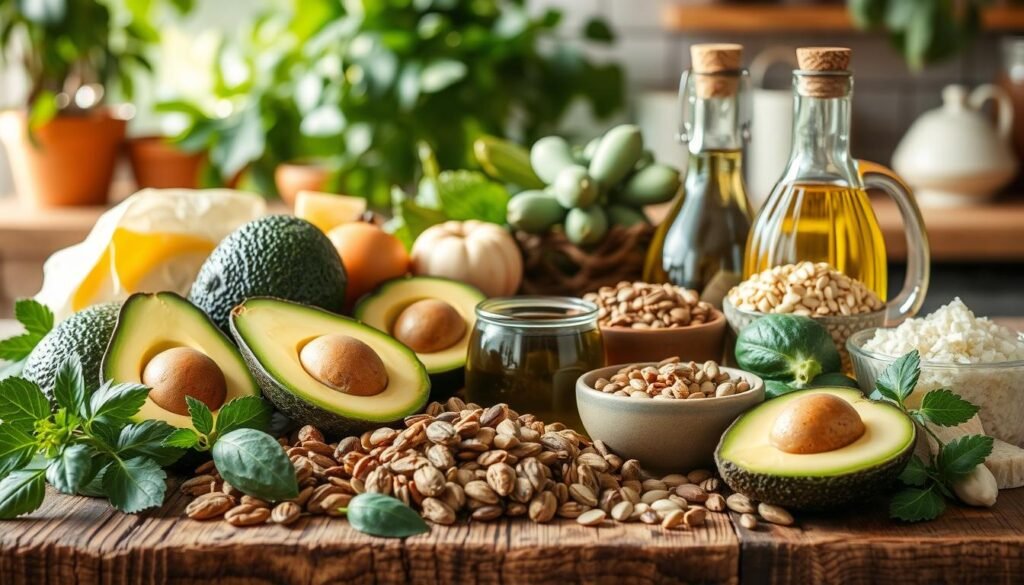
Adding monounsaturated fats to your daily meals is great for your heart. Each gram of these fats gives you 9 calories. They are a smart choice for anyone who wants to stay healthy and enjoy tasty foods.
Examples of Healthy Food Choices
There are plenty of foods full of monounsaturated fats that are easy to add to any meal. Some of the best choices include:
- Extra virgin olive oil
- Avocados
- Almonds
- Cashews
- Peanuts
- Pistachios
- Green olives
- Pumpkin seeds
- Sunflower seeds
- Hard-boiled eggs
These items don’t just help your heart. They can also be used in many recipes and snacks.
Cooking Techniques for Optimal Health
Cooking the right way can make the most of monounsaturated fats and make your food tastier. Here are some tips:
- Sautéing with olive oil instead of butter
- Roasting vegetables with a drizzle of olive oil
- Baking with nut-based flours
Using these cooking methods can cut down on bad fats. This lets you enjoy delicious, healthy meals that are good for your heart.
Benefits of Polyunsaturated Fats
Polyunsaturated fats are key for a healthy heart. Eating these fats, especially omega-3s, offers many benefits for our health.
Omega-3 Fatty Acids and Heart Health
Omega-3 fatty acids excel at lowering triglycerides. This protects the heart. They are in fatty fish like salmon and in seeds.
Eating foods with omega-3s is great for heart health. They can also slightly reduce blood pressure.
How Polyunsaturated Fats Lower Cholesterol
Research shows that polyunsaturated fats lower cholesterol well. They replace bad fats, improving our health. They lower bad LDL and increase good HDL.
The American Heart Association advises getting 8-10% of daily calories from these fats. This lowers heart disease risks. Focus on foods like sunflower oil and fish for heart health.
Incorporating Healthy Oils into Your Diet
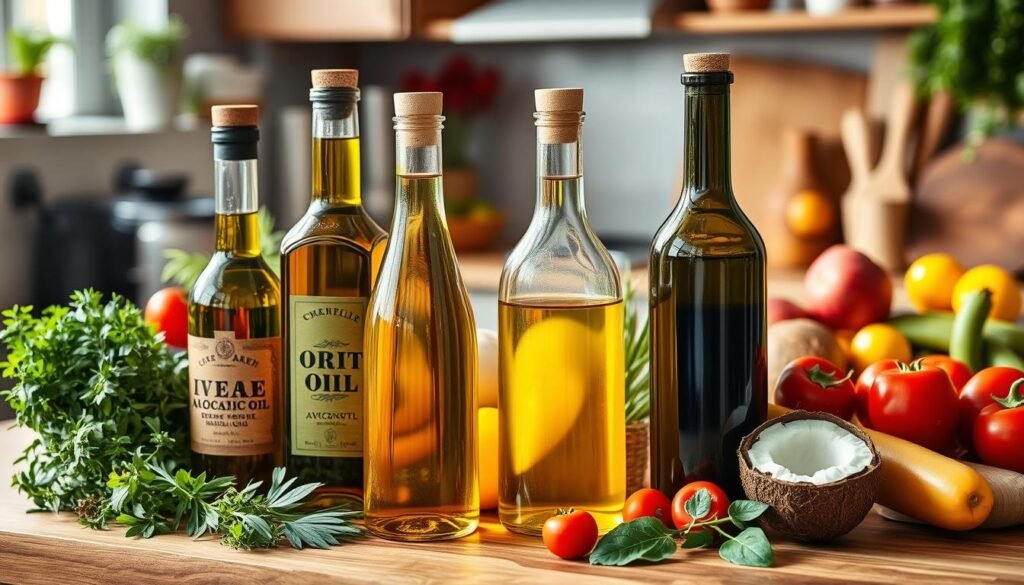
Adding healthy oils to your daily cooking can boost heart health. These oils offer essential nutrients. They are a great swap for less healthy fats like butter. Choose oils such as olive, canola, and soybean to improve your health.
Which Oils Are Beneficial?
Many oils are good for you because of their fats. Here are some of the best oils:
| Oil Type | Source | Main Fats | Health Benefits |
|---|---|---|---|
| Olive Oil | Fruits of olive trees | Monounsaturated Fats | May decrease bad cholesterol and lower heart disease risk |
| Canola Oil | Seeds of canola plants | Monounsaturated and Omega-3 Fats | Improves cholesterol levels and reduces inflammation |
| Chia Seed Oil | Seeds of chia plant | Omega-3 Fats | Supports immunity and may improve vision |
| Flaxseed Oil | Seeds of flax plants | Omega-3 Fats | Potentially protective against cancer |
Ideas for Use in Daily Cooking
It’s easy and tasty to use healthy oils in meals. Here are some fun cooking tips:
- Make salad dressings with olive oil, vinegar, and herbs.
- Marinate meats or veggies in canola or olive oil.
- Top roasted veggies with chia or flaxseed oil for extra flavor and nutrients.
- Add oils to smoothies for a healthy fat boost.
Using these healthy oils instead of saturated fats improves heart health. Plus, it makes cooking more fun. For tips on using healthy fats, check out this resource.
Foods to Reduce Cholesterol
Making good food choices is key to controlling your cholesterol. Adding high-fiber items and plants to your diet helps your heart. These foods don’t just help your heart. They improve your overall health too.
High-Fiber Foods and Their Benefits
Foods high in fiber are great for managing cholesterol. Eat fruits, veggies, beans, and whole grains for soluble fiber. This type of fiber reduces “bad” LDL cholesterol.
By eating 5 to 10 grams of soluble fiber a day, you can lower your cholesterol. More fiber also means you feel full longer. This can help you maintain a healthy weight, which is good for your heart.
Plant-Based Options for Better Heart Health
Choosing plant-based foods is good for your heart. By eating legumes, nuts, and seeds, you get important vitamins and minerals. These choices don’t have the saturated fats that animal products do.
Avocados are also good because they have healthy fats. These can reduce your chance of getting heart disease. Eating foods with plant sterols twice a week also lowers “bad” cholesterol.
Strategies for a Low Cholesterol Diet
Following a diet low in cholesterol is key for heart health. It’s vital to mix dietary fats with other nutrients to make a good nutrition plan. Learning to mix different foods helps improve your health overall.
Balancing Fats with Other Nutrients
A diet low in cholesterol should include different food groups for needed vitamins and minerals. This balance aids in managing cholesterol levels and supplies essential nutrients. Try to add:
- Whole grains, such as brown rice, oats, and whole-grain pasta
- Fruits and vegetables high in fiber
- Lean proteins like chicken, turkey, and fish, especially ones with a lot of omega-3 fats
- Healthy fats from nuts and vegetable oils
Limiting saturated and trans fats found in processed and red meats helps manage cholesterol. Reading food labels helps you know the fat content in your meals.
Portion Control Techniques
Using portion control is important for a low cholesterol diet. It helps avoid eating too much and promotes a healthy way of living. Here are some tips:
- Use smaller plates to help control how much you eat
- Measure servings of high-calorie items like nuts and oils
- Keep an eye on how much you snack, especially with fatty treats
- Plan your meals ahead to stay away from sudden eating
These methods, along with balanced nutrition and watching dietary fats, greatly improve heart health. They help you stick to a diet low in cholesterol.
Limit Unhealthy Fats for Optimal Heart Health
It’s crucial to be aware of saturated fats and trans fats for heart health. These fats can harm cholesterol levels and heart condition. The American Heart Association suggests limiting saturated fat to under 6% of total calories. For a 2,000 calorie diet, that’s about 13 grams or 120 calories from saturated fat. Red meat, full-fat dairy, and certain oils are major sources.
Recognizing Saturated and Trans Fats
Many foods contribute to saturated fat intake. They include:
- Beef
- Pork
- Poultry with skin
- Butter
- Ice cream
- Coconut oil
Trans fats are mainly in partially hydrogenated oils, raising LDL cholesterol. The U.S. Food and Drug Administration banned these oils in 2018, due to health risks. Trans fats are common in fast food, fried foods, and bakery products. So, avoiding these foods is essential.
Guidelines for Reducing Unhealthy Fats
Here are some strategies to manage fat intake:
- Check nutrition labels for lower saturated and trans fats.
- Choose lean meats, skinless poultry, legumes, and fish.
- Use healthy oils like olive and avocado oil in moderation.
- Cook by baking, broiling, or steaming instead of frying.
- Make balanced meals with fruits, veggies, whole grains, and healthy proteins.
Limiting unhealthy fats is key for heart health. Choose healthier fats and pay attention to what you eat to lower heart disease risks.
Conclusion
Keeping a healthy heart is closely tied to the fats we eat. It’s vital to choose good fats, like monounsaturated and polyunsaturated ones. These are found in olive oil, fish, and avocados. They help manage cholesterol and cut the risk of heart disease.
Health experts recommend getting 20-35% of our total calories from fats. But, we should pick the healthier kinds. This helps us get necessary fatty acids and vitamins. At the same time, we should keep saturated fats under 5-6% of our calories, as the American Heart Association suggests.
Keeping an eye on cholesterol levels is key to heart health. By choosing the right fats, we can improve our health and lower heart disease risks. For more information, check out research on dietary fats and heart health.