Did you know many Americans have more cholesterol than needed? This extra cholesterol could harm your heart. But, eating right helps manage it. In this guide, you’ll learn about foods that lower cholesterol. We’ll explore different types of cholesterol and ways to add heart-healthy foods to your meals. Foods good for lowering cholesterol are rich in soluble fiber, omega-3s, and healthy fats. They help improve heart health. By choosing these foods, you’re on your way to a healthier lifestyle.
Key Takeaways
- Consuming 5 to 10 grams of soluble fiber daily can significantly decrease LDL cholesterol levels.
- Incorporating plant sterols into your diet can lower LDL cholesterol by 5% to 15%.
- Replacing saturated fats with monounsaturated fats can reduce LDL cholesterol by up to 10%.
- Whey protein supplements have been shown to lower both LDL and total cholesterol levels.
- Eating a heart-healthy diet rich in fruits, vegetables, nuts, and whole grains is essential for managing cholesterol.
Understanding Cholesterol and Its Types
Cholesterol is key in our bodies, affecting things like hormone creation and how cells hold together. We need to know about the types of cholesterol and how they impact health. Mainly, cholesterol helps or harms our heart health. Our liver makes cholesterol. But, it travels in our blood with different lipoproteins.
The most known types are LDL and HDL cholesterol. LDL is the “bad” type. HDL is the “good” type.
What is Cholesterol?
Cholesterol is a waxy substance that our bodies need to stay healthy. Even though our liver makes it, eating animal products can change our cholesterol levels. Too much LDL cholesterol can cause serious health issues. These include atherosclerosis, heart attacks, and strokes. Keeping an eye on our cholesterol is vital for a healthy heart.
The Role of LDL and HDL Cholesterol
LDL cholesterol can harm our health. It builds up plaque in our arteries, which is bad for our heart’s health. HDL cholesterol, though, is our friend. It clears cholesterol from our blood, taking it back to the liver to be removed from our body. This process helps prevent heart disease. So, having a good balance between LDL and HDL is key.
Keeping our cholesterol healthy means we need to make good lifestyle choices. This includes eating right and exercising. Knowing about our cholesterol and what influences it can help us stay healthy. For tips on keeping cholesterol in check, check out this resource.
Foods That Lower Cholesterol
Eating certain foods can really help lower your cholesterol. Foods high in soluble fiber are especially good. Soluble fiber reduces cholesterol absorption into your bloodstream. This makes it a key part of a diet aimed at lowering cholesterol.
Importance of Soluble Fiber
Studies have found that eating 5 to 10 grams of soluble fiber daily can lower bad cholesterol. This fiber turns into a gel in the stomach. It grabs onto cholesterol, stopping it from getting into your blood. Eating this way not only lowers cholesterol but also helps your heart stay healthy.
Top Sources of Soluble Fiber
Lots of tasty, healthy foods are packed with soluble fiber. Here are great sources:
- Oatmeal: Just one bowl gives you 3 to 4 grams of this fiber.
- Oat Bran: It’s full of fiber and easy to mix into your food.
- Kidney Beans: A cup a day can really cut down LDL cholesterol.
- Apples: With pectin, apples boost your fiber intake, lowering cholesterol.
- Pears: Like apples, pears are great for adding more fiber.
Adding these foods to your regular diet can really help manage cholesterol. This supports a healthy heart.
Heart-Healthy Fats: Omega-3 Fatty Acids
Eating heart-healthy fats is key for good heart health. Omega-3 fatty acids are especially important. They lower cholesterol levels and are found in fatty fish and some plants. These sources provide vital nutrients for the heart.
Benefits of Fatty Fish
Fatty fish, like salmon, mackerel, and sardines, are packed with omega-3s, EPA, and DHA. These nutrients reduce bad triglycerides and boost good cholesterol. Eating 6 to 8 ounces of fish twice a week is advised. This supports a healthy heart and provides essential nutrients.
However, we should watch out for mercury in fish. Swordfish, shark, and king mackerel have high mercury and are not recommended for pregnant individuals or young kids. Safer choices include canned light tuna, but limit albacore tuna to 6 ounces a week due to mercury.
Plant-Based Sources of Omega-3s
ALA is a plant-based omega-3 option. It’s in ground flaxseed, chia seeds, walnuts, and canola oil. Men should aim for 1.6 grams of ALA daily and women for 1.1 grams. Pregnant and breastfeeding people need slightly more. Adding 2 tablespoons of ground flaxseed each day helps meet these goals.
Combining fatty fish and plant sources offers great heart benefits. Making omega-3 fatty acids a key part of your diet helps lower cholesterol.
| Food Source | Type of Omega-3 | Recommended Daily Intake | Serving Size |
|---|---|---|---|
| Salmon | EPA, DHA | 2 servings/week | 3.5 ounces |
| Walnuts | ALA | 1.1-1.6 grams | 1 ounce |
| Ground Flaxseed | ALA | 1.1-1.6 grams | 2 tablespoons |
| Sardines | EPA, DHA | 2 servings/week | 3.5 ounces |
The Power of Nuts in Cholesterol Management
Nuts are key in managing cholesterol, offering a delicious and healthy option for the heart. Studies show that almonds and walnuts, in particular, can significantly lower bad cholesterol. By adding these nuts to your diet, you can boost your cardiovascular health.
Almonds and Their Heart Benefits
Almonds stand out for their heart benefits. Eating a handful each day can improve your cholesterol levels. Research indicates almonds reduce total and bad cholesterol but keep good cholesterol stable. This makes them a champion in nuts and cholesterol management. By including almonds in a well-rounded diet, you can greatly benefit your heart health.
Walnuts: A Delicious Way to Lower Cholesterol
Walnuts are among the best cholesterol-lowering foods. They’re packed with omega-3s that protect the heart. Research shows walnuts can lower bad cholesterol, reducing heart attack risk for those with heart issues. Also, walnuts are great for a heart-healthy diet, emphasizing the role of walnuts cholesterol-lowering foods in a healthy lifestyle.
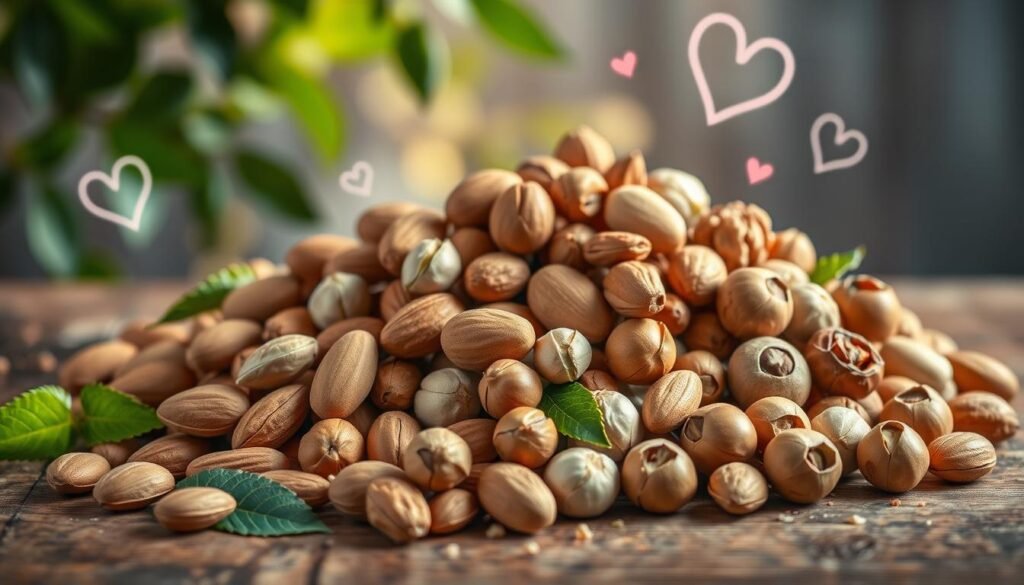
Adding various nuts to your diet isn’t just tasty but helps manage cholesterol too. This balanced nut consumption can have lasting heart health benefits. It shows the strong influence they have on improving heart health.
Incorporating Avocados into Your Diet
Avocados are famous for their taste and nutritional benefits. They are full of monounsaturated fatty acids (MUFAs), which are good for the heart. Studies show eating avocados helps improve HDL cholesterol and the quality of LDL cholesterol. Learning to add avocados to everyday meals boosts wellness and supports a heart-healthy diet.
Nutritional Benefits of Avocados
Avocados pack a lot of nutrients that boost heart health and cholesterol levels. They are:
- Rich in monounsaturated fats, lowering bad cholesterol levels
- A good source of vitamins like Vitamin K, Folate, Vitamin C, Potassium, and Vitamin E
- Loaded with phytosterols for better cholesterol management
Though they don’t significantly lower LDL cholesterol, avocados can raise HDL cholesterol levels. This healthy fat indicates they are part of a balanced diet for managing cholesterol.
Ways to Incorporate Avocados
Adding avocados daily is easy and makes meals nutritional. Enjoy avocados these ways:
- Put sliced avocados in salads for creaminess and flavor.
- Spread mashed avocados on whole-grain toast for a healthy start.
- Add avocado to smoothies for extra nutrients.
- Replace butter or mayonnaise with avocados in recipes.
Using avocados in meals boosts taste and fits a cholesterol-improving diet. This content leads to consistent nutrition beneficial to the heart and tastebuds.
| Nutrient | Amount per 100g |
|---|---|
| Calories | 160 |
| Total Fat | 15g |
| Saturated Fat | 2.1g |
| Monounsaturated Fat | 9.8g |
| Potassium | 485mg |
| Fiber | 7g |
| Vitamin C | 10mg |
With their vast health benefits, avocados are essential for anyone looking to eat well. They support good cholesterol levels and satisfy the palate.
Using Olive Oil as a Heart-Healthy Fat
Adding olive oil to meals every day can boost heart health. It’s high in good fats, making it great for lowering cholesterol. Plus, it adds flavor. Studies say having more than half a tablespoon of olive oil daily could reduce heart disease risk.
Why Choose Olive Oil?
Olive oil is better than saturated fats for many reasons. People who use it often have fewer heart issues. The American Heart Association recommends extra virgin olive oil for a heart-healthy diet. It’s full of antioxidants. These antioxidants, called polyphenols, are between 150–400 mg per kilogram. They’re good for HDL cholesterol, improving heart health.
Cooking Tips with Olive Oil
Here’s how to use olive oil in your cooking:
- Drizzle over salads: Mix it with vinegar and herbs for a tasty vinaigrette.
- Sauté vegetables: Use olive oil to bring out the flavor in sautéed dishes.
- Use as a dip: Offer olive oil for dipping bread instead of butter.
- Roasting: Olive oil makes roasted veggies taste great and stay healthy.
- Beware of heat: Don’t fry with olive oil at high temperatures to keep its benefits.
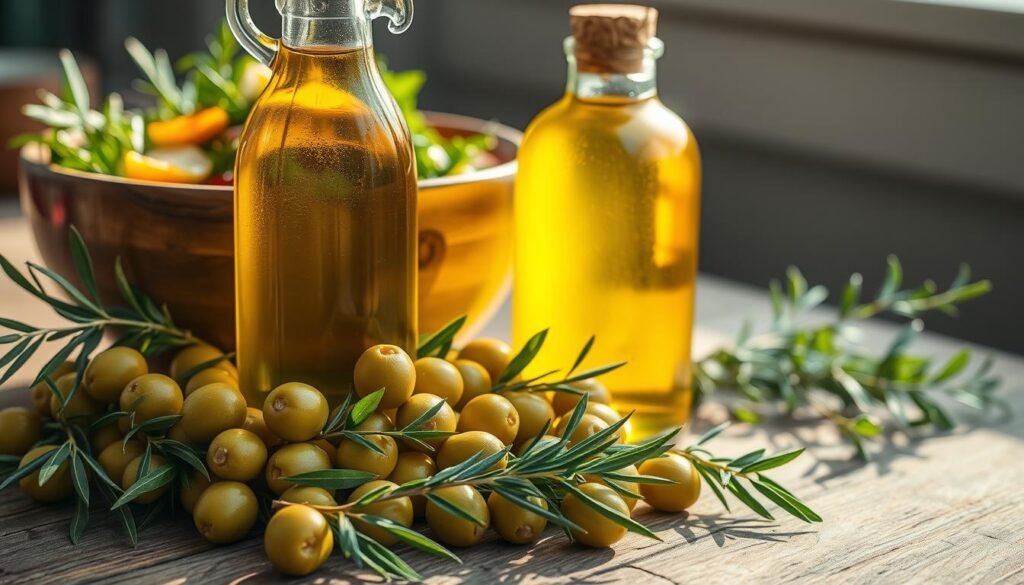
Using olive oil in cooking is both delicious and healthy. Choosing it over bad fats lowers cholesterol and helps the heart. Making small changes, like using olive oil, betters heart health.
| Type of Oil | Polyphenol Levels (mg/kg) | Health Benefits |
|---|---|---|
| Extra Virgin Olive Oil | 150–400 | Higher HDL, antioxidant-rich |
| Common Olive Oil | 10–100 | Heart-friendly, moderate benefits |
| Pomace Olive Oil | 10–30 | Cost-effective, moderate benefits |
| Refined Olive Oil | 0–5 | Lower nutritional value |
Picking and using olive oil wisely makes meals taste good and supports heart health. It’s an easy, tasty way to take care of your cholesterol.
Fortified Foods: A Boost to Lower Cholesterol
Fortified foods are packed with plant sterols and stanols which help lower cholesterol. These substances block LDL cholesterol from being absorbed in the intestines. Adding these foods to your daily diet can improve your heart’s health. You should aim to get 2 grams of these plant compounds every day. This amount can lower your LDL cholesterol by 5% to 15%.
Understanding Plant Sterols and Stanols
Plant sterols and stanols look like cholesterol but work differently. They don’t add to cholesterol in the body. Instead, they stop dietary cholesterol from being absorbed. This makes fortified foods a good choice for managing cholesterol levels. Including these foods in your diet can help keep your cholesterol healthy.
Examples of Fortified Foods
Here are some fortified products that make it easy to get plant sterols in your diet:
| Food Item | Plant Sterol Content | Cholesterol-Lowering Benefit |
|---|---|---|
| Margarine (with plant sterols) | 1.0 – 1.5 g per serving | Significant reduction in LDL cholesterol absorption |
| Orange Juice (fortified) | 0.4 – 1.0 g per serving | Helps maintain heart health |
| Yogurt (fortified) | 0.5 – 1.0 g per serving | Potentially lowers LDL cholesterol levels |
Using fortified foods is a delicious and effective way to add plant sterols to your diet. For more tips on managing cholesterol through diet, check out foods to avoid with high cholesterol. A balanced approach is also important, as explained in detailed dietary guides.
Benefits of Whey Protein for Cholesterol Levels
Whey protein is popular for its health perks, especially in cholesterol control. It is a low-calorie source of protein that benefits many health aspects. It’s great for diets and helps reduce bad LDL cholesterol and boost heart health.
Understanding Whey Protein
Whey protein comes from dairy and is high in quality protein. It aids muscle growth and repair. Beyond muscles, it also improves cholesterol levels, helping those with metabolic issues. It lowers LDL cholesterol, triglycerides, and overall cholesterol. It can also balance blood sugar and lessen inflammation, improving heart health.
Studies show whey protein is effective in lowering cholesterol numbers. Regular use can make a big difference for your cardiovascular system. This makes whey a key food for lowering cholesterol.
Incorporating Whey Protein into Your Diet
Adding whey protein to your diet is easy and tasty. People enjoy it in smoothies, baked items, or as meal replacements. You need 0.8 grams of protein per kilogram of your weight. Whey can help meet this need.
For managing cholesterol, whey protein is very promising. A study found that 54 grams daily for 12 weeks dropped systolic blood pressure by 4% in those with high pressure. This shows whey’s role in promoting heart health.
Whey protein helps keep muscles strong and supports weight loss. It makes you feel full, so you eat less. Its benefits are making it a key part of heart-healthy diets.
To learn more about whey protein’s effects on cholesterol and health, check this link. Knowing the full benefits of whey protein can help you make smart food choices for better health.
Other Dietary Tips for Managing Cholesterol
Changing what you eat is key to controlling cholesterol. It’s crucial to cut back on saturated and trans fats for better heart health. Make sure to eat from different food groups that are good for keeping cholesterol in check.
Reducing Saturated and Trans Fats
Saturated fats are in red meats and full-fat dairy and can raise LDL cholesterol. The American Heart Association suggests eating less than 7% of your daily calories from saturated fat. This helps keep your heart healthy. Avoiding trans fats, found in processed and fried foods, is also critical. The FDA’s move to ban partially hydrogenated oils, a main source of trans fats, benefits heart health.
The Importance of a Low Cholesterol Diet
A diet low in cholesterol focuses on unprocessed, whole foods. Here are the foods to eat:
- Fruits and vegetables rich in vitamins and minerals
- Whole grains that offer soluble fiber to aid in reducing cholesterol absorption
- Lean proteins such as poultry, fish, and plant-based sources
- Healthy fats, including those from avocados, nuts, and olive oil
Eating these foods not only helps manage cholesterol but also boosts overall health. Pairing a good diet with regular exercise is key. It helps keep your weight in check and improves cholesterol levels more.
| Food Group | Examples | Benefits |
|---|---|---|
| Fruits and Vegetables | Apples, carrots, spinach | High in fiber and antioxidants |
| Whole Grains | Oatmeal, brown rice, quinoa | Rich in soluble fiber that lowers cholesterol |
| Lean Proteins | Skinless chicken, tofu, fish | Supports muscle health without high saturated fats |
| Healthy Fats | Avocados, nuts, olive oil | Boosts HDL cholesterol levels |
Engaging in a Heart-Healthy Lifestyle
A heart-healthy lifestyle is key for keeping your cholesterol in check. Regular exercise is vital here. It boosts good HDL cholesterol, fighting heart disease. You can mix structured workouts and daily tasks to improve your health long-term.
Exercise and Its Impact on Cholesterol
The American Heart Association suggests 150 minutes of moderate exercise a week. Things like walking, biking, and swimming easily fit into your day. They keep your heart strong. Quitting smoking also helps by cutting triglycerides and raising good cholesterol. Together, these steps lower heart disease risk, showing the value of a healthy lifestyle.
Weight Management Strategies
Managing your weight is critical for cholesterol control. Losing just 5% to 10% of your weight can help a lot. It drops heart disease risk. Eating right adds to this. Include lots of fruits, veggies, whole grains, and lean meats in your diet. Aim for 21 to 38 grams of fiber every day for heart health. Simple changes, like taking stairs over elevators, boost this effort.
Conclusion
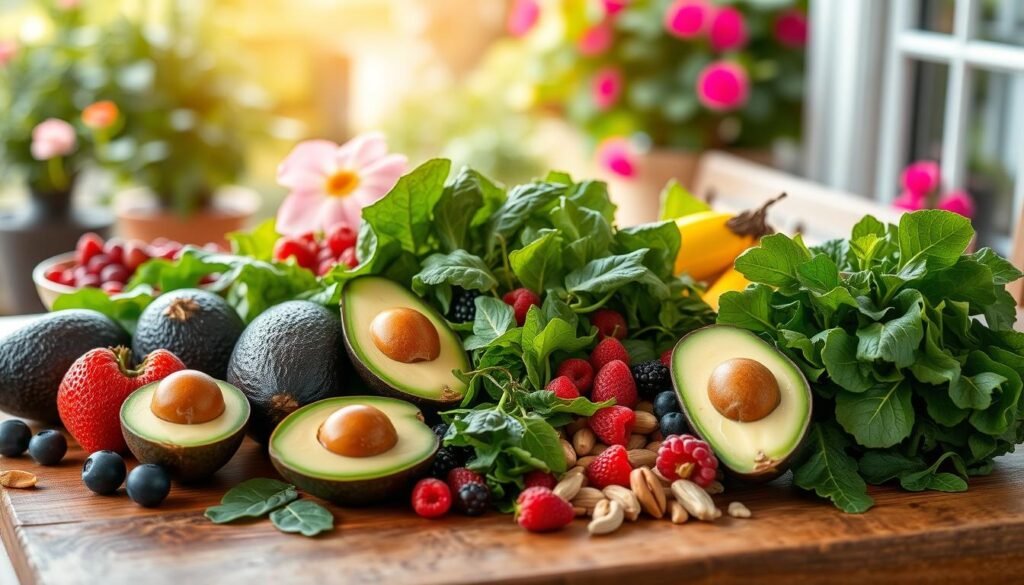
Eating right is key for good heart health and keeping cholesterol in check. Add fruits, veggies, grains, and healthy fats to your meals. Knowing about different types of cholesterol helps you eat smarter for your heart.
Foods rich in soluble fiber and omega-3s are great for your heart. Try adding beans, fatty fish, and avocados to your diet. Along with these foods, staying active and cutting down on saturated fats are important.
Choosing a diet full of nutrients helps manage cholesterol better. By making smart food choices, you can live a longer, healthier life. This complete method supports ongoing heart health and lowers the risk of heart issues.