A shocking 94.8% of women and 96.5% of men over 19 don’t eat enough vegetables, legumes, and beans. This fact stresses the need for better food choices for heart health. Vegetables are key for a heart-healthy diet. They provide important nutrients and help lower the risk of heart diseases and stroke.
Vegetables like dark-green broccoli and colorful bell peppers and sweet potatoes are very good for your heart. These foods improve well-being and heart health with their antioxidants and fiber. Adding a variety of vegetables to your meals helps manage cholesterol. This is shown in the guide for avoiding high-cholesterol foods, helping with cardiovascular health.
Key Takeaways
- Over 90% of adults do not consume enough vegetables, highlighting a significant health concern.
- Dark-green vegetables like broccoli are key players in promoting heart health.
- Red and orange vegetables are rich in essential nutrients beneficial for the heart.
- Beans and lentils are excellent sources of protein and fiber for heart-healthy diets.
- Moderation of starchy vegetables is important for maintaining a heart-friendly diet.
- Variety in vegetable choices contributes to better overall nutrient intake and heart health.
Introduction to Heart Health and Nutrition
Heart health is key to a good life. It deeply affects how well we live. To keep our heart healthy, we must watch our diet, exercise regularly, and make smart life choices. The American Heart Association says eating right can cut down heart disease risks.
Eating plenty of fruits, veggies, whole grains, lean meats, and good fats is important. Yet, many adults struggle with health. In the U.S., 11% have type 2 diabetes and about 42% are obese. These issues are often due to bad eating habits and can hurt our hearts.
Veggies are packed with vitamins, minerals, and antioxidants. They are vital for our hearts. Adding different veggies to our meals can help stop high blood pressure and high cholesterol.
Health experts suggest eating less salt and fewer saturated fats. Choosing nutrient-rich foods can really help our hearts stay strong.
| Key Nutritional Guidelines | Recommendations |
|---|---|
| Daily Sodium Intake | Less than 2300 mg or 1500 mg for better results |
| Saturated Fat | 5% to 6% of total daily calories |
| Alcohol Consumption | No more than 1 drink/day (women), 2 drinks/day (men) |
| Exercise | At least 150 minutes of moderate-intensity activity/week |
Learning these basic ideas is the first step towards great heart health. Veggies are especially powerful for keeping our hearts in top shape.
Understanding the Role of Vegetables in a Heart-Healthy Diet
Vegetables are key for heart health. Their nutrients help keep the heart strong. By eating different vegetables every day, you can improve your heart’s health.
Why Vegetables Matter for Cardiovascular Wellness
Veggies are crucial for heart health. For example, dark-green vegetables like kale and spinach are full of nutrients and fiber. These can lower the risk of heart issues and keep blood pressure in check.
Red and orange vegetables, such as carrots and bell peppers, are loaded with antioxidants. They provide vitamins important for heart disease prevention.
The Nutritional Profile of Heart-Healthy Vegetables
It’s important to know how vegetables can boost heart health. Eating a lot of vegetables can lower blood pressure. It can also help reduce the risk of heart disease and stroke.
Legumes like beans and lentils are great for the heart. They offer protein and fiber. Even starchy vegetables like corn and potatoes are beneficial in moderation. They provide nutrients, while veggies like asparagus and cauliflower are low in calories but high in benefits.
Research shows that eating more vegetables reduces heart disease risk. Eating eight or more servings a day greatly lowers the risk of heart attacks or strokes. This shows why it’s vital to include many vegetables in meals. It not only helps heart health but also improves overall well-being.
For tips on a heart-healthy diet, check out AHA diet and lifestyle recommendations.
Benefits of Vegetables for Heart Health
Eating vegetables is great for your heart. These foods are full of important vitamins and minerals. Also, they bring many health benefits. Including a variety of vegetables in your diet helps prevent heart disease.
Antioxidant Properties and Heart Disease Risk
Vegetables have a lot of antioxidant properties. These protect your cells from damage. This damage can lead to heart disease. The special nutrients in vegetables, like flavonoids and carotenoids, protect your heart. Eating these foods often can reduce inflammation. This is key because longstanding inflammation can raise the risk of heart problems.
The Contribution of Fiber to Heart Health
Veggies are also great because they’re full of fiber. Fiber helps your body in many ways. It lowers cholesterol, keeps your blood sugar stable, and supports a healthy digestive system. People who get enough fiber are less likely to have heart issues. By eating more vegetables, you can meet your daily fiber needs. This improves your heart health overall.
The Role of Vegetables in a Heart-Healthy Diet
Vegetables are important for a heart-healthy diet. They are full of nutrients that help our hearts. Eating a lot of vegetables makes sure we get enough vitamins and keep away bad calories. It’s good to fill half your plate with vegetables to stay healthy.
Eating vegetables every day gives us lots of vitamins, minerals, and antioxidants. These are important for keeping our hearts working well. For example, beets have a lot of folate which lowers risk of heart disease. And one cup of collard greens has more than enough vitamin K.
Foods with potassium are great for our hearts. They help balance the effect of salt on our blood pressure. One cup of winter squash has a good amount of Vitamin C and potassium. Adding different vegetables to our meals helps keep our hearts healthy.
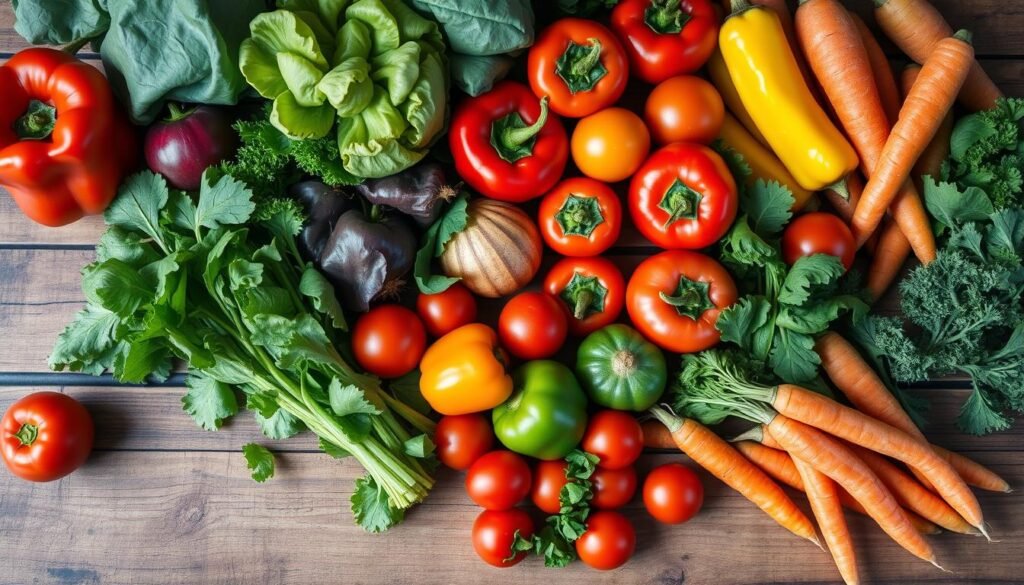
To keep our hearts strong, we should eat 2 1/2 cups of vegetables a day. For a heart-healthy diet, aim to eat 4 1/2 cups of fruits and veggies each day. Making sure half our plate is vegetables at dinner is a smart goal. It encourages healthy eating.
| Vegetable | Daily Value for Nutrients | Health Benefits |
|---|---|---|
| Beets | Over 33% Folate | Reduces homocysteine levels, lowering cardiovascular disease risk |
| Winter Squash | 16% Vitamin C, 8% Potassium | Aids in heart function and regulates blood pressure |
| Collard Greens | Over 130% Vitamin K | Supports blood health and prevents clotting issues |
| Leafy Greens | High Fiber Content | Promotes fullness, aids in weight management |
Vegetables play a big part in keeping our hearts healthy. Adding different kinds of vegetables to what we eat each day is good. This not only makes our meals interesting but also fights off heart disease.
Heart-Friendly Vegetables: What to Include
Eating the right vegetables is key for heart health. The best veggies enhance your meals and provide lots of nutrients. You can pick fresh, frozen, canned, or dried ones. They all offer great health benefits. Choose those with the most nutrients and taste.
Top Vegetables for Cardiovascular Health
There are special vegetables that are really good for your heart. Here’s a list of the best ones:
- Spinach: Loaded with antioxidants, spinach is great for the heart.
- Broccoli: This veggie is full of nutritional values and lowers cholesterol.
- Red Bell Peppers: They’re rich in vitamin C and beta-carotene, supporting heart health.
- Sweet Potatoes: With lots of potassium and fiber, they help manage blood pressure.
Colorful Choices: Eating the Rainbow
Eating various colors of veggies helps your heart stay healthy. This adds many different nutrients to your meals. Here are some colorful veggies to include:
| Color | Vegetables | Nutritional Benefits |
|---|---|---|
| Orange | Carrots | Full of beta-carotene, great for the heart. |
| Green | Kale | Loaded with vitamins K and C, helps lower blood pressure. |
| Purple | Eggplants | Has antioxidants that guard against heart disease. |
Having a colorful plate is not just pretty but also healthy. These vegetables give you lots of phytochemicals and antioxidants. By eating them regularly, you help your heart and improve your health.
Incorporating Vegetables for a Healthy Heart
Adopting a heart-healthy diet is not hard. It means making smart choices, like adding more veggies to your meals. This can really help improve your health. Learning easy ways to do this makes eating more vegetables simple and enjoyable.
Practical Tips for Including More Veggies
Here’s how to eat more vegetables:
- Make vegetables visible: Store cut veggies in the fridge for easy access.
- Sneak them into meals: Add extra servings of vegetables to familiar dishes for a nutritional boost.
- Experiment with new recipes: Explore diverse ways to prepare vegetables to keep meals exciting.
- Join local agriculture programs: Participate in community-supported agriculture (CSAs) or visit farmers’ markets to enjoy fresh, seasonal produce.
- Grow your own: Cultivating a home garden allows individuals to enjoy fresh vegetables and engage with their food source.
Adding different colors of vegetables to your meals is smart. This gives you lots of vitamins and minerals. It also helps in fighting off diseases. Eating about six servings of fruits and veggies a day can cut heart disease risk by 16%.
Eating a lot of vegetables helps you feel full without many calories. Foods that are big in size but low in calories, like salads, are key for a healthy diet. Following these tips can help you make eating veggies a long-term habit. This is great for your heart.
Vegetable Consumption and Heart Disease Prevention
Eating vegetables regularly is key to preventing heart disease. Studies show that more vegetables lead to lower heart risks. Eating an extra 200 grams of fruits and vegetables each day makes heart disease less likely.
Certain veggies and fruits, like green leafy ones, apples, and citrus, are especially good for your heart. They can lower the chances of heart diseases and death. Adding these foods to your diet could improve your health significantly.
About 5.6 million early deaths globally in 2013 were due to not eating enough fruits and vegetables. This shows a big need for programs that teach people about the benefits of eating more veggies for their heart health. Lower prices for veggies, promoting gardening, and better farming can help increase veggie eating.
The table below shows how eating more veggies and fruits affects health:
| Intake Level (g/day) | Coronary Heart Disease Risk Ratio | Stroke Risk Ratio | Total Cancer Risk Ratio | All-Cause Mortality Risk Ratio |
|---|---|---|---|---|
| 200 | 0.92 | 0.84 | 0.97 | 0.90 |
| 500 | Decreased Risk | Decreased Risk | No significant change | Decreased Risk |
| 800 | Maximizing Benefits | Maximizing Benefits | No further reductions | Decreased Risk |
So, eating more vegetables is an easy way to fight heart disease. It’s good for you and everyone around you. This shows we need to tell more people about eating more vegetables.
Cooking Methods that Preserve Nutrients
Preparing veggies the right way matters a lot. How you cook them affects how many vitamins and minerals they keep. Using the right methods gives you tastier and healthier food.
Best Practices for Preparing Vegetables
Steaming, roasting, and grilling veggies are great for keeping nutrients in. These methods help save the vitamins and minerals. This means your food stays good for your health.
- Use small amounts of healthy oils: Opt for oils like canola or olive when sautéing to enhance flavors without excessive fat.
- Combine with fresh greens: Mixing in a tablespoon of oil-based dressing with salad greens enhances nutrient absorption significantly.
- Prioritize steaming and roasting: Cooked spinach provides better availability of calcium and iron. Roasting can bring out natural sweetness in vegetables.
- Refrigerate leftovers: Skimming off excess fat from refrigerated meals ensures they remain heart-healthy when reheated.
- Choose skinless poultry: This reduces saturated fat intake, aligning with best practices for preparing vegetables in a heart-healthy context.
Learning about these methods makes cooking more fun and your veggies more nutritious. To get more tips on keeping nutrients in your food, check out this detailed resource.

Overcoming Barriers to Vegetable Consumption
Many people find it hard to eat enough veggies, which are key for a healthy diet. In the U.S., about 12.8% faced food insecurity in 2023, making it tough to get fresh produce. Only one in four people eat the suggested five servings of fruits and veggies daily. This highlights how crucial it is to eat more veggies for good health.
In Wisconsin, the food insecurity rate was 9.9% from 2019 to 2023, showing that some areas face more issues than others. Low-income neighborhoods have 30% fewer grocery stores than wealthier areas. For African American communities, it’s even harder to find places to buy vegetables compared to predominately White areas. This makes it tough to eat more veggies.
Vegetables often cost more in cities than in suburbs, which makes it hard for some to buy them. People with less money also struggle with getting to stores, finding good veggies, and the changing food world. Helping communities get easier and cheaper access to veggies is key.
Teaching people how to buy and cook veggies without spending a lot could help. Simple ideas like planning meals and growing your own food can make a big difference. These steps help people eat more veggies and stay healthy. Let’s make eating veggies easier for everyone.
| Barrier to Vegetable Consumption | Details |
|---|---|
| Food Insecurity | 12.8% of American households reported food insecurity in 2023. |
| Access Issues | Low-income neighborhoods have 30% fewer supermarkets compared to high-income areas. |
| Cost | Urban supermarket prices are generally higher than those in suburban areas. |
| Transportation | Individuals may struggle to access stores that sell fresh produce. |
| Quality and Variety | Low-income areas often lack diverse options for fruits and vegetables. |
Conclusion
Eating lots of vegetables is extremely good for your heart. Studies show people who eat the most veggies face a lower risk of heart diseases by 10%. They also have less chance of dying from these issues. This tells us how crucial it is to make veggies a big part of our meals.
Raw vegetables might be even better for you than cooked ones. Doctors suggest eating five servings of fruits and veggies every day. This can help prevent heart problems. Making even small changes to your diet can make you healthier. This shows why it’s important for all of us to choose veggies that are good for the heart.
Choosing a diet rich in vegetables does more than just help your body. It can make your life fuller and more energetic. By eating more of these important foods, you can keep your heart healthy. Plus, it reduces the risk of getting long-term illnesses in your community.