Did you know adding just 10 grams of fiber to your diet daily can lower heart attack risks by 14%? It also cuts the chance of dying from heart disease by 27%. This fact shows how important diet is in controlling cholesterol and keeping our hearts healthy. Vegetables are key in this, yet they’re often ignored for processed foods that raise cholesterol.
Eating vegetables that reduce cholesterol is a delicious and healthy way to fight high levels. You can enjoy tasty meals with eggplant, okra, and green veggies like spinach and kale. These help your heart. Knowing which vegetables help the most can lead to better eating habits. This not only improves your nutrition daily but also boosts your heart health.
Key Takeaways
- Fiber-rich vegetables can significantly lower LDL cholesterol levels.
- Daily consumption of specific vegetables like eggplant and okka can aid in cholesterol management.
- Incorporating vegetables into one’s diet is essential for maintaining heart health.
- Plant-based diets promote better cholesterol and overall heart function.
- Regular intake of vegetables can help individuals manage their cholesterol levels effectively.
Understanding Cholesterol and Its Impact on Heart Health
Cholesterol is key for our health. It comes from the liver and does many important things like making hormones and keeping cells working right. But having too much of it can cause heart problems. It’s important to know there are different kinds of cholesterol.
What is Cholesterol?
There are two main kinds: LDL and HDL. LDL is often called “bad” cholesterol. If you have too much, it can block your arteries, leading to heart issues. HDL is the “good” kind, carrying extra cholesterol away from arteries to the liver. For a healthy heart, keeping these two in balance is crucial.
The Role of LDL and HDL Cholesterol in the Body
Eating right plays a big part in managing cholesterol. For a healthy heart, it’s good to eat lots of fiber-filled veggies. They can reduce your LDL levels. About 20% to 30% of cholesterol is influenced by diet. While meat brings cholesterol, plants help fight off the bad fats found in junk food.
Why Choose a Plant-Based Diet for Cholesterol Management?
Choosing a plant-based diet for cholesterol management helps your heart greatly. It focuses on eating things like fruits, vegetables, whole grains, legumes, and nuts. This cuts down on bad fats. Studies show high bad fat intake boosts the bad cholesterol, raising heart disease risks. If you eat more plants, you cut down bad fats and get more fiber. This is key for managing cholesterol.
Fiber, especially the type in oats, beans, and some fruits, lowers bad cholesterol. Eating 5 to 10 grams of it daily can cut LDL by 5 to 11 points. Plant-based diets make it easy to eat lots of fiber. This means your body absorbs less cholesterol. This helps prevent heart issues like plaque build-up.
The Centers for Disease Control and Prevention says over 86 million U.S. adults have high cholesterol. Going plant-based can help lower these high numbers. It reduces heart disease risks. Eating vegetables for heart health has big benefits, like lower bad cholesterol levels.
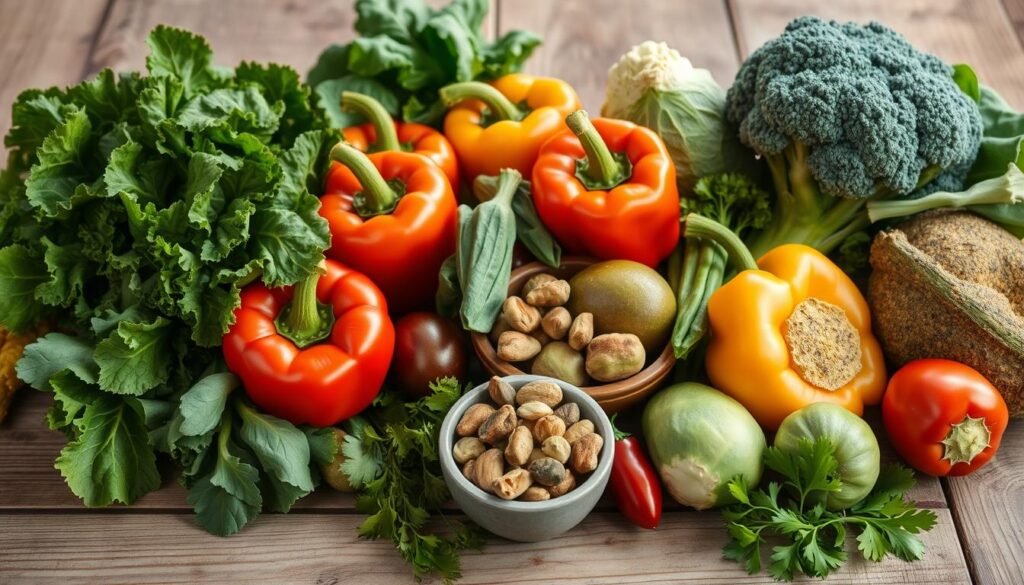
Switching to this diet cuts down on bad fats and increases good nutrients. Heart disease victims often have an average cholesterol level of 225 mg/dL. This shows the big role diet plays. Hence, a plant-based diet is a good choice supported by science for better heart health.
Best Vegetables for Lowering Cholesterol
Eating the right vegetables can greatly help your heart. Low cholesterol vegetables, rich in fiber and antioxidants, are key. They help keep your heart working right and make your meals tasty.
Fiber-Rich Options
Fiber fights high cholesterol well. Soluble fiber lowers cholesterol absorption in our blood. Studies show eating 1 gram of soluble fiber can cut LDL cholesterol by 1%.
Vegetables like beans and lentils have lots of soluble fiber. They’re a must for managing cholesterol. Non-starchy vegetables are low in calories but high in fiber, which helps lower triglycerides and heart disease risk. Include these in your diet:
- Beans
- Lentils
- Brussels sprouts
- Sweet potatoes
Add these veggies to your meals for more flavor and fiber. Mixing them with vegetables like spinach and kale is a good idea. Adding 5 to 10 grams of soluble fiber a day can reduce cholesterol by 5 to 11 points, says the National Lipid Association.
Antioxidant Benefits of Dark Leafy Greens
Dark leafy greens are packed with antioxidants. Spinach, kale, and broccoli fight inflammation and support your heart. They’re superfoods for lowering cholesterol because they’re nutrient-rich, protecting against heart disease.
Adding these greens to your daily meals boosts both taste and health. Try topping dishes with spinach or adding kale to smoothies. Eating a variety of vegetables is crucial. Sadly, the CDC points out that only 9% of people eat enough vegetables daily.
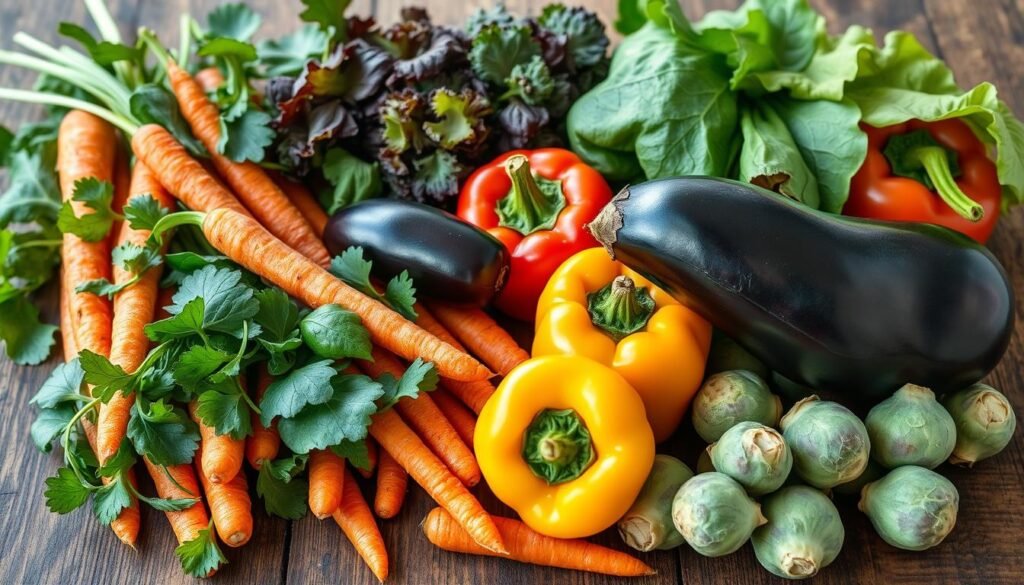
Adding a mix of fiber-rich and antioxidant-packed vegetables can improve cholesterol levels. Foods like edamame, soybeans, and green veggies are good for your heart and tasty. For more tips on managing cholesterol through diet, check out WebMD.
Vegetables for High Cholesterol: How They Work
High cholesterol is a common problem. It increases the risk of heart disease. Adding high cholesterol-lowering vegetables to your diet is important. Fiber-rich vegetables are key in controlling cholesterol levels. Knowing how they help can lead to better diet choices.
Mechanisms of Fiber in Cholesterol Reduction
Soluble fiber found in veggies helps block the absorption of cholesterol. Foods like broccoli, Brussels sprouts, and avocados lower LDL (bad) cholesterol. You should get five to ten grams or more of soluble fiber daily to lower LDL effectively.
Adding foods high in fiber can greatly improve cholesterol levels.
How Vegetables Contribute to Overall Heart Health
Vegetables play a big part in heart health. They reduce inflammation and help keep blood vessels healthy. This is crucial in managing high cholesterol. Eating lots of vegetables, especially dark leafy greens, ensures a balanced diet. This diet includes lean proteins, whole grains, and healthy fats, promoting heart health.
Plant-based foods are very important. Fruits, especially berries, are also fiber-rich and support cholesterol-lowering efforts.
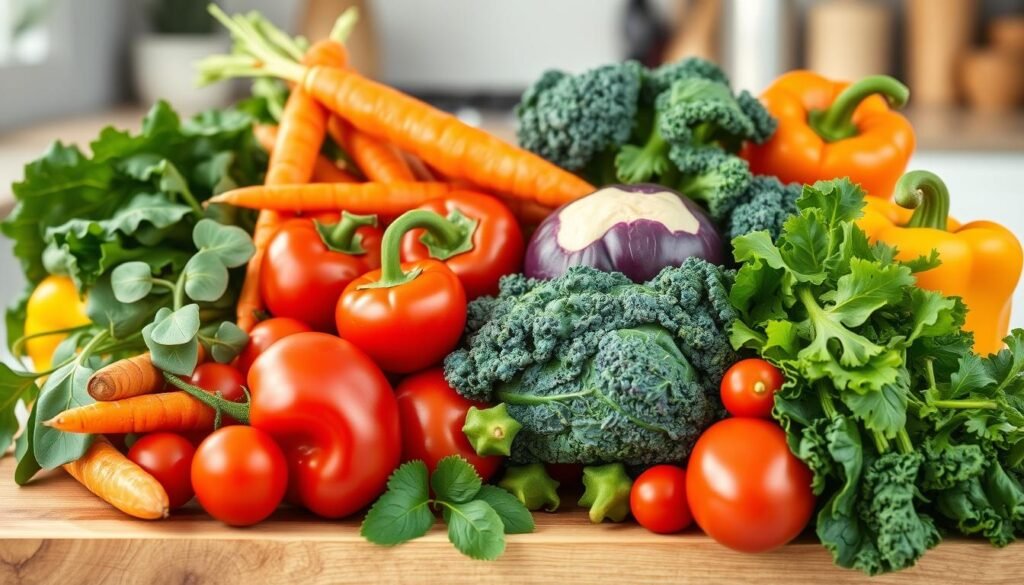
For more tips on managing cholesterol with food, check out this comprehensive resource. Knowing about high cholesterol and vegetables helps in making healthy living choices.
| Food Type | Benefits | Fiber Content (per serving) |
|---|---|---|
| Broccoli | High in fiber, prevents cholesterol absorption | 2.4 g |
| Avocado | Monounsaturated fats, lowers cholesterol | 9.2 g |
| Brussels Sprouts | Rich in nutrients, supports heart health | 4 g |
| Spinach | Loaded with antioxidants, reduces inflammation | 0.7 g |
| Berries | High in fiber, lowers cholesterol | 8 g |
Incorporating Cholesterol-Lowering Vegetables into Your Diet
Adding cholesterol-lowering veggies to meals can be easy and fun. Using creative ideas makes healthy eating enjoyable. You can explore different ways to cook them that boost flavor without the bad fats. Here are some tips for preparing these vegetables and planning meals.
Creative Ways to Prepare Vegetables
Making your cooking methods more exciting can turn them into adventures. Here are some ways to cook vegetables that lower cholesterol:
- Steaming: Keeps nutrients in, while making your veggies crisp and tasty.
- Roasting: Brings out the natural sweetness and adds a smoky touch.
- Sautéing: Use a bit of healthy oils like olive oil for flavor.
- Grilling: Gives a unique smoky flavor, great for summer dishes.
- Raw Salads: Mix different veggies for a refreshing and nutrient-packed side.
Meal Planning Tips for a Heart-Healthy Menu
Planning your meals can help you easily add high-cholesterol fighting veggies to your diet. Below are tips to do it:
- Batch Cooking: Cook lots at once for an easy meal prep during the week.
- Mix and Match: Combine various veggies for colorful, healthy dishes.
- Use Herbs and Spices: Add flavors without the extra calories or fats.
- Include Color: Go for a rainbow of veggies for different nutrients.
- Seasonal Choices: Pick veggies that are in season for the best flavor and price.
| Vegetable | Cholesterol-Lowering Benefits |
|---|---|
| Kale | High in fiber, helps reduce blood fat and cholesterol levels. |
| Spinach | Packed with antioxidants, supports heart health. |
| Brussels Sprouts | Have glucosinolates that can help lower cholesterol. |
| Broccoli | Helps in lowering overall cholesterol levels. |
| Carrots | Their high fiber content aids in managing cholesterol. |
Trying out these cooking and meal planning tips makes it simpler to add vegetables that lower cholesterol to your meals. Embracing these practices can lead to better heart health while still eating food that tastes great.
The Importance of Leafy Greens in Heart Health
Leafy greens are key for a heart-healthy diet. They’re super cholesterol-friendly vegetables. These include spinach, kale, and collard greens, which are full of heart-helping nutrients. Eating these greens often can lower your “bad” cholesterol, known as LDL.
Leafy greens are high in fiber, which is great for managing cholesterol. Fiber absorbs and gets rid of extra cholesterol in your body. This not only helps your cholesterol levels but also boosts overall heart health. Studies show eating greens leads to lower LDL cholesterol and better blood pressure.
These greens are also packed with antioxidants, vitamins, and minerals that protect the heart. They fight oxidative stress and inflammation, both of which can lead to heart disease. People who eat leafy greens regularly have a lower chance of getting heart disease and better heart health.
Adding leafy greens to your meals is easy and tasty. You can put them in salads, smoothies, or cook them on the side. By making these vegetables for heart health a main part of your diet, you’ll see big improvements in your health and lifestyle.
For more on heart-healthy eating, check out the Mediterranean diet. It focuses on whole, plant-based foods. Pairing these veggies with healthy fats, like olive oil, boosts their ability to lower cholesterol.
Avoiding high-saturated fat foods is also crucial for heart health. Eating leafy greens along with making healthy diet choices helps keep LDL cholesterol low. This eating habit supports a longer, healthier heart life and lowers heart disease risk.
| Leafy Green | Key Nutrients | Benefits for Heart Health |
|---|---|---|
| Spinach | Vitamins A, C, K; Iron | Helps clear LDL cholesterol from arteries |
| Kale | Vitamins A, C, K; Calcium | Packed with antioxidants that reduce LDL cholesterol |
| Collard Greens | Vitamins A, C; Fiber | Supports lower cholesterol levels and blood pressure |
| Swiss Chard | Vitamins A, K; Magnesium | Reduces inflammation and cholesterol levels |
| Mustard Greens | Vitamins A, C; Fiber | Promotes heart health and reduces cholesterol absorption |
Other Foods to Combine with Vegetables for Maximum Effect
Eating cholesterol-lowering veggies with other food groups can boost their power. Healthy oils, like olive oil, help by raising good cholesterol. Beans and legumes add nutrients that protect the heart. Each group plays a special role in managing cholesterol.
Healthy Oils and Their Impact on Cholesterol
Healthy oils are key in fighting bad cholesterol. Olive oil, full of good fats, boosts HDL (good) cholesterol and cuts down LDL (bad) cholesterol. It works well with veggies in salads or cooking, helping lower cholesterol. Avocado and canola oil are also great for a heart-healthy diet.
Combining Beans and Legumes with Vegetables
Adding beans and legumes to meals with cholesterol-lowering veggies is smart. They’re rich in soluble fiber, which helps kick out cholesterol. This combo makes meals satisfying and ups the veggie’s cholesterol-fighting abilities.
| Food Group | Key Benefits |
|---|---|
| Healthy Oils | Increase HDL cholesterol and decrease LDL cholesterol levels |
| Beans and Legumes | High in soluble fiber, aids in cholesterol excretion |
| Vegetables for High Cholesterol | Rich in antioxidants and fiber, lower cholesterol |
Potential Challenges in Adding More Vegetables
Adding low cholesterol veggies to your diet might be tough. This is due to taste preferences and how you cook them. Finding tasty ways to eat more vegetables is key for those with high cholesterol. Thankfully, vegetables can be made in many creative ways.
Overcoming Common Taste Preferences
Some people don’t like how certain vegetables taste. This can make them less likely to eat veggies often. Here are tips to make vegetables taste better:
- Experiment with seasonings: Using herbs and spices can make vegetables tastier.
- Try different cooking methods: Cooking methods like roasting, grilling, or sautéing bring out the sweetness in veggies.
- Mix with favorite dishes: Adding veggies to well-liked recipes can help you eat more of them without a big taste change.
Addressing Preparation and Cooking Methods
How you prepare and cook veggies can change their flavor and texture. This can make them more enjoyable. Keep these tips in mind:
- Increase variety: Eating different types of vegetables can keep meals exciting.
- Utilize dips and spreads: Dips like hummus or yogurt-based ones can make raw veggies more appealing.
- Batch cooking: Making veggies ahead of time means they’re ready to eat when you are. This makes including them in meals easy.
By tackling these hurdles, sticking to a heart-healthy diet gets easier. Focusing on creative ways to prepare vegetables can bring big health rewards. Plus, your meals will be delicious.
| Vegetable | Taste Profile | Best Cooking Methods |
|---|---|---|
| Broccoli | Slightly bitter | Steamed, roasted |
| Spinach | Earthy, slightly sweet | Sautéed, raw in salads |
| Carrots | Sweet | Roasted, raw with dips |
| Bell Peppers | Sweet and crunchy | Raw, grilled, sautéed |
| Cauliflower | Mild, nutty | Steamed, riced, roasted |
Conclusion
Eating vegetables that lower cholesterol is a great way to manage cholesterol levels. It boosts heart health too. Veggies like eggplant, broccoli, and sweet potatoes are full of fibers that help lower bad LDL cholesterol. Adding healthy fats from olive oil and omega-3s in fish makes your diet even better for your heart.
Moving to a diet with lots of cholesterol-lowering vegetables offers long-lasting health benefits. For example, eating two cups of vegetables a day can lower LDL cholesterol. Including nuts or legumes makes this effect even stronger. Slow changes to your diet can lead to better health, pushing you towards eating more wholesome, nutrient-rich foods.
By adding a mix of foods that lower cholesterol, like vegetables, fruits, nuts, and legumes, you can reduce high cholesterol risks. Staying committed to a diet good for your heart helps ensure a healthier life. And, it allows you to enjoy tasty, varied meals. For more about how what you eat affects your heart, see this research study.