Did you know the average American has up to 2 to 5 times the necessary cholesterol? This startling fact shows a clear need for better cholesterol management. Thankfully, changing what you eat can greatly lower your cholesterol. This not only helps your heart health but improves your overall well-being.
If you’re dealing with high cholesterol, your diet is key. Wondering what to eat? Opt for cholesterol-lowering foods like whole grains, healthy fats, nuts, and plenty of fruits and veggies. This article will show you which foods to enjoy and which to avoid. Follow these tips for a healthier, happier you.
Key Takeaways
- The average American’s cholesterol levels far exceed what is biologically necessary.
- Adjusting dietary habits is crucial for managing cholesterol effectively.
- Incorporating high-fiber foods can decrease cholesterol absorption in the body.
- Healthy fats, particularly omega-3 fatty acids, are beneficial for heart health.
- Nuts, fruits, and vegetables offer essential nutrients while helping to lower cholesterol levels.
Understanding Cholesterol and Its Impact on Health
Understanding cholesterol is key to keeping your heart healthy. Cholesterol is a fat that helps our bodies work properly. It’s important for making hormones and cell walls. But, not all cholesterol is good for you.
LDL cholesterol, or “bad” cholesterol, can clog your arteries. This raises your risk of heart disease and stroke. Meanwhile, HDL cholesterol or “good” cholesterol, helps clean cholesterol from your arteries. It carries it back to the liver where it’s removed.
Only 20% to 30% of your blood cholesterol comes from food. Saturated and trans fats are the main reasons for high LDL cholesterol. Health experts say we should only get 5% to 6% of our calories from saturated fat.
To help your heart, eat more soluble fiber. Try to get 10 to 25 grams of it every day. This can lower LDL cholesterol. Changing your diet to include heart-healthy foods, like those in the Mediterranean Diet, is a great idea too.
Cooking at home can help you avoid bad fats like butter or lard. Sometimes, changing your diet might not be enough. Supplements like whey protein can also help lower LDL cholesterol. Stop smoking to see quick health improvements. In just 20 minutes, your blood pressure and heart rate get better.
Drinking alcohol in moderation can also be good. It can help increase your HDL cholesterol. But remember, lifestyle choices play a big part in managing cholesterol.
Knowing about cholesterol and its effects is essential. It helps you make better food choices and live a healthier life.
What Can I Eat If I Have High Cholesterol?
Choosing the right foods is key for managing high cholesterol. A heart-healthy diet needs a good balance of nutrients. Know which foods to pick and which to pass on.
Importance of Dietary Choices
Eating foods with soluble fiber helps block cholesterol from getting into your blood. Aim to eat 10-25 grams of soluble fiber a day. Also, eat less saturated fat, keeping it under 7% of your daily calories. Total fat should be 25-35% of what you eat every day.
You should also cut your cholesterol intake to less than 200 mg daily. Adding lots of fruits and veggies, whole grains, and lean proteins is great for your health.
Combining Foods for a Heart-Healthy Diet
Mixing different food groups makes a diet heart-healthy. Eat omega-3 rich fish, like salmon and tuna, twice a week to lower bad fats in your blood. Try to get two grams of plant stanols and sterols every day to help block cholesterol.
Balance your meals with healthy ingredients. This will make your meals more effective for a healthy lifestyle.
Foods Rich in Soluble Fiber
Eating foods high in soluble fiber every day can help control cholesterol levels. Soluble fiber binds to cholesterol, helping remove it from the body, which is good for the heart. Try to get at least 5 to 10 grams of soluble fiber daily for the best results.
Oats and Whole Grains
Oats and whole grains are the best choices for soluble fiber. They have beta-glucan that helps lower the bad LDL cholesterol. Oatmeal is not only a warm, satisfying meal in the morning but also packed with high-fiber foods properties that cut down cholesterol uptake. Don’t forget to include whole grain foods like barley and bran cereals in a diet good for the heart.
Fruits High in Fiber
Fruits are great low cholesterol foods because they’re full of soluble fiber. Apples, pears, and berries are not just tasty snacks; they also provide much-needed fiber. A single apple has about 1 gram of soluble fiber and a pear around 1.5 grams. Eating different fruits can help meet your daily fiber needs, as discussed in this resource.
Beneficial Legumes
Legumes, like beans and lentils, are packed with soluble fiber. For example, a cup of black beans offers about 15 grams of fiber. This is a big chunk of the fiber adults need every day. Kidney beans and lima beans are also full of good fiber and nutrients. Just a half-cup of Brussels sprouts gives you 2 grams of soluble fiber, a great addition to any diet. Focusing on legumes is great for the heart and goes along with studies on soluble fiber’s effects on cholesterol.
Healthy Fats to Include
Adding healthy fats to your diet is key for controlling cholesterol. It’s important to pick the right kinds of fats. Healthy fats like monounsaturated fats and omega-3s help improve heart health.
Monounsaturated Fats
Monounsaturated fats raise HDL (good) cholesterol and lower LDL (bad) cholesterol. They are great for your heart. Some top sources include avocados, olive oil, nuts like almonds, and peanut butter.
- Avocados
- Olive oil
- Nuts such as almonds and hazelnuts
- Peanut butter
Omega-3 Fatty Acids
Omega-3 fatty acids protect your heart. These fats lower triglycerides and reduce inflammation. This boosts overall heart health. Fatty fish, chia seeds, flaxseeds, and walnuts are rich in omega-3s.
- Fatty fish like salmon, mackerel, and sardines
- Chia seeds
- Flaxseeds
- Walnuts
Sources of Healthy Fats
Eating a variety of healthy fats can make a big difference in your cholesterol. The table below shows different healthy fats and how they help:
| Food Source | Type of Fat | Health Benefit |
|---|---|---|
| Avocado | Monounsaturated | Improves HDL cholesterol |
| Salmon | Omega-3 | Reduces triglycerides |
| Olive Oil | Monounsaturated | Lowers LDL cholesterol |
| Chia Seeds | Omega-3 | Supports heart health |
| Almonds | Monounsaturated | Enhances heart health |
Choosing healthy fats is a key step to better cholesterol and heart health. Foods rich in monounsaturated and omega-3 fats help create a heart-healthy diet.
Nuts and Their Benefits for Cholesterol Levels
Nuts are key if you’re looking to manage cholesterol. They’re packed with nutrients that lower cholesterol. Plus, they have healthy fats and plenty of protein. Eating different nuts each day has a big heart health benefit.
Types of Nuts to Consider
- Almonds: Eating almonds daily can reduce bad LDL cholesterol by up to 9.4%.
- Walnuts: They boost good HDL cholesterol and lower bad LDL cholesterol.
- Pistachios: These nuts are great for heart health.
- Pecans: Including pecans in your diet can lower LDL cholesterol and triglycerides.
- Macadamia Nuts: Regularly eating them can cut down total and LDL cholesterol.
How Nuts Affect Heart Health
Benefits of nuts go beyond cholesterol. They are key in stopping heart disease. Almonds and walnuts have a big role in this. Eating walnuts can cut 10% off bad LDL cholesterol for those with diabetes. Adding pecans instead of some calories can also reduce bad cholesterol over 10%.
But remember, nuts have lots of calories, so don’t eat too much. Adults should have 4 to 6 servings of unsalted nuts a week. One serving is a small handful or about 2 tablespoons of nut butter. Adding nuts to your diet makes your heart choices healthier. For more nut info, check out this resource.
Vegetables That Lower Cholesterol
Adding many vegetables to your meals every day is key to controlling cholesterol. Leafy greens and other veggies are packed with nutrients that help keep the heart healthy.
Leafy Greens and Their Nutritional Value
Spinach, kale, and collard greens are full of good stuff for your body. These vegetables for cholesterol have lots of fiber and antioxidants. They help make cholesterol levels better. They also have vitamins and minerals that keep your heart running well.
Cruciferous Vegetables
Broccoli, Brussels sprouts, and cauliflower are super good for you. They’re full of fiber and have special stuff that helps bring down bad cholesterol. Adding these veggies to your diet makes a big difference in managing cholesterol.
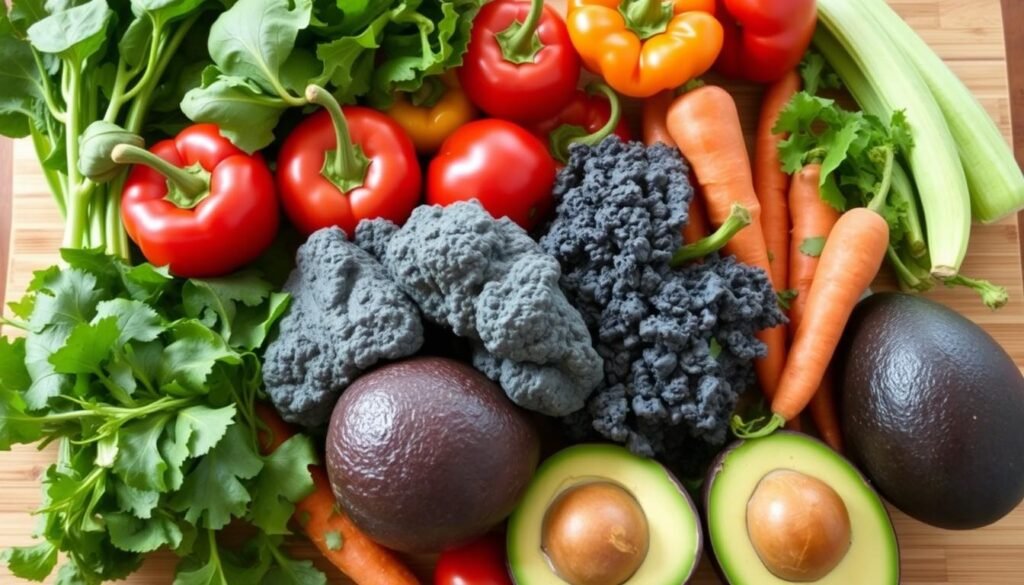
| Vegetable Type | Nutritional Benefits | Cholesterol Impact |
|---|---|---|
| Leafy Greens | High in fiber, vitamins (A, C, K), minerals (iron, calcium) | Helps reduce LDL cholesterol |
| Cruciferous Vegetables | Rich in fiber, antioxidants, and glucosinolates | Supports lower cholesterol levels |
| Example Vegetables | Spinach, Kale, Broccoli, Brussels Sprouts | Promotes heart health |
The Role of Fruits in a Cholesterol-Friendly Diet
Fruits are key in a diet that’s good for your cholesterol, giving you a tasty way to boost heart health. They are packed with vitamins, minerals, and fiber. These elements fight oxidative stress and lower inflammation.
Eating a variety of fruits adds tasty flavors and helps your well-being. It helps lower bad cholesterol (LDL).
Top Fruits to Include
- Apples: High in fiber and pectin, they can cut cholesterol levels by up to 10%.
- Berries: Blueberries and strawberries have lots of heart-healthy antioxidants.
- Oranges: Their fiber and vitamin C help with cholesterol.
- Avocados: Eating an avocado every day can greatly reduce LDL cholesterol.
- Kiwi: A great choice for better heart health.
Antioxidants in Fruits
Fruits are beneficial because they contain antioxidants, crucial in reducing inflammation and bodily damage. These antioxidants, like flavonoids and polyphenols, boost blood flow and keep blood vessels healthy. Eating them regularly lowers total and bad cholesterol, cutting heart disease risk.
The Mediterranean Diet: A Blueprint for Heart Health
The Mediterranean diet is great for keeping a healthy heart. It uses whole foods, healthy fats, and good proteins. This diet is all about eating lots of fresh fruits, vegetables, grains, legumes, nuts, and extra virgin olive oil. These foods are good for your heart and help control cholesterol.
Core Components of the Mediterranean Diet
The Mediterranean diet’s key parts are:
- Whole grains like brown rice and whole-wheat bread
- A range of fruits and veggies for colorful meals
- Protein-rich legumes such as lentils and chickpeas
- Nuts and seeds for healthy fats and nutrients
- Fish, poultry, and dairy in moderation
- Extra virgin olive oil as the main fat source
Eating these foods every day helps you stay healthy. It also helps protect against heart disease. Research shows countries that eat like this have fewer heart problems.
Benefits of Olive Oil
Olive oil is a star in this diet. It’s full of good fats that can lower bad cholesterol. Using olive oil often might cut your heart disease risk. The American Heart Association says swapping bad fats for olive oil is a smart move.
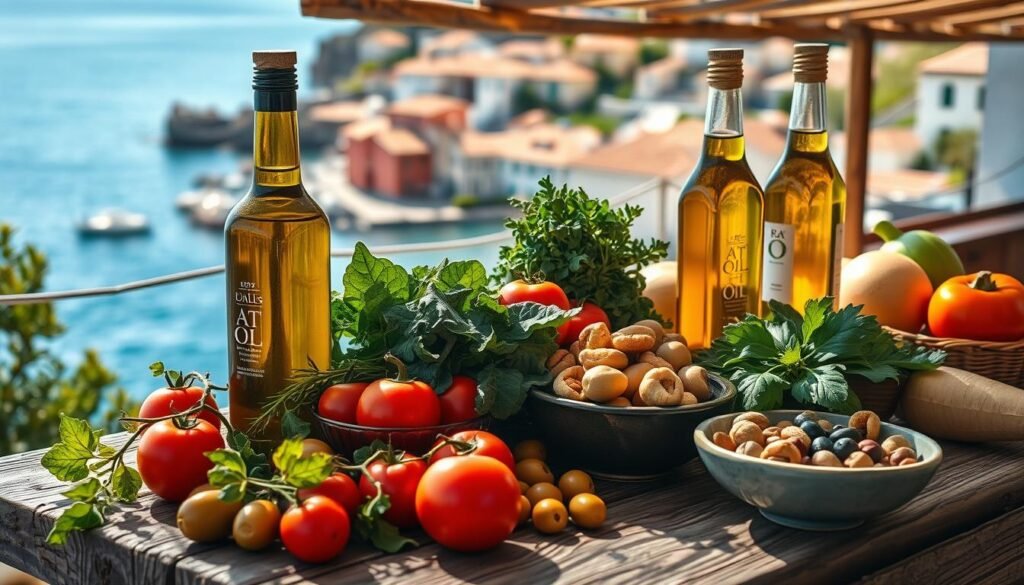
Adding olive oil to your diet is easy. It makes salads tastier, is great for cooking, or as a bread dip. By following the Mediterranean diet, you eat healthier, enjoy tasty meals, and live a lively life.
Want to know more? Check out this article on the Mediterranean diet. It has more health tips and yummy recipes.
Foods to Avoid When Managing Cholesterol
Managing cholesterol means eating well and avoiding bad foods. It’s key to know which foods harm heart health and raise cholesterol. Avoiding these foods helps prevent heart disease.
Processed Foods and Their Impact
Processed foods have stuff that raises cholesterol. They’re full of saturated fats and sugars. Eating too many snacks, cakes, or biscuits can increase bad cholesterol.
Look for labels showing high sugars and bad fats. Choose more whole foods over processed. This change aids cholesterol health.
Saturated and Trans Fats
Stay away from saturated and trans fats to manage cholesterol. Saturated fats are in fatty meats, full-fat dairy, and some oils. They raise cholesterol.
Trans fats in fried and baked goods are worse. They boost bad cholesterol and decrease good cholesterol. Avoid margarine, fast foods, and store pastries to keep cholesterol in check.
Tips for Creating a Cholesterol Diet Plan
Making a personal cholesterol diet plan is key for good heart health. This involves picking meals and prep methods that fit your tastes and needs. By choosing the right foods and making smart food swaps, you can cut cholesterol and boost well-being.
Meal Planning and Preparation
Using a free meal planner can help you make a tailored diet plan. This lets you mix and match foods you enjoy while adding items that lower cholesterol. The plan should mix cultural dishes with whole grains, beans, and lots of veggies.
When some foods are too pricey, finding cheaper alternatives is crucial. This keeps your diet heart-healthy without draining your wallet. It’s also important to eat when hungry rather than at set times. This way, meals stay enjoyable and stress-free.
Making Healthy Swaps in Your Diet
Healthy food swaps are great for a heart-friendly lifestyle. For example, using olive oil instead of butter cuts down on bad fats but keeps food tasty. Choosing low-fat dairy products also helps in eating better.
Adding more veggies to your meals is another smart move. It makes meals more satisfying and healthy. Cooking in bulk saves time and ensures you always have healthy food ready.
Regularly checking your cholesterol levels helps you see if your diet is working. Following the American Heart Association’s advice for a plant-centered diet can lower bad cholesterol. This greatly improves heart health.
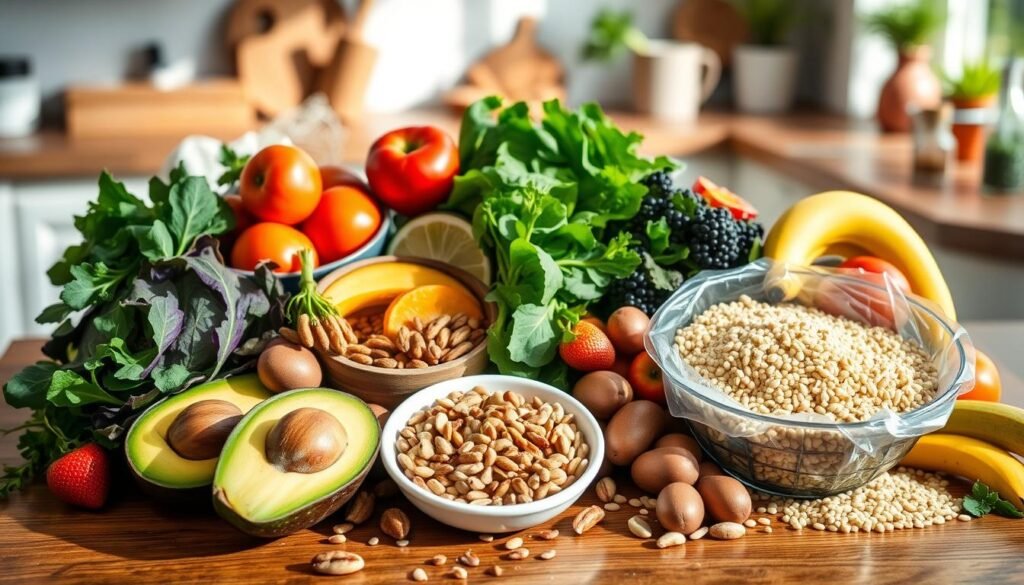
| Healthy Swaps | Original Ingredient | Benefit |
|---|---|---|
| Olive Oil | Butter | Lower in saturated fats |
| Reduced-Fat Cheese | Full-Fat Cheese | Less saturated fat |
| Whole Grain Bread | White Bread | Higher fiber content |
| Legumes | Red Meat | Lower in saturated fat, higher in fiber |
| Brown Rice | White Rice | More nutrients and fiber |
Adding these smart food swaps to your meals creates a balanced diet for your heart. These changes promote ongoing good health and a lifestyle that keeps your heart strong.
Conclusion
The importance of food choices for heart health is huge. Choosing a cholesterol-friendly diet helps people manage their cholesterol well. It leads to better overall health. Foods high in fiber and healthy fats are great for lowering bad cholesterol.
Even foods like eggs and shellfish have benefits for the heart, if eaten in the right amounts. But it’s very important to avoid processed and fatty foods. Eating well helps lower cholesterol and improve life quality.
Being consistent with healthy eating and lifestyle choices is key for a healthy heart. Adding exercise and keeping a healthy weight are important too. People who stick with these habits don’t just lower their cholesterol. They also boost their overall health and live longer. Making these changes is a big step towards a healthier and happier life.