Did you know peanuts can lower LDL cholesterol by up to 14%? This fact shows how peanut butter can help with heart health. More people are eating peanut butter for its protein and healthy fats. They’re curious about its effects on cholesterol. Knowing how peanut butter impacts heart health is key.
Peanut butter is more than a tasty spread. It’s key for a healthy diet. It offers benefits that help our health and eases worries about cholesterol. This piece will look at those benefits. We’ll also see if peanut butter raises cholesterol levels. Plus, how to eat it for a heart-healthy diet. For tips on keeping cholesterol in check, look at this guide on foods to avoid.
Key Takeaways
- Peanut butter contains fats that lower LDL cholesterol.
- Eating peanuts can help manage weight and diabetes.
- Have it in moderation, as the American Heart Association suggests.
- Choose natural peanut butter over processed types.
- Watch out for too much salt in salted varieties.
- Pairing peanut butter with plant-based diets can lower mortality rates.
Understanding Cholesterol and Its Types
Cholesterol is a waxy substance in our blood and cells. It’s needed for making hormones and keeping cell walls intact. There are two main types of cholesterol: Low-Density Lipoprotein (LDL) and High-Density Lipoprotein (HDL).
LDL is known as the “bad” cholesterol. It can build up in arteries, causing blockages. This ups the risk for heart disease. On the other hand, HDL is the “good” cholesterol. It helps move LDL out of the arteries. This action helps keep cholesterol levels in a healthier range.
It’s important to keep an eye on these cholesterol types for heart health. About 70% of American adults are overweight or obese. This shows the need to focus on health and eating habits. Diet affects cholesterol greatly, with 20% to 30% of blood cholesterol coming from food. Foods rich in saturated and trans fats raise LDL levels.
| Cholesterol Type | Characteristics | Health Effects |
|---|---|---|
| LDL (Low-Density Lipoprotein) | Often called “bad” cholesterol, can lead to plaque buildup. | Increased risk of heart disease and stroke. |
| HDL (High-Density Lipoprotein) | Known as “good” cholesterol, helps remove LDL from the bloodstream. | Reduces the risk of heart disease and improves cardiovascular health. |
By being aware and managing cholesterol wisely, we can better our health. This means a healthier heart and lower risk of diseases. Diet and lifestyle choices play a big part in this.
What Is Peanut Butter?
Peanut butter is a tasty spread made from ground peanuts. It’s known for its creamy texture and rich flavor. It’s full of protein, fiber, and healthy fats. These nutrients make it a great snack or spread. But, it’s important to check labels since brands can differ in nutritional value.
Peanut butter is both yummy and convenient. But, it can be high in calories and sometimes has added sugars. Pic’s Peanut Butter is different because it uses ‘Hi Oleic Peanuts.’ These peanuts have more oleic acid. This can help lower inflammation and the risk of heart disease.
- Pic’s Peanut Butter boasts no added sugar.
- It contains less saturated fat and significantly lower sodium compared to other brands.
- The brand is rich in monounsaturated fats and contains minimal omega-6 polyunsaturated fats.
Pic’s Peanut Butter has only 6g of saturated fat per 100g. This helps keep LDL cholesterol levels low. Groups like the American Heart Association praise foods high in monounsaturated fat. Foods like Pic’s can protect your arteries and support a heart-healthy diet.
Moderation is key when picking healthy snacks. Choosing brands with no added sugars and low sodium, like Pic’s, is smart. This choice supports heart health and is a good pick for those looking for healthy snacks.
Health Benefits of Peanut Butter
Peanut butter is more than a tasty treat. It’s packed with valuable nutrients. It has lots of protein, vitamins, and minerals like magnesium and vitamin E. These parts make it a healthy choice for many people.
It’s great for your heart too. One study found that people who ate peanuts had better cholesterol. This means peanut butter can help keep your cholesterol in check.
Peanut butter is also rich in good fats. These fats can lower heart disease and cancer risks. They can also help prevent Type 2 diabetes by improving how your body uses insulin.
Eating peanut butter can be both tasty and healthy. It’s a good choice for improving your diet. To learn more about its benefits and risks, check out this article.
The Role of Fats in Peanut Butter
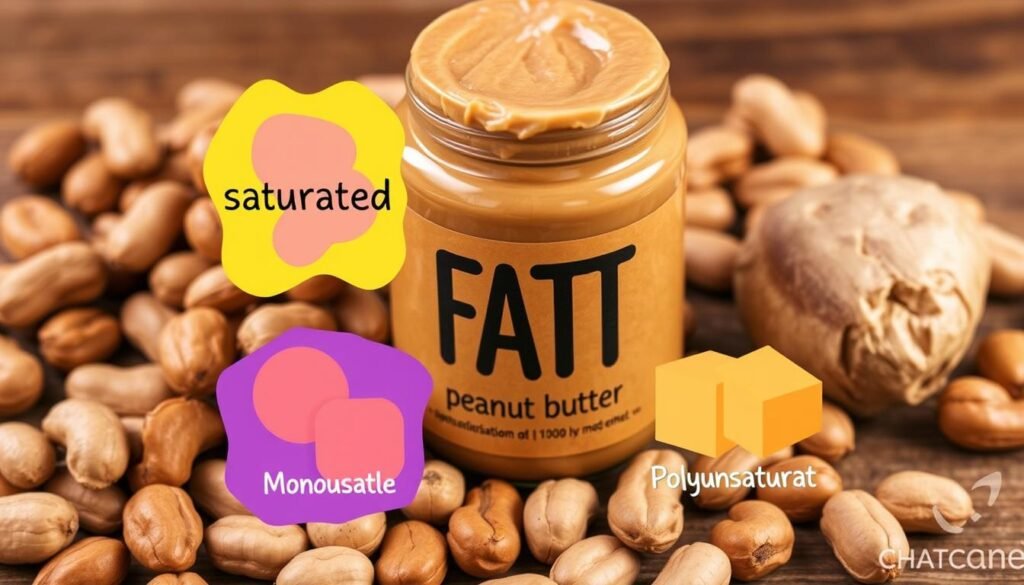
Peanut butter is praised for its healthy fats, good for the heart. We break down the fats in peanut butter: monounsaturated, polyunsaturated, and saturated. These help us understand how it benefits us.
Monounsaturated Fats
About half the fat in peanut butter is monounsaturated. These fats lower “bad” LDL cholesterol, supporting heart health. Sources like olive oil, almonds, and peanut butter are rich in them.
Polyunsaturated Fats
Peanut butter has roughly 25% polyunsaturated fats. They are vital and include omega-3 and omega-6 fatty acids.
These nutrients aid in reducing LDL cholesterol and cardiovascular disease risk. Adding peanut butter to your diet enhances heart health.
Saturated Fats
Peanut butter has some saturated fats, about 19% of its total fat. The key is moderation.
The American Heart Association advises keeping saturated fat low. Choose natural peanut butter to avoid added sugars and hydrogenated fats. This choice helps enjoy peanut butter while managing fat intake.
| Nutrient | Amount per 2 Tablespoons |
|---|---|
| Calories | 188 |
| Protein | 8 grams |
| Total Fat | 16 grams |
| Saturated Fat | 3 grams |
| Monounsaturated Fat | 8 grams |
| Polyunsaturated Fat | 4 grams |
| Carbohydrates | 6 grams |
| Fiber | 2 grams |
In summary, peanut butter’s fats are beneficial. Eating it wisely helps with cholesterol and your health. For tips on using peanut butter well, check out this resource.
Does Peanut Butter Cause High Cholesterol?
Many people wonder if peanut butter raises cholesterol levels. Peanut butter has no cholesterol and is rich in healthy fats. Eating it in moderation usually doesn’t lead to high cholesterol. In fact, it’s often seen as good for you, especially if it replaces unhealthy fats in your diet.
Peanut butter is full of fats that can lower bad cholesterol, helping your heart. Just 2 tablespoons offer about 7.2 grams of monounsaturated fat and 3.49 grams of polyunsaturated fat. These fats suggest that eating peanut butter can help keep your heart healthy.
A 2-tablespoon serving of peanut butter has 188 calories. This is about 9.4% of a 2,000-calorie diet. Peanut butter is also high in protein, offering about 10 grams per serving. But, eating too much can lead to weight gain, which may affect cholesterol levels indirectly.
So, does peanut butter cause high cholesterol? The answer is usually “no” if you eat it in moderation. A little bit can be good for your heart. For more details on managing cholesterol, check out this complete guide on cholesterol.
Impact of Peanut Butter on Cholesterol Levels
Peanut butter has an important effect on cholesterol, especially on LDL (bad) and HDL (good) cholesterol levels. Eating peanut butter regularly can help improve heart health.
Effects on LDL Cholesterol
Peanut butter contains healthy fats that reduce LDL cholesterol. These fats decrease heart disease and stroke risk. Peanut butter is great for keeping heart-friendly fats in your diet.
Effects on HDL Cholesterol
Eating peanut butter also raises HDL cholesterol. This good cholesterol carries bad cholesterol away from arteries, aiding heart health. Studies show peanut butter can improve your cholesterol levels, supporting your heart.
Peanut Butter and Lipid Profile: What Studies Show
Studies on peanut butter show it might help our heart stay healthy. Eating it regularly can improve cholesterol levels and lower heart disease risks. These findings are key to understanding peanut butter’s benefits.
Research Findings
Research on nuts, including peanuts, shows they’re good for cholesterol. A detailed study found that eating nuts can lower total cholesterol. It noted a reduction in bad LDL-cholesterol too.
Triglyceride levels also improved, which means a healthier heart. These results suggest nuts, like peanuts, are great for our health.
Long-Term Health Effects
Eating peanut butter over time helps reduce bad cholesterol. It improves the quality of good cholesterol too. Studies show eating peanut butter can improve important heart health markers.
The benefits apply to everyone, regardless of age or sex. This makes peanut butter a great choice for a healthy diet.
| Factor | Impact |
|---|---|
| Total Cholesterol | Reduced by −0.09 to −0.28 mmol/L |
| LDL-Cholesterol | Reduced by −0.09 to −0.26 mmol/L |
| Triglycerides | Reduced by −0.05 to −0.17 mmol/L |
| Apolipoprotein B | Decreased blood levels |
| HDL Function | Improved function |
Evaluating Different Types of Peanut Butter
There are many types of peanut butter in stores. Each kind has its own ingredients and nutrients. It’s crucial to know these differences because of health issues with processed foods. These issues might reduce peanut butter’s good effects.
Natural vs. Processed Peanut Butter
Natural peanut butter is made of peanuts and sometimes salt. It keeps most of its nutrition. It has healthy fats that are good for your heart. You won’t find added sugars or preservatives in it.
On the other hand, processed peanut butter has hydrogenated oils, sugars, and preservatives. These can harm your heart health. They may lead to other health problems too.
Peanut Butter with Added Ingredients
Some peanut butters have extra things like chocolate or honey. These can make them taste better but add calories. They might have bad fats or too much sugar.
Always check the label to find healthy options. Pick peanut butter with few added ingredients for a balanced diet. Understanding product differences helps you get the most health benefits from peanuts.
For more info on fats and health, visit this informative resource.
Peanut Butter and Heart Health
Peanut butter is famous for being good for your heart. It’s full of healthy fats. These are monounsaturated and polyunsaturated fats. They’re a better choice than bad saturated fats. Eating it regularly can help lower bad cholesterol. This is key to good heart health.
Studies show that peanut butter is great for your heart. One study found that women who ate it more than five times a week had a lower risk of type 2 diabetes than those who didn’t eat it much. It shows how important healthy fats are for our health.
The makeup of peanut butter is impressive. Let’s look at what’s inside:
| Component | Per 100g |
|---|---|
| Calories | 632 |
| Saturated Fat | 8.4g |
| Monounsaturated Fat | 30.7g |
| Polyunsaturated Fat | 9.78g |
| Protein | 24g |
Vitamin E in peanut butter is a big deal. It acts as an antioxidant. This helps reduce inflammation and fight oxidative stress. Both are vital for a healthy heart. Peanut butter’s mix of healthy fats and nutrients makes it a strong ally for our heart.
Guidelines for Including Peanut Butter in Your Diet
Adding peanut butter to your meals daily can be good. But, it’s key to follow recommendations on how much to eat. Understanding the right amounts and pairing it with healthy foods can boost your health.
Recommended Serving Sizes
The American Heart Association notes a typical serving is two tablespoons. This amount is about 188 calories or 9.4% of what you need each day when you eat 2,000 calories. You’ll get:
- 7.2g of monounsaturated fat
- 3.49g of polyunsaturated fat
- 2.86g of saturated fat
Paying attention to saturated fat is important. It should only be 5-6% of your daily calories. Following this, you can enjoy peanut butter without eating too much. This fits into a heart-healthy diet.
Balancing Peanut Butter with Other Nutrients
A balanced diet means eating peanut butter with foods full of nutrients. Try these combos:
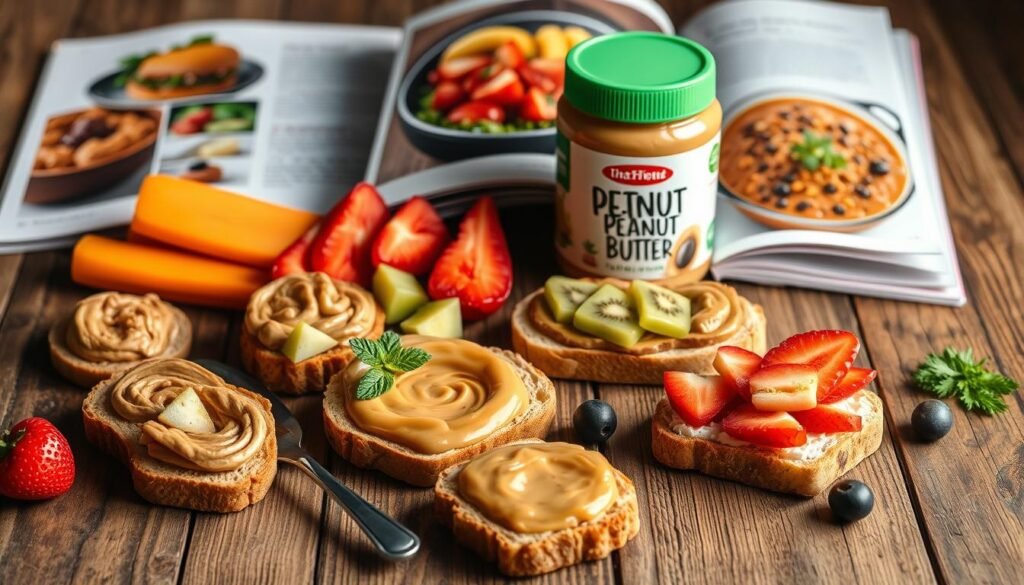
- Pear slices with peanut butter for a nutritious snack
- Whole grain toast with peanut butter and banana
- Peanut butter smoothies with spinach for extra vitamins
Include peanut butter in meals with fruits, veggies, and whole grains. This helps keep a good mix of nutrients. It helps watch your calories and improves your diet’s quality.
Potential Downsides of Peanut Butter Consumption
Peanut butter is loved for its taste and health perks. However, eating too much has its risks. One risk is gaining weight from too many calories. A 2-tablespoon serving has about 188 calories. This is almost 10% of a 2,000 calorie diet.
Peanut butter’s fat is another concern. It has good fats but also bad saturated fat—10.1 grams per 100 grams. The American Heart Association suggests eating less than 13 grams of saturated fat a day. Eating more could affect your heart.
People with nut allergies must be extra careful. Even tiny amounts can cause severe reactions. Also, many peanut butters have added sugars and trans fats.
To avoid risks, watch how much you eat. Choose natural peanut butter without added stuff. Knowing the downsides helps enjoy peanut butter safely.
| Nutritional Content per 100g | Monounsaturated Fat (g) | Polyunsaturated Fat (g) | Saturated Fat (g) | Calories |
|---|---|---|---|---|
| Peanut Butter | 25.4 | 12.3 | 10.1 | 588 |
| Almond Butter | 28.2 | 9.9 | 3.2 | 600 |
| Cashew Butter | 24.4 | 8.5 | 5.5 | 553 |
Conclusion
Peanut butter is good for your heart when you eat it wisely and not too much. It is full of helpful nutrients and helps manage cholesterol levels. This makes it a smart pick for anyone focused on a healthy heart and eating right. The peanut butter health impact comes from its high monounsaturated fats. These fats are key for keeping healthy cholesterol in our bodies.
To make the most of peanut butter’s benefits, pick natural types without added sugar or too much salt. This way, you get all its nutritional upsides. A smart approach lets you enjoy peanut butter’s taste and feel, while staying heart-healthy.
So, eating peanut butter smartly is good for your overall health. For tips on mixing foods and managing cholesterol, check out this detailed guide. It talks about moderation and balance in what we eat.