About 38.2% of Americans have cholesterol levels over 200 milligrams per deciliter (mg/dL). This is risky for health. Foods like red meat and dairy products are often high in unhealthy fats. It’s crucial to pick the right kinds of meat. Choosing cholesterol-lowering meats can really help manage heart health. People can improve their diets by eating lean cuts and cholesterol-friendly meats.
In this piece, we’ll look at the best meats for high cholesterol. These include skinless poultry, pork tenderloin, and certain fish that are high in omega-3 fatty acids. We’ll also discuss how cooking in certain ways keeps these meats healthy. It’s important to care for what we eat and follow medical advice too.
Key Takeaways
- Over one-third of Americans have high cholesterol, which is bad for heart health.
- Eating lean meat and poultry can help keep cholesterol levels lower.
- Fish, especially types rich in omega-3 like salmon, are good for the heart.
- The best choices for high cholesterol are skinless meat and lean cuts.
- Cooking meat through grilling or baking keeps it healthy.
Understanding Cholesterol and its Impact on Health
Cholesterol is a waxy substance made by the liver. It is important for building cell membranes and hormone production. You can find it in meats and dairy too. Our body has two main kinds of cholesterol: LDL (low-density lipoprotein) and HDL (high-density lipoprotein).
LDL is often called “bad” cholesterol because it can build up in arteries. This buildup can lead to heart issues. On the other hand, HDL is “good” cholesterol. It helps remove excess cholesterol from the blood.
About 38.2% of Americans have high cholesterol. This increases their risk of heart disease. Diet plays a big part in our cholesterol levels, being 20% to 30% of the total. Animal products are major sources, so it’s key to watch meat and dairy consumption.
To keep cholesterol in check, limit foods high in saturated fats. They should only be 5% to 6% of your daily calories. Avoid trans fats found in fast food and processed items. Adding 10 to 25 grams of soluble fiber to your diet helps lower LDL cholesterol. Following a heart-healthy diet like the Mediterranean Diet is also beneficial. It includes fruits, vegetables, grains, proteins, and healthy fats like olive oil.
Cooking methods matter in managing cholesterol. Opt for baking, broiling, or steaming over frying. Eating more fish gives you good omega-3 fats. Making these dietary changes can show results in 3 to 6 months. It highlights the need for consistent healthy eating.
Why Lowering Cholesterol is Important
Keeping cholesterol in check is key for a healthy heart. High cholesterol can cause plaque to build up in arteries. This can lead to atherosclerosis, heart attacks, and strokes. It shows why cholesterol management is so important. We can manage it by eating right and living a healthy lifestyle.
It’s important to test your cholesterol regularly. Eating more plant proteins and less red meat can help manage your cholesterol. Ronald Krauss, MD, found that red and white meats can raise cholesterol. He suggests eating nonmeat proteins for better heart health. For more information, check out this article.
Here are some tips to manage your cholesterol:
- Working out for 30 minutes five times a week can increase your “good” HDL cholesterol.
- Stopping smoking can cut your heart disease risk in half after a year.
- Drinking alcohol in moderation, as recommended by the American Heart Association, can help maintain healthy cholesterol levels.
Using these methods, along with making smart food choices, can help fight high cholesterol. This way, you can keep your heart healthier.
| Strategy | Benefit |
|---|---|
| Physical Activity | Raises HDL cholesterol |
| Quit Smoking | Significantly lowers heart disease risk |
| Moderate Alcohol Intake | Linked to higher HDL levels |
| Plant-Based Diet | Helps reduce overall cholesterol |
Best Meat for High Cholesterol: Lean Choices to Consider
Choosing the right meat is key to managing cholesterol. For those with high cholesterol, selecting lean meats is vital. Here are some top picks.
Skinless Poultry
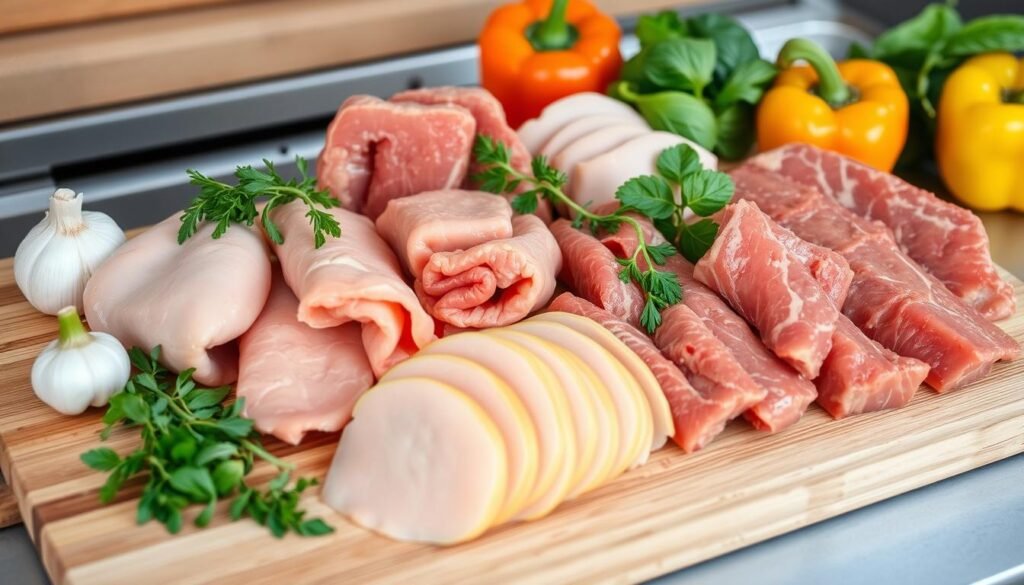
Skinless chicken and turkey breasts are great for lowering cholesterol. They are low in fat and cholesterol. Grill, bake, or sauté them without skin for health benefits and great taste.
Pork Tenderloin
Pork tenderloin is a top meat selection. It stays lean when trimmed of fat and has a tasty profile. With less saturated fat, it helps manage cholesterol well.
Lean Cuts of Beef
Choosing lean beef cuts is essential. The USDA says lean cuts have under 10 grams of total fat and 4.5 grams of saturated fat per serving. Eye of round, top sirloin, and top round are good picks.
Consider “Choice” or “Select” over “Prime” cuts to eat less fat. Always cut off visible fat. For ground beef, go for 93% or 95% lean for best health.
Cholesterol-Friendly Meats: The Benefits of Fish
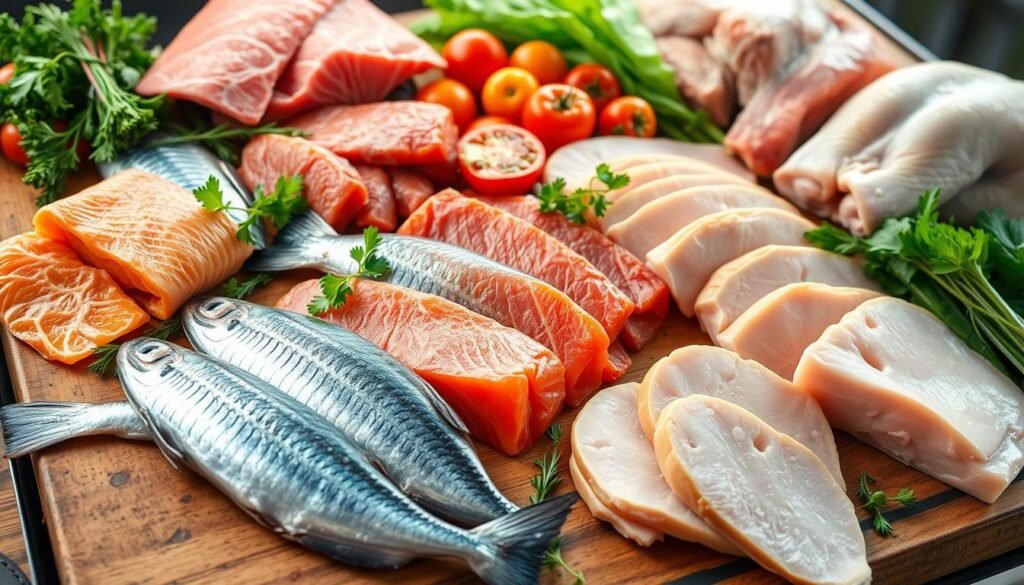
Eating fish can really help manage cholesterol levels. It’s a great source of lean protein and usually has little saturated fat. The omega-3 fatty acids in many kinds of fish are key for heart health. They can lower the risk of heart diseases.
Omega-3 Fatty Acids
Omega-3 fatty acids can cut down triglycerides in the blood. Eating fish regularly helps avoid heart problems, even sudden ones. Experts suggest eating fish rich in omega-3s twice a week to get these benefits.
Recommended Fish Types
Here are some top fish choices for heart-healthy proteins and omega-3 fatty acids:
| Fish Type | Omega-3 Content (grams per 3.5 oz) | Health Benefits |
|---|---|---|
| Salmon | 2.5 | Supports heart health, may lower blood pressure |
| Sardines | 2.2 | Excellent source of vitamin D and calcium |
| Mackerel | 4.6 | May reduce inflammation, rich in selenium |
| Trout | 2.2 | Promotes brain health, high in protein |
Adding these heart-friendly fish to your diet can boost your health. Research backs up eating fatty fish like salmon for heart perks. Eating fish often helps manage cholesterol and supports overall health.
Top Meats for Reducing Cholesterol: A Closer Look
Looking into different meat options can really help if you’re trying to lower your cholesterol. Opting for meats that are lean and have less saturated fat means you can still enjoy tasty meals. And you won’t have to worry about harming your health.
Venison and Other Game Meats
Venison and other game meats are great for those watching their cholesterol. They’re usually leaner than beef or pork. This makes them a healthy choice for anyone. Plus, venison has less saturated fat, which is good for your cholesterol levels.
Game meats also taste great and are versatile in cooking. They add rich flavor to your dishes and boost the meal’s nutrition.
Low-Fat Processed Meats
If you’re careful, low-fat processed meats can also fit into a cholesterol-lowering diet. Just make sure to eat them in moderation. They typically have less saturated fat than regular processed meats.
Always read the nutrition labels to avoid unhealthy additives and fats. Options like turkey or chicken sausage are high in protein but still low in unhealthy fats.
Healthy Meats for High Cholesterol: Alternatives to Consider
Looking for healthier options instead of traditional meats can be good for you. Adding things like plant-based proteins to your meals is smart. They’re full of important nutrients and are good for your heart. These options are great for people trying to eat protein without raising their cholesterol.
Plant-Based Proteins
Plant-based proteins are super for keeping cholesterol in check. Foods like beans, lentils, and tofu are not just rich in protein. They also have fiber that helps reduce cholesterol. Choosing these over animal proteins can make meals both healthy and heart-friendly.
Beans and Legumes as Protein Sources
Beans and legumes are both healthy and wallet-friendly options. Just one cup of cooked beans can take the place of two ounces of meat. They come without the unhealthy fats found in beef or pork. Favorites like black beans, kidney beans, and chickpeas can be used in many dishes.
Looking at this guide could help you learn more about eating right for your cholesterol. Focusing on these good protein sources is a smart way to eat better.
Cooking Methods that Preserve Healthy Meats
Choosing the right ways to cook is key to boosting meat’s health benefits and keeping cholesterol in check. Knowing the best methods can save nutrients and cut down on bad compounds formed while cooking. Grilling, baking, and broiling are top picks, letting excess fat drip off and making meals better for low cholesterol.
Grilling and Baking Techniques
Grilling and baking are smart choices for cooking meats in healthier ways. Grilling lets fats drip away, slashing harmful compound levels, like polycyclic aromatic hydrocarbons (PAHs), by up to 89%. Baking is great too because it needs no extra fat, helping keep the goodness in meats.
To cook healthier, try spicing things up with herbs and spices. They add flavor and cut down the need for bad fats. Studies show that herbs can lower the creation of dangerous substances, like heterocyclic amines (HAs), by around 90%. These substances are linked to many health issues.
Avoiding Saturated Fats in Preparation
Avoiding saturated fats is crucial for heart health. Choose healthier oils like extra-virgin olive oil or canola oil for cooking. When using moist-heat methods like poaching or steaming, these oils limit extra fats and preserve essential nutrients. Consider methods like steaming or boiling, which use less heat and don’t need butter or added fats.
For more tips on nutrient preservation and heart-healthy cooking, check out this detailed resource.
Conclusion
Choosing wisely when it comes to meat is key for good cholesterol management. This piece has shown that red meat doesn’t hugely affect cholesterol if you pick lean cuts and eat balanced meals. It also points out how eating lean meats for protein while focusing more on plants is great for your heart.
Healthy cooking and eating fish with lots of omega-3s help lower inflammation and improve heart health. The American Heart Association reminds us to watch how much red meat we eat. This helps avoid too much saturated fat.
Moving towards a heart-friendly diet includes ways to lower cholesterol and enjoy a variety of foods. This not only helps with your cholesterol but also leads to a healthier life. By making better food choices, individuals enhance their well-being.