Did you know losing just 10 pounds can lower your LDL cholesterol by 8%? This fact shows how changing your lifestyle can improve your cholesterol. Learning to reduce high cholesterol naturally is crucial for heart health. It can be done with simple diet and exercise changes.
Before choosing medication, know the power of heart-healthy habits. Changing your diet to eat less saturated fats and more fiber really helps. Also, exercise regularly, quit smoking, keep a healthy weight, and limit alcohol. These steps effectively manage your cholesterol. By making these lifestyle changes, you can lower cholesterol and boost your health. For more tips on lowering cholesterol naturally, here’s a comprehensive guide with practical advice.
Key Takeaways
- Losing just 10 pounds can lower LDL cholesterol by up to 8%.
- Regular exercise for 2 1/2 hours a week can improve overall cholesterol levels.
- Consuming an additional 5 to 10 grams of soluble fiber daily may decrease LDL cholesterol.
- Substituting olive oil for butter can reduce LDL cholesterol significantly.
- Incorporating fish into your diet two to four times weekly aids in lowering cholesterol.
Understanding Cholesterol and Its Types
Cholesterol is like a fat substance in our body. It’s in animal products and made by the liver. Knowing about cholesterol types helps us stay healthy.
There are two main types: LDL and HDL. LDL, or “bad” cholesterol, builds up in arteries and can cause heart disease. HDL, or “good” cholesterol, moves LDL out of arteries. It helps to prevent heart problems. Understanding HDL and LDL shows why we need to watch our cholesterol levels.
To control cholesterol, we should eat less saturated fat. No more than 7% of our daily calories should be saturated fat. And, we should eat less than 200 mg of cholesterol a day.
Eating soluble fiber is also important. We should have 10 to 25 grams a day. It stops cholesterol from being absorbed by our bodies. Adding 2 grams of plant stanols and sterols each day helps too. These things prevent cholesterol from getting into our system.
Unhealthy fats like saturated and trans fats are bad. They raise the “bad” cholesterol more than anything else we eat. This knowledge helps us make smarter choices about what to eat.
| Cholesterol Type | Function | Health Impact |
|---|---|---|
| LDL (Low-Density Lipoprotein) | Transports cholesterol to cells | High levels can lead to artery buildup and heart disease |
| HDL (High-Density Lipoprotein) | Carries cholesterol away from arteries to the liver | Helps reduce heart disease risk |
Making changes for a heart-healthy life is key in managing cholesterol. It keeps our heart and blood vessels in good shape.
Why High Cholesterol Matters
Knowing the risks of high cholesterol is key for keeping your heart healthy. High LDL cholesterol levels can cause problems like heart attacks and strokes. It shows how crucial managing cholesterol is for our heart and overall health.
Cholesterol levels depend on genetics, what you eat, and how you live. Smoking and high blood pressure make cholesterol worse, raising heart disease risks. Experts suggest eating less saturated fat, no more than 6% of daily calories, to lower cholesterol.
Doing 150 minutes of exercise like walking or biking each week helps a lot. Exercise lowers cholesterol and blood pressure. Stopping smoking also helps by lowering bad fats and raising good cholesterol, making your heart healthier.
Keeping a healthy weight is important too. Losing just 5% to 10% of your weight can make your cholesterol better and lower heart disease risks. Knowing if your family has high cholesterol problems is important; many don’t know they have it until it’s late, so early check-ups are key.
Research over 50 years shows lower LDL cholesterol means fewer heart problems. Following doctor’s advice and making healthy choices can really improve your health. That’s why keeping cholesterol in check is so important for avoiding diseases.
How to Lower High Cholesterol Naturally
Adopting a heart-healthy diet is crucial to lower high cholesterol naturally. It involves choosing foods good for the heart. Gradually adding foods that lower cholesterol can greatly improve cholesterol levels.
Adopting Heart-Healthy Foods
Eating a variety of heart-healthy foods helps cholesterol levels and well-being. Some strategies include:
- Consuming fruits and vegetables, which provide essential nutrients and fiber.
- Choosing whole grains over refined grains to boost fiber intake.
- Incorporating healthy fats, such as those found in avocados and extra virgin olive oil, to raise HDL cholesterol.
- Including two servings of fish rich in omega-3 fatty acids each week, as recommended by the American Heart Association.
Identifying Cholesterol-Lowering Foods
Some foods can specifically help lower bad cholesterol (LDL). Adding them to your diet offers significant benefits:
| Food Group | Benefits |
|---|---|
| Fish (e.g., salmon, mackerel) | Rich in omega-3 fatty acids, helps lower triglycerides |
| Nuts (almonds, walnuts) | Contain healthy fats that reduce LDL cholesterol |
| Beans and legumes (lentils, chickpeas) | Serve as plant-based protein, lower bad cholesterol |
| Leafy greens (spinach, kale) | Provide fiber that supports heart health |
| Plant sterols (fortified products) | Can lower LDL cholesterol by more than 10% |
| Dark chocolate (70% cocoa or more) | May help lower LDL cholesterol |
For guidance on lowering cholesterol naturally, visit this resource. Making these changes improves cholesterol levels and heart health.
The Role of Saturated and Trans Fats
Saturated fats and trans fats are key in managing cholesterol. They mainly affect LDL cholesterol levels. The American Heart Association (AHA) advises people to limit saturated fat to less than 6% of their total daily calories. For a 2,000 calorie daily diet, this means only about 11 to 13 grams of saturated fat.
Trans fats have been closely watched since 2006, when the FDA required them to be listed on Nutrition Facts panels. Any food with 0.5 grams or more of trans fat per serving must show this amount. The push by big fast-food chains to cut out trans fats shows people are becoming more aware of their health risks. The AHA says adults should completely avoid trans fats.
Saturated fats are found in animal products and some oils, while trans fats are in processed and fried foods. Both can raise cholesterol and increase heart disease risk. Experts recommend eating more fruits, vegetables, whole grains, and lean proteins. Reducing red meats and processed foods can help lower cholesterol levels.
Unsaturated fats, found in olive oil, avocados, and nuts, are a healthier choice. These fats are liquid at room temperature. Using them instead of unhealthy fats can improve cholesterol levels. For example, choose fat-free or low-fat dairy and lean seafood instead of full-fat dairy products or red meats.
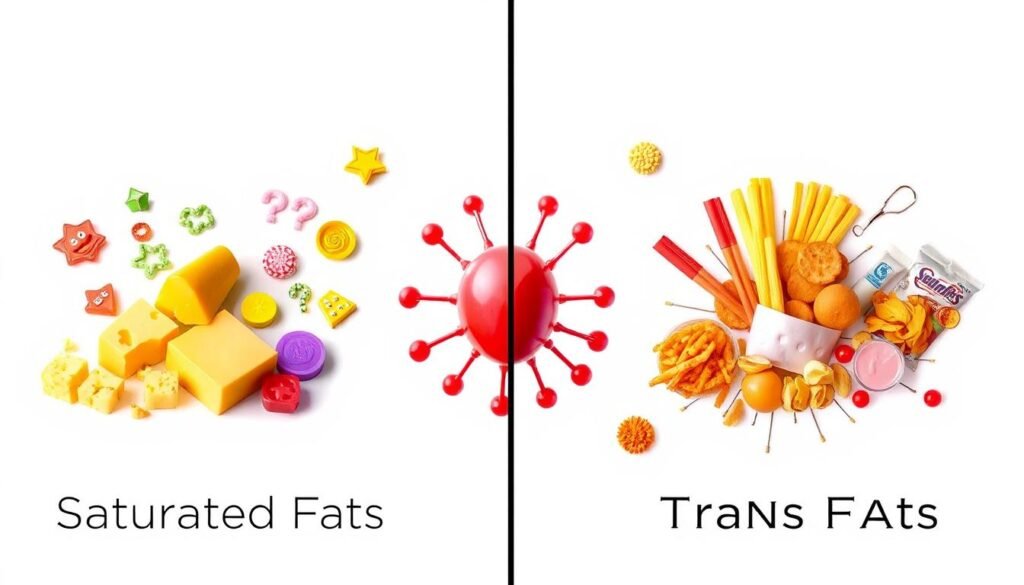
Eating right and keeping an eye on saturated and trans fats are crucial for cholesterol management. Adding physical activity and working with healthcare professionals help maintain heart health. Being informed about what you eat helps you make better choices for your cholesterol.
Incorporating More Fiber into Your Diet
Add fiber to your diet for many health benefits, especially for your heart. Soluble fiber helps lower cholesterol by binding with it in the intestines. This process removes it from your body. Try to eat 5 to 10 grams of soluble fiber each day. It helps reduce total and LDL cholesterol levels. This makes fiber-rich foods a key part of your diet.
Benefits of Soluble Fiber
Soluble fiber is good for more than just cholesterol. It makes you feel full, which helps control your appetite and manage weight. It also boosts digestive health and improves insulin sensitivity. This is great news for people with diabetes.
Sources of Soluble Fiber
It’s easy to get the soluble fiber you need by eating various foods. Some good sources are:
| Food Source | Soluble Fiber (per serving) |
|---|---|
| Oats | 1.5 – 2 grams per cup cooked |
| Beans (black, kidney, navy) | 1 – 3 grams per ½ cup cooked |
| Barley | 2 grams per cup cooked |
| Avocado | 2 grams per fruit |
| Apples | 2 – 4 grams per medium apple |
| Citrus fruits (oranges, grapefruits) | 1 – 3 grams per fruit |
| Raspberries | 4 grams per cup |
| Carrots | 1.5 grams per cup raw |
Increase your soluble fiber intake slowly. This lets your body adjust without discomfort. Over time, you will see improved health and a more balanced diet.
Importance of Omega-3 Fatty Acids
Omega-3 fatty acids are vital for heart health. They are good fats that help manage cholesterol. Your body can’t make enough of them, so eating foods rich in omega-3s is essential.
Heart-Healthy Fish to Include
Eating heart-healthy fish boosts your omega-3 intake. Good choices are:
- Salmon
- Mackerel
- Sardines
- Anchovies
- Herring
Adding these fish to your diet is smart. They add omega-3s and help you eat less red meat. Try to avoid high-mercury fish like king mackerel and shark to stay safe.
Try to eat fish twice a week for better heart health. For those who don’t eat fish, try ground flaxseed, chia seeds, or walnuts. They offer ALA, another important omega-3, that supports heart health.
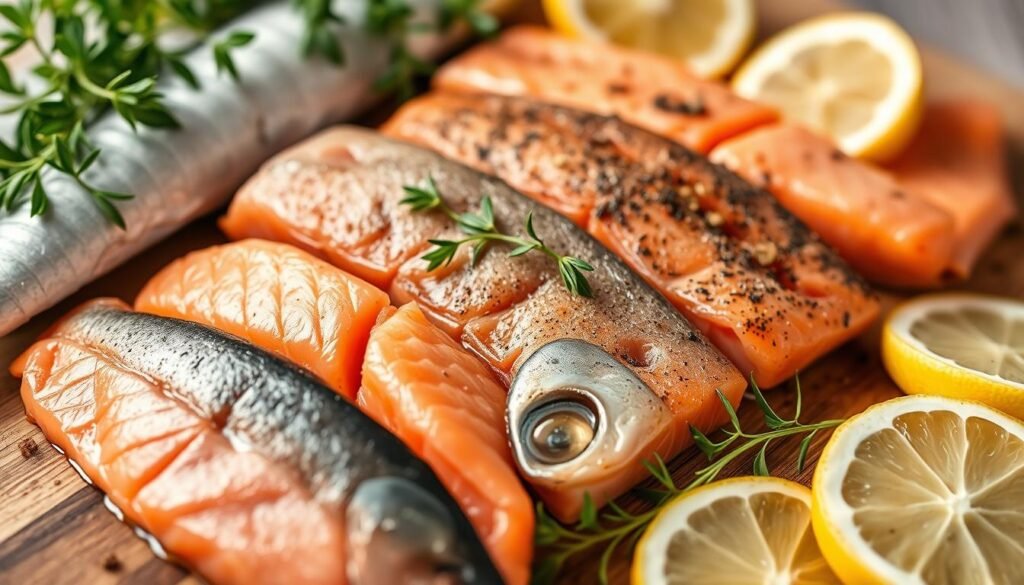
| Fish Type | Omega-3 Content (grams per 3.5 oz) | Mercury Levels |
|---|---|---|
| Salmon | 2.2 | Low |
| Mackerel | 4.5 | Moderate |
| Sardines | 1.5 | Low |
| Anchovies | 2.5 | Low |
| King Mackerel | 3.1 | High |
| Shark | 1.5 | High |
Eating fish rich in omega-3s is key for heart health and cholesterol management. It’s a smart way to keep your heart strong.
Exercise: A Key Component for Cholesterol Control
Regular physical activity is key in managing cholesterol. It boosts HDL (good cholesterol) and lowers LDL (bad cholesterol). Adding different exercises to your daily routine helps your heart. This section talks about exercises that are good for cholesterol and how to set fitness goals.
Types of Exercises for Cholesterol Management
A mix of exercises works best. The American Heart Association suggests doing aerobic, resistance, and flexibility exercises. Let’s look at some effective exercises:
- Aerobic Exercises: Brisk walking, cycling, and swimming can lower triglycerides by 30% to 40%. They also raise HDL by 5 to 8 mg/dL. Aim for 30 to 45 minutes of moderate exercise.
- Resistance Training: Strength training helps with cholesterol and improves strength. It’s good for your body overall.
- Flexibility Exercises: Yoga can make you more flexible and lower cholesterol. It also boosts heart health.
Setting Achievable Fitness Goals
It’s important to have realistic fitness goals for cholesterol management. Try to exercise for 200 minutes each week. A good goal is 30 minutes of activity, five to six days a week. Start with 15-minute sessions and slowly increase.
Working out with friends or in groups can make it fun. Being consistent is crucial for better cholesterol levels. For more tips on exercise and cholesterol, check out this guide. There, you’ll find exercises that help meet health goals.
Adding these exercises improves your heart health. It leads to a healthier life.
Try different exercises to keep your heart healthy and manage cholesterol well.
| Exercise Type | Benefits | Recommended Duration |
|---|---|---|
| Aerobic | Reduces triglycerides, boosts HDL | 30 to 45 minutes, 5-7 times a week |
| Resistance | Improves body composition, metabolism | At least 2 times a week |
| Flexibility | Enhances flexibility, contributes to heart health | Incorporate into daily routine |
For more tips on an exercise routine for cholesterol control, visit this resource.
Lifestyle Changes: Ditching Bad Habits
Trying to change your lifestyle for better cholesterol can really boost your health. It’s mainly about stopping smoking and watching how much you drink. If you work on these habits, your cholesterol and heart will thank you.
The Impact of Quitting Smoking
Stopping smoking is great for your heart. Studies show it can up your good cholesterol, the HDL. Higher HDL is good because it cleans bad cholesterol, the LDL, from your blood. This cuts down on heart disease risk.
Understanding Alcohol Consumption and Cholesterol
Drinking a little alcohol might help your heart. But too much is bad. It can raise your bad cholesterol and fats, hurting your heart. The key is to find a balance. Watching how much you drink can keep your cholesterol in check.

Weight Management Strategies
Effective weight management is key to optimal cholesterol. Keeping a healthy weight boosts heart health. Even a small weight loss of 5-10% can lower bad LDL cholesterol. It’s important to set doable weight loss goals for better cholesterol levels.
Setting Realistic Weight Loss Goals
Realistic weight loss goals help maintain good health. Changing eating habits and regular exercise are crucial. Here are strategies for this journey:
- Make small changes, not drastic diets. Target a slow weight loss of 1-2 pounds per week.
- Track what you eat with a food diary to see where you can improve.
- Eat a variety of healthy foods. Focus on fruits, veggies, lean meats, and whole grains.
- Stay active with at least 150 minutes of exercises like walking or cycling each week.
- Seek support from groups or professionals to stay motivated and accountable.
- Have clear, measurable goals, like losing five pounds in two months.
These approaches underline the need for lasting lifestyle changes for weight control. By setting attainable weight loss goals, people can improve their living habits. This helps in effectively lowering cholesterol levels.
Stress Management Techniques
Managing stress is key to a healthy heart and keeping cholesterol levels in check. Too much stress can raise your bad cholesterol and lower the good one. By using effective stress management techniques, you can cut down stress and boost your well-being.
Effective Methods to Reduce Stress
Adding relaxation practices to your daily life is important for managing stress and cholesterol. Here are a few methods to try:
- Yoga: This practice brings together body and mind, easing stress and anxiety.
- Meditation: Mindfulness and meditation can make you feel relaxed and clear-minded, lowering stress.
- Engaging in Hobbies: Enjoyable activities offer a break from daily stress.
- Physical Activity: Exercising, like walking for 30 minutes daily, is advised by the American Heart Association for stress and cholesterol management.
Using these techniques can greatly improve your heart health. Stress is linked to higher cholesterol levels. Studies have shown that stressed individuals often have high cholesterol. So, it’s crucial to understand the link between stress and cholesterol. For those seeking to manage stress, resources are available here.
Strong stress management techniques not only make you feel better emotionally but can also help lower your cholesterol. For a healthy heart, it’s important to use a comprehensive approach that encompasses mindful practices.
Conclusion
Managing cholesterol levels is essential for a heart-healthy lifestyle. The natural remedies discussed can greatly improve health. Changes in diet, more exercise, and lifestyle tweaks help manage cholesterol.
Small changes like adding soluble fiber and omega-3 fats make a big difference. A study showed someone cut cholesterol by 40.25% and LDL by 52.8% in six weeks. They just ate healthier fats and exercised. It shows we can control cholesterol without medicine.
Heart disease is a leading cause of death around the world. It’s crucial to keep an eye on cholesterol levels. By using a whole-body approach, people not only lower their cholesterol but also boost overall health. This leads to lasting health benefits.