About 94 million American adults have high cholesterol, says the CDC. This fact shows how crucial it is to manage cholesterol well. High cholesterol can raise the risk of heart disease and stroke significantly. These are the top causes of death worldwide. So, knowing what foods to avoid is key for anyone wanting better health.
Through this article, you’ll find out what to steer clear of if you have high cholesterol. This will help keep your heart healthy. Although getting your cholesterol to a healthy level might seem hard, the right choices can really make a difference. It enables people to actively improve their health.
Key Takeaways
- High cholesterol affects 94 million adults in the U.S.
- Monitoring cholesterol levels can prevent heart disease and stroke.
- Diet plays a key role in cholesterol management.
- Processed and fried foods can lead to increased cholesterol levels.
- Incorporating more fiber can help lower LDL cholesterol.
- Staying hydrated may contribute to better cholesterol levels.
Understanding Cholesterol and Its Importance
Cholesterol is key for our bodies. It helps make cell walls and hormones. But, eating too much of certain foods can cause high cholesterol. This can be risky for our health.
There are two important types of cholesterol: LDL (bad) and HDL (good). Too much LDL or not enough HDL can block arteries. This raises the chance of heart problems and strokes.
Eating right and staying active are crucial for managing cholesterol. Foods high in bad fats can raise your LDL. Being active can increase your HDL, helping your heart. Age, genetics, smoking, and stress also play a role.
Dr. Romit Bhattacharya stresses changing your lifestyle to keep cholesterol in check. Getting your cholesterol checked regularly is also important. Your age and health will determine how often you need these tests.
| Cholesterol Type | Optimal Level (mg/dL) | High Level (mg/dL) |
|---|---|---|
| Total Cholesterol | 150 | Above 200 |
| LDL Cholesterol (Bad) | 100 | Above 130 |
| HDL Cholesterol (Good) | 40 (Men), 50 (Women) | Below 40 (Men), Below 50 (Women) |
| Triglycerides | Less than 150 | Above 200 |
Why Is High Cholesterol Dangerous?
High cholesterol is a big health risk. It can lead to heart disease and stroke. The most worrisome issue is atherosclerosis. This happens when cholesterol builds up in artery walls, making them narrow. This slows down blood flow. It can cause chest pain, heart attacks, and strokes over time.
Since high cholesterol doesn’t always show symptoms, it’s important to check your levels regularly. Kids between 9 to 11 should get screened. After that, every five years is recommended. For adults, men from 45 to 65 and women from 55 to 65 should get tested every one to two years. Those older than 65 should consider yearly checks. By doing so, you can monitor your cholesterol and prevent serious issues.
Many things can raise your cholesterol. Not exercising enough, being overweight, and eating poorly can all play a part. Also, certain conditions like chronic kidney disease, diabetes, and hypothyroidism can affect it. Even some medications for acne or high blood pressure can make managing cholesterol harder.
Knowing what increases cholesterol is key. Eating poorly, drinking too much alcohol, smoking, and not moving enough can all raise cholesterol. In the U.S., one in three adults has high cholesterol and blood pressure. This makes understanding the risks very important.
Family history can affect your cholesterol levels. Eating healthy and staying active can really help lower your risk. Starting these habits early can prevent serious problems with cholesterol in the future.
High Cholesterol Symptoms You Shouldn’t Ignore
High cholesterol often has no clear signs. It can impact many without them knowing. Serious problems like heart disease or erectile dysfunction may be the first hint. Sometimes, yellowish skin growths called xanthomas show high cholesterol. It’s key to know these symptoms to manage cholesterol well.
Heart disease can lead to heart attacks or strokes. Many don’t know cholesterol can cause these issues. Everyone over 20 should get their cholesterol checked regularly. This helps spot risks early. Walking or swimming regularly can also help manage your cholesterol.
If you have high cholesterol and smoke, your condition can get worse. Smoking lowers good cholesterol, so quitting is vital. Tackling issues like obesity or diabetes can also help your cholesterol levels. Staying at a healthy weight is especially important for your heart.
High cholesterol can quietly lead to atherosclerosis, threatening heart health. It’s important to check cholesterol levels often. Change your diet, exercise, and sometimes take medication. Regular check-ups can uncover hidden health risks.
Taking active steps towards health is vital. Understanding high cholesterol symptoms and acting is key. Ignoring them can hurt your life quality. Stay informed and make healthy life choices. Regular doctor visits are crucial.
Want to know more about cholesterol and heart health? Check out this research.
Things to Avoid with High Cholesterol
Managing high cholesterol is about choosing the right foods. It’s essential to know what foods to avoid for heart health. Some fats and too much sugar can badly affect your cholesterol levels.
High Saturated Fats
Saturated fats are mainly found in animal products. They can increase cholesterol if you eat too much. The American Heart Association advises keeping saturated fat under 6% of your daily calories. Opt for lean meats and low-fat dairy to cut down on these fats.
Be cautious with red meat and skin-on poultry. They have lots of saturated fats.
Trans Fats
Trans fats are in many processed foods, like margarine and store-bought cookies. These fats hurt your cholesterol by raising the bad kind and lowering the good. Check food labels to avoid trans fats. Eating too much fast food can also make cholesterol levels worse.
Excessive Sugar Intake
Eating too much sugar can lead to weight gain, impacting cholesterol. To manage cholesterol, it’s wise to cut back on sweets and sugary drinks. Eating responsibly helps control weight and cholesterol. Look for foods high in fiber for a heart-healthy diet.

For in-depth advice on things to avoid with high cholesterol, lifestyle and diet changes are vital for better health.
Worst Foods for High Cholesterol
Knowing what foods are bad for high cholesterol is key. Some foods raise cholesterol and cause other health issues. Knowing which foods to avoid is important for your health.
Fatty Meats
Fatty meats like bacon and sausage are bad for cholesterol. They contain lots of saturated fats, which raise LDL levels. Processed meats, including hot dogs, are also unhealthy and should be limited.
Dairy Products High in Fat
Full-fat dairy items like whole milk are not good for cholesterol. They have a lot of saturated fats. Try fat-free or low-fat dairy instead to get nutrients without the bad effects on cholesterol.
Baked Goods and Snacks
Many baked goods and snacks have trans fats and added sugars. Things like cookies and cakes increase cholesterol. Choose healthier snacks to keep a balanced diet.
| Food Type | Cholesterol Content (mg) | Saturated Fat Content (g) |
|---|---|---|
| Bacon (per 100g) | 95 | 37 |
| Duck (per 100g) | 76 | 23 |
| Butter (per 100g) | 215 | 81 |
| Shrimp (per serving) | 190 | 1.5 |
| Processed Meats (per 100g) | 80-120 | 25 |
| Snack Cakes (per serving) | 10-20 | 3-8 |
Avoiding foods high in cholesterol is good for your health. It can help you control your cholesterol levels better.
Best Foods to Include for Managing Cholesterol Levels
Eating right is key to controlling cholesterol. Adding specific foods can boost your health and help manage cholesterol. It’s important to know which foods lower cholesterol to improve heart health.
Healthy Fats
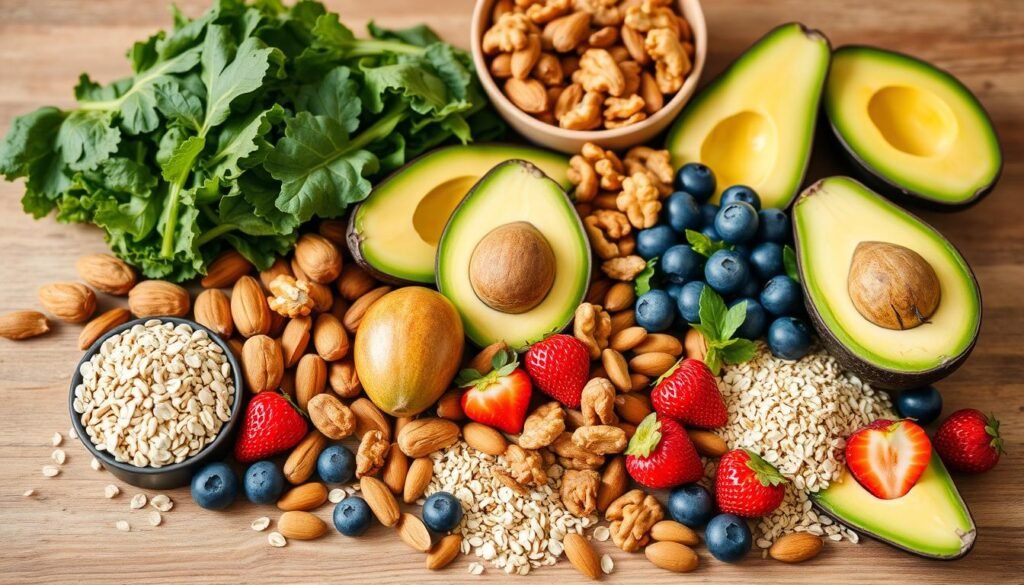
Healthy fats are important for heart health. Foods like avocados and olive oil raise good cholesterol. The American Heart Association advises eating fish twice a week for omega-3 fatty acids. These lower bad fats in the blood. Nuts are also good for keeping cholesterol in check.
Fiber-Rich Foods
Foods high in fiber can lower cholesterol. Aim for at least 5 to 10 grams of soluble fiber a day to reduce bad cholesterol. Oats, beans, lentils, and fruits are great for adding fiber. Adding these foods to your diet improves heart health.
Whole Grains and Vegetables
Diets rich in whole grains and veggies help manage cholesterol. Whole grains balance blood sugar and provide vital nutrients. Vegetables are full of vitamins and minerals needed for health. Eating these food groups supports a cholesterol-lowering diet. Discovering whole grains and veggies also adds variety to meals.
The Role of Exercise in Cholesterol Management
Getting regular exercise is key for managing cholesterol well. Aim for 150 minutes of activities like walking or biking each week. These not only keep you fit but also help your heart by keeping cholesterol in check.
In 2021, a study showed that swimming for 16 weeks helped lower cholesterol in people with diabetes and high blood pressure. Cycling to work for a year also reduced cholesterol levels. Making exercise part of your daily life brings big health benefits.
Exercise boosts “good” cholesterol, known as HDL. Higher HDL levels get rid of bad cholesterol in your blood. This cuts down the risk of heart diseases. Running even a little bit can lower the risk of heart-related deaths by 30%.
Lifting weights is good for cholesterol too. Doing strength exercises two days each week increases muscle and metabolism. It also betters cholesterol levels. Mixing cardio with strength training is best for cholesterol management.
On your cholesterol management journey, mix exercise with healthy eating. Together, they work best for keeping cholesterol and heart health on point.
Maintaining a Healthy Weight
Maintaining a healthy weight is crucial for managing cholesterol. It helps keep LDL and HDL cholesterol levels in check. Those who are overweight often struggle with cholesterol management. To stay at a healthy weight, regular check-ups and lifestyle changes are key.
Calculating Your Body Mass Index (BMI)
The Body Mass Index (BMI) is a useful tool for checking if you’re at a healthy weight. It measures your weight in relation to your height. Knowing your BMI can alert you to possible weight-related health issues.
| BMI Range | Category |
|---|---|
| Under 18.5 | Underweight |
| 18.5 – 24.9 | Normal weight |
| 25.0 – 29.9 | Overweight |
| 30.0 and above | Obesity |
Working with healthcare providers to create health goals based on BMI is helpful. Remember, BMI is just a part of your overall health picture.
Cholesterol Medications: What You Need to Know
Managing high cholesterol isn’t just about eating well and exercising. Often, cholesterol medications, such as statins, are needed to keep levels in check. Health experts suggest keeping total cholesterol under 200 milligrams per deciliter (mg/dL). And for LDL or “bad” cholesterol, under 100 mg/dL is best. People at higher risk for heart problems might aim for under 70 mg/dL.
Statins are key for controlling cholesterol because they effectively lower levels. They also decrease the chances of heart attacks and strokes. Most people can use these drugs without problems, though about 5% may feel muscle pain. But serious muscle damage is very rare. Sometimes these drugs can raise liver enzymes or blood sugar, which doctors keep an eye on.
Some people worry about side effects like muscle aches or issues with memory. Healthcare teams can tackle these by changing doses, trying different statins, or even stopping treatment briefly. Talking with a healthcare provider is crucial for personalized cholesterol care. This approach helps manage cholesterol safely.
| Medication Type | Target Cholesterol Level | Potential Side Effects |
|---|---|---|
| Statins | LDL | Muscle pain, liver enzyme increases, blood sugar elevation |
| Bile Acid Sequestrants | LDL | Constipation, bloating |
| Cholesterol Absorption Inhibitors | LDL | Stomach pain, diarrhea |
| PCSK9 Inhibitors | LDL | Injection site reactions, flu-like symptoms |
Working with Your Healthcare Team
Managing your cholesterol means talking often with your healthcare team. Working with a doctor helps you understand your cholesterol levels. It also helps find the right lifestyle changes and medications. Checking your health often is key to keeping an eye on cholesterol and heart health.
Talk with your healthcare team about what you eat and your medicines. This helps them see how other health issues might affect your cholesterol plan. Always come to appointments with a list of questions. This makes sure you get all your concerns talked about.
It’s important to know your cholesterol goals. Your LDL cholesterol should be under 100 mg/dL. Your HDL should be 60 mg/dL or more. You should get checked every 4 to 6 years to stay on track. If you’re at higher risk, you might need checks more often.
| Cholesterol Goals | Target Level (mg/dL) |
|---|---|
| LDL Cholesterol | Less than 100 |
| HDL Cholesterol | 60 or higher |
| Triglycerides | Less than 150 |
| Total Cholesterol | Less than 200 |
Making changes like eating heart-healthy, losing weight, and stopping smoking is key. Working with a healthcare team helps you make wise choices. Together, you work to lower heart disease risk and boost your health.
Conclusion
To manage high cholesterol well, it’s important to know what to avoid. Things to avoid with high cholesterol include certain foods. By choosing the right foods, people can lower their risk of heart disease. It’s key to steer clear of saturated fats, trans fats, and processed foods.
Choosing healthy foods is crucial for better cholesterol management. This leads to improved heart health.
Adding exercise to your day is also important. Research shows that 30 minutes of moderate activity most days can help. It raises good HDL cholesterol and lowers bad LDL cholesterol. Yoga and other activities are good for the heart too.
This holistic approach is key for managing cholesterol well. Being active in heart health care is important. High levels of LDL cholesterol can lead to heart attacks and strokes.
Working with healthcare providers is crucial for successful cholesterol management. They help with regular check-ups, diet tips, and exercise plans. A healthy lifestyle is the base of good heart health. It helps people take control of their heart health now and later.