Did you know 3.5 ounces of raw squid has 231 mg of cholesterol? This info shocks many who love calamari. Calamari, the culinary name for squid, is loved for starters and main dishes. But, some worry about its cholesterol impact on heart health. They wonder if they should eat less seafood like calamari.
This article explores calamari’s health benefits and its cholesterol levels. We’ll look at its nutrition, how much to eat, and best cooking methods. This guide helps you decide if calamari is good for your diet. For more seafood tips, check out this article.
Key Takeaways
- Calamari has a lot of cholesterol, so eat it in moderation.
- Choose grilled squid over fried calamari for a healthier option.
- A 100g serving of calamari uses up 90% of your daily cholesterol limit.
- Calamari is rich in omega-3 fats and vitamins.
- Pregnant women and kids should watch their calamari intake due to mercury.
Understanding Calamari
Calamari comes from the Italian word for squid. It stands out for its wide use in cooking. You can find it in dishes like fried calamari, pasta, and salads, loved in many food traditions. Its great taste and soft texture make any dish better, attracting fans with its unique appeal.
For centuries, squid has been favored in Europe, where it’s often caught and eaten. The European squid and the Argentine shortfin squid are among the top kinds caught. They are famous worldwide. Calamari can be made in many ways, so chefs love to use it. Whether it’s fried until crispy or grilled with herbs, there are countless dishes to try.
The way to prepare calamari can change a lot, fitting many tastes. You can marinate, bread, sauté, or grill it, making it versatile in cooking. Also, understanding the difference between calamari and octopus is interesting. They may seem similar but taste and feel very different in meals.
Calamari is not just tasty but also good for you. It’s low in calories but packed with important nutrients, making it heart-friendly. Eating calamari fits well with health advice on seafood. It helps people stay healthy without worrying much about mercury.
Calamari Nutrition Facts
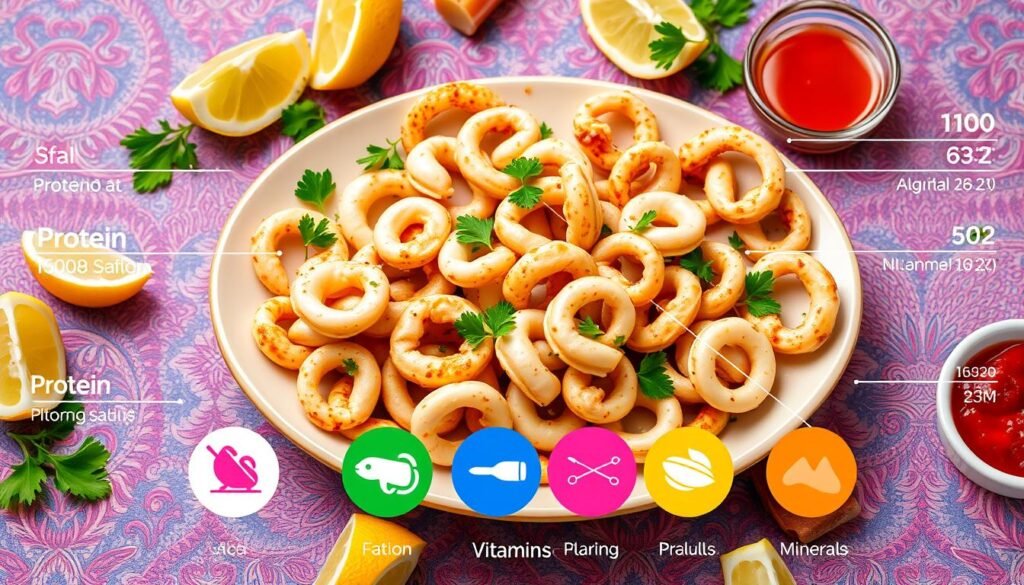
Calamari is a healthy seafood choice. It’s low in calories but high in protein. A 3-ounce serving has about 80 calories and 15 grams of protein. This makes calamari great for boosting protein intake without adding many calories.
Every 100 g serving of calamari contains roughly 90 calories, 1.5 g of fat, and 16 g of protein. It has 3 g of carbohydrates, no sugar, and no dietary fiber. Important vitamins and minerals in calamari include 0.4 g of saturated fat, 263 mg of cholesterol, 0.77 mg of iron, and 20.00 mg of calcium.
The cholesterol in calamari is high, with an 88% Daily Value in a 100 g serving. Cooked as fried calamari, the cholesterol rises to about 294.8 mg in a 4-ounce portion. It’s important to think about how calamari is cooked because it impacts its nutritional value.
Steamed or boiled calamari contains about 507.1 mg of cholesterol per serving. Dried Korean squid has up to 895.9 mg in just 2 ounces. These numbers show how cooking methods change calamari’s nutrition.
Calamari is packed with nutrients like vitamin B12 which is crucial for nerve and immune function. Omega-3 fatty acids in calamari help maintain heart health. They lower triglyceride levels and reduce blood pressure. Adding calamari to your diet can offer numerous benefits.
| Nutritional Component | Value per 100 g |
|---|---|
| Calories | 90 |
| Protein | 16 g |
| Fat | 1.5 g |
| Carbohydrates | 3 g |
| Saturated Fat | 0.4 g |
| Cholesterol | 263 mg |
| Iron | 0.77 mg |
| Calcium | 20.00 mg |
Health Benefits of Calamari
Calamari is not just tasty but also packed with nutrients. A small 4-ounce portion has about 39 grams of protein. This is great for building muscles. It’s rich in essential nutrients like vitamin B12, potassium, copper, and iron. They are key for our body to work well. Plus, calamari has more choline than eggs, boosting brain health and memory.
Though calamari has lots of cholesterol, eating it has many benefits. But it’s important to watch how much you eat. Studies suggest it can help prevent anemia due to its copper content. A serving has around 507 milligrams of cholesterol, which is high. So, use cooking methods that keep it healthy.
Calamari is also loaded with vitamins and minerals. It provides about 482 milligrams of potassium per serving, which is 10% of what you need daily. It also has magnesium and zinc. These support your immune system and metabolism. And calamari is low in calories, making it a smart choice for those watching their weight.
Looking for fresh calamari? City Fish Market has a wide range of seafood, including squid. Eating a variety of seafood can boost your nutrition and lead to a healthier life.
Is Calamari High in Cholesterol
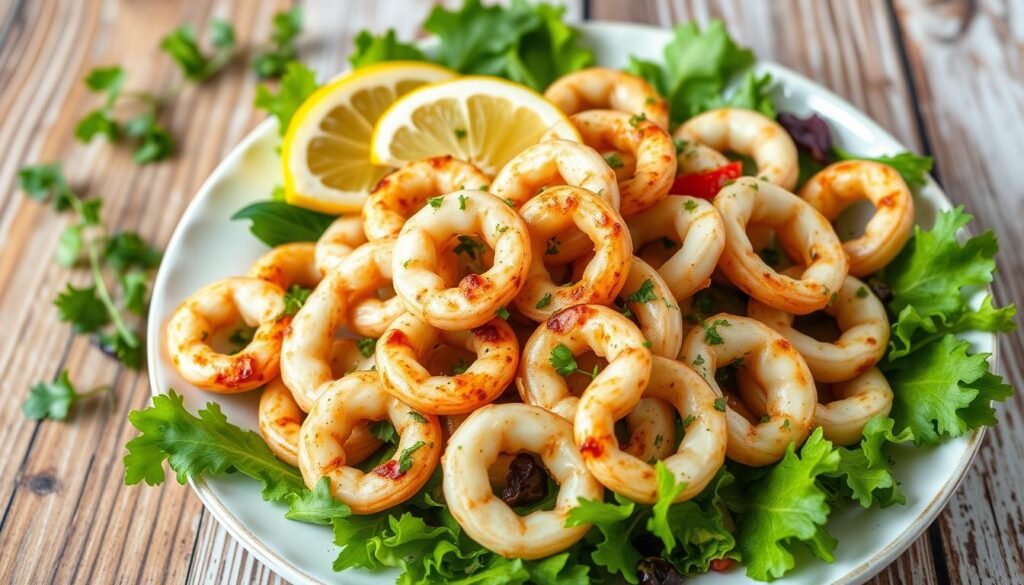
Calamari is loved in many foods around the world. But many wonder about its cholesterol. If you’re health-minded, it’s important to know both its calories and nutrients.
Cholesterol Content Comparison
A 3.5 oz serving of raw squid has about 231 mg of cholesterol. Meanwhile, the same serving of uncooked octopus has 164 mg. If the squid is grilled, it has 198 mg of cholesterol per 100 grams. So, while calamari is high in cholesterol, some seafood and meats have even more.
| Food Item | Cholesterol (mg) per Serving | Protein (g) per Serving |
|---|---|---|
| Calamari (3 oz) | Approximately 150 | 13-15 |
| Uncooked Octopus (3 oz) | 164 | 20 |
| Grilled Squid (100g) | 198 | 13.2 |
| Raw Squid (3.5 oz) | 231 | Approximately 15 |
Recommended Daily Limits
Watching your cholesterol is vital. Aim for less than 300 mg a day, or under 200 mg if you’re at heart disease risk. Given calamari’s cholesterol, enjoying it in moderation is wise for those who love seafood.
The Impact of Cholesterol on Health
Knowing how cholesterol affects health is key to staying healthy. High cholesterol can lead to heart disease and more. There are two kinds: LDL, or “bad” cholesterol, and HDL, or “good” cholesterol. LDL can clog arteries, but HDL helps clean the blood, improving health.
Diet plays a big part in cholesterol levels. Foods rich in saturated and trans fats raise cholesterol. Eating fish and seafood helps. They have little saturated fat and offer omega-3 fats. These can lower bad fats and increase HDL. It’s good to eat fish like salmon twice a week.
Those watching their cholesterol should know which foods to eat. Eating some shellfish, like shrimp and calamari, can boost HDL. For example, shrimp has 161mg of cholesterol per serving but can improve cholesterol balance if eaten wisely.
To learn more about managing cholesterol with food, check out healthy dietary choices.
Calamari and Heart Health
Calamari is not only tasty but also good for your heart. It has a lot of potassium, which is important for your heart to work right and to keep your blood pressure stable. Eating enough potassium helps fight the bad effects of sodium and supports a healthy heart.
Potassium and Heart Function
Potassium is a key mineral that helps your heart beat regularly. It reduces the danger of high blood pressure, leading to heart disease. Including potassium-rich foods like calamari in your diet helps you meet your daily needs. Adults should aim for 2,500 to 3,000 mg of potassium a day through various foods.
The Role of Omega-3 Fatty Acids
Omega-3 fatty acids protect your heart. Calamari has some omega-3s, but fish like salmon have more. These fats can lower bad fats in your blood, ease inflammation, and cut down heart disease risk. Foods and supplements with EPA and DHA omega-3s, like Standard Process Calamari Omega-3 Liquid, are good for your heart.
| Food Item | Cholesterol Content (mg) | Omega-3 Content (mg) |
|---|---|---|
| Calamari (3.5 oz) | 231 | Varies |
| Standard Process Calamari Omega-3 Liquid (1 tsp) | 110 | 800 (DHA) + 400 (EPA) |
| Salmon (3.5 oz) | 63 | 2,260 |
| Beef Liver (3.5 oz) | 389 | 0 |
It’s vital to have a good balance of potassium and omega-3s for heart health. Even though calamari is beneficial, you should eat it in moderation because of its cholesterol. Knowing how calamari helps your heart lets you make smarter food choices.
Incorporating Calamari into Your Diet
Eating calamari can be a tasty way to get more protein with little fat. A 3-ounce piece has about 15-18 grams of protein. This makes calamari a great choice for a healthy meal.
- Grilled or Roasted Calamari: Flavor it with herbs and spices and grill it. This brings out its natural taste.
- Calamari Salad: Mixing it into a salad with greens, tomatoes, and a light dressing makes a healthy meal.
- Stir-fried Calamari: Add it to stir-fries with veggies for a colorful, nutrient-rich dish.
- Calamari Tacos: Make tacos with calamari, avocado, and salsa for a delicious meal.
Remember, it’s best to eat calamari in moderation. Avoid frying to keep it heart-healthy. Try grilling, baking, or steaming instead.
Pair calamari with foods like olive oil, lemon, and veggies. This makes your meal more heart-healthy and tasty. Calamari is a good choice for a balanced and enjoyable diet.
| Nutritional Component | Content per 100g |
|---|---|
| Protein | 15.6g |
| Vitamin B-12 | 1.05mcg |
| Potassium | 221mg |
| Selenium | 44mcg |
| Iron | 0.68mg |
| Omega-3 Fatty Acids | High |
Calamari is a healthy and flexible food option. Use different cooking methods and pair it with nutritious foods. This ensures calamari stays a tasty and healthy part of your diet.
Moderation: The Key to Enjoying Calamari
Enjoying calamari is all about balance. This tasty seafood is healthy but has a lot of cholesterol. A small serving of squid packs about 231 mg of cholesterol. So, watching how much you eat is key, especially for heart health.
Adding calamari to a well-rounded diet lets you enjoy its flavor without going overboard. Try to eat it just a few times a month. Mix it up with fruits, veggies, and whole grains for better nutrition.
It’s good to keep an eye on your cholesterol, especially if you have heart concerns. The American Heart Association says to aim for less than 300 mg of cholesterol daily. This way, you can enjoy calamari and still look after your heart.
- Opt for grilled calamari instead of fried to lower cholesterol intake.
- Pair calamari with high-fiber foods like salads or whole grains.
- Eat other high-cholesterol foods, like liver or shrimp, in moderation.
By these tips, you can enjoy calamari and maintain a heart-healthy lifestyle. Eating this dish moderately lets you savor its benefits without harming your health.
Conclusion
Looking into calamari shows it’s packed with good stuff. It’s full of high-quality protein, vitamins, and minerals. This makes it great for a balanced diet. But, it’s got a bit of cholesterol—about 400 milligrams in a 3-ounce serving. Even so, eating it in moderation won’t hurt your health.
It’s good to eat calamari a few times a week. This fits with seafood eating guidelines. Choose to grill or steam it to keep it healthy. That way, you get to enjoy its yummy taste without adding bad fats. Keeping an eye on how it’s cooked can help you enjoy calamari’s benefits while watching cholesterol.
So, calamari is a great choice for tasty and healthy eating when used wisely. Mixing things up and cooking it carefully means it can be part of eating well. Enjoying calamari the right way can boost your meals and health together.