Did you know that drinking milk in moderation might actually lower your chance of heart disease by 14%? This fact adds to the debate about milk’s effect on cholesterol. People often ask: does milk raise cholesterol levels? While dairy has fats that some think could increase cholesterol, milk is full of important nutrients like calcium, vitamin D, and protein. Most of the cholesterol in our bodies doesn’t come from what we eat. This raises interesting questions about milk and cholesterol. In this article, we’ll explore the relationship between dairy products and cholesterol. We’ll provide facts to help you make better food choices.
Key Takeaways
- Moderate milk intake may lower the risk of coronary heart disease.
- Whole milk contains fat, cholesterol, and essential nutrients, impacting health.
- Non-dairy alternatives like almond, soy, and oat milk offer different nutritional benefits.
- Understanding the types of milk can help in making heart-healthy choices.
- Consumption of dairy should be moderated along with the avoidance of unhealthy fats.
Understanding Cholesterol and Its Importance
Cholesterol is key for good health, acting as a waxy substance in all body cells. It’s needed for producing hormones, vitamin D, and substances for digestion. But, it’s important to keep cholesterol levels healthy. High cholesterol can lead to heart disease and stroke. Knowing about cholesterol types and their effects can guide health decisions.
What is Cholesterol?
Cholesterol is a fat found in the blood, essential for the body’s functioning. Yet, too much cholesterol poses risks. High levels of certain types, like non-HDL and LDL, can cause artery blockages. That’s why regular testing is crucial to understand and manage cardiovascular health.
The Different Types of Cholesterol
There are two main cholesterol types: LDL and HDL. LDL is the “bad” kind, creating fatty deposits in arteries. HDL is the “good” kind, clearing LDL from the blood. Balancing them is key to avoiding health issues. By changing lifestyle and keeping an eye on cholesterol, risks can be lowered. For tips on managing cholesterol, click here.
Exploring the Relationship Between Milk and Cholesterol
Dairy products and their impact on health have always sparked debate, especially about cholesterol. Knowing what’s in these products helps us understand how they affect health. This is crucial for people watching their cholesterol.
Dairy Products and Their Nutritional Profile
Dairy goods are packed with nutritional benefits. They have calcium, potassium, protein, and vitamins. Full-fat versions have more saturated fat and cholesterol. Reduced-fat or skim options contain less. The American Heart Association suggests eating less saturated fat. They recommend less than 6% of your daily calories come from this fat. For a 2,000-calorie diet, that means only 11 to 13 grams of saturated fat a day.
Impact of Milk Consumption on Cholesterol Levels
Drinking milk in moderation usually doesn’t raise cholesterol much. In fact, sticking to milk might lower both bad and good cholesterol levels. A big study found milk drinkers had a 14% lower risk of heart disease. Some milk drinkers, especially those with certain genes, had less cholesterol but a higher BMI.
The link between milk, cholesterol, and weight is still being studied. Researchers think there might be a special ‘milk factor’ at play. They’re digging deeper into how dairy affects our cholesterol.
| Dairy Product Type | Saturated Fat (grams per serving) | Cholesterol (mg per serving) | Nutritional Benefits |
|---|---|---|---|
| Whole Milk | 5.0 | 24 | Rich in calcium, potassium, vitamin D |
| 2% Reduced Fat Milk | 3.0 | 20 | Moderate calcium and vitamin D content |
| Skim Milk | 0.2 | 5 | Low fat, high calcium, beneficial for weight management |
| Ricotta Cheese | 6.0 | 50 | High in protein, calcium, and vitamin A |
Does Milk Cause High Cholesterol?
People often wonder if drinking milk can raise their cholesterol. Most studies suggest that milk and other dairy products don’t greatly increase cholesterol in most people. It turns out, our livers adjust cholesterol production based on what we eat. This means drinking milk in moderation shouldn’t cause cholesterol problems for most.
The Science Behind Dietary Cholesterol and Blood Levels
Not everyone reacts the same to foods rich in cholesterol. In America, about 94 million adults have high cholesterol. This can lead to heart disease and stroke. Research shows saturated fats in some dairy can increase bad cholesterol. But, milk might not have the same effect. Diet quality and how your body reacts to fats play a big role.
Genetics and Their Role in Cholesterol Management
Genetics affect how our bodies handle cholesterol. For some, a genetic condition makes cholesterol spike when eating foods rich in cholesterol. If you have this condition, picking low-fat dairy is wise. Adding milk, cheese, and yogurt to a balanced diet works for many. Always consider what’s best for your health. For more on dairy and heart health, check out this article.
Types of Milk and Their Nutritional Differences
There are different types of milk, each with its own nutritional value. This is key for those watching their cholesterol and health. Whole milk, skim milk, and reduced-fat milk each offer various benefits.
Whole Milk vs. Skim Milk: The Differences
Whole milk and skim milk stand out among milk choices. They have big differences in calories and fat. Whole milk has about 150 calories and 8 grams of fat per serving. It’s richer.
On the other hand, skim milk has around 80 calories and almost no fat. It’s a lower-fat choice. These differences matter for diet planning, especially with cholesterol in mind.
Understanding Reduced-fat and Nonfat Milks
Reduced-fat milks, like 1% and 2% milk, offer a balance in nutrition. 1% milk, for example, has roughly 110 calories and 2 grams of fat. It’s important to understand these options.
Nonfat milk has about 80 calories, similar to skim milk. It also has lower cholesterol, making it a good pick for heart health.
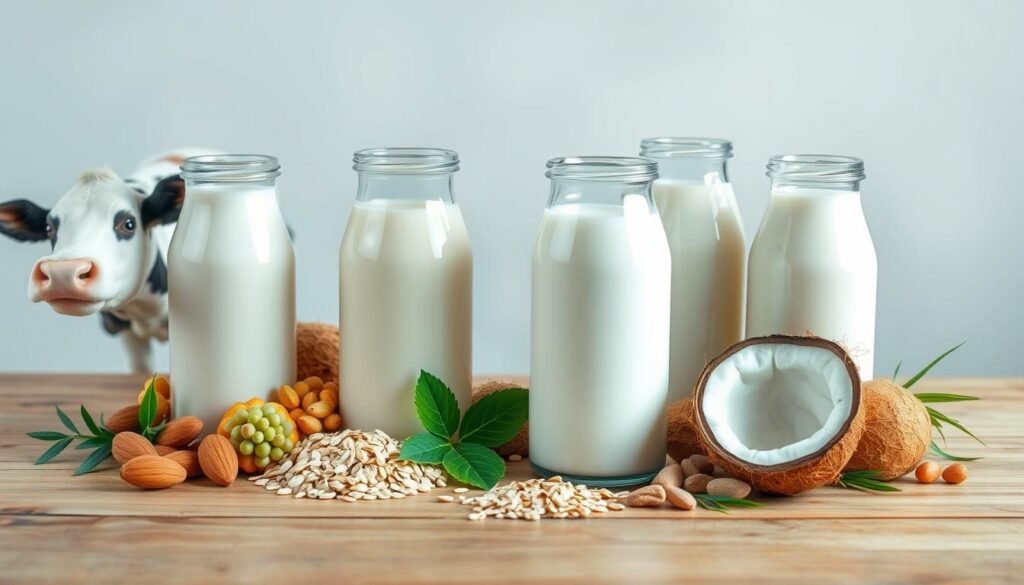
| Type of Milk | Calories (8 oz) | Fat (grams) | Cholesterol (mg) |
|---|---|---|---|
| Whole Milk | 150 | 8 | 24 |
| 1% Milk | 110 | 2 | 10 |
| Skim Milk | 80 | 0 | 7 |
| Nonfat Milk | 80 | 0 | 7 |
Looking at these milks helps us make better food choices, especially for cholesterol control.
The Role of Saturated Fats in Dairy Products
Saturated fat in dairy has been a hot topic lately, especially when we talk about heart health. It’s crucial to understand how whole milk saturated fat affects cholesterol. Dairy items like whole milk are rich in saturated fat. This fat can change LDL and HDL cholesterol levels.
Whole Milk and Saturated Fat Content
Whole milk stands out because it’s richer in saturated fat than low-fat or non-fat milk. A single serving of whole milk has a lot of saturated fat. This matters for those keeping an eye on their cholesterol. Health experts say to keep saturated fats under 10% of your daily calories, or less than 22 grams on a 2,000-calorie diet. Picking milk with less fat can help control saturated fat intake.
Effects of Fat Content on LDL and HDL Cholesterol
The LDL HDL cholesterol effects vary by the fat content in dairy. Full-fat dairy might boost HDL cholesterol, which is good for the heart. But, it can also raise LDL cholesterol, like lower-fat dairy does. Yet, fermented dairy like yogurt can be heart-friendly and not harm cholesterol levels. Choosing between full-fat and reduced-fat dairy should match personal health goals and cholesterol concerns. For tips on cholesterol and diet, check out this guide.
Alternative Milk Options and Their Health Impacts
More people are choosing alternative milk for its health and environmental benefits. Types like soy, almond, and oat milk are popular dairy alternatives. They offer unique nutrients to meet different dietary needs and tastes.
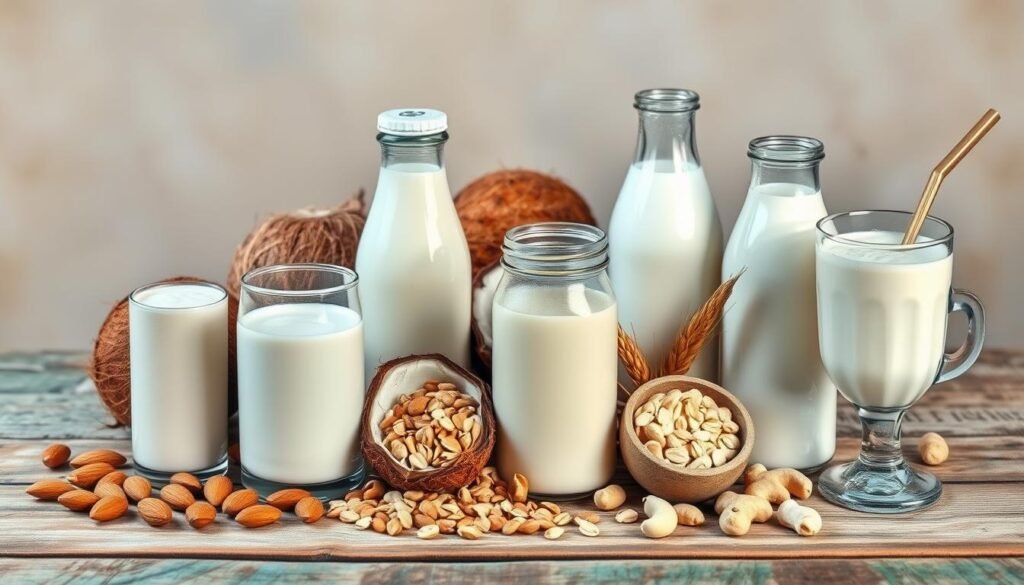
Plant-Based Milks: Soy, Almond, and Oat Milk
Soy milk is known for its complete protein. An 8-ounce serving has about 38 calories, 3.5 grams of protein, and 2 grams of fat. It is also fortified with vitamins B12 and D. This makes soy milk a top choice among alternative milks.
Almond milk is another option, with around 41 calories per serving. It’s low in fat and carbs, making it good for losing weight. Oat milk’s popularity has soared, with a 71% sales jump in one year. It’s creamy, cholesterol-free, and rich in heart-healthy soluble fibers.
Comparative Cholesterol Levels in Non-Dairy Milks
Non-dairy milks like soy and almond don’t contain cholesterol. This is great for those trying to lower their cholesterol levels. Oat milk also supports heart health with its soluble fiber. These alternative milks meet the demand for nutritious options that support low-cholesterol diets.
For those interested in the health effects of plant-based milks, detailed information is available. Check it out through this source.
Milk and Heart Health: What the Research Says
Recent studies focus on how milk and heart health are connected. They show a tricky relationship between dairy and heart well-being. It seems that drinking milk in moderation might be good for us.
Looking into these studies helps us understand milk’s impact on cholesterol and heart health.
Studies Linking Dairy Consumption with Cardiovascular Health
A big study with nearly two million people found milk doesn’t make cholesterol levels go up. People who can easily digest lactose had better cholesterol levels. Plus, those who drank milk were 14% less likely to get heart disease.
Some studies even say certain dairy fats might protect us from stroke and heart problems. This fits with more research. It shows dairy might help keep our hearts healthy.
Moderation in Dairy Intake: Key Takeaways
It’s getting clear that dairy has its perks, but don’t go overboard. Milk packs nutrients like calcium and magnesium that are good for the heart. This is true if we don’t have too much.
Eating a balanced diet with just the right amount of dairy might help our cholesterol. It could also boost our heart health. So, keeping dairy moderate is part of living heart-smart.
Practical Dietary Recommendations for Cholesterol Management
For those keeping an eye on cholesterol, the choice of milk matters a lot. Go for fat-free or skim milk to cut down cholesterol. Adding foods high in fiber and healthy fats is also great for your heart’s health. It’s best to choose foods low in saturated fats. This helps follow cholesterol management advice and keeps your nutrition balanced.
How to Choose the Right Type of Milk
Looking at milk’s fat content is important. Fat-free milk is a great choice to keep saturated fats low. Always read the labels to make sure dairy fits heart-healthy guidelines. Here’s what to keep in mind:
- Choose fat-free or low-fat milk to cut down on saturated fat.
- Try soy or almond milk as healthy alternatives.
- Be cautious of added sugars in flavored milks, as they can raise cholesterol levels.
Incorporating Dairy in a Heart-Healthy Diet
When it comes to dairy for a heart-healthy diet, less is more. Dairy can be part of a healthful diet if balanced with other good-for-the-heart foods. Aim to:
- Have at least two servings of fish weekly to lower triglycerides and increase HDL cholesterol.
- Eat 5 to 10 grams of soluble fiber daily from fruits, veggies, and whole grains to lower LDL cholesterol.
- Keep saturated fats under 7% of your daily calories to help with cholesterol.
While making these diet choices, it’s wise to check your cholesterol levels regularly. For more advice on lowering cholesterol, see the American Heart Association’s guidelines.
| Milk Type | Fat Content | Cholesterol Impact |
|---|---|---|
| Whole Milk | 3.25% fat | Its high saturated fat can raise LDL cholesterol levels. |
| Skim Milk | 0% fat | Being lowest in saturated fat, it’s good for lowering LDL cholesterol. |
| Almond Milk | Varies (usually low) | It’s generally low in saturated fat, and fortified types offer more nutrition. |
Common Misconceptions About Milk and Cholesterol
There are many wrong ideas about milk and its cholesterol. It’s key to know that dairy products impact cholesterol differently. The fat in various types of milk matters a lot in terms of cholesterol. For example, whole milk has a lot of fat, making it seem bad for cholesterol levels.
On the other hand, 2-percent milk has less fat. And 1-percent milk has even less fat than that. This means people have many options depending on their health goals and dietary needs.
Do All Dairy Products Affect Cholesterol the Same Way?
This question is very important when talking about dairy. Studies say that most people don’t react much to dietary cholesterol. These folks, called compensators, don’t see a spike in cholesterol from eating full-fat dairy.
But, a few people, known as hyper-responders, are sensitive to it. They are in the minority, though.
Clarifying Myths About Milk and Heart Disease Risks
There are myths that milk could lead to heart disease. But, research doesn’t show a clear link between eating saturated fat and getting heart disease. Foods high in fat, like eggs, avocados, and full-fat dairy, can be good for you.
For instance, milk is often wrongly said to be bad for the heart. Yet, having dairy in moderation can help bones and help you feel full. This helps with weight control. Knowing the true effects of dairy on cholesterol can help people choose their food wisely.
Conclusion
The link between drinking milk and cholesterol levels is complex. For people with certain health issues, it’s important to watch how much dairy you consume. But for most, eating dairy in moderation, especially low-fat products, is okay. It won’t harm your cholesterol levels. Knowing about cholesterol, different kinds of milk, and diet tips helps make smart heart-health choices.
Studies show dairy might even lower the risk of heart disease. For example, eating yogurt can cut your risk by 22%. Dairy in general may reduce heart problems by 22% and the chance of a stroke by 34%. These facts shift the debate on milk and cholesterol. They show us the heart benefits of dairy.
In summary, the key is balance and variety in what we eat. Including foods like yogurt and cheese in your diet can be good for your heart. They can help with cholesterol worries and improve your health overall.