Did you know a 4-ounce serving of raw octopus has about 30% of your daily cholesterol need? With more people caring about health, it’s key to know what’s in seafood. This article looks at octopus cholesterol and other nutritional facts. Octopus offers lean protein, vitamins, and minerals, making it a healthy choice in many cultures.
But, we should look at some concerns too, like cholesterol and sodium levels. We’ll also touch on heavy metal risks. This info helps you decide if octopus is good for your diet.
Key Takeaways
- Octopus is a rich source of lean protein and essential nutrients.
- A 4-ounce serving provides 30% of the daily recommended cholesterol intake.
- It is high in sodium, which can impact heart health if consumed excessively.
- Octopus is low in mercury compared to other seafood options.
- The nutritional content varies based on preparation methods.
Introduction to Octopus
The octopus is a fascinating sea creature without bones. It is known for its interesting qualities and smart brain. This marine animal lives in many oceanic places and is important for food in different cultures. In Asia-Pacific and Mediterranean areas, it is especially loved for its unique taste in many dishes. It is seen as a special food that many people around the world enjoy.
Many want to know about the health benefits of eating octopus. They look at its cholesterol and what good nutrients it has. Click here to learn about the octopus’s nutritional. This seafood is packed with health perks. For example, grilled octopus has about 25 grams of protein per 100 grams. It’s great for muscles and repairs them, too. Plus, it has omega-3 fatty acids. These are good for the heart because they lower triglycerides.
Around the world, octopus is cooked in many ways. Each place has its own way of making it and seasoning it. This shows how versatile octopus can be. When eating octopus, it’s good to check how much sodium is in it. About 230 milligrams are in a 100-gram serving. Knowing this helps people choose wisely when adding octopus to their meals.
| Nutritional Component | Per 100 grams |
|---|---|
| Protein | 25 grams |
| Cholesterol | 95 milligrams |
| Sodium | 230 milligrams |
| Taurine | 448.5 mg |
| Omega-3 Fatty Acids | High levels |
| Net Carbs | 2.5 grams |
Octopus Nutrition Facts
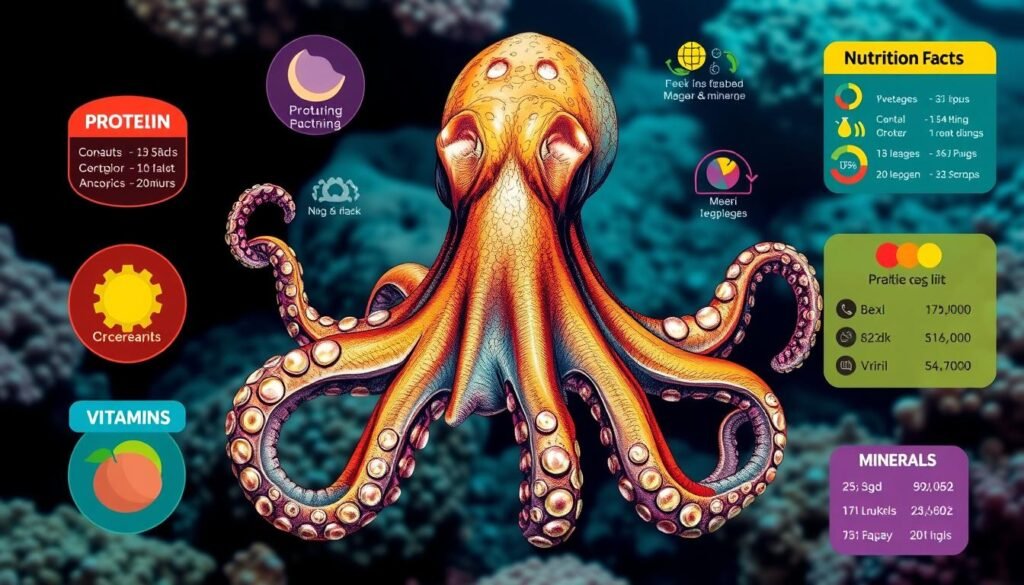
Octopus is full of nutrients and low in calories. A 3 ounce serving gives you about 139 calories. It’s packed with protein, around 25 to 31 grams. That’s 62% of what you need every day.
This seafood is great for those wanting less fat, with only 2 grams per serving. It has a bit of saturated fat, 0.5 grams, and 102 mg of cholesterol. So, it’s a top choice for healthy diets that focus on lean protein.
Octopus is rich in vitamins and minerals too. It’s especially high in Vitamin B12, offering 950% of what’s recommended daily. Vitamin B12 helps with absorbing iron and keeping nerves healthy. Plus, there’s 9.1 mg of iron per serving to help avoid anemia.
There are also minerals like calcium (106 mg) and potassium (465 mg) in octopus. They’re good for bones and muscles. The balance of sodium and potassium is great after working out. Omega-3 fatty acids in octopus, at 0.34 g per serving, are good for the heart.
Check out this summarized table for a quick view of octopus nutrition:
| Nutrient | Amount per 106g Serving | % Daily Value |
|---|---|---|
| Calories | 173 | 8% |
| Protein | 31g | 62% |
| Fat | 2.2g | 3% |
| Saturated Fat | 0.5g | 3% |
| Cholesterol | 102mg | 34% |
| Iron | 9.1mg | 30% |
| Calcium | 106mg | 11% |
| Potassium | 465mg | 13% |
| Vitamin B12 | 950% DV | 950% |
| Omega-3 Fatty Acids | 0.34g | N/A |
Is Octopus High in Cholesterol?
Understanding the cholesterol content in octopus is important for a healthy diet. Octopus has about 48 mg of cholesterol per 100 grams. This is a moderate amount and may be fine for those watching their intake. It gives over 30% of the daily limit, so some wonder if it’s high in cholesterol. Compared to many other meats and seafood, its cholesterol level is on the lower side.
Understanding Cholesterol in Octopus
Dietary cholesterol, like that in octopus, might not affect blood cholesterol much, especially when compared to saturated fats. A typical octopus serving offers 160 calories and 30 grams of protein. It also gives more than half the daily need for iron per 100 grams. This makes octopus a good choice for a balanced diet. For more on what octopus offers, check out its nutritional values.
Comparative Cholesterol Levels in Seafood
Comparing seafood, octopus comes out as a better option.
| Seafood Type | Cholesterol (mg per 100g) |
|---|---|
| Octopus | 48 |
| Squid | 200 |
| Shrimp | 150-200 |
| Mussels | 60 |
| Scallops | 20-30 |
Octopus stands out as a healthier choice. It has less cholesterol than shrimp and squid. For those on a low-cholesterol diet but love seafood, octopus is a smart pick. It allows them to enjoy healthy, nutritious meals.

Health Benefits of Octopus
Octopus is widely praised in food cultures around the world. It’s known for being an octopus protein source that’s both lean and full of nutrients. This makes it a perfect choice for any meal plan.
Lean Protein Source
Octopus provides more than 25 grams of protein per serving and is low in fat. It’s ideal for those focused on weight loss or building muscle. In fact, you can get between 80 to 164 Kcal for every 100 grams you eat. This makes octopus beneficial for those watching their calorie intake.
Rich in Omega-3 Fatty Acids
Even though octopus doesn’t have as much omega-3 as some fish, it’s still a good source. Important fats like docosahexaenoic acid (DHA) and eicosapentaenoic acid (EPA) are found in it. These fats are great for your heart and can even help your brain work better. Adding octopus to your diet is a smart move for overall health.
Essential Vitamins and Minerals
Octopus is packed with important vitamins and minerals. For example, it’s a great source of Vitamin B12, which is necessary for making use of iron. It also gives you a good amount of selenium, iron, and potassium. These are key for things like making DNA and guarding against cell damage. Eating octopus can lead to better health because of its nutrient-rich profile.
Low Cholesterol Seafood Options
If you’re trying to eat well and keep your cholesterol low, you’ll find many seafood choices. Some seafood, like squid and shrimp, is high in cholesterol. But, there are others that are tasty and won’t make your cholesterol levels go up. Knowing these healthy seafood diet options is crucial for anyone wanting to eat better.
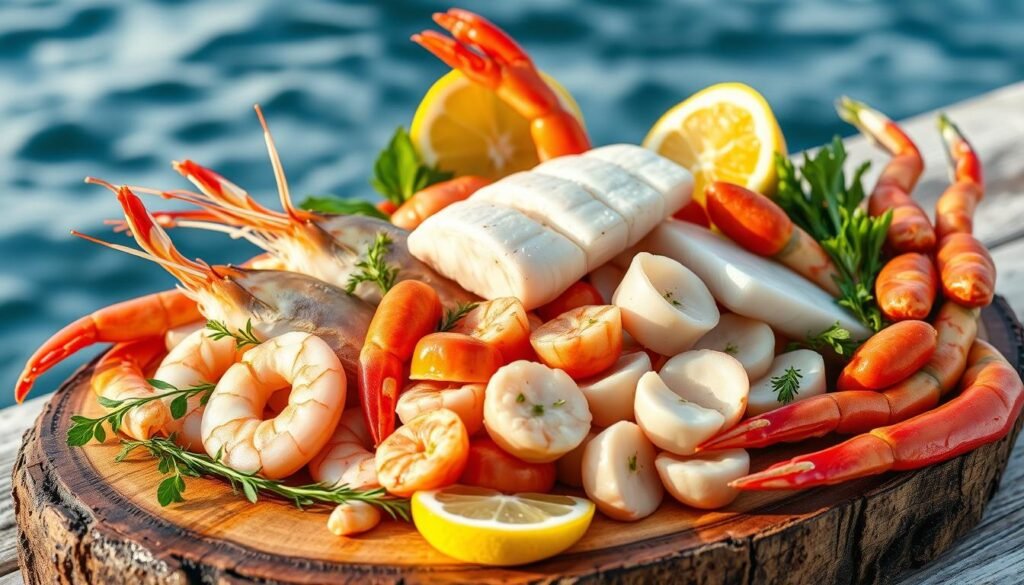
Low cholesterol options include fish like cod, haddock, and tilapia. These are good for those watching their cholesterol. These fish have less cholesterol and are full of important nutrients and omega-3s, which are good for your heart.
The American Heart Association suggests eating fish twice a week for the best health. This advice means adding different seafood alternatives to your meals regularly. Below, see a table that shows some of the best low cholesterol seafood and their cholesterol amounts:
| Seafood | Cholesterol (mg per 3.5 oz) | Key Nutrients |
|---|---|---|
| Cod | 54 | Protein, Vitamin B12 |
| Tilapia | 57 | Protein, Selenium |
| Haddock | 47 | Protein, Phosphorus |
| Shrimp | 194 | Protein, Vitamin B12 |
| Squid | 231 | Protein, Vitamin B12 |
Adding these low cholesterol seafood options to your diet supports heart health and lets you enjoy diverse flavors. Cook them by grilling, baking, or sautéing to keep their health benefits. For more about managing cholesterol with seafood, check out these tips. They offer advice on enjoying seafood in a healthy, balanced way.
Octopus Cooking Tips
Cooking octopus the right way adds to its flavor and texture. Using proper methods makes it tender and tasty. Let’s look at the top tips for cooking octopus:
Best Cooking Methods for Octopus
There are several key methods for cooking octopus:
- Boiling: Boil octopus for about 45 minutes to keep it moist and tender.
- Simmering: Simmering takes around 1 hour and makes the octopus soft.
- Grilling: After boiling, grilling for 3 minutes per side adds a crunchy layer.
- Pickling: Pickled octopus is a tasty choice in some cultures.
How Preparation Affects Nutritional Value
The way you cook octopus affects its nutrition. Fried octopus has more fat and calories. It usually has 160 calories per 100 grams. Boiling or simmering keeps it nutritious and tender. Too much cooking makes it chewy. Choosing how long to cook is key to a tasty and healthy dish. Octopus is a great source of nutrients.
Using the right cooking tips for octopus makes meals better and healthier. Whether you boil or grill, the right method improves your food experience.
Potential Downsides of Eating Octopus
Octopus has health benefits. Still, we need to look at potential drawbacks. It’s important to know the sodium content, especially for certain health issues.
Sodium and Heart Health Risks
Octopus can be high in sodium. Sometimes, it’s up to 25% of what you should have in a day. This can be a problem for people with high blood pressure or those who need to watch their salt intake. Too much sodium can risk heart health. So, knowing how much sodium is in octopus can help make better food choices.
Allergies and Ethical Considerations
Octopus is tasty and healthy but may cause allergic reactions for some. This is especially true for those allergic to shellfish, leading to severe reactions. Besides health issues, the way octopuses are caught raises ethical concerns. Octopuses are smart, making us think about how they’re treated when caught. Being aware of these points helps us think about our octopus eating choices.
Conclusion
Octopus is a nutritious seafood with lots of health benefits. It provides about 25 grams of protein per 100 grams. This makes it a great lean protein source for keeping muscles strong and growing. The omega-3 fatty acids in octopus help reduce inflammation and support a healthy heart.
It’s also packed with essential vitamins and minerals like selenium and zinc. These are important for a strong immune system. Plus, its low in calories and fat, perfect for weight management. Octopus is a smart addition for anyone looking to eat healthier.
By learning about its nutrients and trying different ways to cook it, people can enjoy octopus’s unique taste and texture. This is good for heart health too. For more on how octopuses manage cholesterol, see this important study. In short, octopus is a tasty choice for those mindful of their health.