Did you know losing just 3 percent of your body weight can greatly improve cholesterol levels? This shows how important diet and lifestyle changes are in handling high cholesterol. Millions of Americans deal with high cholesterol. So, it’s key to follow a heart-healthy diet that’s both tasty and good for you.
In this guide, you’ll find a high cholesterol meal plan easy to follow. It’s made to lower cholesterol and please your taste buds. You’ll learn about the different types of cholesterol and get to try many yummy low cholesterol recipes. This plan helps you take care of your heart health with confidence.
Key Takeaways
- A 3% weight loss can positively influence cholesterol levels.
- The meal plan is adaptable for daily caloric needs of 1,500 to 2,000 calories.
- Incorporating healthy fats and fiber can help lower cholesterol.
- Focus on whole grains, fruits, and vegetables for better heart health.
- Stay hydrated with appropriate water intake to support metabolic health.
- Meal options range from breakfast to supper, ensuring variety and satisfaction.
Understanding High Cholesterol
Cholesterol is a waxy substance important for our body. It is needed to make hormones, vitamin D, and to help digest foods. Our liver makes all the cholesterol we need. However, what we eat can change our cholesterol levels. Understanding cholesterol is about knowing the different types and their health effects.
What is Cholesterol?
Cholesterol comes in two main types: HDL and LDL. HDL, or “good” cholesterol, helps clear cholesterol from your blood. LDL, known as “bad” cholesterol, can clog arteries and lead to health issues. It’s important to keep these levels in balance.
The Role of Cholesterol in the Body
Cholesterol keeps cell membranes strong, helps produce hormones, and aids in using vitamins. But too much LDL cholesterol can be harmful. It might cause artery disease and raise heart risk. So, watching what you eat is key to staying healthy.
Types of Cholesterol: HDL vs. LDL
Knowing about cholesterol types helps us make better health choices. Let’s see how they compare:
| Type | Common Name | Role | Health Impact |
|---|---|---|---|
| HDL | Good Cholesterol | Helps remove cholesterol from the blood | Reduces risk of heart disease |
| LDL | Bad Cholesterol | Can build up in arteries | Increases risk of heart disease |
Check your cholesterol regularly to avoid risks. Eating well helps your heart stay healthy. Add more soluble fiber and healthy fats to your diet to manage your cholesterol better.
Health Risks Associated with High Cholesterol
It’s critical to understand the health risks of high cholesterol for heart health. High cholesterol leads to conditions like heart disease and stroke. A process called atherosclerosis occurs when plaque clogs arteries, restricting blood flow.
This increases the risks for heart issues and stroke. It shows why controlling cholesterol is vital.
Heart Disease and Stroke
Eating too much saturated and trans fats raises bad cholesterol. Foods such as processed meats and full-fat dairy are big contributors. To lower heart disease risk and avoid stroke, limit saturated fats to 5-6% of daily calories.
Trying heart-healthy diets like the Mediterranean, which focuses on plants, is good. It’s also important to regularly check your cholesterol since there are often no clear signs of high levels.
Other Health Concerns Related to High Cholesterol
High cholesterol also links to other issues like hypertension and diabetes. It affects overall health and various body functions. Sometimes, diet changes alone don’t lower cholesterol because of genetics and lifestyle factors.
Following nutritional guidelines helps maintain a balanced diet. For tips on managing high cholesterol with diet, visit this resource.
| Health Concern | Cholesterol Level Impact | Preventive Measures |
|---|---|---|
| Heart Disease | Elevated LDL levels lead to plaque formation. | Limit saturated fat; adopt a heart-healthy diet. |
| Stroke | Narrowed arteries restrict blood flow to the brain. | Regular monitoring and dietary adjustments. |
| Hypertension | High cholesterol can contribute to increased blood pressure. | Manage weight; engage in physical activity. |
| Diabetes | Associated risks with high cholesterol levels. | Maintain balanced blood sugar; regular health checks. |
Benefits of a Heart-Healthy Diet
A heart-healthy diet has many advantages. It lowers cholesterol and improves heart and overall health. It includes cholesterol-lowering foods that are key to a nutritious lifestyle.
Lowering Cholesterol Levels
A diet good for the heart is great for managing cholesterol. Foods high in fiber, healthy fats, and omega-3s help a lot. They reduce bad cholesterol and increase the good, keeping unhealthy fats low.
Improving Heart Health
Research says a good diet lowers heart disease risks. The Mediterranean diet, for example, cuts bad cholesterol by 20% to 30%. It focuses on fruits, veggies, grains, lean meats, and healthy oils, boosting overall health benefits.
Enhancing Overall Well-Being
A diet focused on heart health also lifts energy and mood. Over time, healthy eating habits contribute to better nutrition and happiness. For tips on adding these foods to your diet, check the 7-day meal plan.
| Nutritional Aspect | Recommended Guidelines |
|---|---|
| Saturated Fat | Limit to less than 6% of total daily calories (11-13g for a 2000 calorie diet) |
| Sodium Intake | Limit to 2,300mg daily; ideally 1,500mg |
| Protein Sources | Lean meats, fish rich in omega-3, legumes, low-fat dairy |
| Fiber Intake | Aim for 28g daily |
| Total Nutrient Range | 60g protein, 142g carbohydrates, and 52g fat per day in meal plan |
High Cholesterol Meal Plan
Making a meal plan for high cholesterol means thinking carefully about what you eat. It’s important to focus on meals that have a lot of nutrients but not too many calories. This way, you can take care of your heart by eating a mix of fruits, veggies, and whole grains. Most people aim for about 1,500 calories each day, but you can change this to fit your own needs.
Overview of the Meal Plan
This plan focuses on soluble fiber because it helps lower bad cholesterol. You should make sure half of what you eat is made up of colorful fruits and vegetables. This will give you many vitamins and minerals. By eating oats, barley, and beans, you add more fiber to your diet. Experts say you should get 21 to 38 grams of fiber every day to help your heart stay healthy.
Caloric Intake Considerations
When planning meals for high cholesterol, it’s key to think about calories. Experts recommend choosing low-fat dairy like 1% or skim milk and healthy fats from nuts and avocados. This helps you eat less saturated fat, which is bad for cholesterol levels and is found in red meat and processed items. Always check food labels to stay away from added sugars and trans fats.
If it’s hard to stick to these changes, try the Mediterranean or DASH diets. They are both good for your heart and also tasty and easy to follow.
| Meal Type | Example Foods | Caloric Contribution |
|---|---|---|
| Breakfast | Oatmeal with fruits and nuts | 300 |
| Lunch | Spinach salad with grilled chicken and olive oil | 400 |
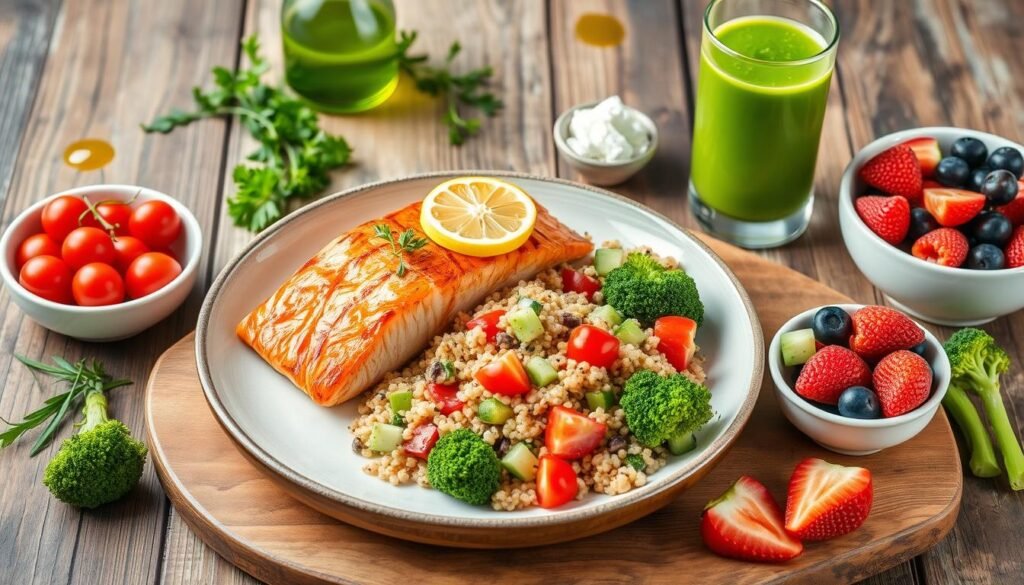
| Dinner | Quinoa with roasted vegetables and salmon | 500 |
| Snacks | Vegetable sticks with hummus | 200 |
| All Meals Total | – | 1400 |
Cholesterol-Lowering Foods to Include
Adding the right foods to your daily meals is key to managing cholesterol. Foods like fiber-rich items and healthy fats are great for your heart. They help lower bad cholesterol. Let’s explore some examples and their benefits.
High-Fiber Foods
Eating more fiber is vital for reducing LDL, or bad cholesterol. Soluble fiber, found in beans, lentils, oats, and fruits, helps. It binds with cholesterol in the digestive system. Aim for 25 grams of fiber every day.
Start your day with whole fruits like apples and oranges to up your fiber. Switching to whole grain pasta or brown rice boosts fiber too. These changes are simple but effective.
Omega-3 Fatty Acids
Fatty fish, such as salmon and mackerel, are rich in Omega-3s. They’re great for your cholesterol. The American Heart Association suggests eating fish twice a week. These Omega-3s can lower triglycerides and lessen heart disease risk.
Don’t forget about plant sources like flaxseeds and walnuts. They also offer heart-friendly Omega-3s.
Healthy Fats Examples
Using healthy fats can boost your heart health. Avocados, nuts, and seeds increase good cholesterol. Replace butter with liquid vegetable oils like olive or canola to cut bad cholesterol.
Try low-fat dairy instead of full-fat in your recipes. Adding uncooked oatmeal to meatloaf or veggies like carrots and broccoli to salads are good moves. They make meals more nutritious.
Low Cholesterol Recipes for Planning Success
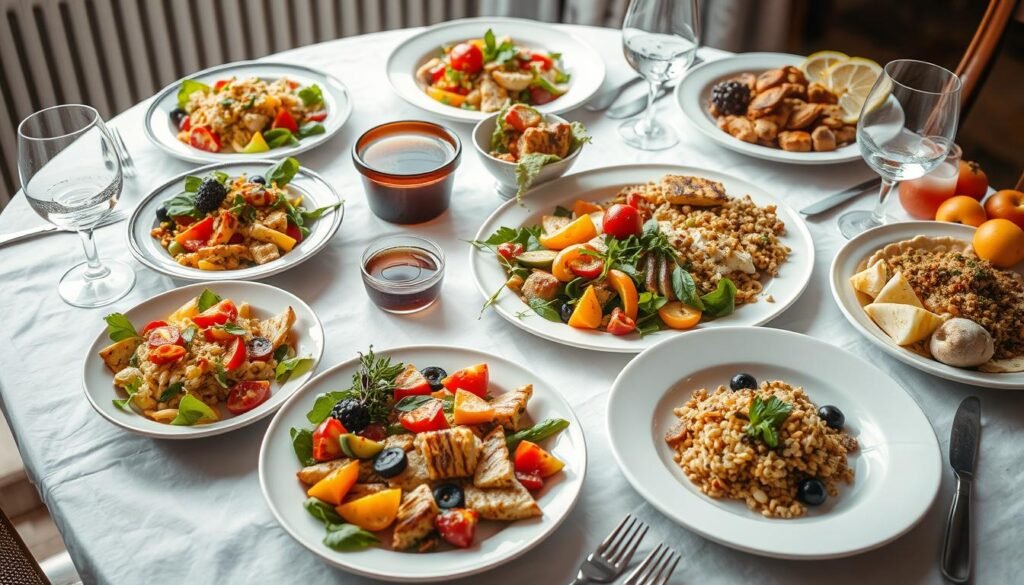
A great meal plan includes many tasty and healthy recipes. These low cholesterol recipes help you eat well and manage your diet. You’ll find energizing breakfasts, vibrant lunches, and satisfying dinners. With these ideas, you can love your food and stay healthy.
Breakfast Ideas
Starting your day well is key, especially for controlling cholesterol. Try these:
- Oatmeal with fresh berries – High in fiber, helps lower cholesterol and keeps you full.
- Whole grain toast with avocado – Offers healthy fats for a healthy heart.
- Smoothies made with spinach and bananas – Add flaxseeds or chia seeds for more nutrients.
Lunch Recipes
Lunches can be both tasty and healthy. Enjoy these recipes:
- Quinoa salad with chickpeas – Has plant-based protein and fiber, good for the heart.
- Spinach and berry salad – Mix fresh greens with fruits and light dressing.
- Lentil soup – Warm, full of fiber and nutrients.
Dinner Options
End your day with these delicious, low-saturated fat dinners:
- Grilled salmon with steamed broccoli – Rich in omega-3 fatty acids.
- Stir-fried tofu with mixed vegetables – Plant-based with a variety of flavors.
- Whole grain pasta with roasted tomatoes and spinach – Simple, nutritious, and tasty.
Meal-Prep Tips for Busy Lifestyles
Eating healthy can be hard with a busy schedule. Meal-prep tips help make cooking simpler and keep you on a heart-healthy meal plan. By cooking in bulk, you can prepare several meals at once. This saves time during the busy week.
Batch Cooking Strategies
Batch cooking means making lots of food at the same time. It makes meals quick and easy all week. Here’s how to do it well:
- Plan Ahead: Make a weekly menu to know what to cook and eat each day.
- Choose Versatile Ingredients: Pick items like quinoa and various veggies that fit in many dishes.
- Cook in Batches: Cook big amounts of proteins and veggies and then split them into smaller parts for later.
- Store Properly: Use airtight containers for your meals and label them with the dates to keep them fresh.
Simple Meal Prep Techniques
Meal prep should be easy and boost your health. Here are simple tips to follow:
- Chop Vegetables in Advance: Cutting up veggies early saves time and encourages eating them during the week.
- Utilize Freezing: Freezing meals in portions keeps the taste and nutrition for when you need them.
- Make Grab-and-Go Snacks: Have snacks ready, like Greek yogurt with fruit, for quick, healthy bites.
- Stay Organized: Keeping a shopping list for your meals helps with budgeting and avoids buying extra items. It supports a balanced diet within your budget.
Using these meal-prep tips can really support your health goals, especially with a low-cholesterol diet. Planning and preparing meals in advance helps manage cholesterol and improve your health overall.
Cholesterol Management Tips
To manage cholesterol well, you need a balanced plan. This should include changes in your daily habits and regular health checks. Being active plays a big part in keeping your heart healthy and your cholesterol in check. Regular health exams help people adjust their food and activities based on their health scores.
Incorporating Physical Activity
Being active is key to getting your cholesterol where it should be. Adults should try for 30 minutes of moderate exercise five times a week. Or do vigorous exercises for 20 minutes three times a week. Exercise boosts your “good” cholesterol, known as HDL. Quitting smoking also helps a lot. It improves your cholesterol and lessens the risk of heart disease. Adding activities like walking, biking, or swimming can really help too.
Regular Health Check-ups
Seeing your doctor regularly is a big part of managing your cholesterol. These visits help you keep an eye on your cholesterol levels. You can then make smart choices about your food and how active you are. The CDC says over 86 million adults in the U.S. have high or near-high cholesterol. Early check-ups can lead to early action, like changing your diet or exercising more, to keep your cholesterol at the right level.
| Activity | Frequency | Benefits for Cholesterol Management |
|---|---|---|
| Aerobic Exercise | 30 minutes, 5 times a week | Increases HDL cholesterol |
| Vigorous Activity | 20 minutes, 3 times a week | Improves overall cardiovascular health |
| Regular Health Check-ups | At least once a year | Monitors cholesterol levels and overall health |
Grocery Shopping for a High Cholesterol Meal Plan
Learning how to navigate the grocery store is key for heart health. This means picking the right foods and avoiding the bad ones. By knowing what to skip and what to pick, you can eat better and keep your heart happy.
Foods to Avoid
Some foods can mess up your meal plan when you’re watching your cholesterol. Aim for foods rich in nutrients. And try to stay away from these:
- Red meats and processed meats like beef and bacon
- High-fat dairy products, including butter and creamy sauces
- Packaged snacks that typically contain trans fats
- Fast food and fried items
- Pastries and sugary snacks such as doughnuts
- High-sodium foods that exacerbate health issues
- Alcoholic beverages that can raise cholesterol levels
Healthier Alternatives
Choosing healthier items is crucial. Add these to your shopping cart to meet your cholesterol goals:
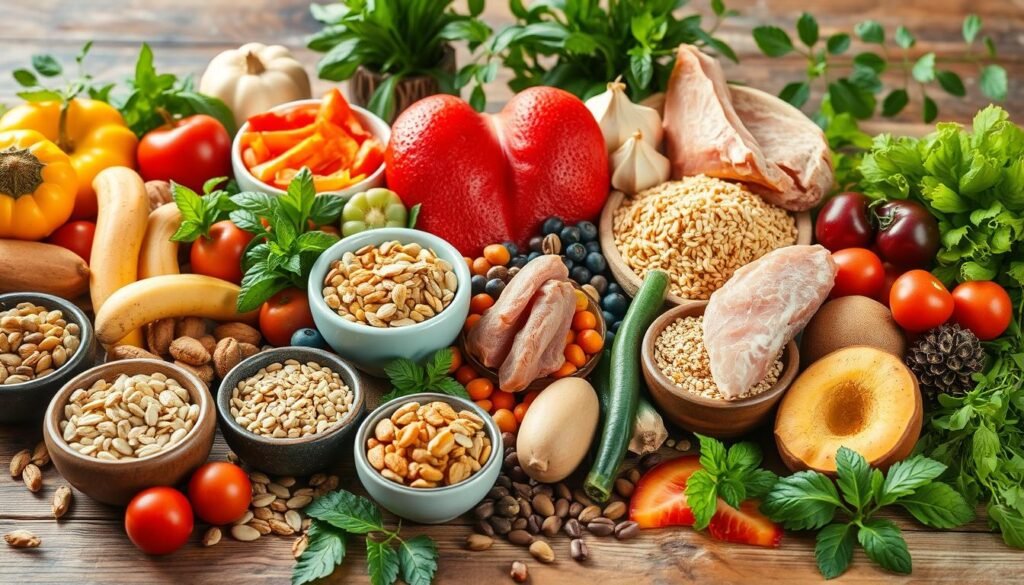
- Fruits like apples, oranges, and berries for their fiber content
- Leafy greens such as kale and spinach that support heart health
- Lean proteins including turkey, salmon, and low-fat fish
- Whole grains like barley and lentils which provide fiber
- Nuts and seeds that supply healthy fats to boost HDL levels
- Healthy oils, such as olive oil, for cooking
- Herbal teas and green teas for additional health benefits
Understanding what to avoid and what to choose is crucial. This way, your meals can lower cholesterol while still being tasty and nutritious.
| Foods to Avoid | Healthier Alternatives |
|---|---|
| Red Meats | Lean Proteins (Turkey, Chicken) |
| Full-Fat Dairy | Low-Fat or Non-Fat Dairy |
| Bacon | Fish (Salmon, Mackerel) |
| Trans Fat Snacks | Nuts and Seeds |
| Sugary Snacks | Fresh Fruits |
Adapting the Meal Plan for Different Caloric Needs
When making a high cholesterol meal plan, it’s key to look at personal calorie needs. This part shows how to adjust the meal plan for different calorie amounts, keeping it good for cholesterol management. A customized plan helps achieve health goals while keeping nutrition balanced.
Modifications for Higher Caloric Intake
For those needing more calories, like active people or those with unique metabolic rates, changing meal plans is vital. Here are some ways to adjust:
- Incorporate additional servings of lean proteins like chicken, turkey, fish, or tofu.
- Add healthy fats in moderation through sources such as avocado, olive oil, and nuts.
- Include more high-fiber foods like broccoli, spinach, and bell peppers to increase satiety without excessive calories.
- Opt for larger portions of whole grains like quinoa and whole wheat bread to meet energy needs.
- Add more low-calorie fruits such as berries, apples, and pears as snacks or dessert options.
Consultation with a Dietitian
A dietitian consultation offers tailored dietary advice based on personal health situations. Working with a registered dietitian helps fine-tune meal plans for specific caloric needs while managing cholesterol well. They check lifestyle, nutritional needs, and food likes, making sure the diet is balanced and health is not at risk. This teamwork helps stick to diet changes and supports overall health.
Conclusion
A structured high cholesterol meal plan can greatly help your heart. This article shared the best foods, such as beans and nuts, to improve heart health. Eating these regularly lowers bad cholesterol and enhances heart wellness.
To eat better for your heart, you need to try new things and plan meals ahead. Little changes, like eating fish instead of red meat, make a big difference. These changes lower cholesterol levels and help your heart.
If you need more help with your diet, talk to a healthcare expert. They can give you personalized advice. By eating a balanced diet, you start on the path to a healthier life. For more tips on a good meal plan, visit this resource.