Did you know more than 95 million U.S. adults battle high cholesterol? This fact underlines the importance of managing cholesterol for heart health. To lower high cholesterol, lifestyle changes, better eating habits, and sometimes medicine are key. These steps not only lower cholesterol but also promote heart health over time.
Since high LDL cholesterol can lead to heart attacks and strokes, it’s crucial to act. Keeping cholesterol intake under 200 mg daily and saturated fats below 7% of daily calories makes a huge difference. This article explores ways to control cholesterol and protect your health.
Key Takeaways
- Over 95 million adults in the United States have high cholesterol levels.
- High LDL cholesterol significantly increases the risk of heart attacks and strokes.
- Limiting cholesterol intake to less than 200 mg daily can help lower cholesterol levels.
- Making lifestyle adjustments can show results within 6 to 12 months.
- Effective cholesterol management often requires collaboration with healthcare providers.
Understanding Cholesterol and Its Impact on Health
Cholesterol is a waxy, fat-like substance made by the liver. It’s found in every cell and is crucial for our body’s functions. It comes in two main forms: LDL (low-density lipoprotein) and HDL (high-density lipoprotein). It’s important to keep these two types balanced for a healthy heart.
LDL cholesterol is often called “bad” because it can build up in arteries. This buildup can lead to serious problems like heart disease and strokes. In contrast, HDL is known as “good” cholesterol. It carries cholesterol to the liver to be removed, helping to protect the heart.
The impact of cholesterol goes beyond just the numbers we see in blood tests. What we eat affects our cholesterol levels. Eating too much saturated and trans fats can raise LDL levels. However, eating things like fish and nuts, rich in polyunsaturated fats, is good for the heart.
Doctors suggest getting your cholesterol checked if you’re at a certain age or have a specific medical background. Making changes like eating a balanced diet and staying active can help manage cholesterol.
Knowing how cholesterol works helps in keeping it under control. This understanding can improve your health and lower the risk of heart problems due to high cholesterol.
| Cholesterol Type | Role | Health Impact |
|---|---|---|
| LDL (Bad Cholesterol) | Delivers cholesterol to cells | Can lead to plaque buildup if levels are high |
| HDL (Good Cholesterol) | Transports cholesterol to the liver | Helps reduce risk of heart disease |
What Causes High Cholesterol?
High cholesterol comes from different sources that change lipid levels in our blood. Being genetically predisposed is key. If your family has a history of it, maintaining normal levels can be hard, even with a good diet and exercise.
Eating habits play a big part in causes of high cholesterol. Foods high in saturated and trans fats increase LDL cholesterol. These fats are in processed snacks and fatty meats. The FDA’s ban on partially hydrogenated vegetable oils, starting January 1, 2021, aims to cut down these fats in foods.
Not moving enough also factors in. Being active boosts the “good” cholesterol, HDL. Obesity, marked by a BMI of 30 or more, strongly links to high cholesterol.
Conditions like diabetes and hypothyroidism can affect cholesterol. So, understanding these conditions is key. It’s vital to start cholesterol screenings early, between ages 9 and 11. The National Heart, Lung, and Blood Institute suggests getting tested every one to two years for men aged 45 to 65 and women aged 55 to 65.
Tackling high cholesterol means changing your lifestyle, like drinking less alcohol and stopping smoking. For healthy adults, this means up to one drink a day for women and two for men under 65. Quitting smoking cuts heart disease risk in half after a year.
Importance of a Cholesterol-Lowering Diet
A diet that lowers cholesterol is key to keeping your heart healthy. It involves eating foods rich in nutrients to lower cholesterol and cut heart disease risk. Eating heart-healthy fats, more soluble fiber, and less saturated fat are major steps.
Choose Heart-Healthy Fats
Eating heart-healthy fats daily helps better your cholesterol levels. Foods like olive oil, avocados, and nuts are loaded with unsaturated fats. These good fats decrease bad LDL cholesterol and boost good HDL cholesterol. It’s also important to skip trans fats found in fast food and baked treats to keep your heart fit.
Increase Soluble Fiber Intake
For a diet that fights cholesterol, you need more soluble fiber. It blocks LDL cholesterol from being absorbed in your gut. Try to eat 10 to 25 grams of soluble fiber a day through oats, beans, apples, and pears. This helps manage cholesterol well.
Limit Cholesterol and Saturated Fat
It’s vital to watch your cholesterol and saturated fat to stay heart-healthy. The American Heart Association asks us to keep dietary cholesterol under 200 mg daily. They also say to make saturated fats less than 6% of all the calories you eat. Eating fewer animal products like meats, cheeses, and dairy products helps meet these rules and lowers cholesterol.
How to Bring Down High Cholesterol with Foods
Eating right is key to managing cholesterol levels. By adding certain foods to your meals, you can start to lower your cholesterol naturally. It helps to focus on foods full of nutrients for a heart-healthy diet.
Foods Rich in Omega-3 Fatty Acids
Omega-3 fatty acids are great for your heart. Fish like salmon, mackerel, and sardines are full of omega-3s. Walnuts and flaxseeds are plant-based sources that are also good for reducing bad LDL cholesterol and improving heart health.
Incorporating Plant Stanols and Sterols
Plant stanols and sterols can help lower cholesterol. They work by cutting down cholesterol’s absorption in your gut. Foods like some margarine and orange juice often have these compounds added. Eating these along with other heart-healthy foods makes a difference.
Importance of Fruits and Vegetables
Eating fruits and veggies is crucial for healthy cholesterol. High-fiber foods, like berries, oats, and beans, block cholesterol absorption. They also make you feel full, which prevents overeating. Adding a variety of fruits and veggies to your diet provides important nutrients for your health.
| Food Group | Examples | Cholesterol Impact |
|---|---|---|
| Fatty Fish | Salmon, Mackerel, Sardines | Lower LDL cholesterol |
| Nuts | Walnuts, Almonds | Low in saturated fat, high in healthier fats |
| Fortified Foods | Margarin, Orange Juice | Reduces cholesterol absorption |
| Fruits & Vegetables | Berries, Leafy Greens | High in fiber, supports heart health |
| Whole Grains | Brown Rice, Whole Grain Pasta | Helps prevent cholesterol absorption |
Regular Exercise for Cholesterol Management
Regular physical activity is key for managing cholesterol. It helps lower bad LDL cholesterol and increase good HDL cholesterol. The American Heart Association recommends 150 minutes of moderate exercise each week. Using a mix of exercises improves health overall.
Types of Exercise Beneficial for Cholesterol
Different exercises help manage cholesterol in their own ways:
- Walking: A simple, effective way to help your heart.
- Cycling: Biking regularly can help keep your cholesterol levels in check.
- Swimming: Great for those with certain health conditions and lowers fats in the blood.
- Running: Regular runners have a 30% lower risk of heart disease.
- Resistance training: This strengthens your body and helps manage cholesterol effectively.
Setting a Weekly Exercise Schedule
A consistent weekly exercise schedule helps you stick to your goals. Here are some guidelines:
| Day | Activity | Duration |
|---|---|---|
| Monday | Walking | 30 minutes |
| Tuesday | Cycling | 30 minutes |
| Wednesday | Resistance Training | 30 minutes |
| Thursday | Swimming | 30 minutes |
| Friday | Running | 30 minutes |
| Saturday | Yoga/Pilates | 30 minutes |
| Sunday | Rest or Light Walk | 30 minutes |
By mixing aerobic and resistance training, you can reduce triglycerides and raise HDL cholesterol. Being dedicated to daily exercise promotes heart health beyond just managing cholesterol.
Lifestyle Changes That Lower Cholesterol Naturally
Making changes in your life is key to lowering cholesterol naturally. Small shifts in daily habits can boost your health. These healthy choices help not just with cholesterol but with your overall well-being too.
The Benefits of Quitting Smoking
Stopping smoking brings many health perks, especially for cholesterol. Smokers have lower levels of “good” cholesterol. With quitting smoking, your “good” cholesterol can improve. This boosts heart health and lowers heart disease risks.
Maintaining a Healthy Weight
Keeping a healthy weight is crucial for cholesterol control. Dropping just 5-10 pounds can lower cholesterol. Healthy eating and exercise play a big role in weight management. Focusing on whole foods and staying active helps lower cholesterol.
Reducing Alcohol Consumption
Drinking less alcohol can help your cholesterol and heart. Too much alcohol stops the liver from removing bad cholesterol. Cutting down on alcohol aids in managing cholesterol, making your heart healthier.

Natural Remedies and Supplements for Cholesterol Management
Individuals seeking to manage high cholesterol might look into natural remedies and supplements. These can significantly help with heart health. Omega-3 supplements are especially beneficial in a cholesterol-lowering plan.
Benefits of Omega-3 Supplements
Omega-3 supplements are mainly from fish oil. They’re known to lower triglycerides and boost heart wellness. Eating omega-3 rich fish, like salmon and tuna, reduces heart disease and heart attack risks. Adding omega-3 supplements and choosing heart-healthy foods help manage cholesterol effectively. Learn more about diet and cholesterol management here.
Whey Protein and Its Impact on Cholesterol
Whey protein is in dairy and may lower LDL cholesterol. Research shows it also improves overall cholesterol and blood pressure. Adding whey protein to your diet offers more natural solutions for managing high cholesterol. Always talk to a health professional before starting supplements.
| Supplement | Potential Benefits | Considerations |
|---|---|---|
| Omega-3 Supplements | Lowers triglycerides; supports heart health | Consult a doctor if on blood-thinning medication |
| Whey Protein | May lower LDL cholesterol; can help manage blood pressure | Ensure no lactose intolerance; consult a healthcare provider |
Using natural remedies and a diet high in omega-3s improves heart health. Always get professional advice when adding supplements to your daily routine.
Work with Your Healthcare Provider
Managing cholesterol well means teaming up with a healthcare provider. Together, you create personalized treatment plans based on your health history and cholesterol levels. Regular visits help track your progress and tweak your plan as needed.
Your healthcare provider guides your diet and lifestyle changes. Even losing 3% to 5% of your body weight can greatly improve your cholesterol. They can help you make a plan to lose weight healthily.
Sometimes, lifestyle changes aren’t enough on their own. Your provider might suggest medicines like statins, which lower the risk of heart attacks and strokes from high cholesterol. If statins don’t work for you, there are other options like ezetimibe or bempedoic acid.
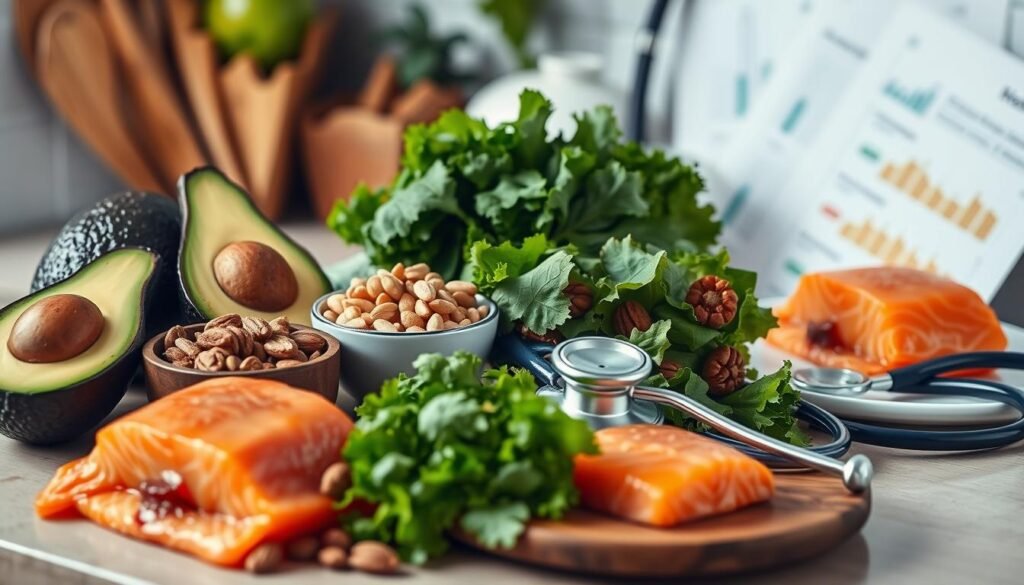
Talking openly with your healthcare provider helps find the best ways to manage your cholesterol. Using tools like professional advice and going to all your appointments can lead to better health results.
Medications to Lower Cholesterol Levels
Some people find it hard to control cholesterol with diet and exercise alone. They may need medicines to help. These drugs can make a big difference in lowering “bad” cholesterol, known as LDL. It’s important to know about these options, like statins, to keep your heart healthy.
Understanding Statins and Their Benefits
Statins are the top choice for lowering LDL cholesterol because they work well. They are best for adults who have had heart issues, have LDL-C over 190 mg/dL, or are 40-75 with diabetes. Statins cut down heart attack and stroke risks. They work by slowing down cholesterol production and helping the liver remove LDL.
However, some people might feel headaches, nausea, or mild muscle pain as side effects.
Alternative Medications for Managing Cholesterol
If statins don’t work for you, there are other choices. You can use bile acid sequestrants, PCSK9 inhibitors, or ezetimibe. These drugs lower cholesterol in different ways, like removing bile acids or adding more LDL receptors in your liver. Fibrates lower triglycerides, and niacin helps with your lipid profile, but watch out for side effects.
Also, taking omega-3 fatty acid supplements from fish oils can lower triglycerides. It’s important, though, to keep an eye on side effects like bleeding risks.
Monitoring and Evaluating Your Cholesterol Levels
Getting your cholesterol checked regularly is key to knowing your heart health. It helps see if treatments work and lets you choose how to stay well. Everyone needs to test it often, but how often depends on your age.
Importance of Regular Blood Tests
Blood tests are very important for keeping an eye on cholesterol. The American College of Cardiology and American Heart Association say adults need a check-up every 4 to 6 years. Here’s a quick guide:
- Children should have cholesterol checked at least once between ages 9 and 11.
- Adolescents should be tested between ages 17 and 21.
- Younger adults may require testing every 5 years.
- Men aged 45 to 65 and women aged 55 to 65 should consider a test every 1 to 2 years.
- Individuals older than 65 should have their levels tested annually.
This helps spot any issues early, to keep you healthy.
How to Interpret Your Cholesterol Results
Knowing what your cholesterol numbers mean is the first step. There are key markers to look at in the blood tests. These include:
| Cholesterol Type | Desirable Level | Risks |
|---|---|---|
| LDL (bad cholesterol) | Less than 100 mg/dL | Higher levels can lead to artery blockages and heart disease. |
| HDL (good cholesterol) | 60 mg/dL and above | Helps in removing LDL cholesterol from the bloodstream. |
| Triglycerides | Less than 150 mg/dL | High levels may increase the risk of heart disease. |
| Total cholesterol | Less than 200 mg/dL | Levels 200 mg/dL and above are considered high. |
Talking with your doctor about your results is crucial. If levels are high, you might need to change your diet, exercise more, or try other ways to get your cholesterol down. Working together will help you find the best plan.
Conclusion
Managing cholesterol is key for a healthy heart and overall well-being. We’ve covered effective strategies throughout this article. These include eating heart-healthy foods like fruits, vegetables, and whole grains. Also, exercising regularly helps keep cholesterol in check.
Making lifestyle changes is very important. Avoiding tobacco and maintaining a healthy weight can boost heart health. It can also lower bad cholesterol levels.
The importance of actively working to lower cholesterol cannot be overstated. One young man cut his cholesterol by over 40% through changes in his lifestyle. This shows that consistent efforts can bring lasting results. For some people, cholesterol-lowering drugs like statins are vital. Health professionals recommend these when needed.
Cholesterol management is a team effort between you and your doctor. It’s important to talk openly about treatment and lifestyle changes. By using the strategies we’ve discussed, you can work towards better cholesterol levels. This will lead to a healthier heart.