Did you know experts once said to only eat 300 mg of cholesterol a day? This shows people worry about high cholesterol foods and health risks. But, newer guidelines say to eat less cholesterol and focus on healthy eating habits too. Knowing about cholesterol-rich foods is key. Some can be good for you because they have important nutrients.
We’re looking at how a diet high in cholesterol affects your health. It’s key to know which foods to eat less of, like some meats and fried foods. But it’s also good to eat things that help like fish and nuts. These can help manage cholesterol and keep your heart healthy. Also, foods high in fiber and plant sterols can help with cholesterol. To find out more about eating right, click here.
Key Takeaways
- Recent guidelines encourage minimizing cholesterol intake but stress healthy eating.
- Cholesterol-rich foods can provide essential nutrients despite their reputation.
- Healthy fats from fish and nuts can aid in cholesterol management.
- Fiber-rich foods play a crucial role in maintaining cholesterol levels.
- Some processed and fried foods should be limited for heart health.
Understanding Cholesterol: The Basics
Cholesterol is a waxy substance we all have in our bodies. It’s important for making hormones, absorbing vitamins, and fixing cells. Our liver and foods from animals like eggs and cheese provide cholesterol. Knowing the different types of cholesterol helps us keep a healthy balance.
There are two main kinds: LDL and HDL cholesterol. LDL is often called “bad” cholesterol because it can clog arteries, raising the risk of heart disease and stroke. HDL is the “good” cholesterol. It helps remove bad cholesterol from the blood, protecting our hearts.
Too much bad cholesterol or not enough good cholesterol can cause atherosclerosis. This is when plaque builds up in arteries, leading to serious heart issues. Poor diet, not exercising, smoking, and drinking too much alcohol can all make cholesterol levels worse. It’s important to get yours checked.
Some people have high cholesterol because of their family history. This is known as familial hypercholesterolemia (FH). Regular blood tests can tell us our cholesterol levels. The ideal levels are 150 mg/dL for total cholesterol, 100 mg/dL for LDL, and at least 40 mg/dL for HDL in men and 50 mg/dL for women.
| Cholesterol Type | Classification | Optimal Levels (mg/dL) |
|---|---|---|
| Total Cholesterol | Healthy | 150 |
| LDL (bad) | Lower is better | 100 |
| HDL (good) | Higher is better | Men: 40, Women: 50 |
| Triglycerides | Lower is better | 150 |
What Are Cholesterol-Rich Foods?
Cholesterol-rich foods mainly include meats, dairy, and eggs from animals. Knowing about them helps manage cholesterol in your diet. While eggs and full-fat dairy raise some concerns, studies show they barely affect your overall cholesterol levels for most people.
Eggs are a good example with lots of cholesterol. One yolk has about 186 milligrams, which is over half the daily limit. But, egg whites are a great option with no cholesterol and plenty of protein. Healthier choices like goat cheese, parmesan, and blue cheese are smart picks to keep your cholesterol balanced.
Being careful with your food choices is key. Saturated fats found in processed meats, like bacon and pepperoni, may increase cholesterol problems. Instead, choose healthy proteins from beans, chicken, and fish. These offer good nutrients without the high cholesterol of red meats. For tips on managing cholesterol, check out valuable guidance on lowering dietary cholesterol.
Getting to know which foods are rich in cholesterol allows people to make smart eating choices. This knowledge aids in keeping a balanced diet. It ensures heart health while still enjoying many beneficial foods.
Foods High in Cholesterol: What to Watch For
It’s vital to understand how different foods affect cholesterol. This knowledge is key to keeping a healthy heart. High cholesterol foods can cause health problems. It’s crucial to know which foods to eat and which to avoid. While foods like eggs, shellfish, and certain dairy products are okay in moderation, it’s wise to cut back on processed, fast, and fried foods.
Here’s a list of high cholesterol foods to be cautious about:
| Food Type | Cholesterol Content | Recommendations |
|---|---|---|
| Processed Meats (e.g., bacon, sausage) | High | Avoid |
| Fried Foods (e.g., fries, donuts) | High | Avoid |
| Fast Food | High | Avoid |
| Full-Fat Dairy | Moderate to High | Limit |
| Shellfish (e.g., shrimp, lobster) | High | Consume in moderation |
| Eggs | Moderate | Limit to a few per week |
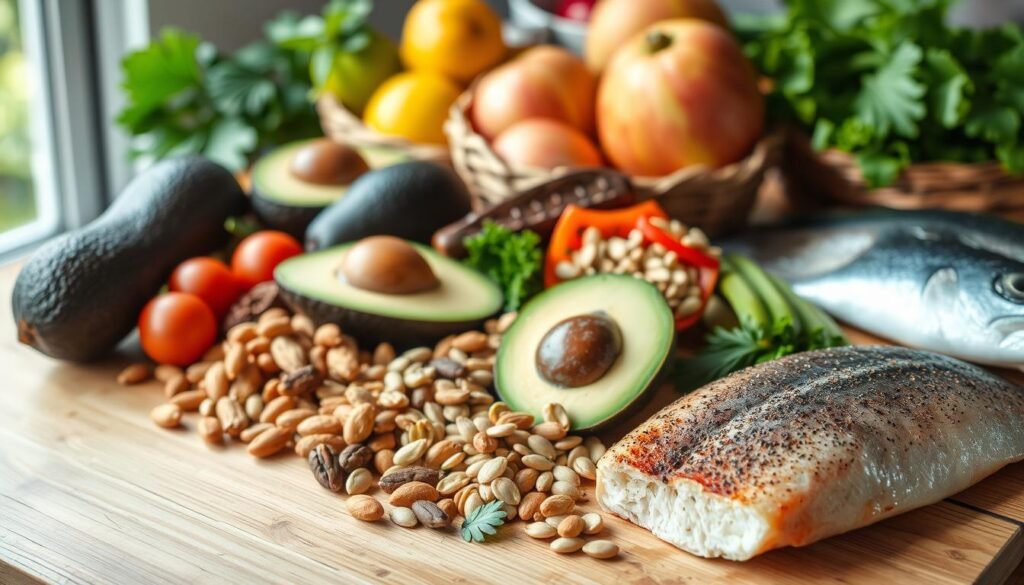
Choosing healthier options helps a lot. Foods high in omega-3 fatty acids, like fatty fish, are great for your heart. Almonds and walnuts are good for cholesterol and taste great, too.
Staying away from high cholesterol foods is crucial for better health. Adding fiber-rich fruits and veggies is also important. They help lower bad cholesterol. Beans and leafy greens are great for your heart.
Reading up on cholesterol management can help make smarter food choices. This informative link offers great advice. Knowing what foods to limit or enjoy can change your eating habits and health.
Healthy Foods that Are High in Cholesterol
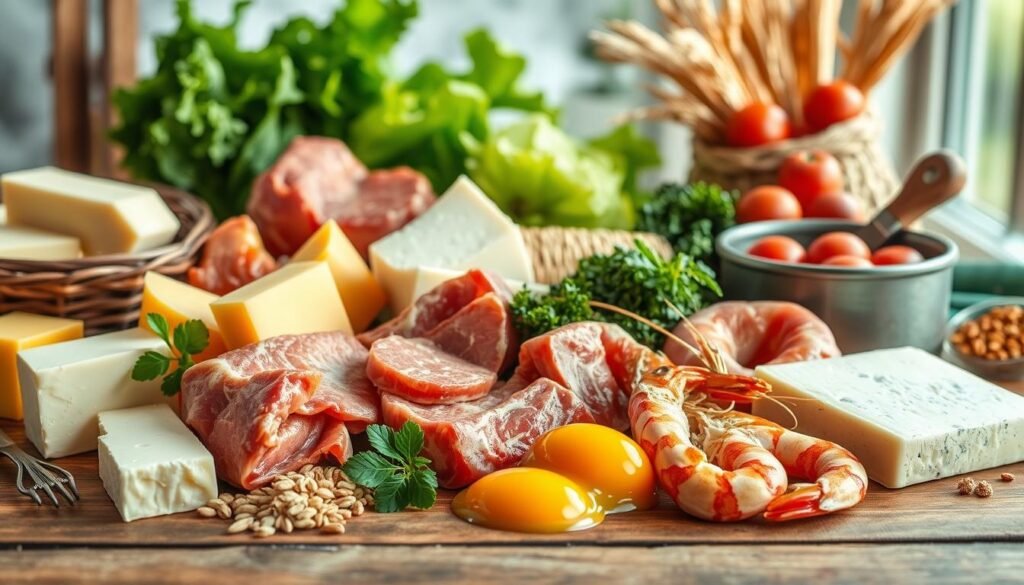
Adding high cholesterol foods that are healthy into your diet can boost heart health and give you nutrients. Foods like eggs, full-fat dairy, shellfish, and organ meats are great choices. They don’t just add cholesterol. They also bring lots of other nutritional benefits to the table.
Eggs: A Nutritional Powerhouse
Eggs are a key part of many diets because they are rich in protein. They’re also super versatile in cooking. A big scrambled egg has about 169 milligrams of cholesterol. This is more than half of the daily recommended 300 milligrams. Eating eggs can raise the good HDL cholesterol levels. It does this without harming LDL cholesterol levels.
Benefits of Full-Fat Dairy Products
Full-fat dairy items like cheese and yogurt can be good for you in small amounts. They boost your calcium and give you healthy fats that can lower bad cholesterol levels. Research shows people who eat full-fat dairy are less likely to get heart disease. This is compared to those who pick low-fat options.
Shellfish and Their Nutritional Value
Shellfish are a surprising source of healthy high cholesterol. They are packed with protein and full of vitamins and minerals. For example, sardines in oil have 131 milligrams of cholesterol. Twelve large shrimp have about 130 milligrams. These foods are also full of omega-3 fatty acids. Omega-3s are great for your heart.
The Role of Organ Meats
Organ meats are packed with important nutrients. They’re often not considered but are full of vitamins, minerals, and protein. Adding organ meats to your diet ups your intake of key nutrients. They have a lot of cholesterol but are good to eat sometimes. They should be part of a varied diet.
High Cholesterol Foods You Should Avoid
It’s important to manage cholesterol for good health. Certain foods high in cholesterol must be eaten with care to stay healthy. Foods falling into specific categories are best avoided to maintain good cholesterol levels.
Processed Meats: Understanding the Risks
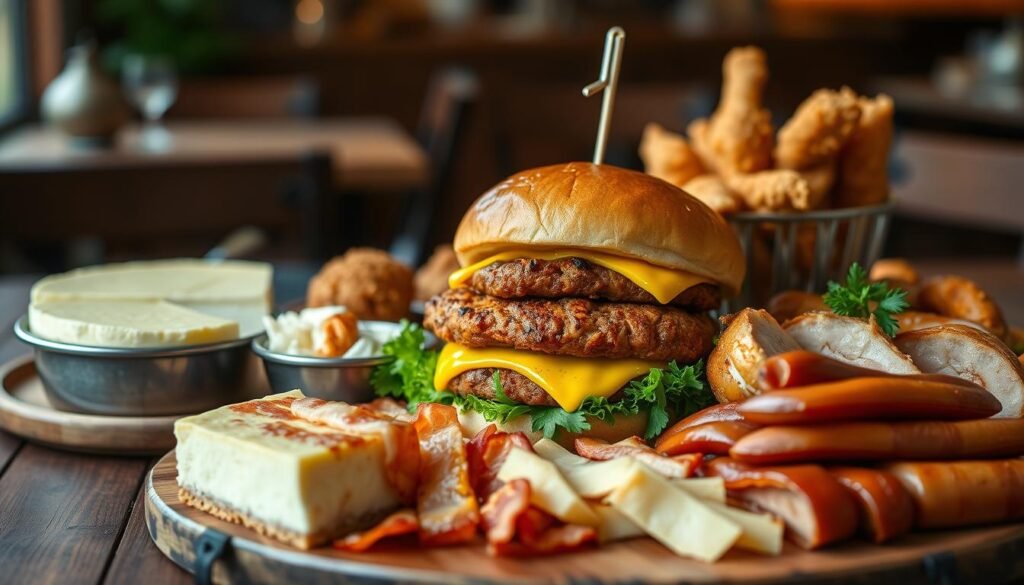
Processed meats, like sausages and bacon, are bad for the heart. Eating just a little bit more processed meat each day can greatly increase the risk of heart disease by 42%. It’s best to stay away from foods that are high in cholesterol to protect your health in the long run.
Fried Foods and Their Impact on Health
Fried foods fall into the high cholesterol category and should be skipped. They’re often made with oils that have unhealthy fats. These foods are not only high in calories but also make obesity more likely, which is a big heart disease risk.
Fast Food: A Major Contributor to High Cholesterol
Fast food is well known for its bad fats, like trans and saturated fats. These fats raise cholesterol levels and lead to health issues. Eating fast food often can cause chronic illnesses, so it’s key to eat it less and choose healthier options.
Desserts and the Hidden Dangers
Desserts may taste good but they hide risks. These sweet foods can make you gain weight and often have a lot of added sugars. These sugars can cause serious health problems, showing why it’s vital to avoid these kinds of high cholesterol treats.
The Effect of Unhealthy Fats on Cholesterol Levels
Unhealthy fats, like saturated and trans fats, greatly affect our body’s cholesterol. The American Heart Association advises eating less saturated fat. They suggest less than 6% of our daily calories should come from these fats. For someone eating 2,000 calories a day, that’s only about 11 to 13 grams.
Foods high in these fats include fatty meats, full-fat dairy, and processed foods. Eating these can raise your LDL cholesterol. This makes heart disease more likely to happen.
Trans fats are in things like margarine and many fast foods. They can also increase cholesterol in our bodies. The FDA says foods must list trans fats on their labels if they have 0.5 grams or more per serving. Lately, many food places have stopped using trans fats in their recipes. This shows people are becoming more aware of how bad they are. The AHA says we should try to cut out trans fats completely to better our cholesterol.
We should eat unsaturated fats instead because they’re healthier for our cholesterol. Foods like vegetable oils, nuts, seeds, and fish are good sources. These should be eaten more than saturated and trans fats. Eating the right fats, like those in beans, nuts, and fish, can help reduce risks from bad fats.
The Importance of a Balanced Diet
A balanced diet is key for good heart health and cholesterol management. Eating foods full of nutrients helps people keep a healthy cholesterol balance. Adding healthy fats and enough fiber to your diet makes a big difference in your well-being.
Incorporating Healthy Fats
It’s important to eat healthy fats for a stronger heart. Foods like olive oil, avocados, and nuts, rich in monounsaturated fats, improve cholesterol levels. Fatty fish, such as salmon and mackerel, are high in Omega-3. They help prevent blood clots and lower stroke risk.
Avoiding saturated fats found in processed foods and fatty meats is also crucial. They can increase bad (LDL) cholesterol. The American College of Cardiology and the American Heart Association advise eating minimal saturated fat. They suggest it should be only about 5% to 6% of your daily calories.
How to Increase Fiber Intake
More fiber in your diet is also key. Foods high in fiber, like fruits, veggies, whole grains, and legumes, help lower LDL cholesterol. Sadly, only a few adults eat enough fruits and vegetables daily. Yet, these foods offer vital vitamins and minerals for heart health.
Eating various plant foods helps reduce bad cholesterol levels. This supports a balanced diet. Experts recommend eating at least two servings of fish every week. They also suggest choosing meals with more fiber to improve heart health.
Healthy Lifestyle Habits for Managing Cholesterol
Healthy lifestyle habits are key to managing cholesterol well. Being active helps your heart stay strong and improves your cholesterol. Choosing the right foods and lifestyles can make you healthier overall.
Physical Activity and Its Benefits
Staying active is important for good cholesterol. Exercise boosts good cholesterol and lowers the bad kind. The Surgeon General recommends adults to exercise moderately for at least 2 hours and 30 minutes a week. Activities like walking, swimming, or biking are great for your heart and help keep your weight in check.
- Regular physical activity can help lower LDL cholesterol levels.
- Increased exercise enhances HDL cholesterol and reduces triglyceride levels.
- Engaging in regular workouts supports overall weight management.
The Role of Weight Management
Keeping a healthy weight is crucial for cholesterol control. Losing just 5 to 10 pounds can greatly reduce total and LDL cholesterol. High cholesterol often comes with obesity, raising heart disease risks. Balanced eating and healthy habits can significantly influence your cholesterol levels.
| Weight Management Strategies | Benefits |
|---|---|
| Balanced Diet | Reduces cholesterol and encourages healthier eating habits. |
| Increased Physical Activity | Aids in calorie burning and improves overall cardiovascular health. |
| Regular Monitoring | Helps track progress and informs necessary adjustments in diet and activity. |
Conclusion
Knowing about high-cholesterol foods is vital for smart eating choices. Some foods are good in small amounts, but others are harmful if eaten too much. It’s key for people, especially with high cholesterol, to balance their diet well.
To eat healthier, add more plants to your meals like whole grains, fruits, and veggies. Lean proteins, especially fish, are also good. Cutting down on saturated fat and staying active are big steps toward a healthy heart. Also, new diet guidelines suggest a better way to think about cholesterol in food.
By choosing their food wisely, people can control their cholesterol better. Knowing how to include certain foods, like eggs and shrimp, helps maintain a diet good for the heart. This way, the risk of heart disease drops, leading to a healthier life for them and their families.