Did you know that nearly 94 million American adults have high cholesterol? This info comes from the Centers for Disease Control and Prevention (CDC). It shows how vital it is to understand which foods that cause high cholesterol can up your levels. High cholesterol can lead to big health problems like heart disease and stroke. By choosing what you eat wisely, you can lower your cholesterol and boost your health.
In this article, we’re going to look at which high cholesterol foods to eat less of or avoid. Knowing these foods helps you take steps toward a heart-healthy lifestyle. Remember, managing cholesterol involves many aspects, but knowing what to eat is key. As expert insights suggest, smart food choices can lead to better health.
Key Takeaways
- High cholesterol levels affect millions of Americans.
- Diet and lifestyle play a vital role in cholesterol management.
- Avoiding specific foods can help reduce the risk of heart disease.
- Regular check-ups with a healthcare provider are crucial for monitoring cholesterol.
- Making dietary changes can lead to improvements within 3-6 months.
Understanding Cholesterol and Its Impact on Health
Cholesterol is crucial for creating cell membranes and making hormones. Knowing about cholesterol is key to staying healthy. High cholesterol levels, however, can lead to serious health issues.
What is Cholesterol?
Cholesterol is a waxy substance in our blood, made by the liver and also gotten from food. There are two types: LDL, or “bad” cholesterol, and HDL, or “good” cholesterol. Checking your cholesterol levels helps keep a healthy balance, preventing heart disease risks.
Why is High Cholesterol Dangerous?
High cholesterol can cause atherosclerosis, where plaque builds up in arteries. This narrows arteries, leading to heart disease, stroke, and heart attacks. High cholesterol often has no symptoms, so regular checks are vital for at-risk people.
How High Cholesterol Affects the Body
High cholesterol harms more than just the heart. It affects blood flow, leading to diseases like peripheral artery disease (PAD). A bad diet, no exercise, smoking, and too much alcohol can raise your cholesterol. Eating well, staying active, and avoiding bad habits help control it.
For tips on controlling cholesterol and understanding it better, check out this guide.
Common Misconceptions About Cholesterol
Understanding cholesterol helps us keep our hearts healthy. Our bodies have two main types of cholesterol. Each type does something different for us. People often get confused about HDL, LDL, and dietary cholesterol. This affects our food choices and health. Learning the truth helps us make better choices for our blood cholesterol levels.
The Difference Between HDL and LDL Cholesterol
Cholesterol comes in two kinds: HDL and LDL. HDL is the good guy. It takes away other cholesterols from your blood. This lowers your chance of heart problems. LDL, on the other hand, isn’t so great. If you have too much, it can clog your arteries. This raises your risk of heart attacks and strokes.
Dietary Cholesterol vs. Blood Cholesterol
Eating cholesterol affects everyone differently. Some people see no change in their blood cholesterol from their diet. Genes, diet, and how you live can influence this. Knowing this lets us eat without too much worry. However, it’s still smart to check your cholesterol with a doctor regularly.
https://www.youtube.com/watch?v=0U7YHRW5dyc
| Type of Cholesterol | Function | Health Impact |
|---|---|---|
| HDL Cholesterol | Removes cholesterol from the bloodstream | Reduces risk of heart disease |
| LDL Cholesterol | Transports cholesterol to cells | Can lead to artery blockage if levels are high |
Eating right is key to controlling cholesterol. A heart-friendly diet can help boost your HDL while keeping LDL in check. Along with eating well, seeing your doctor and staying active are important. They help keep your cholesterol where it should be.
10 Foods That Cause High Cholesterol to Avoid
It’s vital to know which foods can raise your cholesterol. Foods high in saturated and trans fats are the main culprits. Here, we’ll talk about ten foods to avoid because they can make your cholesterol levels spike. These foods also pose other health risks.
Why Certain Foods Elevate Cholesterol Levels
Many foods can boost your LDL cholesterol, which is not good for your heart. These foods include:
- Processed Meats: Think bacon, hot dogs, and sausage. They’re packed with saturated fats and cholesterol.
- Trans Fat-Rich Foods: Foods like pastries, cakes, and fried favorites can push up your cholesterol too.
- Full-Fat Dairy Products: Using whole milk, full-fat cheese, and cream means more saturated fat.
- Fast Foods: Burgers, fries, and any fried chicken are usually cooked in bad oils that raise cholesterol.
- Certain Cooking Oils: Palm and coconut oils are not your friends; they’re high in saturated fats.
- Baked Goods: Cookies, doughnuts, and crackers from stores often have trans fats.
- Red Meat: Beef, pork, and lamb — they’ve got a lot of saturated fat.
- High-Sodium Foods: Items like canned soups and snacks can make you gain weight, indirectly affecting your cholesterol.
- Sugary Snacks: Eating candy bars, drinking sodas, and indulging in desserts can lead to weight gain and higher cholesterol.
- Chicken with Skin: Chicken is healthy, but the skin adds lots of saturated fat.
Switching out these foods for healthier choices can lower your cholesterol. Eating more fruits, veggies, whole grains, and lean meats is key to a heart-healthy diet.
Trans Fats: The Unseen Culprit in Processed Foods
Trans fats are bad fats found in many processed foods. They’re made by changing liquid oils into solid fats through hydrogenation. This process improves texture and shelf life but is bad for our health. Eating trans fats often can raise bad cholesterol and lower good cholesterol. This increases the risk of heart disease.
Examples of Foods with Trans Fats
Finding and avoiding trans fats is key to heart health. They’re hidden in many snacks and convenience foods. Here’s a table showing common foods that may have trans fats:
| Food Item | Trans Fat Content (per serving) | Healthier Alternatives |
|---|---|---|
| Commercial baked goods (cookies, cakes) | 3-5g | Homemade baked goods using olive oil |
| Fried fast foods (fries, chicken) | 2-4g | Baked versions with minimal oil |
| Margarine (stick form) | 1-3g | Soft margarine or butter |
| Snack foods (microwave popcorn, chips) | 1-2g | Air-popped popcorn, nuts |
| Frozen pizza | 3-4g | Whole grain pizza with fresh toppings |
It’s crucial to read labels carefully to choose healthier options. Look for “partially hydrogenated oils” to spot trans fats. Being informed helps improve health and lower cholesterol.

High Saturated Fat Foods: What to Watch Out For
Saturated fats impact unhealthy cholesterol levels a lot. They link high saturated fat foods with more LDL cholesterol. Knowing this is key to making better food choices. This can cut your risk of heart disease by a lot.
The Link Between Saturated Fats and Cholesterol Levels
Years of study confirm that saturated fats up “bad” cholesterol. This is bad for heart health. The American Heart Association wants us to eat less saturated fat, no more than 6% of calories. For someone eating 2,000 calories daily, that’s only 13 grams max. Foods high in saturated fat include meats and tropical oils, so eating less is vital.
Foods Rich in Saturated Fats
To keep your heart healthy, watch how much of these foods you eat:
| Food | Recommended Amount | Notes |
|---|---|---|
| Cheese | Limit to 3 ounces per week | Opt for part-skim varieties like Swiss or mozzarella |
| Red Meat | Choose lean cuts | Focus on options like sirloin or tenderloin |
| Processed Meat | Minimize consumption | Look for lean turkey or chicken alternatives |
| Fried Foods | Limit from the diet | Includes French fries and fried chicken |
| Baked Goods | Consume sparingly | High in saturated fat and sugar |
| Eggs | One egg contains 60% of daily cholesterol | Consider egg whites if monitoring cholesterol |
| Shrimp | Moderation advised | High in cholesterol but low in saturated fat |
| Organ Meats | Moderation recommended | Examples include liver and kidney |
Smart choices about these foods can keep cholesterol in check and heart health up. Go for unsaturated fats instead, eat more fruits and veggies, and watch portion sizes to meet heart-healthy goals.
Risks of Consuming Fried Foods
Fried foods are a favorite for many, offering a delicious taste that’s tough to give up. Yet, they come with health risks, especially concerning cholesterol. Knowing these risks is crucial for making smarter health choices.
How Fried Foods Contribute to Unhealthy Cholesterol Levels
Fried foods are high in bad fats, like trans fats, raising cholesterol levels. They also have more calories than healthier options. For example, a baked potato has 128 calories and 0.18 grams of fat. In contrast, the same amount of french fries has about 431 calories and 20 grams of fat. This makes it easy to fall into unhealthy eating habits.
Studies show the dangers of eating fried foods. Eating fried fish twice a week can increase heart disease risk. People who eat fried foods seven times a week are 55% more likely to get type 2 diabetes than those who eat them less. This shows the strong link between fried foods and health problems.
Different cooking oils affect health differently. Some oils can be harmful when heated. Using better oils, like coconut, olive, or avocado, can reduce some bad effects. Other cooking methods, like air-frying or oven-frying, use less oil. They offer a healthier way to enjoy crispy foods.

Red Meat: A Hidden Danger for Cholesterol
Red meat, especially when processed or fatty, can be bad for cholesterol. It’s good to know which red meats to eat less of. This part talks about different red meats and their effects on health.
Types of Red Meats to Limit
Eating less red meat is important. Certain types might need to be avoided to keep cholesterol in check:
- Fatty cuts like ribeye and T-bone steak
- Ground beef, especially the higher fat varieties (e.g., 80% lean)
- Processed options like bacon, sausage, and hot dogs
- Duck and goose have more cholesterol than chicken and turkey
Understanding the Nutritional Profile of Red Meat
Red meat has many nutrients but also a lot of saturated fat and cholesterol. Nutritional values can vary with the meat type and how it’s prepared. Look at this example:
| Type of Meat | Servings (4 oz raw) | Saturated Fat (grams) | Cholesterol (milligrams) |
|---|---|---|---|
| Ground Beef (80% lean) | 3 oz cooked | 8.5 | 70 |
| Ground Beef (95% lean) | 3 oz cooked | 2.5 | 60 |
| Filet Mignon | 3 oz cooked | 6 | 70 |
| Top Round Steak | 3 oz cooked | 1.5 | 65 |
| Bacon | 3 slices | 14 | 30 |
| Pork Tenderloin | 3 oz cooked | 70 |
Experts say to limit red meat to about three servings each week to lower health risks. This includes problems like high cholesterol and disease links. Choosing lean meats and watching how much you eat helps make your diet healthier.
Processed Meats: A Serious Health Concern
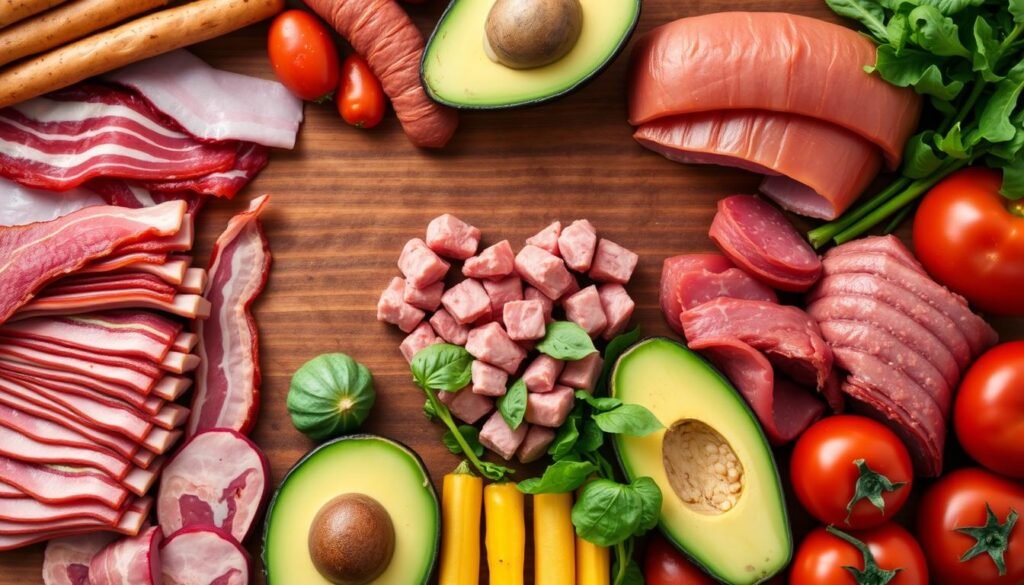
Processed meats, like bacon and hot dogs, pose real risks to heart health. They are loaded with saturated fats and sodium. Studies show eating these meats often can lead to serious health problems. It’s crucial to think about their effect on our health.
The Impact of Processed Meats on Heart Health
Eating processed meats can greatly increase your risk of heart disease, by 46%. Every serving matters and raises the danger. These meats boost “bad” LDL cholesterol, mainly because they are rich in saturated fats. Eating lots of them can cause heart problems, type 2 diabetes, and some cancers.
We need to cut down on processed meats to take care of our hearts. Choosing a diet with plenty of fruits, veggies, and whole grains helps. It’s also good to pick lean proteins over processed ones. By eating fewer processed meats, we can improve our heart health significantly.
The Role of Full-Fat Dairy Products
Full-fat dairy products have been under the microscope for their high saturated fat. Some thought they could raise cholesterol. But now, studies are showing they have benefits that were missed before.
How Full-Fat Dairy Affects Cholesterol Levels
Full-fat dairy items like milk, cheese, and yogurt are packed with vital nutrients. They contain calcium and vitamin D. They do raise LDL cholesterol, which is not great. But, interestingly, they don’t increase heart disease or stroke risk much.
A study with over 1,400 people showed dairy doesn’t greatly affect blood pressure or cholesterol. Eating full-fat dairy with fruits, veggies, and healthy foods can actually lower heart disease death rates. Fermented dairy products might help with weight control and less fat accumulation. This is likely due to the protein in dairy that keeps you feeling full longer.
Contrary to past advice, full-fat dairy like cheese and yogurt might reduce heart risks. This is not the case with red meat and butter, which have higher heart disease risks. It suggests we need to rethink how we view full-fat dairy in diets.
Reading food labels can help those watching cholesterol make better choices. Don’t just cut out all full-fat dairy—think about including it as part of a balanced diet. There is growing evidence that full-fat dairy can be part of a healthy diet. It’s making experts and people rethink its role. For more info, check out this related article.
Conclusion
It’s key to manage cholesterol for heart health, starting with what we eat. Studies in 2022 show lowering dietary cholesterol cuts heart attack and stroke risks. So, it’s vital to avoid foods high in trans and saturated fats to keep cholesterol down.
Eating right means choosing whole grains, fruits, veggies, and lean meats. According to the Dietary Guidelines for Americans, fats should be less than 10% of our daily calories. This calls for smart eating choices. Being active regularly also helps manage cholesterol.
A healthy lifestyle helps avoid bad cholesterol foods. This includes good eating, exercising, and regular check-ups. As we learn more, we can make better choices for our hearts.