Did you know Americans eat over 41 pounds of cheese each year? This number has almost doubled in the last 40 years. It shows how much we love cheese. But, if you’re worried about heart health and cholesterol, you might wonder: is cheese high in cholesterol?
This article explores how cheese affects cholesterol and heart health. It’s important to understand different types of cholesterol and the impact of what we eat. Some cheeses are high in saturated fat. This can increase cholesterol levels.
To choose wisely when it comes to cheese, you can use tools like cholesterol tracking tables. They help you check the nutrition in different cheeses. This way, you can still enjoy cheese without harming your health.
Key Takeaways
- Americans average over 41 pounds of cheese consumption per year.
- Cheddar cheese contains about 6 grams of saturated fat in a 1-ounce slice.
- It’s recommended that individuals limit saturated fat intake to 11-13 grams per day based on a 2,000-calorie diet.
- Reduced-fat cheeses are a better choice for those monitoring cholesterol levels.
- Understanding dietary cholesterol helps in making healthier choices regarding cheese.
- The American Heart Association advises incorporating low-fat dairy options in a heart-healthy diet.
Understanding Cholesterol and Its Types
Cholesterol is a waxy substance our bodies make. It helps with hormone production and cell function. Knowing the different types of cholesterol is key to managing it. There are two main kinds: LDL and HDL cholesterol. LDL is often called “bad” cholesterol because it can build up in arteries. On the other hand, HDL is “good” cholesterol. It helps remove LDL from the blood.
The Role of LDL and HDL Cholesterol
It’s important to have the right balance of LDL and HDL for a healthy heart. Too much LDL can lead to heart disease and stroke. People should watch their diet to control LDL levels. Eating too much from animals can raise cholesterol. Also, it’s best to eat less unhealthy fats like saturated and trans fats. Eating foods high in soluble fiber can lower LDL. Health experts suggest 10 to 25 grams of it every day.
How Cholesterol Affects Heart Health
Keeping an eye on cholesterol levels is crucial for your heart. You should limit saturated fat in your diet. Aim for it to be 5% to 6% of daily calories. Avoid trans fats found in fast and processed foods completely. Following diets like the Mediterranean Diet or the TLC program is helpful. They focus on eating more plants and less bad fats. Adding more fish and veggies to your diet can also help manage cholesterol levels.
What Happens When You Eat Cheese?
Cheese is loved by many for its taste and nutritional value. It’s rich in calcium and protein. But, it’s important to watch how much you eat because of cheese and cholesterol. Knowing the benefits and risks helps you enjoy cheese in a healthy way.
Nutritional Benefits of Cheese
Cheese has several key nutritional benefits:
- Calcium: A 1-ounce piece of Cheddar has about 200 mg of calcium. That’s almost one-third of what you need each day.
- Protein: Cheese is packed with protein. This helps keep muscles healthy and strong.
- Probiotics: Certain cheeses, like Swiss and Gouda, are good for your gut because they have probiotics.
- Heart Health: Studies show eating full-fat cheese might actually lower bad cholesterol in your body.
Eating cheese in moderation can be part of a healthy diet. The American Heart Association advises limiting saturated fats to 6% of total calories each day. So, you can enjoy cheese’s taste while managing cholesterol.
Potential Risks of Cheese Consumption
Eating too much cheese can have downsides:
- Saturated Fat: Cheese is high in saturated fats, making up about 60% of its fat. Too much can raise cholesterol.
- Sodium: A lot of cheeses are salty, raising blood pressure. Try to stay under 1,500 mg of sodium each day.
- Cholesterol Impact: Cheeses like cheddar and gouda have over 25 milligrams of cholesterol per ounce. People with high cholesterol should be careful.
Keeping an eye on cholesterol is key for a healthy heart. Getting your cholesterol checked regularly and eating wisely, like limiting cheese, helps lower heart disease risk. To learn more about healthy cholesterol levels, click here.
Is Cheese High in Cholesterol?
Cheese is loved by many and raises questions about its cholesterol impact. Different kinds of cheese have different cholesterol amounts. This can affect what people choose to eat, especially those looking after their heart health. Knowing about cheese’s cholesterol helps consumers make smart choices.
Cholesterol Content in Different Types of Cheese
Different cheeses have various levels of cholesterol. For example, Swiss cheese has about 20 mg of cholesterol per slice. On the other hand, a 30g chunk of cheddar offers lots of calcium, more than a quarter of what an adult needs daily. Cheese singles, roquefort, and halloumi have more salt, which matters for a balanced diet.
Comparing Cheese with Other Foods High in Cholesterol
Looking at other foods highlights cheese’s cholesterol level. A large egg has 207 mg of cholesterol, and canned shrimp has 214 mg per 3-ounce serving. Yet, common cheeses like brie and edam, despite their 26g of fat per 100g, have less cholesterol. So, cheese does add to cholesterol intake but might not be as harmful as other foods in our diets.
Cheese Nutrition Facts
Exploring cheese nutrition facts opens up lots of interesting insights. Cheese has different calorie counts and nutrients based on its type. In this discussion, we look at the nutritional content of some popular cheeses. This shows how special each cheese is.
Calories and Macronutrients in Cheese
Each cheese variety brings its own set of nutrients:
| Type of Cheese | Serving Size | Calories | Protein (g) | Fat (g) | Carbs (g) | Calcium (% DV) |
|---|---|---|---|---|---|---|
| Cheddar | 1 cubic inch | 69 | 4 | 6 | 0.8 | 28 |
| Mozzarella | 1 ounce (28g) | 85 | 6 | 6 | 1 | 11 |
| Blue Cheese | 1 ounce (28g) | 100 | 6 | 8 | 1 | 12 |
| Feta | 1 ounce (28g) | 75 | 4 | 6 | 1 | 11 |
| Cottage Cheese (Low-Fat) | 1 ounce (28g) | 23 | 3 | 0.8 | 1.3 | 2.3 |
| Ricotta (Whole Milk) | 1 ounce (28g) | 42 | 2 | 2.9 | 2 | 4.5 |
| Parmesan | 1 ounce (28g) | 111 | 10 | 7 | 1 | 26 |
| Swiss | 1 ounce (28g) | 111 | 8 | 9 | 0.4 | 19 |
Vitamins and Minerals Found in Cheese
Cheese offers more than just calories and fats. It’s rich in vitamins and minerals too. Take cheddar, for example, it’s loaded with calcium. Calcium is crucial for strong bones and might help prevent osteoporosis. Choosing wisely means gaining all the health benefits cheese has.
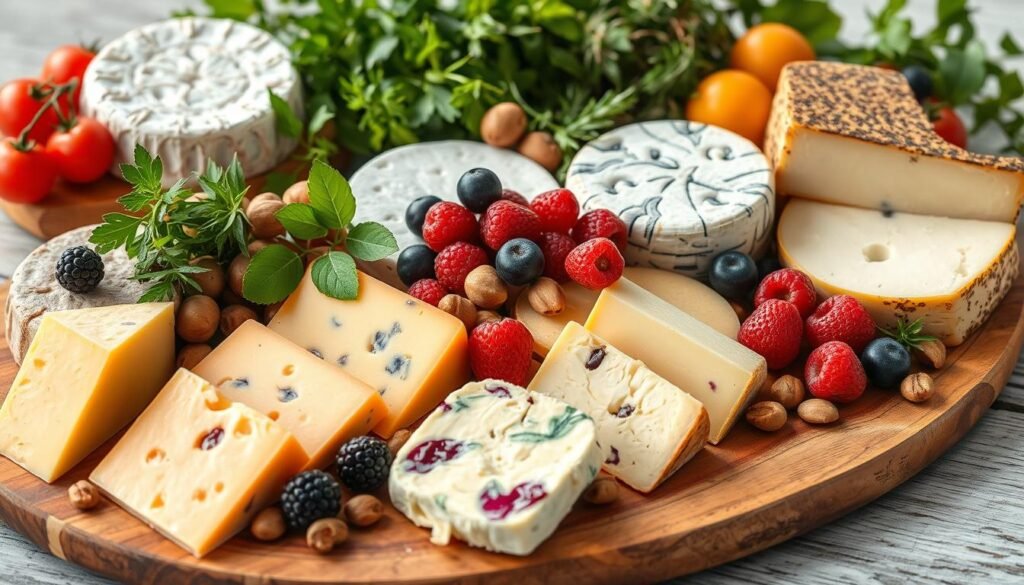
Influence of Saturated Fat in Cheese
Understanding the role of saturated fat in cheese is crucial for heart health. Many hard cheeses have a lot of saturated fat. For instance, an ounce of hard cheese has about 6 grams of saturated fat.
This is almost half the daily limit for a 2,000-calorie diet. The impact of saturated fat on heart health is a hot topic among experts.
Saturated Fat and Heart Health
Not all saturated fats are the same for heart health. Studies show cheese might lower bad cholesterol more than other saturated fats like butter. This means the type of cheese and your diet play a role.
Moderately eating cheese could be good for the heart, especially in women. But too much saturated fat increases the risk of heart disease. Knowing these details helps people choose their food wisely.
Recommended Daily Intake of Saturated Fat
The U.S. Dietary Guidelines recommend eating less saturated fat. They say to keep it below 10% of your daily calories, which is about 22 grams on a 2,000-calorie diet. To reduce risks, try cheeses with less saturated fat, like goat or Swiss cheese.
Choosing these cheeses lets you enjoy them without hurting your heart health. Being smart about which cheese you eat makes a difference.
| Type of Cheese | Saturated Fat (g per 1 oz) | Calories | Protein (g) | Calcium (mg) |
|---|---|---|---|---|
| Cheddar | 6 | 120 | 8 | 180 |
| Cottage Cheese (4% Fat) | 3 | 120 | 14 | 80 |
| Goat Cheese | 4 | 100 | 6 | 60 |
| Swiss Cheese | 5 | 110 | 8 | 200 |
How Dietary Cholesterol Affects Blood Cholesterol
Dietary cholesterol has been debated for years. Recent studies suggest it may not significantly alter blood cholesterol levels. The emerging consensus focuses on the importance of genetics and overall dietary habits.
Current Research Findings on Dietary Cholesterol
Research shows dietary cholesterol’s effects on blood cholesterol vary by individual. Foods rich in plant sterols or stanols can lower LDL cholesterol by 5% to 15%. This happens when 2 grams are consumed daily. Also, whey protein supplements help reduce LDL and total cholesterol levels, supporting heart health.
Individual Variability in Cholesterol Response
The response to dietary cholesterol varies from person to person. Some individuals may improve their cholesterol levels with specific lifestyle changes. For instance, eating avocado twice a week can boost HDL cholesterol, lowering heart disease risk.
Following the Mediterranean diet helps too. It suggests replacing saturated fats with healthier fats to better heart health.
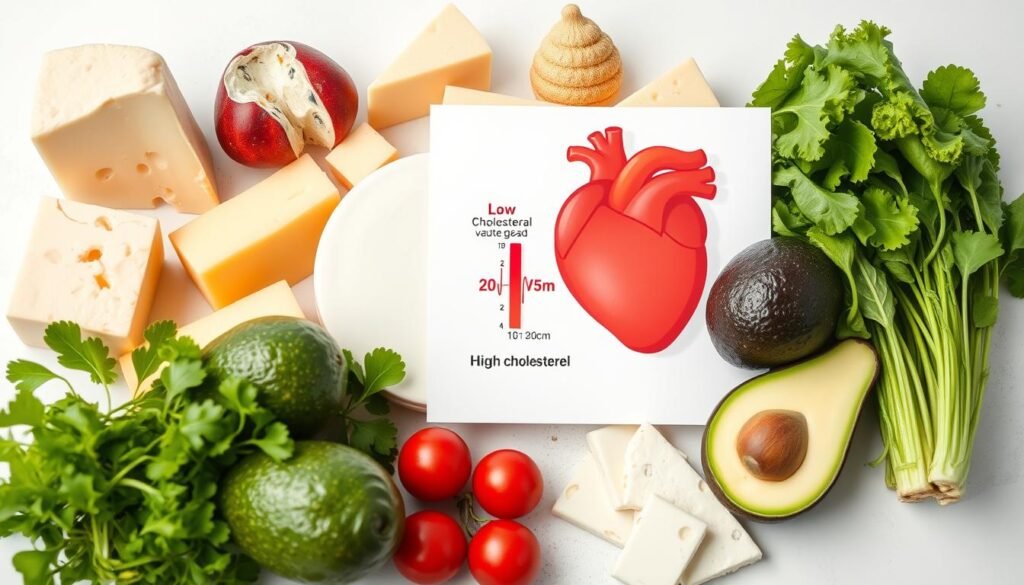
It’s key to understand how fats impact cholesterol levels. Limiting saturated fats to less than 7% of daily calories can cut LDL cholesterol by 8% to 10%. Choosing healthier oils like olive, canola, or sunflower oil benefits blood cholesterol. For more insights, check out current research findings on cholesterol.
Types of Cheese and Their Cholesterol Levels
Knowing how much cholesterol is in different cheeses helps us eat healthier. Cheeses can be split into two groups: those with high cholesterol and those with less. The amount of cholesterol varies a lot between high-fat and low-fat cheeses. This difference affects how healthy they are.
High-Fat Cheese vs. Low-Fat Cheese
High-fat cheeses have more cholesterol. This is not good for people watching their cholesterol levels. For instance, Brie has about 28.4 mg of cholesterol per ounce. Regular Cheddar has around 28.1 mg per ounce. On the other hand, cheeses with less cholesterol are a better choice for health.
Low-fat Cheddar has only 6 mg of cholesterol per ounce. Low-fat cottage cheese has just 3.4 mg. This shows the big difference in options available.
Examples of Popular Cheeses and Their Nutritional Profiles
| Cheese Type | Cholesterol (mg) | Fat (g) | Saturated Fat (g) |
|---|---|---|---|
| Cheddar | 28.1 | 9.5 | 5.4 |
| Brie | 28.4 | 7.9 | 4.9 |
| Feta | 25.3 | 6.1 | 3.8 |
| Low-Fat Cheddar | 6 | 2 | 1.2 |
| Low-Fat Cottage (2%) | 3.4 | 0.6 | 0.4 |
| Part-Skim Ricotta | 9 | 3 | 1.4 |
| Whole Mozzarella | 22 | 6.5 | 3.5 |
Cheese and Heart Health
Research shows moderate cheese eating could be good for you. It gives you proteins and calcium for better health. Eating cheese with fruits, veggies, and whole grains may help your heart.
Potential Benefits of Moderate Cheese Consumption
Eating cheese in the right amounts might help your heart. One study found people who ate cheese daily lowered their bad cholesterol. Unlike butter, cheese in a balanced diet might improve heart health. Cheese is also a big source of important nutrients. It gives 21 percent of calcium, 11.4 percent phosphorus, and 9.2 percent vitamin A.
Heart-Healthy Foods to Pair with Cheese
Adding heart-friendly foods with cheese is smart. Try it with:
- Whole grain crackers
- Fresh fruits like apples and pears
- Nuts such as almonds or walnuts
- Vegetables, like bell peppers and cucumbers
This mix is not just tasty but good for the heart. Studies show full-fat dairy like cheese might not raise heart disease risk. The way cheese nutrients work together could protect heart health.
Choosing Low Cholesterol Cheese Options
Choosing the right cheese is key for a heart-healthy diet. Some cheeses are both tasty and good for you. They have less fat and salt but still make your meals delicious. By choosing wisely, you can enjoy cheese and stay healthy.
Recommendations for Heart-Healthy Cheese Choices
Here are some tips for picking low cholesterol cheese:
- Go for cheeses from non-fat milk like mozzarella and ricotta.
- Pick light or fat-free cream cheese and sour cream to cut down on fat.
- Avoid eating too much high-fat cheese, like Cheddar and Cream Cheese. They have a lot of fat.
- Choose cheeses with less sodium. For example, Swiss cheese has much less sodium than processed cheeses.
How to Incorporate Low Cholesterol Cheese in Your Diet
Adding low cholesterol cheese to meals is fun and tasty. Here are some ideas:
- Add part-skim mozzarella to pizzas and pasta for a healthier option.
- Put reduced-fat cheese in salads to enhance flavor without extra fat.
- Spread light cream cheese on whole grain toast or bagels for a healthy breakfast.
- Try substituting regular cheese with low-fat versions in your favorite recipes.
Using these low cholesterol cheese choices helps you enjoy meals while caring for your heart.
| Type of Cheese | Calories (per 1 oz) | Fat (g) | Saturated Fat (g) | Sodium (mg) | Protein (g) | Calcium (mg) |
|---|---|---|---|---|---|---|
| Cottage Cheese | 75 | 1 | 1 | 373 | 14 | 83 |
| Ricotta (Part-Skim) | 90 | 5 | 3 | 140 | 7 | 82 |
| Swiss | 110 | 9 | 5 | 53 | 8 | 272 |
| Reduced-Fat Cream Cheese | 70 | 5 | 3 | 230 | 2 | 27 |
Practical Tips for Enjoying Cheese in Moderation
Enjoying cheese can be a delightful experience. It’s great when eaten as part of a balanced diet. Knowing how much to eat and choosing wisely helps us enjoy cheese without harming our health. Here are some tips to enjoy cheese while keeping your health in mind.
Serving Sizes and Portion Control
It’s important to keep an eye on how much cheese you eat. The American Heart Association suggests eating only one to two matchbox-sized pieces a day, about 30 grams each. Here’s a table showing different types of cheese and how much you should eat:
| Cheese Type | Recommended Serving Size (grams) | Calories per Serving |
|---|---|---|
| Cottage Cheese | 30 | 27 |
| Feta Cheese | 30 | 80 |
| Part-Skim Mozzarella | 30 | 70 |
| Goat Cheese | 30 | 80 |
| Cheddar Cheese | 30 | 120 |
Choosing cheeses like ricotta and part-skim mozzarella can lower your fat intake. You might also try plant-based cheeses for even less saturated fat. Eating cheese with foods high in fiber, like fruits, veggies, and grains, helps balance your diet and manage cholesterol.
Healthy Recipes Using Cheese
There are creative ways to enjoy cheese without too many calories or fat. Here are a few ideas:
- Cottage Cheese Salad: Mix cottage cheese with chopped veggies and herbs for a healthy dish.
- Feta and Spinach Stuffed Peppers: Combine feta with spinach and quinoa, stuff it into bell peppers, and bake them.
- Part-Skim Mozzarella Caprese: Layer mozzarella with tomatoes and basil, then add a splash of balsamic vinegar.
- Grated Cheese Topping: Sprinkle a small amount of grated cheese over pasta or salads instead of using thick slices to cut down on calories.
These recipes show healthy ways to eat cheese. Mixing cheese with other nutritious foods makes it a tasty, healthy part of your diet.
Conclusion
Knowing how cheese and cholesterol relate is key for heart health. Cheese has cholesterol, but eating it in moderation might not hurt your cholesterol levels much. This means the question “is cheese high in cholesterol?” doesn’t have a simple answer.
Studies show that cheese can be part of a healthy diet without bad effects on cholesterol. One study found that overweight adults eating full-fat Irish cheddar cheese lowered their cholesterol. The trick is to eat cheese in small amounts and choose wisely.
Choosing low-fat cheeses helps keep your heart healthy. Control how much cheese you eat and mix it with foods that are good for your heart. This way, you can enjoy cheese without worrying too much. For more on cheese and cholesterol, check out this detailed resource for more info and tips.