About two in five people in the UK might have high cholesterol without knowing. They only find out after facing health issues or getting a blood test. High cholesterol doesn’t show symptoms but can cause serious problems like heart disease and strokes. It’s important to notice signs of high cholesterol on the face. Signs like cholesterol deposits around the eyes can hint at health risks.
Small yellow lumps, called xanthelasmas, can show up near the eye’s inner corner. They are seen in about half of the people with high cholesterol. A pale white ring around the iris, known as corneal arcus, is another sign. These signs are crucial for early warning. They push people to get tested and make lifestyle changes. To handle cholesterol levels, it’s advised to get regular blood tests and live healthily. For more info, check out this link or learn how to keep a healthy cholesterol HDL ratio here.
Key Takeaways
- High cholesterol often presents no symptoms, making awareness crucial.
- Xanthelasmas and corneal arcus are notable visual signs on the face.
- Family history can increase the likelihood of high cholesterol levels.
- Regular cholesterol testing is vital, especially for those at risk.
- Healthy lifestyle choices can significantly improve cholesterol control.
Introduction to High Cholesterol
High cholesterol, known as hyperlipidemia, comes from genetic factors and lifestyle choices. It often shows no symptoms, highlighting the cholesterol testing importance. Around 94 million U.S. adults have cholesterol levels over 200 mg/dL.
To fight hyperlipidemia, being aware and proactive is crucial. Kids should start getting cholesterol checks early on. For people assigned male at birth (AMAB), it’s every five years up to 45. Then, it changes to every one to two years until 65, and yearly after that. For those assigned female at birth (AFAB), screenings are every five years until 55, then every one to two years for a decade, and yearly after 65.
Lifestyle heavily affects cholesterol. Smoking, drinking too much, and not exercising can raise cholesterol, risking heart issues. High blood pressure also plays a role, with one in three U.S. adults affected by both. Sadly, over half might not seek needed treatment.
For those with chronic illnesses like kidney disease, high cholesterol and heart disease risks are higher. Making healthier life choices, like improving diet and exercising regularly, can help a lot. To learn more about cholesterol tests, check making sense of the numbers.
Understanding High Cholesterol and Its Effects
High cholesterol has serious effects of high cholesterol on health, mainly by increasing heart and artery issues. High levels of LDL (“bad”) cholesterol cause plaque to build up in arteries. This ups the risk for heart disease and stroke. On the other hand, HDL (“good”) cholesterol helps by removing LDL from the blood.
It’s key to check cholesterol levels regularly through a lipid panel. This blood test looks at total cholesterol, LDL, HDL, and triglycerides. A full view of your cholesterol health comes from these numbers. If your LDL is over 160 mg/dL, your health risks of high cholesterol go up, including heart problems.
Watch for signs of high cholesterol. Yellowish deposits near the eyelids or bumps on the face could indicate issues. Other hints include arcus senilis, a gray ring around the cornea. It’s seen more in young people with high cholesterol. These visible signs suggest possible metabolic imbalances. So, regular health checks are vital for catching and managing high cholesterol early.
Identifying the Signs of High Cholesterol on Face
Your face can tell a lot about your cholesterol levels through certain signs. Knowing these signs is key to catching health problems early. Let’s look at some facial signs to watch out for.
Xanthelasmas: Soft Yellow Bumps on Eyelids
Xanthelasmas appear as soft, yellowish bumps around the eyelids. These bumps might not hurt but they’re a clear sign of high cholesterol. If you have them, it’s time to think about your health. Seeing a doctor and keeping an eye on your cholesterol levels is important.
Corneal Arcus: A Gray Ring Around the Eye
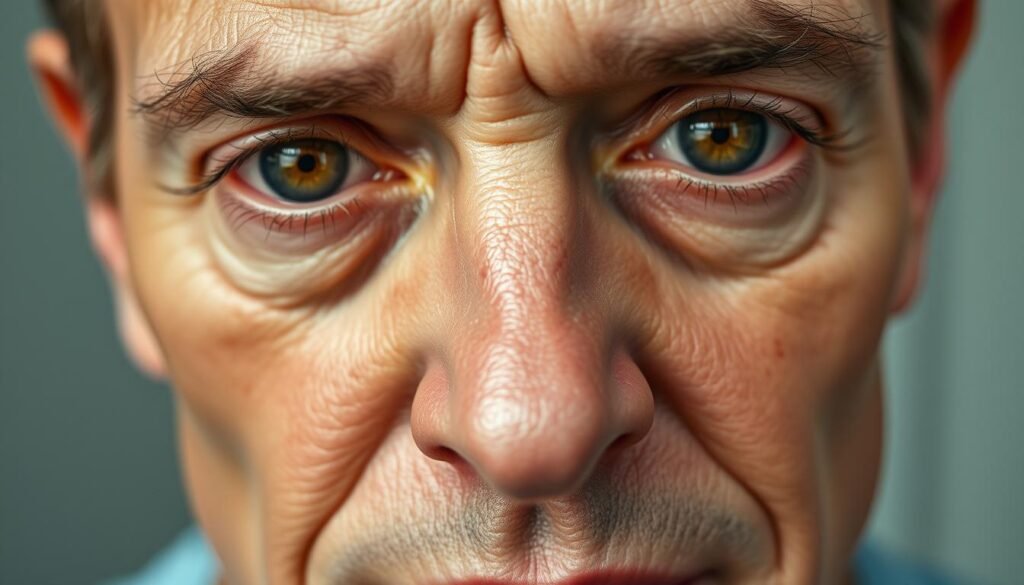
A grayish-white ring around the cornea, known as corneal arcus, could mean high cholesterol. This is especially true for younger people. Even though it’s more common in the elderly, young people with it should check their cholesterol. Early action can help avoid heart problems down the line.
Eruptive Xanthoma: Multiple Skin Lesions
Eruptive xanthoma shows up as reddish or yellow bumps. This condition points to very high triglyceride levels. You might see these bumps not just on the face but other body parts too. They indicate serious hyperlipidemia that needs medical attention. Being aware of these facial symptoms is the first step towards maintaining good health.
| Facial Sign | Description | Associated Cholesterol Readings |
|---|---|---|
| Xanthelasmas | Soft yellow bumps on eyelids | Elevated levels of cholesterol |
| Corneal Arcus | Grayish-white ring around cornea | Indicates high cholesterol, especially in younger individuals |
| Eruptive Xanthoma | Reddish or yellow bumps on skin | Sign of very high triglyceride levels |
Facial Xanthelasma and Cholesterol Deposits Around Eyes
Facial xanthelasma shows up as soft, yellowish spots of cholesterol near the eyes. These spots often point to possible cholesterol problems. Even though xanthelasma can occur without serious health issues, they usually signal high cholesterol. They are most common in middle-aged women more than in men.
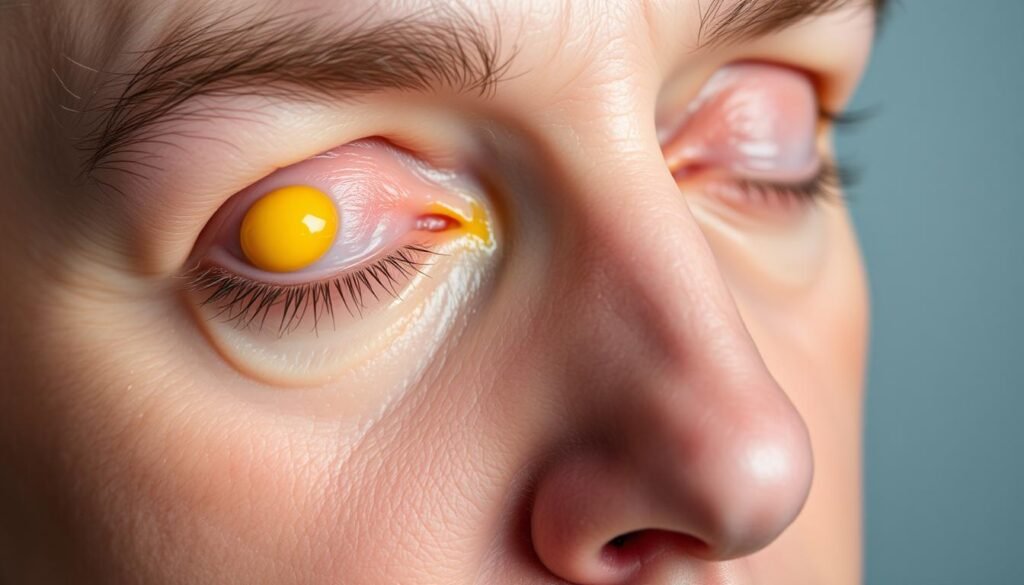
Xanthelasma may not cause immediate health issues. Yet, they could suggest dyslipidemia. This condition means abnormal blood lipid levels, raising heart disease risk. These cholesterol spots are linked to genes and lifestyle. This includes eating foods rich in saturated fats and not exercising enough.
Seeing a doctor about facial xanthelasma is vital. They can check your cholesterol and suggest changes or treatments. Although fixing lipid levels won’t clear current spots, it’s key to avoid new health risks. Treating the cholesterol problem can stop more deposits from appearing.
Recognizing Yellowish Cholesterol Patches on Skin
Yellowish patches called xanthomas are signs of high cholesterol. They vary in size, even reaching 3 inches. These bumps might show up alone or in groups on the knees, elbows, hands, feet, buttocks, and eyelids.
These patches indicate there’s too much cholesterol in the body. Mainly, high levels of blood lipids cause xanthomas. It’s important to pay attention to these signs to avoid serious health issues. If you notice them, getting medical advice is key.
Some conditions leading to high lipid levels can make these patches more likely. Xanthelasma palpebrarum, found on the eyelids, hints at cholesterol problems but isn’t usually harmful. Doctors may do biopsies and blood tests to check lipid levels and related health risks.
Lowering cholesterol often means changing your lifestyle. This includes better diet and more exercise. These changes can make cholesterol bumps shrink, showing why early medical help matters.
For more details on facial signs of high cholesterol, check out this article. Learning about these signs helps you focus on your health and take action.
| Characteristic | Details |
|---|---|
| Size | Can grow up to 3 inches across |
| Appearance | Single or in clusters |
| Common Locations | Knees, elbows, hands, feet, buttocks, eyelids |
| Causes | Excess blood lipids (cholesterol, triglycerides) |
| Medical Evaluation | Biopsies and blood tests |
| Treatment Approaches | Lifestyle changes, dietary modifications, exercise, medication |
Link Between Skin Cholesterol Bumps and High Lipid Levels
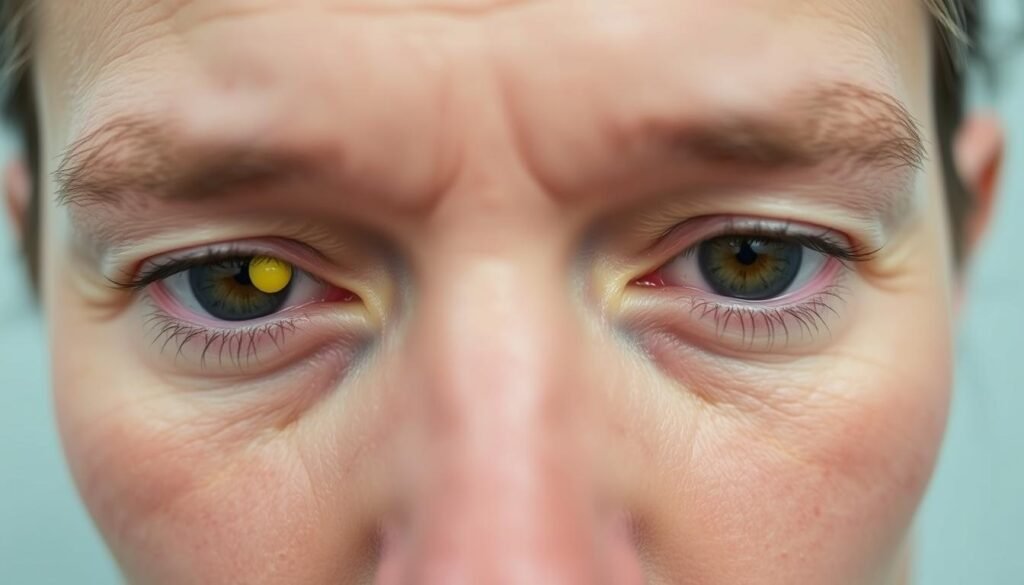
Skin cholesterol bumps hint at issues with managing lipids in the body. Examples include xanthelasmas and eruptive xanthomas, which appear due to high lipid levels. People may notice these visible cholesterol deposits without any other symptoms. Knowing this link helps spot possible health risks from dyslipidemia.
Understanding Lipid Deposits Under Skin
Lipid deposits appear when cholesterol and triglycerides are too high. They can show up around the eyelids and on parts like the palms and legs. While they might seem harmless, they signal deeper metabolic problems. Here’s what you should know about these deposits:
- Cholesterol deposits are mostly harmless and stay put.
- Genes, lifestyle, and certain medicines can lead to these bumps.
- Testing your cholesterol regularly helps manage risks.
- The American Heart Association suggests changes in diet and lifestyle for cholesterol control.
Different types of cholesterol deposits have their own features and usual spots on the body. The table below explains more:
| Type of Deposit | Characteristics | Common Locations |
|---|---|---|
| Xanthelasma | Soft yellow bumps, usually painless, often without other health issues | Eyelids |
| Eruptive Xanthoma | Red-yellow to yellow bumps, with possible red halos, firm texture | Buttocks, arms, thighs |
| Palmar Xanthoma | Fleshy plaques with defined borders | Palms |
Professional treatment can manage these lipid deposits and stop them from coming back. Lifestyle and diet changes, along with medical treatments, are strategies. Spotting these bumps early can alert you to bigger cholesterol problems. It allows for quick action to avoid future issues.
Psoriasis and Its Connection to High Cholesterol
Psoriasis shows how skin problems can link to other health issues, like high cholesterol. Studies show a complex connection between them. It’s found that people with psoriasis often have higher cholesterol. This includes total cholesterol, free cholesterol, and LDL cholesterol.
A study with genetic analysis found these lipid levels can be risk factors for psoriasis. About 40% of people with psoriasis also have high cholesterol. This shows a big overlap between the two conditions.
Psoriasis is often found with conditions such as obesity and diabetes. These conditions are known to increase cholesterol levels. Understanding how psoriasis affects overall health is crucial. Chronic inflammation from psoriasis may cause cholesterol to build up in arteries, raising heart disease risks.
Treating psoriasis might help manage cholesterol levels, which is good for the heart. Medications and lifestyle changes can lower both skin symptoms and cholesterol. Ongoing research is key to learning about these linked conditions and improving treatments.
| Research Focus | Key Findings |
|---|---|
| Genetic Studies | Association between high cholesterol and psoriasis confirmed |
| Prevalence of High Cholesterol | Up to 40% of psoriasis patients carry high cholesterol levels |
| Comorbid Conditions | Increased incidence of obesity, diabetes, cardiovascular diseases |
| Cholesterol Effects | Chronic inflammation may lead to higher cholesterol accumulation |
| Treatment Impacts | Effective psoriasis treatment may reduce cardiovascular risks |
Medical Conditions Associated with High Cholesterol
High cholesterol levels often go hand in hand with various health problems. This is especially true for chronic conditions. They can make the risk of serious health issues bigger. Understanding how cholesterol affects health is key for keeping it under control.
Exploring Chronic Conditions and Their Relationship with Cholesterol
There are several chronic conditions tied to high cholesterol, including:
- Diabetes: People with diabetes often have trouble with cholesterol, raising their heart disease risk.
- Chronic Kidney Disease (CKD): CKD can increase bad cholesterol and triglycerides, leading to heart problems.
- Obesity: Being overweight usually means higher cholesterol, which needs lifestyle changes to lower risks.
These conditions and high cholesterol levels need regular checks. Over 94 million Americans aged 20 and above had high cholesterol by 2022. This shows how widespread high cholesterol is and its possible connection to chronic health issues.
People with chronic conditions should start checking their cholesterol at 20. They should continue testing every five years if they’re at low risk for heart disease. Making lifestyle changes is very important for managing cholesterol. Key steps include:
- Following a heart-healthy diet with less saturated and trans fats.
- Doing regular exercise.
- Reducing stress.
- Quitting smoking.
Cholesterol-lowering medicines can also help manage high levels. Combining lifestyle changes and medical treatment is essential. This approach helps people with chronic conditions and cholesterol problems achieve better health and lower heart disease risk.
| Condition | Effect on Cholesterol |
|---|---|
| Diabetes | Increases risk of dysregulated cholesterol levels |
| Chronic Kidney Disease | Elevates triglycerides and VLDL cholesterol |
| Obesity | Typically results in higher overall cholesterol |
When to Consult a Doctor About Facial Signs
Knowing the facial signs that need a doctor’s look is key for your health. If you see yellowish bumps or odd skin changes, it’s time to act. This is especially true if high cholesterol or heart disease runs in your family. Catching these signs early is very important for taking care of your health.
There are certain signs that mean you should maybe see a doctor:
- Xanthelasma: Yellow cholesterol patches around the eyes could mean your cholesterol is too high.
- Arcus Senilis: A grayish circle around the iris in young people might be a cholesterol warning.
- Dry or Cracked Lips: These could point to being dehydrated or having an allergic reaction, needing a check-up.
- Ptosis: Eyelids sagging could be a sign of a deeper health issue.
- Facial Rash resembling Lupus: If this comes with fever or joint pain, see a doctor right away.
It’s important to know when to seek help if you notice any of these signs. This is especially true if you’re overweight, don’t exercise much, or eat poorly. Getting checked regularly and having blood tests can keep those at risk informed. Not paying attention to these symptoms could lead to worse health problems later.
High cholesterol can sneak up without any clear signs. This is why being alert is so important. If you notice any strange signs on your face, acting quickly can ease your worry. It helps you take charge of your health.
Conclusion
Knowing how to spot high cholesterol signs on the face is key to good health. Signs like xanthelasmas, corneal arcus, and changes in skin color can warn us about high cholesterol. These signs can hint at health dangers like heart disease or stroke. It’s critical to pay attention to them.
To manage high cholesterol, we must act early. This means getting tested often, changing our lifestyle, and following doctors’ advice. Factors like bad eating habits, not exercising, and smoking play a big role in high cholesterol. We need to tackle these issues to get healthier.
Also, some supplements, like krill oil, can help control cholesterol and aid heart health.
A true health plan involves eating better, moving more, and handling stress well. We must also see doctors when necessary. By doing these things, we can manage our cholesterol better. This helps us live a healthier life and lowers the danger of high cholesterol.