94 million American adults have high cholesterol. This is a big health issue. It shows why choosing the right foods is crucial. High cholesterol doesn’t show symptoms until serious problems occur. Problems like heart attack and stroke are linked to high cholesterol. Knowing what foods are high in cholesterol is key for heart health.
This article will cover cholesterol-rich foods to stay away from. It also talks about better food choices that help manage dietary cholesterol. By understanding this, you can take steps to better your health and lower cholesterol risks.
Key Takeaways
- High cholesterol affects 94 million adults, increasing the risk of heart disease.
- Heart attacks and strokes are common outcomes of unmanaged cholesterol levels.
- Maintaining healthy cholesterol involves consistent healthy habits.
- Many high-cholesterol foods can be easily integrated into a balanced diet.
- Understanding the role of dietary cholesterol is essential for heart health.
Understanding Cholesterol and Its Role in the Body
Cholesterol is a waxy substance important for our bodies. It helps make hormones, cell membranes, and vitamins. The importance of cholesterol is huge, yet high levels are risky. High cholesterol in the blood can cause heart disease and stroke. So, keeping cholesterol at the right level is key for health.
What is Cholesterol?
Cholesterol moves in our blood and is crucial for cells to work right. There are two main kinds: LDL and HDL. LDL, or “bad” cholesterol, can block arteries. HDL, the “good” cholesterol, cleans LDL from the blood.
The Importance of Cholesterol for Hormones and Cells
Cholesterol is needed to make hormones like estrogen and testosterone. It also keeps cell walls strong. But, too much cholesterol brings problems like atherosclerosis, leading to heart attacks and strokes. Eating foods with a lot of saturated and trans fats raises bad cholesterol. This shows how cholesterol levels in food affect heart health.
| Type of Cholesterol | Function | Health Impact |
|---|---|---|
| LDL | Transports cholesterol to cells | High levels can lead to plaque buildup |
| HDL | Removes cholesterol from the bloodstream | Lower risk of heart disease |
| Dietary Cholesterol | Found in animal products | Affects blood cholesterol modestly |
Why High Cholesterol Can Be Dangerous
High cholesterol brings many health risks, leading to severe conditions. It is key to grasp these dangers for heart health and avoiding complex health issues. Conditions like atherosclerosis and heart disease show the danger of high cholesterol. Various factors, such as diet, can raise cholesterol levels.
Health Risks Associated with High Cholesterol Levels
Raised cholesterol can cause big health issues. The National Heart, Lung, and Blood Institute suggests checking cholesterol often. This is vital for anyone over 45 or those with obesity and lack of activity. Chronic conditions and lifestyle choices may change cholesterol levels too. Risk factors include:
- Inactivity and obesity
- High-salt and high-fat diets
- Smoking and excessive alcohol consumption
- Age and chronic health issues
Atherosclerosis: The Link Between Cholesterol and Heart Disease
Atherosclerosis happens when bad foods increase arterial plaque. This makes arteries narrow, upping heart disease risks, including chest pain or heart attacks. The American Heart Association urges eating better to cut bad cholesterol (LDL) and boost good cholesterol (HDL). Choosing healthier foods with more fruits, veggies, whole grains, and healthy fats is crucial for cholesterol management and heart health.

What Foods Are High in Cholesterol: A Comprehensive List
Knowing the cholesterol in foods helps us choose what to eat wisely. Some foods are nutritious but have a lot of cholesterol. This can affect our health if we eat too much of them. It’s important to know which foods have cholesterol and how much. This way, we can keep a healthy diet.
Cholesterol Content in Common Foods
| Food Item | Cholesterol Content (mg) | Total Fat (g) |
|---|---|---|
| Egg (1 large) | 212 | 5 |
| Chicken Liver (3.5 oz) | 631 | 6 |
| Cheddar Cheese (1 oz) | 30 | 9 |
| Non-Fat Milk (1 cup) | 4 | 0 |
| Tofu (1/2 cup) | 0 | 11 |
Cholesterol-Rich Foods Not to Overlook
Some foods high in cholesterol might surprise you. Like seafood and certain meats. Foods like shrimp and crab are okay in small amounts. Cholesterol is only in animal products, not in fruits or vegetables. People at risk of heart disease should eat less than 200 milligrams of cholesterol a day. Knowing about foods high in cholesterol, like liver and fatty meats, is important. To learn more about cholesterol and diet, read this article.
Cholesterol-Raising Foods to Avoid
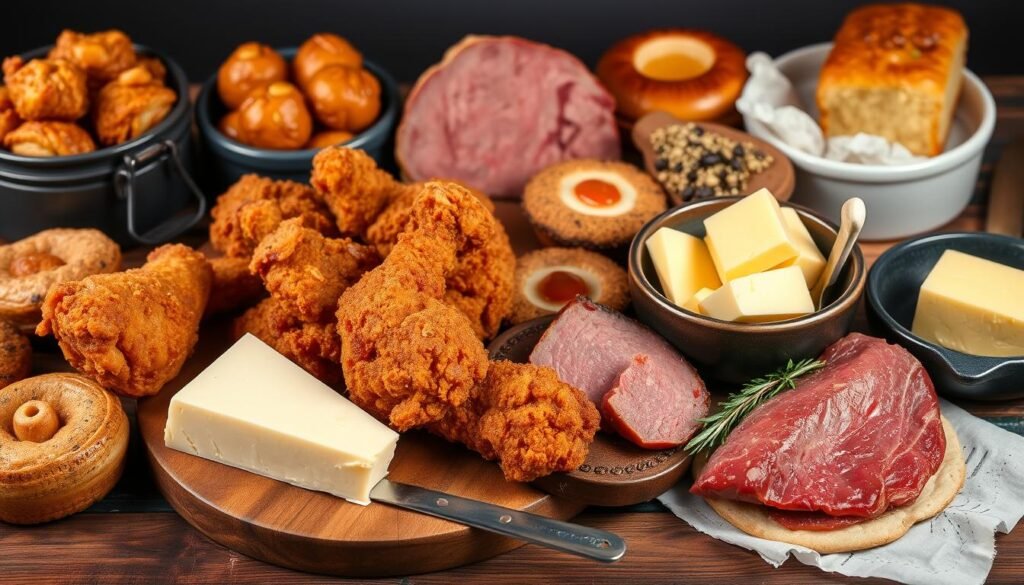
Keeping your cholesterol healthy is key for heart well-being. Certain foods to avoid for high cholesterol can really affect your levels. Foods like processed meats and fried items are big no-nos in your diet.
Processed Meats and Their Impact on Cholesterol Levels
Processed meats, think bacon and sausages, pack a lot of saturated fats and sodium. They bump up cholesterol and heighten heart disease risk. Swap them out for lean meats like turkey, chicken, or go for plant-based proteins. Making smart food choices can do wonders for your health.
Fried Foods: How They Affect Heart Health
Frying food introduces unhealthy trans fats, shooting up cholesterol. Regularly eating fried chicken and fries can increase weight and bad LDL cholesterol. Try baking, grilling, or steaming your meals for better cholesterol health.
Understanding the Risks of Fast Food
Fast food may be quick, but it’s full of bad carbs, fats, and sugars that raise cholesterol. Options like burgers, fries, and sugary drinks worsen health issues with frequent eats. Knowing which foods to avoid for high cholesterol can lead to smarter eating habits and a healthier heart.
| Food Type | Impact on Cholesterol | Healthier Alternatives |
|---|---|---|
| Processed Meats | High in saturated fat | Lean meats, plant-based proteins |
| Fried Foods | Contains trans fats | Baked or grilled options |
| Fast Food | High in unhealthy fats and sugars | Homemade meals with whole ingredients |
Healthy Cholesterol Choices: Foods That Can Help
Making the right choices for your cholesterol is key for your health. Some foods high in cholesterol are actually good for you. Eating things like eggs and fatty fish wisely can help a lot.
Nutritious High Cholesterol Foods That Benefit Health
Not all cholesterol-rich foods are bad for you. The cholesterol from meats, eggs, and dairy affects us less than we thought. Healthy picks include:
- Eggs: They’re full of nutrients and protein.
- Fatty Fish: These are great for boosting good cholesterol.
- Full-Fat Yogurt: Good for your gut’s health.
- Avocados: They increase the good cholesterol without harming the bad.
The Role of Whole Foods in Managing Cholesterol Levels
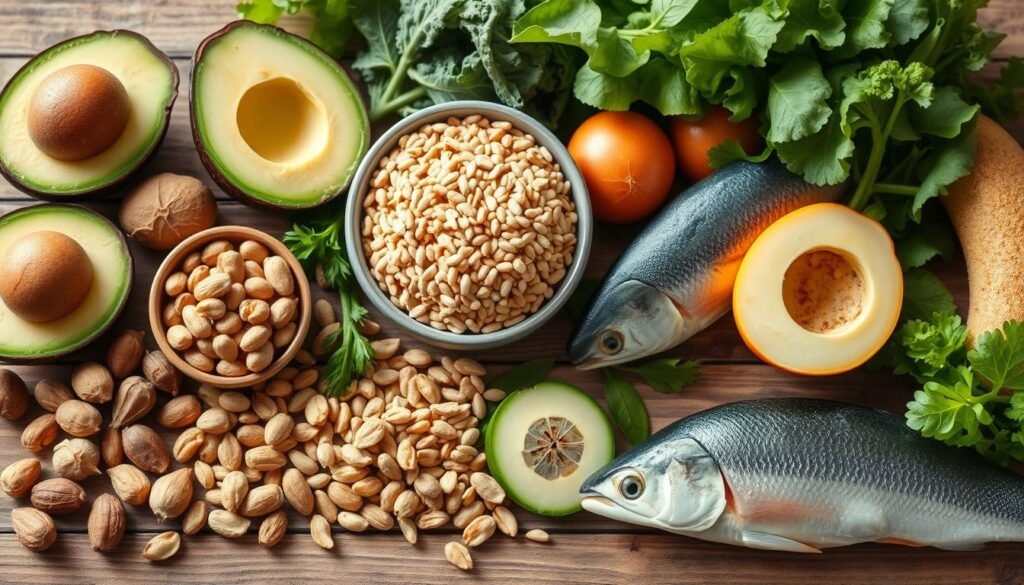
Eating whole foods is crucial for controlling cholesterol. Most people need 21 to 38 grams of fiber but get less. Foods like oats and oranges can lower bad cholesterol.
Fill half your plate with fruits and veggies for more fiber. Choose canned produce in water or with low sodium for a healthier meal. Here’s a summary of foods high in soluble fiber:
| Food | Serving Size | Fiber Content (grams) |
|---|---|---|
| ½ ripe avocado | 1 serving | 2 |
| ¼ cup dried figs | 1 serving | 2 |
| 1 large orange | 1 serving | 2 |
| 1 cup cooked oatmeal | 1 serving | 4 |
| 1 cup cooked barley | 1 serving | 6 |
Eating snacks high in fiber, like fruits with skin and veggies, helps. Choosing whole, unprocessed foods decreases heart disease risk and improves heart health.
How Dietary Habits Influence Cholesterol Levels
What we eat greatly affects our cholesterol. It’s important to know how food changes blood cholesterol levels. While foods like red meat, eggs, and dairy have cholesterol, they may not be as harmful as once thought.
The Relationship Between Dietary Cholesterol and Blood Cholesterol
Now, diet experts focus more on eating healthy than just counting cholesterol milligrams. Despite old limits on egg consumption, many can enjoy an egg daily without worry. Studies, including the PURE study, show eggs don’t impact heart disease risk as feared.
Impact of Fiber and Healthy Fats on Cholesterol
Fiber and healthy fats are key for good cholesterol. Eating 10 to 25 grams of soluble fiber daily blocks bad cholesterol. Foods like grains, nuts, and beans are great for the heart.
Omega-3 fats from fish and nuts lower bad cholesterol. It’s good to eat less saturated fat to keep the heart healthy. Eating this way helps your cholesterol and your heart.
| Dietary Components | Recommended Intake | Sources |
|---|---|---|
| Dietary Cholesterol | As low as possible without compromising nutrition | High-fat meat, eggs, butter, full-fat dairy |
| Soluble Fiber | 10 to 25 grams/day | Whole grains, nuts, legumes |
| Saturated Fat | Less than 7% of daily calories | Processed meats, fried foods |
| Omega-3 Fatty Acids | Include in regular diet | Fish, walnuts, flaxseed |
Making Heart-Healthy Food Choices
Choosing the right foods can really help your heart. Eating foods full of nutrients makes your cholesterol healthier. Here are easy tips for buying and cooking foods that are good for your heart.
Tips for a Heart-Friendly Grocery List
- Prioritize whole foods such as fruits, vegetables, whole grains, and lean proteins.
- Include at least 8 ounces of fish per week, favoring varieties rich in omega-3 fatty acids.
- Choose lean or extra-lean ground meats with no more than 15% fat.
- Opt for low-fat or fat-free dairy alternatives like skim milk and low-fat cheeses.
- Focus on fiber-rich foods, incorporating beans, whole-grain pasta, and bread.
- Select products labeled “low sodium” to help reduce sodium intake.
Strategies for Cooking Healthier Meals
Cooking the right way is key to heart-healthy eating. Using good cooking methods keeps meals nutritious.
- Grill, steam, or bake instead of frying to minimize unhealthy fat consumption.
- Substitute pureed fruits or vegetables for oil in baking to enhance nutritional quality.
- Use liquid vegetable oils like olive, canola, or safflower instead of solid fats such as butter.
- Incorporate a variety of vegetables and fruits in meals, aiming for colorful and nutrient-dense options.
| Food Group | Heart-Healthy Examples | Cooking Methods |
|---|---|---|
| Protein | Fish, Poultry, Legumes | Grilling, Baking |
| Dairy | Skim Milk, Low-fat Yogurt | No added fats in cooking |
| Fats/Oils | Olive Oil, Avocado | Sautéing, Baking with oils |
| Grains | Whole Grain Bread, Brown Rice | Steaming, Boiling |
| Vegetables/Fruits | Fresh, Frozen, Canned Options | Roasting, Steaming |
Managing Cholesterol Through Lifestyle Changes
Making smart lifestyle changes is key to controlling cholesterol. Being active and getting regular health checks are both crucial. They work together to keep cholesterol at a good level.
Benefits of Increased Physical Activity on Cholesterol
Becoming more active is a great way to handle cholesterol. Exercises like walking, cycling, or swimming are beneficial. They not only lower “bad” cholesterol (LDL) but also raise “good” cholesterol (HDL). The American Heart Association suggests doing moderate exercises for 150 minutes a week. This includes:
- Brisk walking
- Swimming
- Cycling
- Dancing
Adding these activities to everyday life helps in losing weight, which is good for cholesterol. Even a small weight loss can have a big impact. Also, stopping smoking boosts HDL cholesterol quickly.
The Importance of Regular Health Checkups
For good cholesterol management, regular health checks are a must. Start checking at 20, or sooner if your family has high cholesterol. These checkups provide key information on heart health and cholesterol control. By keeping an eye on cholesterol regularly, you can make needed changes quickly.
Using tools like cholesterol apps and home tests can improve these efforts. They offer easy ways to monitor cholesterol and promote healthier living.
Conclusion
It’s key to understand dietary cholesterol and its health effects. Foods high in cholesterol impact everyone differently. Some, like eggs and shellfish, may actually be good for your heart. They don’t raise your bad cholesterol much. It’s vital to pick a balanced diet and watch out for bad fats for heart health.
Eating nutritious foods like cheese and full-fat yogurt in moderation is beneficial. They’re packed with vitamins and minerals. But, it’s best to avoid processed and fried foods. Such items can increase heart disease risks due to unhealthy fats. Everyone should try eating more plant-based foods. They are full of omega-3 and fiber, which are great for your cholesterol.
By choosing healthier foods and making lifestyle changes, you can improve your health a lot. A diet rich in whole foods and healthy fats can protect your heart. This approach leads to a healthier life overall. Check out nutritious high-cholesterol foods and heart-healthy food tips for more on managing cholesterol.