Did you know around 95 million adults in the US have high cholesterol? This fact underlines the need for smart food choices. High cholesterol ups the risk of heart disease and stroke. So, it’s key to know which foods to cut back on. The 2020–2025 Dietary Guidelines for Americans suggest eating as little dietary cholesterol as possible to stay healthy.
It’s crucial to pinpoint the foods to avoid with high cholesterol. Doing so helps keep your heart healthy. By managing cholesterol, you can better your heart health and lower the risk of severe health issues. Let’s explore the foods to limit for a healthier life.
Key Takeaways
- High cholesterol affects approximately 95 million adults in the U.S.
- Limit saturated fat to no more than 6% of daily calories to help manage cholesterol levels.
- Avoid trans fats found in margarine, fried foods, and packaged baked goods.
- Dietary cholesterol affects only 20% to 30% of blood cholesterol levels.
- Prioritize heart-healthy diets like the Mediterranean Diet for optimal cholesterol management.
- Plan meals carefully to make better choices when dining out.
Understanding Cholesterol and Its Importance
Cholesterol is a fat-like substance found in all body cells. It helps make cells and hormones. While there’s good and bad cholesterol, too much of it can cause health problems. Many Americans have high cholesterol, leading to heart disease risks.
Understanding and managing your cholesterol can greatly improve your health.
What is Cholesterol?
Cholesterol moves through blood in lipoproteins. These take it to different body parts. There are two main types: LDL (bad) and HDL (good). The importance of cholesterol is in its essential functions. But, too much LDL can cause artery plaque, leading to health risks.
Why Healthy Cholesterol Levels Matter
Keeping cholesterol levels healthy is key to avoiding heart problems. Heart attacks and strokes can happen with high cholesterol. Kids should get their first cholesterol test between 9 and 11 years old. Adults need checks every one to two years.
Genetics and lifestyle choices affect cholesterol. Bad diet, obesity, and not being active can make LDL go up and HDL go down. This shows why managing cholesterol is important. Regular health checks can prevent serious issues. They promote healthy habits like eating foods with soluble fiber and omega-3s.
Why is High Cholesterol Dangerous?
Knowing the dangers of high cholesterol is key to staying healthy. High cholesterol can lead to heart attacks, strokes, and other serious diseases. It causes blockages in the arteries, which cuts down blood flow and oxygen to organs.
Health Risks Associated with High Cholesterol
High cholesterol comes with many health risks.
- Heart disease
- Atherosclerosis (narrowing of arteries)
- Stroke
- Peripheral artery disease
Many people don’t know they have high cholesterol because there are no clear signs. Without tests, this condition might not be found until it’s too late. So, it’s vital to be aware and manage our health.
The Importance of Regular Check-ups
Getting cholesterol check-ups regularly is critical. These check-ups help people keep track of their cholesterol. Knowing if you have high cholesterol early can make a big difference in heart health.
Adults should get their cholesterol checked every four to six years. Those with a higher risk may need tests more often. For more information on cholesterol tests, check out this resource.
How Diet Influences Cholesterol Levels
Knowing how diet affects cholesterol is key to heart health. What we eat greatly changes our cholesterol levels, including the “bad” LDL and the “good” HDL cholesterol. It’s important to understand the fats we eat to manage cholesterol well.
Types of Cholesterol: LDL vs. HDL
LDL cholesterol raises the risk of heart disease by causing plaque buildup in arteries. In contrast, HDL cholesterol moves cholesterol away from arteries, lowering heart disease risks. Balancing LDL and HDL cholesterol is critical for heart health. Despite common beliefs, dietary cholesterol’s impact may be less substantial than previously thought.
The Role of Fats in Heart Health
Different fats affect cholesterol levels in various ways. Saturated and trans fats boost LDL cholesterol, but unsaturated fats can raise HDL cholesterol. Opting for healthier fats, like those in fish, nuts, and avocados, is beneficial for the heart. Also, foods rich in dietary cholesterol, like certain meats and full-fat dairy, typically have lots of saturated fats.
| Type of Fat | Effect on LDL Cholesterol | Effect on HDL Cholesterol |
|---|---|---|
| Saturated Fat | Increases | May decrease |
| Trans Fat | Increases | Decreases |
| Monounsaturated Fat | Neutral/May decrease | Increases |
| Polyunsaturated Fat | Neutral/May decrease | Increases |
Foods to Avoid with High Cholesterol
Choosing the right foods is key for managing high cholesterol. Foods rich in cholesterol and bad fats can harm your heart. They may lead to heart disease. Knowing which high-cholesterol foods to avoid is a big first step towards better health.
Identifying Cholesterol-Rich Foods
Many cholesterol-heavy foods are loaded with saturated and trans fats. Here are some to look out for:
- Processed meats, such as bacon and sausage
- Full-fat dairy products like cheese and cream
- Fried foods, including french fries and donuts
- Bakery items, especially those made with palm oil
- Fast food meals
Limiting or avoiding these foods can help control your cholesterol.
Negative Impact of Unhealthy Fats
Bad fats, like saturated and trans fats, are harmful. They raise LDL (the “bad” cholesterol). Saturated fats are in animal products and some oils. Trans fats are in processed foods. Eating these fats can cause:
- Higher LDL cholesterol
- Greater risk of heart disease
- Weight gain, which can lead to obesity
It’s crucial to eat a balanced diet with few unhealthy fats to keep your heart healthy.
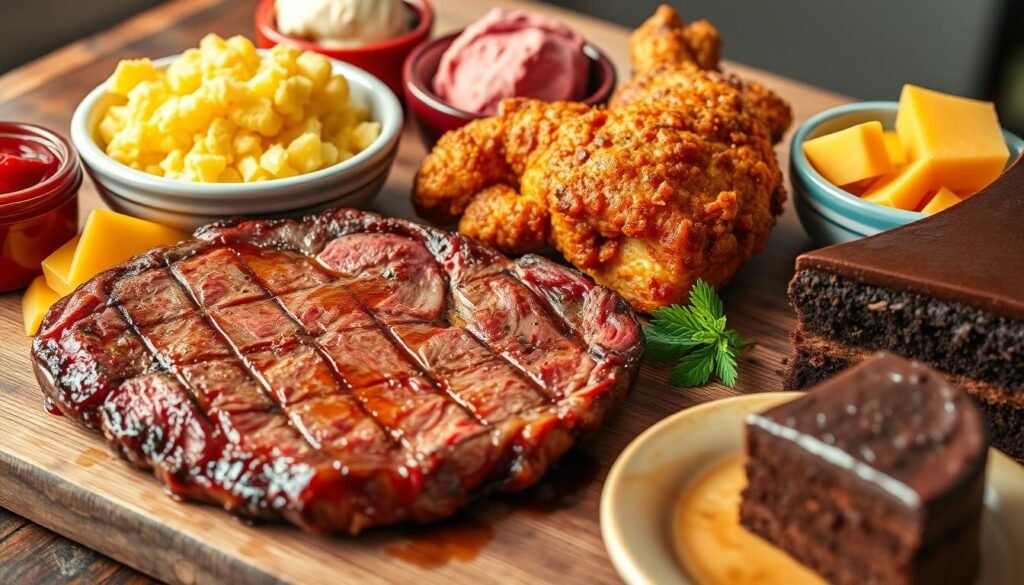
Unhealthy Fats: The Villains in Your Diet
Unhealthy fats are bad for cholesterol levels and overall health. It’s key to know the difference between fats to choose wisely. Saturated and trans fats are especially harmful.
Understanding Saturated Fats
Saturated fats mainly come from red meat and dairy. The American Heart Association (AHA) says to get just 5-6% of calories from these fats. That’s about 13 grams in a 2,000-calorie diet. However, their impact on health is complex.
Some research shows no clear link between saturated fats and heart disease. This suggests that processed foods might be a bigger problem. Interestingly, some studies even suggest full-fat dairy could protect against heart disease.
What Are Trans Fats and Why to Avoid Them?
Trans fats are in processed and fried foods and are worse than saturated fats. They increase bad LDL cholesterol and decrease good HDL cholesterol. This can lead to heart disease and other health issues.
To keep your heart healthy, eat fewer saturated and trans fats. Instead, choose healthier fats found in olive oil, avocados, and fatty fish.
Common Foods High in Saturated and Trans Fats
Many people don’t know they eat foods high in saturated and trans fats. These fats can raise cholesterol, harming heart health. It’s important to avoid fried foods and processed meats, which are common in our diets.
Fried Foods and Their Impact on Cholesterol
Fried foods are full of trans fats, raising bad cholesterol. Items like French fries and doughnuts stress our blood vessels, risking heart problems. Experts say we should eat less than 10% of our total calories from saturated fats for a healthy heart.
It’s key to eat fewer fried foods.
Processed Meats: The Hidden Dangers
Sausages, bacon, and hot dogs have lots of saturated fats. Eating them often can make cholesterol levels spike. These foods are in many meals, like sandwiches and breakfasts, adding bad fats to our diet.
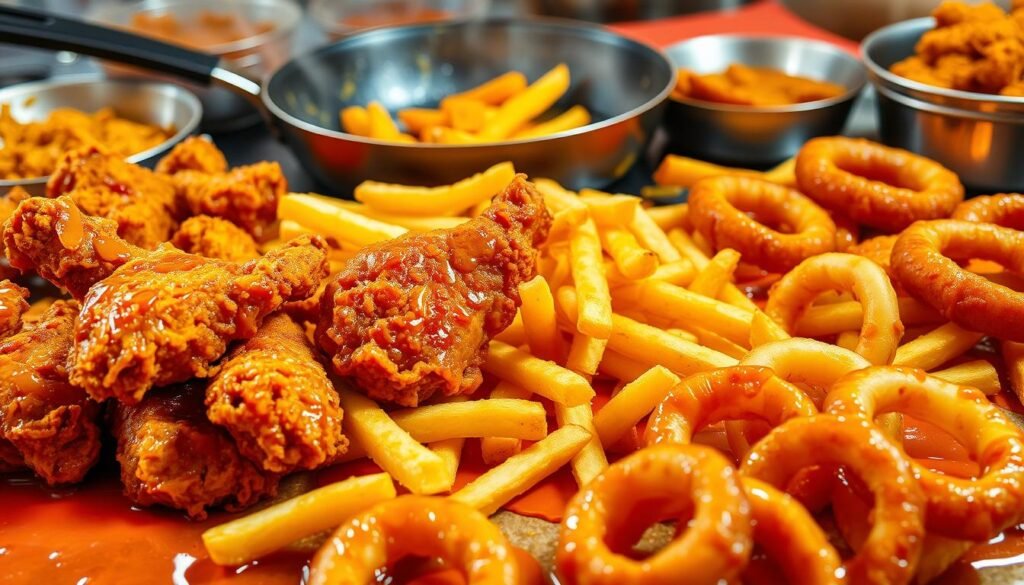
| Food Type | Saturated Fats (grams per serving) | Trans Fats (grams per serving) |
|---|---|---|
| Fried Potatoes (Medium serving) | 2.5 | 3.0 |
| Bacon (2 slices) | 3.0 | 0.2 |
| Sausages (1 link) | 5.7 | 0.3 |
| Doughnut (1 medium) | 4.0 | 0.5 |
| Microwave Popcorn (1 bag) | 2.5 | 1.0 |
High-Cholesterol Dairy Products to Avoid
Watching your cholesterol means being smart about dairy choices. Many don’t know that high-fat dairy items can push up cholesterol. You should know which full-fat products to avoid. They can boost LDL cholesterol, the harmful kind, risking heart health. By picking smarter options, you keep your diet healthy and your heart safer.
Identifying High-Fat Dairy Options
Some dairy products are packed with bad fats and cholesterol. Here are key ones to eat less of:
- Whole milk: Contains about 4.5 grams of saturated fat
- Heavy cream: Rich in both calories and saturated fats
- Full-fat cheeses: Cheddar and brie are high in fat
- Ice cream: High in added sugars and saturated fats
Choosing low-fat or nonfat dairy can be a smart move. It lets you enjoy dairy without extra bad fats.
Healthy Alternatives to High-Cholesterol Dairy
Thankfully, there are tasty alternatives to traditional dairy. Consider these heart-friendly choices:
- Soy milk: It’s free of cholesterol and low in bad fat
- Oat milk: A fat-free option that’s also free of lactose
- Almond milk: Not just low in calories but also a source of vitamin E
- Coconut milk: Creamy, but best to limit because of its saturated fats
Adding these dairy alternatives to your meals can lower cholesterol and boost heart health. It’s about finding what fits your life while exploring new tastes and textures.
The Impact of Egg Yolks and Organ Meats
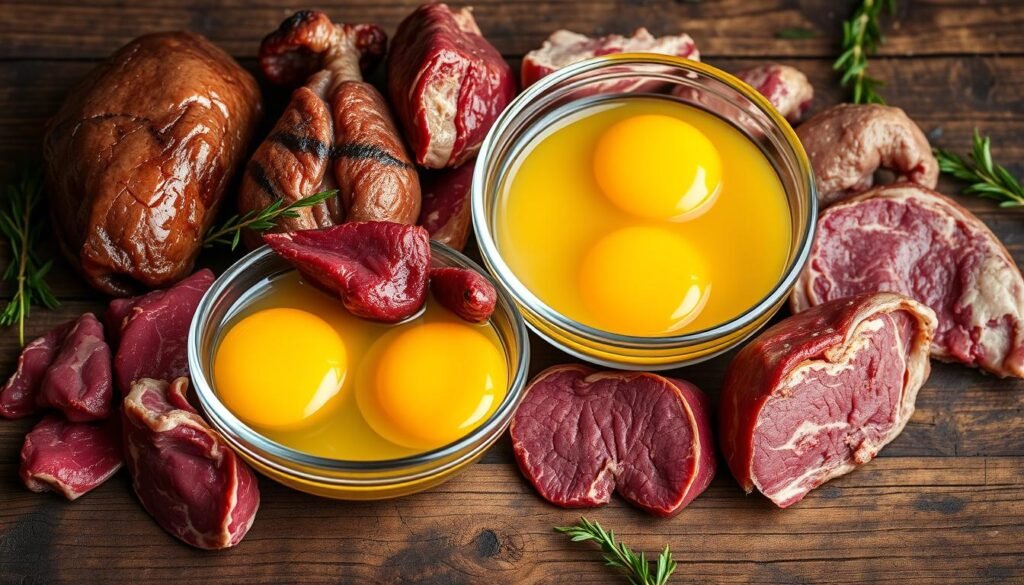
Egg yolks and organ meats are often talked about when we discuss dietary cholesterol. Knowing what’s in these foods is key to keeping our hearts healthy and cholesterol in check.
Understanding Cholesterol Content in Eggs
Egg yolks are high in cholesterol. Just one yolk has about 275 mg. This is more than half of what we should have in a day. Despite new studies, eating in moderation is still important.
Egg whites, on the other hand, have no cholesterol. They are a good alternative for whole eggs in many recipes.
Risks of Consuming Organ Meats
Organ meats like liver are full of cholesterol and saturated fats. For example, a 3-ounce piece of beef liver has 333 mg of cholesterol. Eating these foods often can raise the risk of heart disease.
With many adults in the U.S. fighting high cholesterol, it’s wise to eat less organ meat. Choosing healthier proteins, such as fish or nuts, can help manage cholesterol better.
Making Heart-Healthy Choices
Choosing foods good for your heart means going for nutritious substitutes over bad ones. A balanced meal plan full of fiber-rich foods helps lower harmful LDL cholesterol. Adding a mix of vegetables, fruits, whole grains, and plant-based proteins brings many health perks.
Substituting Unhealthy Foods with Nutritious Alternatives
Cutting out foods high in bad fats is key for a happy heart. Instead, try these options:
- Avocado instead of butter for healthy fats
- Oats or barley instead of refined cereals to boost fiber intake
- Low-fat dairy options, like 1% milk or fat-free yogurt, replacing whole dairy items
- Lean proteins such as grilled chicken or tofu, steering clear of red or processed meats
Making these heart-smart choices can boost your overall health and lower heart disease risks.
Creating a Balanced Meal Plan
A balanced meal plan is crucial for heart well-being. The American Heart Association suggests adding:
| Food Group | Examples | Benefits |
|---|---|---|
| Fruits and Vegetables | Spinach, berries, broccoli | Packed with vitamins and antioxidants |
| Whole Grains | Quinoa, brown rice, whole wheat bread | Full of fiber to help lower cholesterol |
| Healthy Fats | Olive oil, nuts, fatty fish | Help lower bad cholesterol, boost heart health |
| Plant-Based Proteins | Tofu, lentils, chickpeas | Aid in maintaining a healthy weight and heart |
Combining these with smart eating strategies can lead to a heart-healthy diet. Regularly making heart-healthy choices strengthens your heart and overall health.
Conclusion
It’s vital to manage high cholesterol to keep a healthy heart. Knowing what foods to avoid is key. Especially those high in bad fats. This knowledge is critical for controlling high cholesterol.
By understanding the right diet, you can lower your cholesterol. This reduces heart disease risks. Focus on eating foods low in saturated fats and cholesterol to achieve this.
Eating a diet rich in whole grains, fruits, veggies, and healthy fats is important. Add foods packed with soluble fiber, omega-3s, and unsaturated fats. These choices help manage cholesterol and boost heart health.
Making smart eating choices is crucial for a healthy life. Regular check-ups are also essential. Both steps are proactive ways to live healthier. They lead to lower cholesterol and a better life quality.