Did you know that your heart health might be written in your family tree? It’s true. Learning about your family’s health past can shed light on hidden high cholesterol risks. This silent condition can lead to heart problems and even strokes in young people. One key problem, known as FH, skyrockets cholesterol from a young age.
Where you come from can play a big part in your cholesterol levels. About 1 in 250 folks inherit high cholesterol. It’s crucial to understand this genetic risk. This piece explores how your family’s past can influence your cholesterol. It aims to boost awareness and show ways to catch and treat it early.
Key Takeaways
- Familial hypercholesterolemia is an inherited condition impacting cholesterol levels from a young age.
- Individuals with untreated FH are at a significantly higher risk of coronary heart disease.
- Most people with FH remain undiagnosed, highlighting the importance of family medical history.
- Cholesterol genetics can greatly influence health outcomes, emphasizing the need for awareness and screening.
- Regular cholesterol screening can lead to early detection and effective treatment of high cholesterol.
Understanding High Cholesterol and Its Risks
Millions suffer from high cholesterol, leading to major health problems, particularly heart disease. High cholesterol levels can cause artery plaque buildup. This might result in heart attacks or strokes. Around 1 million U.S. adults have familial hypercholesterolemia. This condition, present from birth, increases high cholesterol risks yet often goes unnoticed.
Age and family history are key in cholesterol levels. Women usually have lower LDL levels than men until they’re about 55. Then, the risks become similar for both. If high cholesterol runs in your family, you might need to check your levels more often. The National Heart, Lung, and Blood Institute says to start screening early, especially if there’s a family history of this issue.
Genetics play a big role in how well our bodies handle LDL cholesterol. High cholesterol risks go up due to inactivity, bad eating habits, being overweight, and smoking. Some medical conditions and medications make managing cholesterol harder. Statins can cut LDL levels by half or more. This shows how crucial it is to manage cholesterol proactively.
What is Familial Hypercholesterolemia?
Familial hypercholesterolemia (FH) is a genetic disease that causes high cholesterol levels early in life. It’s mainly due to gene mutations that affect how cholesterol is managed in the body. People with FH face a high risk of coronary heart disease.
About 1.3 million people in the U.S. have FH, with one in 200 adults carrying the responsible gene mutation. Shockingly, only 10% know they have it. LDL cholesterol levels can be over 190 mg/dL in some and exceed 400 mg/dL in others. Identifying FH early is essential to prevent heart attacks in men by age 50 and women by 60.
Those at risk for FH should be tested by age 2. Checkups for cholesterol are advised between ages 9 to 11 and then from 17 to 21. Cascade screening is vital for finding if family members also have FH.
Treatments aim to lower LDL cholesterol by at least 50% using statins and other drugs. In tough cases, apheresis is needed. Knowing if FH runs in your family could save lives.
| Type of FH | LDL Cholesterol Levels | Heart Attack Risk |
|---|---|---|
| Heterozygous FH (HeFH) | Above 190 mg/dL | 30% by age 60 (women), 50% by age 50 (men) |
| Homozygous FH (HoFH) | Above 400 mg/dL | Heart attacks in childhood |
The Role of Genetics in Cholesterol Levels
Genes play a big role in determining our cholesterol levels. A common condition called Familial hypercholesterolemia (FH) affects about 1 in 250 people. It leads to high cholesterol, which can cause serious health problems without early diagnosis. Kids with one FH parent have a 50% chance to inherit it. If both parents have FH, their kid could get a more severe type, homozygous FH.
FH is more common in some ethnic groups than others. For example, Black individuals have it at a rate of 1 in 211, while White individuals are at 1 in 249, and Mexican Americans at 1 in 414. Between 60–80% of FH cases are due to specific gene mutations. These include LDLR, APOB, or PCSK9. People with these mutations can’t regulate cholesterol well. This increases their risk of coronary artery disease (CAD) by twenty times without treatment.
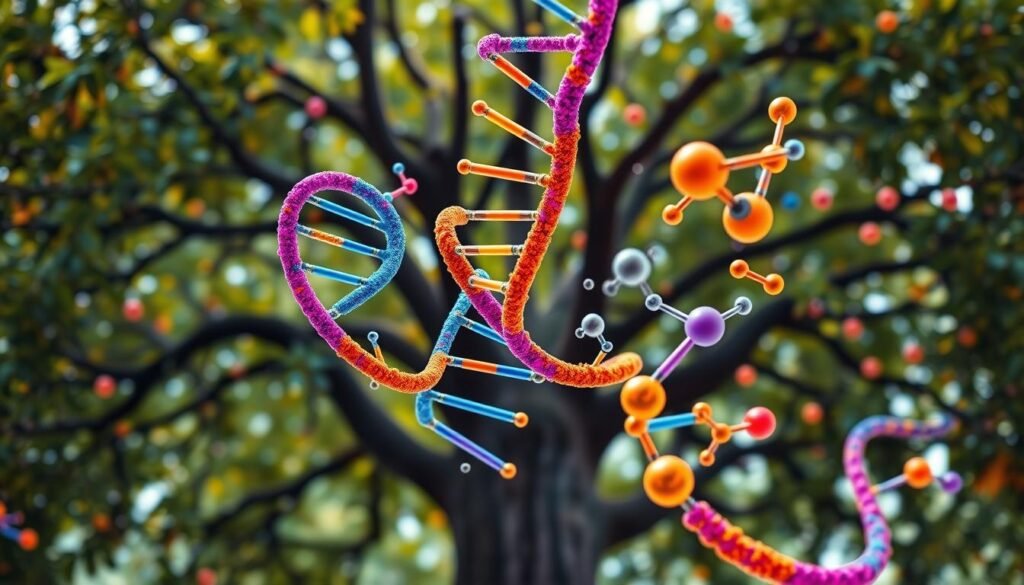
Untreated FH leads to a high risk of heart attacks. Men with it face a 50% risk by age 50. Women have a 30% risk by the time they turn 60. This highlights the importance of genetic testing and early management to avoid such risks.
Finding FH early is key. Most people with FH have high cholesterol from the start. This puts them at risk for heart issues early on. If you’re concerned about your family’s health history, getting a detailed analysis can help manage cholesterol better. Being proactive about treatment can lead to better health outcomes.
To wrap up, knowing about cholesterol genetics is vital in tackling disorders like FH. Learning about your family’s health history is crucial. It helps with early detection and intervention, reducing the risks tied to high cholesterol.
For more on how genetics affect cholesterol, visit this resource.
Family History and Genetic Risk for High Cholesterol
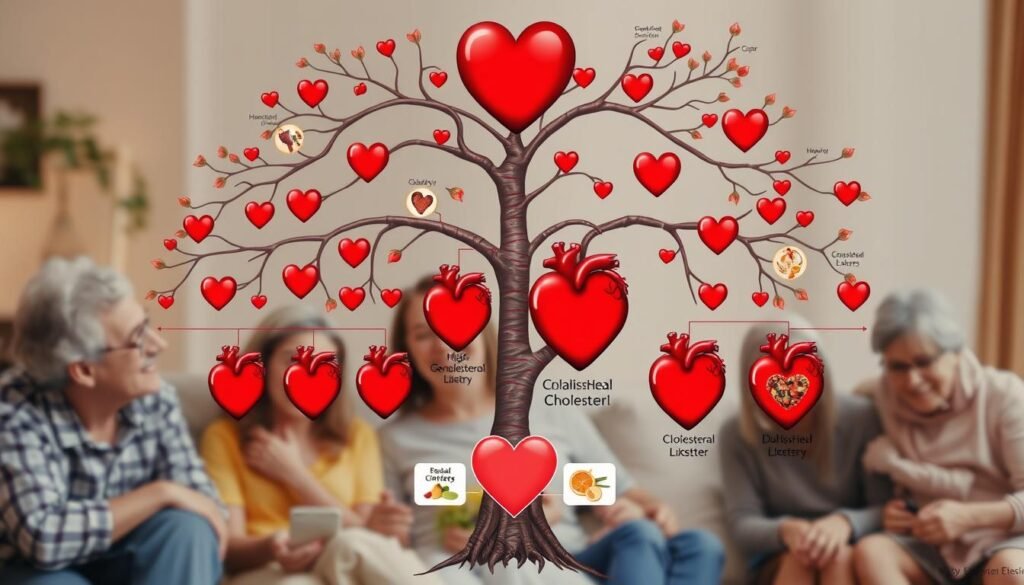
It’s key to understand how family history relates to genetic risks for high cholesterol. A deep look at family health can show if conditions like familial hypercholesterolemia (FH) might be passed down. Knowing if there was early heart disease in the family helps us see the need for early health actions.
Identifying Key Risk Factors
Several important risk factors help us see if there’s a genetic leaning towards high cholesterol:
- Having family members with heart disease before age 55.
- A family history of high cholesterol, especially FH, affecting cholesterol from birth.
- Heart issues patterns in the family, with men 20-39 showing higher risk than women.
- Differences in cholesterol levels among ethnicities, with African Americans often having higher HDL cholesterol levels.
Importance of Family Medical History
Gathering a full family medical history is crucial for assessing genetic high cholesterol risk. This step helps not just the individual in understanding their risk but also doctors in creating specific screening and treatment plans. Things to look into include:
- Keeping track of early incidents of heart disease to assess risks better.
- How menopause affects women’s cholesterol levels.
- How age-related changes in metabolism might impact cholesterol levels.
Getting involved in assessing one’s health can lead to taking control and making positive changes. Lifestyle choices play a big part in managing genetic risks of high cholesterol. Thus, high cholesterol risks come not just from genetics but also from our daily choices.
| Risk Factor | Impact on Cholesterol |
|---|---|
| Family History of Heart Disease | Higher likelihood of early onset cholesterol issues |
| Age | Increased risk for diagnosis between ages 40-59 |
| Gender Differences | Men have a higher risk of cholesterol issues at a younger age |
| Ethnicity | Different HDL and LDL levels among various ethnic groups |
Early Signs of Familial Hypercholesterolemia
It’s important to spot Familial Hypercholesterolemia (FH) early. This condition often shows through physical signs. Many don’t know they have it until it’s severe. Catching it early can mean better management and less risk of heart trouble.
Recognizing Physical Symptoms
People with FH might see yellowish cholesterol spots, called xanthomas. These can be around the eyes or on tendons. It’s key to notice these, especially with a family history of heart disease. If you can’t see signs but are at risk, talk to a doctor about getting checked for high cholesterol.
When to Seek Medical Attention
If you see signs of FH or have family with heart issues, get checked. Screenings find high cholesterol early. This means you can start making changes or take meds if needed. People with symptoms or who know they might get FH need to keep an eye on their cholesterol.

The Impact of LDL Receptor Mutations
LDL receptor mutations are key in familial hypercholesterolemia (FH), impacting how our bodies handle cholesterol. They stop our body from clearing out LDL, or “bad,” cholesterol. This can make cholesterol levels reach dangerous highs.
Most FH cases, about 85%-90%, are due to over 1,600 mutations in the LDL receptor gene. These mutations make each person’s LDL cholesterol levels differ. For instance, people with heterozygous FH show cholesterol numbers between 350 and 550 mg/dL. But those with homozygous FH have even higher levels, from 650 to 1,000 mg/dL.
Some groups have more FH cases because of their genes. This includes people from Christian Lebanese, French Canadian, and other backgrounds. It’s thought that 14 to 34 million people globally have FH. It shows how crucial it is to know about and find FH early.
Diagnosing FH focuses on understanding its genetic side. Next-generation genetic testing helps spot LDL receptor mutations easily. This means doctors can diagnose more accurately and quickly. This is key because in some places, 80% of FH cases are not found. If not caught early, these people face a higher risk of heart disease.
| Mutation Type | Prevalence | Cholesterol Levels (mg/dL) | Population Impacted |
|---|---|---|---|
| Heterozygous FH | 1:300-1:500 | 350-550 | General population |
| Homozygous FH | 1:1,000,000 | 650-1,000 | Rare Cases |
| ApoB Gene Mutation | 5%-10% | Varies | Northern European populations |
| PCSK9 Gain-of-Function | Varies | General population |
Understanding LDL receptor mutations helps us grasp cholesterol genetics. It also shows how vital genetic tests are in making things better for patients. Identifying these mutations lets doctors act fast. They can then control cholesterol and lower the chance of heart disease.
Cholesterol Screening and Early Detection
Cholesterol screening is key to finding risks from high cholesterol levels. Catching these issues early can really make a difference in health, especially if you’re likely to have cholesterol problems because of your family history. Following the screening guidelines from health experts can help catch risks early.
Recommended Screening Guidelines
Some people have a condition making high cholesterol more likely, found in about 1 out of every 250 to 350 individuals. Experts say kids between 9 to 11 should get a cholesterol check. This comes from the National Heart, Lung, and Blood Institute and the American Academy of Pediatrics.
They also say if someone over 16 has LDL (bad) cholesterol above 190 mg/dL, and there’s heart disease early in the family, they need screening too. Many people with this cholesterol problem don’t know they have it. That’s why tools like the Dutch Criteria for Familial Hypercholesterolemia are so important.
How to Discuss Family History with Your Doctor
Talking about your family’s health history with your doctor is crucial. Mention any heart disease, high cholesterol, or similar issues in the family. This helps your doctor understand your risk and come up with the best plan for you.
If you’re worried about cholesterol, don’t hesitate to ask for more tests or about genetic factors. Talking openly with your doctor can help spot problems early and get in front of them.
For more details on genetic tests and their role in understanding your family’s heart health, check out this information here. Knowing more about this can encourage more screenings and evaluations, helping keep your whole family’s heart health on track.
Treatment Options for High Cholesterol
To manage high cholesterol, it’s important to combine lifestyle changes and medical treatments. This is especially true for conditions like familial hypercholesterolemia. Good habits, such as eating right, exercising often, and keeping a healthy weight, are key steps. These actions help control your cholesterol.
Eating a diet low in saturated fats, less than 6% of your daily calories, can lower heart disease risks. Being active for 150 minutes a week also helps your heart and reduces fats in your blood.
Lifestyle Modifications and Their Importance
Changes in lifestyle can show results in 6 to 12 months. People with familial hypercholesterolemia might also need medication to hit their cholesterol goals. Drugs like statins are common for lowering bad cholesterol (LDL) and reducing heart risks. If statins don’t work for someone, there are other drugs to try.
Medications and Advanced Treatments
Doctors look at a patient’s risk to decide on treatments. Lowering LDL cholesterol can cut the chance of heart problems. So, sticking to your treatment plan is key. For tough cases, PCSK9 inhibitors or treatments like lipoprotein apheresis are options.
For more on treatments, check the CDC’s guidelines. It’s vital to talk with your doctor to find the best approach for you.