Did you know that what we eat changes only 20% to 30% of our blood’s total cholesterol? This fact shows how complex managing cholesterol can be. It also shows how important our diet is. High-fat foods, especially ones with lots of saturated and trans fats, are linked to higher cholesterol. This can be bad for our heart health.
It’s crucial to know how different fats change LDL (bad cholesterol) and HDL (good cholesterol) levels. Everyone who wants to keep their heart healthy should understand this.
This article will discuss how high-fat foods affect our cholesterol. We’ll look at the types of cholesterol, the best practices for eating fats, and ways to keep cholesterol at a good level through diet.
Key Takeaways
- Dietary cholesterol affects only a small fraction of overall cholesterol levels in the blood.
- High saturated and trans fat intake can elevate LDL cholesterol and lower HDL cholesterol.
- Incorporating unsaturated fats can improve cholesterol levels and support heart health.
- The Mediterranean Diet offers a heart-healthy alternative to high-fat diets.
- Choosing vegetable oils and soft margarine over butter can help reduce unhealthy fat intake.
- Limiting processed and fried foods is essential for managing cholesterol levels.
- Consuming adequate soluble fiber can aid in lowering cholesterol.
Understanding Cholesterol and Its Importance
Cholesterol is a waxy substance essential for your body. It helps form cells and make hormones and vitamins. Our bodies make all the cholesterol we need in the liver. But, understanding its importance is key for good health. Keeping an eye on cholesterol levels is crucial, especially for heart health.
What is Cholesterol?
There are two main types of cholesterol in our blood: LDL and HDL. Too much LDL, or “bad” cholesterol, can lead to heart disease and stroke. HDL, or “good” cholesterol, cleans cholesterol from the blood. This helps keep your heart healthy.
The Role of Cholesterol in the Body
Our bodies need cholesterol for important jobs. It helps build cell walls and make hormones. But, having too much cholesterol is dangerous. It can cause heart diseases. Poor diet and genetics can raise cholesterol levels, making regular checks important.
A healthy lifestyle and diet changes can lower cholesterol. This is vital for your heart health. For more details on cholesterol and health, read this article.
| Cholesterol Type | Level (mg/dL) | Risk |
|---|---|---|
| Total Cholesterol | About 150 | Optimal levels |
| LDL (“bad”) Cholesterol | About 100 | High levels increase risk |
| HDL (“good”) Cholesterol | At least 40 (men), 50 (women) | Low levels increase risk |
| Triglycerides | Less than 150 | Optimal levels |
Types of Cholesterol: LDL vs. HDL
Learning about cholesterol types is key for heart health. Cholesterol is crucial for our bodies. Yet, not all cholesterol is the same. LDL cholesterol and HDL cholesterol impact our cardiovascular health differently.
What is LDL Cholesterol?
LDL stands for low-density lipoprotein. It’s often called “bad” cholesterol. High LDL levels can cause plaque buildup in arteries. This raises the risk of heart disease and strokes. It’s vital to keep LDL below 130 mg/dL, especially for those with heart disease or diabetes. Regular tests can track these levels.
What is HDL Cholesterol?
HDL is known as high-density lipoprotein, or “good” cholesterol. It helps move LDL cholesterol from arteries to the liver to be removed. High HDL levels, over 40 mg/dL for men and 50 mg/dL for women, help prevent heart problems. A diet rich in healthy fats can increase HDL. For tips on eating well, check out this guide on managing cholesterol with diet.
The Relationship between Dietary Fats and Cholesterol
The types of fats we eat can really change our cholesterol levels. It’s important to know how saturated and trans fats can be bad for our health. Choosing the right fats makes a difference in staying healthy.
How Dietary Fats Influence Cholesterol Levels
Saturated and trans fats can make LDL cholesterol levels go up. Many people in the U.S. eat too much of these bad fats. These come mainly from meat, prepackaged snacks, and processed foods. The 2015 Dietary Guidelines recommend eating less saturated fat. They say to keep it under 10% of your daily calories. This advice matches what the National Cholesterol Education Program says, too.
They also suggest that people over 20 should check their cholesterol every five years. This checkup includes tests for total cholesterol, LDL and HDL cholesterol, and triglycerides.
On the other hand, good fats, like polyunsaturated and monounsaturated fats, are good for your cholesterol. Omega-3 fatty acids, for example, are found in fatty fish like salmon. They help reduce the risk of heart disease. Omega-3s make your blood thinner and lower triglycerides, helping your heart stay healthy.
Key Studies on Dietary Fats and Cholesterol
Many studies show that the fats we eat affect our heart health. Diets with lots of EPA and DHA can prevent arteries from getting hard. They might even lower blood pressure. The Dietary Reference Intakes suggest getting 20 to 35 percent of our daily calories from fats. But, it’s important not to have too much saturated or trans fats.
Reading the Nutrition Facts Panel on food packages is key. It tells you how much total fat, saturated fat, and cholesterol are in a serving. Making smart choices about the fats we eat can really make a difference in our cholesterol levels and heart health.
Impact of High-Fat Foods on Cholesterol
High-fat foods have a big impact on cholesterol, affecting heart health. These foods have saturated fats and trans fats. Knowing about them helps make better food choices.
Foods High in Saturated Fats
Saturated fats can raise LDL or “bad” cholesterol. Common sources are:
- Processed meats, like bacon and sausage
- Full-fat dairy products such as cheese, butter, and cream
- Fried foods, which often absorb saturated fats during cooking
- Baked goods, including cookies, cakes, and pastries
Some studies say moderate saturated fat may not harm you. But too much is still risky. Health experts suggest keeping it under 10% of daily calories. This helps control cholesterol and protect the heart.
Foods High in Trans Fats
Trans fats harm your cholesterol, raising bad and lowering good levels. They’re in foods like:
- Processed snacks like chips and crackers
- Baked goods, including certain pastries and margarine
- Fast foods, such as fried chicken and burgers
The FDA says to avoid trans fats. They’re bad for cholesterol and raise heart disease risk.
| Type of Fat | Sources | Cholesterol Impact |
|---|---|---|
| Saturated Fats | Processed meats, full-fat dairy, fried foods | Raises LDL cholesterol |
| Trans Fats | Processed snacks, baked goods, fast food | Raises LDL, lowers HDL cholesterol |
It’s important to watch your intake of foods with saturated and trans fats for healthy cholesterol.
Healthy Fats That Support Cholesterol Management
Adding healthy fats to your diet is key for good cholesterol management. The right kinds of fats help improve cholesterol levels and support heart health. This makes them vital for a healthy heart.
Monounsaturated Fats
Monounsaturated fats are heart-friendly. They can make bad LDL cholesterol levels drop if you eat them instead of bad fats. Foods rich in these fats include olive oil, avocados, and nuts.
Adding these to your meals can lower bad cholesterol. It’s smart to use these fats instead of high-saturated-fat foods like red meat. Studies say this swap can cut total cholesterol by 8% to 10%.
Polyunsaturated Fats
Polyunsaturated fats, including omega-3s from fish like salmon, are great for cholesterol. These fats lower bad fats and help balance cholesterol levels. Eating fish twice a week can cut heart disease risks.
Other good sources are seeds, walnuts, and flaxseeds. Choosing these over bad fats can boost heart health over time. Both fat types are crucial for those working on better cholesterol management.
Find out how to adjust your diet for heart health, check out this guide on cholesterol management. Or look at this informative resource for the latest studies on dietary fats and heart health.
| Type of Healthy Fat | Sources | Benefits |
|---|---|---|
| Monounsaturated Fats | Olive oil, avocados, nuts | Improves LDL cholesterol, lowers total cholesterol |
| Polyunsaturated Fats | Fatty fish, walnuts, flaxseeds | Lowers triglycerides, enhances cholesterol ratios |
Common High-Fat Foods to Avoid
It’s important to know which high-fat foods to steer clear of to keep your cholesterol in check. Many foods commonly found in the American diet can seriously raise cholesterol levels. This can lead to heart disease and other serious problems.
Processed Meats and Saturated Fats
Processed meats are big sources of bad fats and cholesterol. Foods like hot dogs, sausages, and bacon have a lot of these fats. They can cause bad cholesterol to build up in your body.
A regular pork sausage has about 24 grams of fat, 23 of which are saturated fat. Eating more of these foods can make heart disease risks shoot up by 42% with each extra 2-ounce serving.
Fried Foods and Baked Goods
Fried foods and baked goods often have trans fats, making cholesterol problems worse. Just a small scoop of ice cream can have up to 19 grams of fat, including 12 grams of saturated fat.
Fast-food french fries have about 17 grams of fat and 3.5 grams of saturated fat in a normal serving. A slice of deep-dish cheese pizza has at least 20 grams of fat, half of which is saturated fat. These foods can cause cholesterol to build up in the arteries, increasing the risk of heart diseases.
| Food Item | Fat Content (g) | Saturated Fat (g) |
|---|---|---|
| Regular Pork Sausage (3 links) | 24 | 23 |
| Ice Cream (1/2 cup) | 19 | 12 |
| Fast-food French Fries (medium) | 17 | 3.5 |
| Deep-Dish Cheese Pizza (1 slice) | 20 | 10 |
| Swiss Cheese (1 slice) | 8 | 5 |
How to Balance Your Fat Intake for Better Cholesterol
It’s vital to balance your fat intake for healthy cholesterol levels. One should add healthy fats to their diets and avoid the bad ones. Learning about different fats helps us make choices good for our hearts.
Incorporating Healthy Fats into Your Diet
Healthy fats are great for your heart. They come from olive oil, nuts, and fish like salmon. Omega-3 fatty acids in fish help lower blood pressure and cut heart disease risk.
Eating these foods helps manage fat intake and boosts your health. Foods like oatmeal and Brussels sprouts also work by lowering cholesterol absorption in your blood. Whole grains and fruits, especially berries, are high in fiber but low in bad fats, keeping you healthy and satisfied.
Avoiding Unhealthy Fats
For healthy cholesterol, avoid bad fats found in red meat and full-fat dairy. Saturated and trans fats increase cholesterol a lot. These are in margarine and processed foods too.
Eating lean protein like fish or plant options helps you avoid unhealthy fats. It’s also crucial for your heart’s health. Reading food labels helps you stay away from these harmful fats.
The Role of Fiber in Cholesterol Management
Adding fiber to your diet is key for controlling cholesterol. Soluble fiber is especially important because it binds with cholesterol in the gut. This helps remove cholesterol from the body, leading to better blood fat levels.
Soluble Fiber and Its Benefits
Eating 10 to 25 grams of soluble fiber each day is beneficial. This can lower total and LDL cholesterol by 5 to 10 percent. Soluble fiber reduces cholesterol absorption by the liver and helps get rid of it. Eating foods high in soluble fiber is crucial for heart health.
Foods Rich in Soluble Fiber
Many foods can help you meet your fiber goals. Here are some top sources of soluble fiber:
- Oats: About 1 cup can lower LDL cholesterol levels by approximately 11%.
- Legumes: A diet rich in legumes can drop total cholesterol levels by nearly 12 points.
- Apples: Containing pectin, typically around 6 grams, apples can aid in reducing blood cholesterol levels.
- Avocados: A whole avocado provides around 4.7 grams of fiber, contributing positively to LDL cholesterol levels.
- Flaxseeds: Daily consumption of up to 3 tablespoons can reduce triglyceride and LDL cholesterol levels.
- Psyllium supplements: These may lower LDL cholesterol by 6% to 24% and total cholesterol by 2% to 20%.
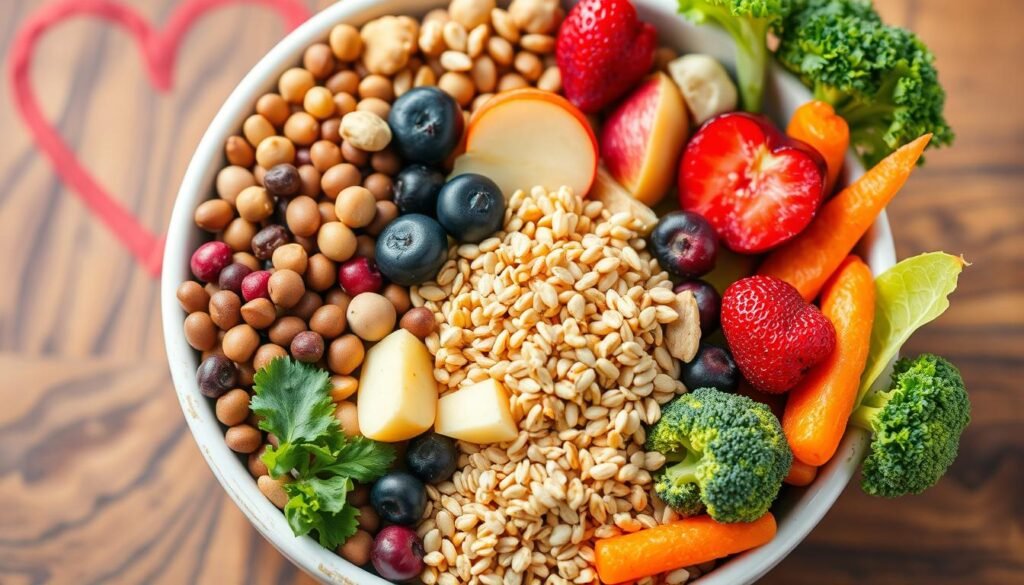
Including foods rich in fiber in your meals helps keep cholesterol low and supports digestion. A diet high in soluble fiber is essential for managing cholesterol well.
Practical Tips to Lower Cholesterol Through Diet
Making smart choices in what you eat is key to lowering cholesterol. It’s about finding the right balance of good foods. Eating lots of fruits, veggies, whole grains, and lean meats helps. Try to eat less red meat and fewer processed foods. This approach is great for keeping cholesterol in check.
Meal Planning for Heart Health
For a heart-healthy diet, focus on lean proteins. Eating skinless poultry, fish, and plant-based proteins cuts down on bad fats. The American Heart Association suggests having 8 ounces of fish weekly. Go for fish high in omega-3s, like salmon and mackerel. Also, eat plenty of fiber from oats, beans, and whole grains. This boosts heart health. Good meal planning improves your diet’s quality substantially. Check out tips on meal planning for more info.
Healthier Cooking Methods
Choosing healthier cooking methods is a big step in controlling cholesterol. Bake, steam, or grill instead of frying. Using less oil or a vegetable oil spray keeps veggies healthier. Pick liquid oils over solid fats to cut back on saturated fat. Swapping in pureed fruits or veggies for oil in recipes is a smart move. It adds nutrition without sacrificing taste. Choosing low-fat dairy also helps limit bad fats. Remember, exercise and lifestyle changes are important too. They help maintain a healthy heart.
Conclusion
The impact of high-fat foods on cholesterol is vital for heart health. It’s crucial to know the good fats from the bad. This knowledge helps us choose better foods for our cholesterol and heart.
Eating healthy fats, like those in olive oil or omega-3-rich foods, is good for your heart. These good fats can help manage cholesterol. But, we should avoid bad fats found in certain meats and baked goods. Adding foods high in soluble fiber also helps keep cholesterol in check.
Regular check-ups and talking to doctors are key in taking care of our hearts. They help us make the right food choices. This way, we can be proactive in preventing heart disease.
Research keeps teaching us about cholesterol and food. It’s important to stay updated and adjust our diets when needed. By eating right and cutting out bad fats, we can all live healthier. A heart-healthy lifestyle is possible for everyone.